
English


Views: 241 Author: Dapeng Aluminum Publish Time: 2026-09-13 Origin: Site


Content Menu
● How the Aluminum Extrusion Process Works
>> 1. Profile Design and Technical Review
>> 2. Aluminum Billet Preparation
>> 3. Extrusion Die Manufacturing
>> 4. Extrusion Through the Press
>> 5. Cooling, Quenching, and Straightening
>> 6. Aging and Mechanical Property Development
>> 7. Surface Treatment and Deep Processing
● Why Aluminum Extrusion Is Used Across Industries
>> Architectural Aluminum Profiles
>> Industrial Aluminum Profiles
>> Transportation and New-Energy Applications
● How to Design a Better Custom Aluminum Extrusion Profile
>> Use Consistent Wall Thickness Where Possible
>> Avoid Unnecessarily Sharp Corners
>> Integrate Functions Into the Profile
>> Specify Only Critical Tolerances
● A Buyer's Quality Checklist for Aluminum Extrusion Projects
● Common Mistakes When Sourcing Aluminum Extrusions
>> Choosing Alloy by Price Alone
>> Sending an Incomplete Drawing
>> Ignoring Surface-Finish Requirements
>> Approving Production Without a Sample
>> Separating Extrusion and Processing Without Coordination
● Work With a Custom Aluminum Profile Manufacturer
>> What is the difference between aluminum extrusion and aluminum casting?
>> Which aluminum alloy is best for extrusion?
>> Can aluminum extrusion profiles be customized?
>> What surface finishes are available for aluminum extrusion?
>> Are aluminum extrusions strong enough for industrial structures?
>> What information is needed to request an aluminum extrusion quotation?
>> How can I reduce the cost of a custom aluminum extrusion project?
Aluminum extrusion is a high-efficiency manufacturing process that transforms heated aluminum billets into continuous profiles with a defined cross-section. From architectural window frames and curtain walls to automation equipment, transport components, solar structures, and custom industrial assemblies, aluminum extrusion makes it possible to produce lightweight, strong, corrosion-resistant parts at scale.
For buyers, the key question is not only "What is aluminum extrusion?" It is also: How can you specify an aluminum extrusion profile that performs reliably, is economical to manufacture, and arrives ready for assembly? This guide explains the full process from a manufacturer's perspective, including alloy selection, die design, tolerances, surface finishes, inspection priorities, and a practical sourcing checklist.
At Guangdong Dapeng Aluminum Industry Co., Ltd., we develop, manufacture, process, and export aluminum solutions for global customers. Our capabilities cover industrial aluminum profiles, architectural aluminum profiles, and customized secondary processing for projects that require consistent quality, technical support, and dependable international delivery.
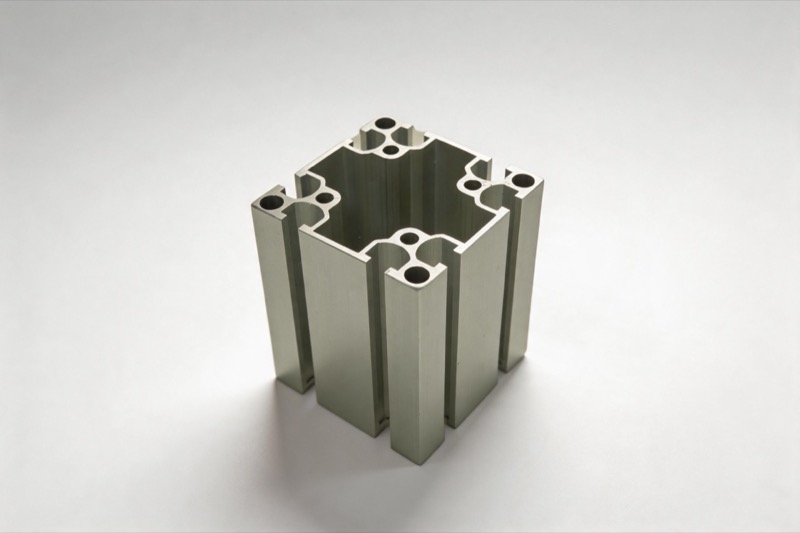
Aluminum extrusion is a forming method in which a heated aluminum billet is pushed under high pressure through a precision-made steel die. As the aluminum exits the die, it takes the die's opening shape and becomes a long profile with a consistent cross-section.
A simple comparison is squeezing toothpaste from a tube: the material takes the shape of the opening as it is pushed through. In extrusion manufacturing, however, the material, temperature, pressure, die geometry, cooling process, and quality control are precisely managed.
The process can produce simple shapes such as angles, channels, tubes, and flat bars. It can also create highly engineered aluminum extrusion profiles with multiple chambers, screw ports, heat-dissipation fins, cable-routing grooves, sealing slots, and interlocking features.
The main advantage is design freedom. Instead of machining a complex part from a solid aluminum block, engineers can often integrate several functions into one extruded profile. This may reduce material waste, assembly time, fasteners, and total project cost.
A reliable aluminum extrusion process is not a single press operation. It is a controlled manufacturing sequence in which each stage affects profile accuracy, surface appearance, mechanical performance, and final usability.
Every project begins with a drawing, dimensional requirements, alloy selection, surface-finish expectations, application environment, and production volume estimate.
Before die manufacturing, the technical team should review:
- Profile cross-section and wall thickness
- Critical dimensions and allowable tolerances
- Hollow, semi-hollow, or solid profile structure
- Alloy and temper requirements
- Required strength, corrosion resistance, and weldability
- Surface treatment requirements
- Secondary processing needs, such as cutting, drilling, CNC machining, or assembly
- Packing, labeling, and shipping requirements
A well-reviewed drawing prevents costly changes later. For example, a profile with excessively thin walls, sharp transitions, or uneven metal flow may be difficult to extrude consistently. Small design changes at the drawing stage can improve manufacturability and help control cost.
The raw material for extrusion is usually an aluminum alloy billet. A billet is a solid cylindrical aluminum log that is cut to the required length for the press.
The alloy must match the intended application. Common examples include:
| Alloy | Typical Characteristics | Common Applications |
|---|---|---|
| 6063 | Good extrudability, smooth surface, good corrosion resistance | Windows, doors, curtain walls, decorative profiles |
| 6061 | Higher strength, good machinability, good structural performance | Industrial frames, machinery, transport parts |
| 6005A | Good strength and extrusion performance | Rail, solar frames, structural sections |
| 6082 | High strength and strong structural capability | Heavy-duty industrial and transportation components |
The billet is heated to a controlled temperature. Aluminum is not melted during normal direct extrusion. Instead, it is heated until it becomes plastic enough to flow through the die while retaining its solid-state structure.
The extrusion die is the core tool that determines the profile shape. It is normally produced from high-strength tool steel and engineered according to the profile's geometry, alloy, press capability, and expected production volume.
There are several common die categories:
- Solid dies for flat bars, angles, channels, and other open profiles
- Hollow dies for tubes, multi-void sections, and enclosed profiles
- Semi-hollow dies for profiles with deep openings or narrow gaps
A high-quality die does more than copy the drawing. It must balance metal flow across different areas of the profile. If one section flows faster than another, the extrusion may twist, bow, show uneven wall thickness, or develop surface defects.
For this reason, experienced die design is especially important for complex industrial aluminum profiles.
The heated billet is loaded into the extrusion press container. A hydraulic ram then applies pressure and pushes the billet through the die.
As the aluminum passes through the die opening, it emerges as a continuous profile. The press capacity, billet diameter, alloy, profile size, and die configuration all influence what can be manufactured efficiently.
During this stage, manufacturers monitor key process variables, including:
- Billet temperature
- Die temperature
- Container temperature
- Ram speed
- Exit temperature
- Press pressure
- Profile appearance and dimensional stability
Stable process control is essential. Excessive speed or temperature can cause surface tearing, discoloration, or inconsistent mechanical properties. Insufficient heat or pressure may lead to poor metal flow and incomplete profile formation.
After the aluminum profile exits the die, it is cooled by air, water mist, or another controlled quenching method. Cooling helps establish the material condition needed for later aging and mechanical performance.
The profile is then pulled along the runout table and cut to handling length. Because aluminum can naturally distort slightly during extrusion and cooling, stretching is often used to improve straightness and reduce internal stress.
This stage matters for downstream processing. A profile that is not straight or stable may create problems during automated cutting, CNC machining, assembly, glazing, welding, or installation.
Many heat-treatable aluminum extrusion alloys need an aging process after extrusion. Aging develops the required hardness and strength by allowing alloying elements to form strengthening phases within the metal structure.
The final temper may be specified as T5, T6, or another appropriate condition depending on the alloy, process route, and application.
For example:
- T5 generally refers to cooling from the extrusion process and then artificially aging.
- T6 generally involves solution heat treatment, quenching, and artificial aging for higher strength in many applications.
The right temper should be selected based on actual engineering requirements, not only on a desire for the highest possible hardness. Higher strength can affect formability, machining behavior, cost, and the suitability of the profile for its intended use.
After extrusion and aging, profiles may receive surface treatment and further fabrication.
Common surface treatment options include:
- Mill finish for industrial applications where appearance is not the main requirement
- Anodizing for enhanced corrosion resistance, decorative appearance, and a durable oxide layer
- Powder coating for color flexibility, weather resistance, and architectural appeal
- Electrophoretic coating for a uniform, smooth, and durable surface
- Wood-grain transfer for decorative architectural products
Deep-processing services can turn an extruded section into a ready-to-use component. These may include precision cutting, drilling, punching, tapping, milling, CNC machining, bending, deburring, assembly, and custom packaging.
For global buyers, sourcing extrusion and secondary processing from one manufacturer can simplify quality responsibility, production planning, and logistics coordination.
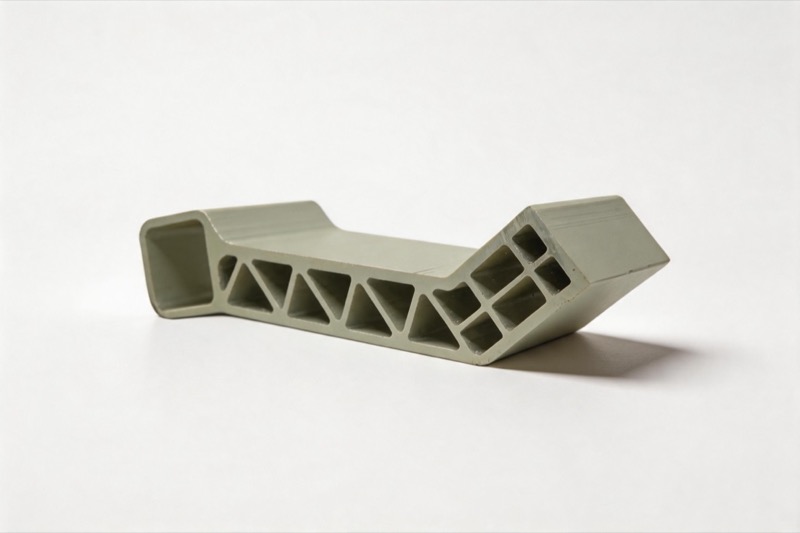
Aluminum extrusion supports both high-volume standardized products and custom-engineered components. Its combination of low weight, corrosion resistance, design flexibility, thermal conductivity, and recyclability makes it suitable for many sectors.
Architectural aluminum extrusion profiles are widely used in:
- Windows and doors
- Curtain wall systems
- Sunrooms and conservatories
- Railings and balustrades
- Partition systems
- Shutters and louvers
- Decorative trims
- Building façade components
6063 aluminum is commonly selected for architectural use because it offers excellent extrudability and can achieve a refined surface after anodizing or powder coating.
Industrial aluminum profiles often serve as structural building blocks for modular equipment and machinery. Typical applications include:
- Automation frames
- Conveyor systems
- Workbenches
- Safety guards
- Machine enclosures
- Robotics structures
- Cleanroom partitions
- Display systems
- Warehouse and logistics equipment
A properly designed aluminum frame can reduce fabrication time because slots and connection points can be integrated directly into the profile.
Aluminum's light weight supports energy efficiency in transport and mobility systems. Extruded profiles are used in:
- Vehicle structures
- Truck bodies and trailers
- Railway components
- Marine equipment
- Battery housings
- Solar mounting structures
- Heat sinks and thermal-management systems
- Charging infrastructure enclosures
In these applications, the selection of alloy, temper, corrosion protection, and joining method should be evaluated together. A profile that performs well in a dry indoor environment may need a different alloy or surface finish for marine, coastal, outdoor, or high-humidity service.
A custom aluminum extrusion profile should be engineered for both function and manufacturability. Good design choices can reduce die complexity, improve yield, shorten production time, and create a more stable final product.
Large differences in wall thickness can cause uneven metal flow during extrusion. This may increase the risk of distortion, dimensional variation, and surface defects.
When possible, keep wall thickness relatively uniform. If different thicknesses are necessary, use gradual transitions instead of abrupt changes.
Sharp internal corners can restrict material flow and concentrate stress. Adding appropriate radii generally improves extrusion performance and can increase the durability of the finished part.
An extrusion profile can often combine functions that would otherwise require multiple fabricated components.
For example, an industrial enclosure profile may include:
- A structural wall
- T-slots for fasteners
- A channel for a sealing strip
- A groove for a panel
- A cavity for cable management
- A surface for a decorative cap
This approach can reduce part count and simplify assembly.
Tighter tolerances often require more process control, inspection effort, and potentially additional machining. Buyers should distinguish between dimensions that are truly critical for assembly or safety and those that can follow standard extrusion tolerances.
The best specification is not the tightest specification. It is the one that protects functional performance without adding unnecessary cost.
Reliable aluminum profiles depend on more than visual inspection. Before approving mass production, buyers should establish clear acceptance criteria and request appropriate documentation.
A practical purchase specification should include:
1. Alloy grade and temper, such as 6063-T5, 6061-T6, 6005A, or 6082.
2. Approved technical drawing with revision number.
3. Critical dimensional tolerances and straightness requirements.
4. Surface finish type, color, and coating or anodizing requirements.
5. Length tolerance, cut quality, and burr-control requirements.
6. Required mechanical properties where applicable.
7. Inspection method and sampling expectations.
8. Packaging, labeling, and shipment requirements.
9. First-article sample or pre-production sample approval process.
10. Required certificates, such as material composition records or inspection reports.
For customized projects, a structured approval sequence is highly effective:
| Project Stage | Main Objective | Buyer Approval Point |
|---|---|---|
| Drawing review | Confirm design feasibility and requirements | Approve drawing and quotation |
| Die trial | Validate profile geometry and basic appearance | Review trial sample |
| First article | Verify fit, dimensions, and critical features | Approve sample or report |
| Pre-production sample | Confirm finish, packing, and batch consistency | Authorize mass production |
| Mass production | Maintain approved standards | Review inspection documentation |
This process helps prevent misunderstandings between the design, purchasing, production, and quality teams.
The lowest-cost alloy may not provide the strength, surface quality, corrosion resistance, or machining performance your application needs. Material selection should start with the real service environment and load conditions.
A profile drawing without alloy, temper, tolerances, finish, length, and inspection criteria leaves too much room for interpretation. A complete specification supports faster quotations and more consistent production.
Anodizing, powder coating, and other finishes affect appearance, corrosion protection, dimensions, lead time, and cost. Define the intended finish early, especially for visible architectural products.
A technical drawing is essential, but it cannot fully show assembly fit, color uniformity, tactile feel, packing quality, or the visual appearance of a complex profile. Sample approval is one of the most valuable risk-control steps in custom aluminum extrusion projects.
Using separate suppliers for extrusion, cutting, machining, and finishing can work, but it increases coordination requirements. If parts must meet tight assembly requirements, integrated manufacturing can improve accountability and reduce handling risk.
The right aluminum extrusion partner should understand more than press operation. They should be able to support material selection, profile optimization, die development, surface treatment, deep processing, quality planning, and export packaging.
Guangdong Dapeng Aluminum Industry Co., Ltd. provides aluminum profiles and customized aluminum solutions for customers in architectural, industrial manufacturing, transportation, and new-energy markets. With a modern production base, ISO 9001 quality management certification, professional manufacturing experience, and customized processing capability, we help customers move from drawings and requirements to dependable finished aluminum products.
If you are planning a custom aluminum extrusion project, send us your drawing, target application, alloy preference, surface requirements, order quantity, and destination market. Our team can review manufacturability and provide a tailored aluminum profile solution for your project.
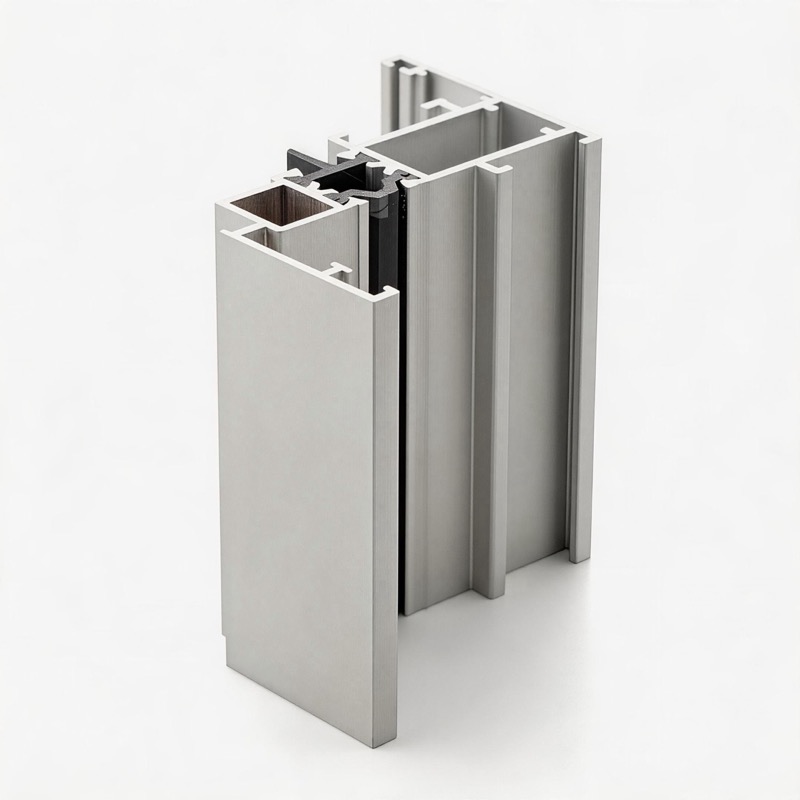
Aluminum extrusion pushes heated aluminum through a die to create a long profile with a continuous cross-section. Aluminum casting pours molten aluminum into a mold to create a three-dimensional part. Extrusion is especially suitable for frames, rails, channels, heat sinks, and other long-profile products.
The best alloy depends on the application. 6063 is widely used for architectural profiles because of its surface quality and finishing performance. 6061 offers higher strength and good machinability for industrial applications. 6005A and 6082 are often considered for structural and transportation-related uses.
Yes. Custom aluminum extrusion profiles can be designed according to dimensions, wall thickness, structural features, alloy, temper, surface treatment, length, machining requirements, and packaging needs. A technical drawing is usually the best starting point.
Common finishes include mill finish, anodizing, powder coating, electrophoretic coating, painting, and wood-grain transfer. The right choice depends on appearance expectations, corrosion exposure, application environment, and budget.
Yes, when the correct alloy, temper, cross-section, wall thickness, and connection method are selected. Structural performance should be evaluated according to the actual load, span, support conditions, vibration, safety factor, and environmental exposure.
Provide a profile drawing, alloy and temper requirements, surface finish, order quantity, length, tolerance requirements, processing needs, quality documentation requirements, packaging specifications, and delivery destination. If some details are not finalized, describe the application so the manufacturer can recommend a suitable solution.
Improve manufacturability before die production, avoid unnecessary tight tolerances, use consistent wall thickness where possible, combine functional features into one profile, choose a suitable alloy rather than an over-specified grade, and confirm volume expectations early. Approving samples before mass production also reduces the risk of expensive rework.
1. [BOR USA — What Is Aluminum Extrusion? The Process in 10 Steps]
2. [Guangdong Dapeng Aluminum Industry Co., Ltd. — Custom Aluminum Solutions]
3. [Aluminum Association — Aluminum Industry Standards]
4. [Aluminum Association — Aluminum Extrusion Design and Applications]
6. [Guangdong Dapeng Aluminum — Top 10 Aluminum Alloy Manufacturers in China]


