
English


Views: 261 Author: Dapeng Aluminum Publish Time: 2026-08-17 Origin: Site


Content Menu
● How We Selected Manufacturers
>> 1. Guangdong Dapeng Aluminum Industry Co., Ltd.
>> 2. Guangdong Xingfa Aluminium Co., Ltd.
>> 3. Asia Aluminum Group (AAG)
>> 6. Guangdong Huachang Aluminium
>> 8. Shandong Nanshan Aluminium
>> 9. China Zhongwang / Zhongwang Group
>> 10. Aluminum Corporation of China (CHALCO)
● China's Aluminum Manufacturing Advantage
>> 1. Avoid vague alloy descriptions
>> 2. Verify certificates properly
>> 3. Use a three-stage sample process
>> 4. Check the material, not only appearance
>> 5. Plan logistics around profile length
● The Overlooked Risk: "Equivalent Alloy" Substitution
>> 2. Is 6063-T5 always suitable for aluminum window and door profiles?
>> 3. How do I prevent a supplier from reducing wall thickness after the sample is approved?
>> 4. What MOQ should I expect for custom aluminum extrusion in China?
>> 5. Do CE, RoHS, and REACH apply to every aluminum profile?
China remains the world's largest primary-aluminum producer. Statista estimates China produced approximately 43 million metric tons in 2024, while Chinese aluminum-product exports reached a net 5.903 million tonnes in the same year according to industry data based on China Customs statistics.
For international buyers, the attraction is not simply lower production cost. China offers a mature ecosystem covering billet supply, die design, aluminum extrusion, CNC machining, anodizing, powder coating, thermal-break processing, packaging, and export logistics. Guangdong—particularly Foshan, Zhaoqing, and surrounding Pearl River Delta industrial areas—has become a major cluster for architectural and industrial aluminum profiles.
However, supplier selection requires more than comparing quotations. A low price may hide lower alloy purity, reduced wall thickness, inconsistent surface treatment, weak traceability, or unstable delivery performance. The following list is designed for procurement managers looking for a long-term aluminum alloy manufacturing partner rather than a one-off trading supplier.
The companies below were selected based on a practical procurement framework. This is not a ranking based only on company size; it is intended to help buyers identify suppliers that match different project requirements.
| Evaluation Area | What Buyers Should Check | Why It Matters |
|---|---|---|
| Manufacturing capability | Extrusion presses, billet capacity, die workshop, finishing lines, CNC/deep processing | Determines profile complexity, output stability, and customization depth |
| Material control | Alloy composition, billet source, melt records, material certificates | Reduces the risk of incorrect grades or recycled-content inconsistency |
| Quality system | ISO 9001, inspection procedures, batch traceability, final inspection records | Helps maintain dimensional and cosmetic consistency |
| Engineering capability | Die design, DFM support, drawing review, prototype response | Critical for custom industrial profiles and assembly-ready parts |
| Surface treatment | Anodizing, powder coating, electrophoresis, PVDF, wood grain | Affects corrosion resistance, appearance, and service life |
| Export readiness | Packaging standards, documentation, Incoterms, destination-market experience | Reduces customs, damage, and communication risks |
| Delivery reliability | Production planning, raw-material planning, on-time shipment history | Important for construction schedules and assembly-line supply |
| Compliance support | CE-related project requirements, RoHS declarations, REACH statements, test reports where applicable | Required for many EU, North American, and regulated applications |
For aluminum alloy profiles, buyers should also specify the relevant material standard. Common references include:
- 6063 / 6063-T5 / 6063-T6: Widely used for architectural profiles, window and door systems, decorative sections, and general extrusions.
- 6061 / 6061-T6: Often selected for higher-strength industrial structures, machinery frames, transportation components, and engineered parts.
- 6005 / 6005A: Suitable for structural profiles requiring a balance of extrudability and strength.
- 6082: Used in more demanding structural applications, subject to design and processing requirements.
- ADC12 / A380: Common die-casting alloys, but not interchangeable with wrought extrusion alloys such as 6063 or 6061.
A supplier should be able to explain not only the alloy number, but also its temper, chemical-composition tolerance, mechanical-property targets, extrusion feasibility, surface-treatment compatibility, and inspection method.
| Manufacturer | Established | Main Focus | Typical Buyer Fit | Capacity / MOQ Position | Common Compliance Scope |
|---|---|---|---|---|---|
| Guangdong Dapeng Aluminum Industry Co., Ltd. | Verify with supplier | Industrial, architectural, and customized aluminum profiles | Small-to-mid-sized brands and customized projects | Flexible for project-based OEM orders | Request current ISO, material, and project documents |
| Guangdong Xingfa Aluminium Co., Ltd. | 1984 | Architectural and industrial aluminum profiles | Large construction and system-profile projects | Large-scale manufacturing | ISO and project-specific documentation |
| Asia Aluminum Group / AAG | 1991 | Precision extrusion and architectural profiles | High-volume building and industrial programs | Reported large-scale capability | Request current facility-specific certificates |
| JMA Aluminium | 1993 | Doors, windows, curtain wall systems | Façade, real estate, and building-system buyers | Strong architectural-system capability | ISO 9001 / ISO 14001 reported in market sources |
| Fenglu Aluminium | 1990 | Architectural profiles and aluminum systems | Window, door, and building-material distributors | Large catalog and export capability | Request certificate scope by factory |
| Guangdong Huachang Aluminium | Verify with supplier | Building and industrial profiles | Construction and general extrusion sourcing | Medium-to-large project capability | Verify current quality-system records |
| Weiye Aluminium | 1992 | Architectural aluminum systems | Door/window fabricators and building contractors | Large domestic-system experience | Request destination-market documentation |
| Shandong Nanshan Aluminium | 1993 | Rolled products, extrusions, aerospace/transport materials | High-spec industrial and transportation buyers | Large integrated-material base | Project-dependent quality documentation |
| China Zhongwang / Zhongwang Group | 1993 | Industrial and high-strength aluminum profiles | Rail, automotive, equipment, and complex industrial applications | Historically large industrial-extrusion focus | Conduct current legal and operational due diligence |
| Aluminum Corporation of China (CHALCO) | 2001 | Upstream aluminum, alumina, fabricated aluminum products | Large-volume and strategic sourcing programs | Very large integrated group | Documentation varies by entity and product line |
Guangdong Dapeng Aluminum Industry Co., Ltd. is positioned as a practical option for buyers seeking industrial aluminum profiles, architectural aluminum profiles, and custom deep-processing support without automatically entering the procurement complexity of a very large group supplier.
Its strongest fit is typically for importers, engineering companies, project contractors, equipment manufacturers, and growing brands that need responsive communication, drawing-based quotation, custom extrusion support, and a more flexible approach to OEM requirements. For many small and medium-sized buyers, this can be more useful than working with a supplier whose systems are optimized primarily for large, standardized orders.
Key areas buyers may evaluate with Dapeng include:
- Custom aluminum extrusion based on 2D drawings, 3D files, or physical samples.
- Industrial profiles for machinery frames, automation equipment, enclosures, solar-related structures, transportation components, and fabricated assemblies.
- Architectural profiles for windows, doors, curtain walls, decorative applications, and project-specific systems.
- OEM services involving die development, cutting, drilling, punching, CNC machining, surface finishing, and export packaging.
- Project communication for prototype confirmation, sample approval, production scheduling, and shipment planning.
For buyers with customized specifications, the value is often not the lowest per-ton aluminum price. It is the ability to receive engineering feedback before die release, manage smaller or phased purchase volumes, and maintain efficient communication during sampling and production.
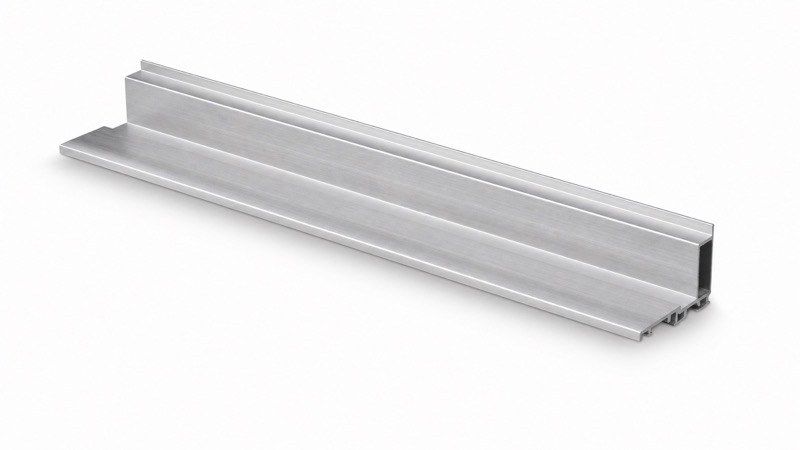
Founded in 1984, Guangdong Xingfa Aluminium is a well-known Chinese aluminum-profile manufacturer with a broad product offering in architectural and industrial aluminum profiles. Its product portfolio includes window, door, curtain wall, railing, decorative, and other aluminum alloy profile categories.
Xingfa is generally relevant for buyers looking for established architectural aluminum systems, larger construction programs, and profile categories with mature tooling and established production methods. Its position in Guangdong also provides access to the broader Foshan building-material and fabrication ecosystem.
Best suited for:
- Large residential and commercial construction projects.
- Window and door system manufacturers.
- Curtain wall contractors.
- Distributors requiring established architectural profile ranges.
- Buyers seeking consistent supply for repeat project orders.
Buyer consideration: For custom industrial profiles, confirm whether the project will be handled by an industrial extrusion team rather than an architectural-system sales channel.
Asia Aluminum Group, commonly known as AAG, is associated with large-scale aluminum extrusion and architectural profile manufacturing. Market sources frequently cite capacity around 500,000 tonnes per year, though buyers should verify the current figure, facility scope, and available capacity for their specific product category directly with the manufacturer.
AAG is generally considered when buyers need substantial throughput, precision extrusion capability, mature production systems, and broad surface-finishing options. The company is relevant to both construction-related and selected industrial applications.
Best suited for:
- High-volume profile programs.
- Curtain wall and façade projects.
- Building-material distributors.
- Exporters requiring stable repeat production.
- Projects needing coordinated extrusion and finishing capability.
Buyer consideration: Large-scale capacity does not necessarily mean a low MOQ for every custom section. Confirm the minimum billet quantity, die charge, finishing MOQ, and color-matching requirements before issuing a purchase order.
JMA Aluminium was established in 1993 and is strongly associated with aluminum solutions for doors, windows, and curtain wall systems. It has developed international market coverage, with market references stating exports to more than 70 countries.
For building-envelope buyers, JMA is often evaluated for system capability rather than only raw extrusion supply. This distinction matters: a system supplier may provide profile families, accessories, glazing concepts, fabrication guidance, and project support that go beyond a single extrusion drawing.
Best suited for:
- Aluminum window and door fabricators.
- Curtain wall contractors.
- Property-development and façade projects.
- Overseas distributors of building systems.
- Buyers requiring coordinated architectural profile families.
Buyer consideration: Request system drawings, wall-thickness specifications, hardware compatibility, glazing requirements, thermal-break details, and performance-test documentation where applicable.
Fenglu Aluminium, founded in 1990, is a major Chinese supplier of aluminum alloy products and building-profile systems. Market sources describe a large product range and exports to more than 100 countries, although buyers should independently confirm current export-market coverage and the relevant product-line scope.
Its broad catalog can be useful for distributors or project buyers who need established window, door, and façade profile solutions. A large profile library may reduce tooling time for standard applications, especially when a buyer can adapt a project around existing sections.
Best suited for:
- Window and door profile distributors.
- Building-material wholesalers.
- Residential and commercial property projects.
- Buyers seeking a wide standard-profile selection.
- Export projects requiring mature packaging and shipment processes.
Buyer consideration: Ask whether your requested profile is an existing catalog section or a new die. Existing-profile availability can materially change lead time, MOQ, tooling cost, and delivery risk.
Guangdong Huachang Aluminium is commonly included in Chinese aluminum-profile manufacturer comparisons for its building and industrial extrusion capability. It is relevant for buyers that need a supplier located within the Guangdong aluminum-processing cluster, particularly for architectural profiles, general industrial profiles, and downstream finishing coordination.
The Guangdong location can be valuable when a project requires coordination among extrusion plants, hardware suppliers, glass processors, machining subcontractors, packaging providers, and export forwarders.
Best suited for:
- General building-profile procurement.
- Industrial aluminum extrusion projects.
- Buyers sourcing through the Foshan/Guangdong ecosystem.
- OEM programs requiring local finishing or fabrication support.
Buyer consideration: Verify which finishing and machining processes are performed in-house and which are outsourced. Outsourcing is not automatically a problem, but it changes quality-control responsibility, lead-time planning, and traceability.
Weiye Aluminium is known in the Chinese market for architectural aluminum profiles, particularly for window, door, and building applications. It is often considered by buyers that need mature architectural systems and stable access to common building-profile categories.
For buyers purchasing aluminum profiles for fabrication rather than for resale, Weiye may be relevant when the project requires consistency across repeated profile batches, compatible accessories, and established section designs.
Best suited for:
- Door and window manufacturers.
- Construction-material distributors.
- Property and renovation projects.
- Buyers seeking established architectural aluminum profile categories.
Buyer consideration: For coastal, high-humidity, or high-UV environments, request the exact surface-treatment specification—not merely "powder coated" or "anodized." Confirm film thickness, pretreatment process, coating brand if specified, salt-spray criteria, and color standard.
Shandong Nanshan Aluminium is part of a large integrated aluminum group with activities across aluminum processing and higher-value material segments. It is more relevant for buyers seeking material depth, industrial-scale supply, and products for transportation, packaging, automotive, aerospace-related, or engineered applications.
Compared with a profile-focused Guangdong supplier, an integrated aluminum producer may offer advantages where raw-material control, alloy-development capability, and large-volume supply are priorities.
Best suited for:
- Transportation and automotive supply chains.
- High-volume industrial purchasing.
- Engineered aluminum-material programs.
- Buyers requiring deeper material documentation.
- Strategic or long-term supply agreements.
Buyer consideration: Determine whether you need extruded profiles, rolled products, plate, sheet, coil, billet, or fabricated components. Large aluminum groups may have different subsidiaries or business units for each category, and quality documentation can differ accordingly.
China Zhongwang has historically been associated with large industrial aluminum extrusion, including high-strength profiles used in transportation, machinery, and industrial applications. Market sources have described significant capacity in industrial extrusion.
For procurement teams, the main lesson is not simply to rely on historical market position. Large suppliers should undergo the same current due diligence as any other vendor: legal entity verification, active-facility confirmation, certificate validation, production-site audit, financial-risk screening, and sample qualification.
Best suited for:
- Industrial structures and engineered profiles.
- Transportation-related applications.
- Large and technically demanding extrusion programs.
- Buyers requiring complex profile geometries.
Buyer consideration: Where supplier ownership, business structure, or operating status has changed over time, confirm the exact contracting entity, factory address, bank beneficiary, production responsibility, and warranty obligation before payment.
Aluminum Corporation of China, commonly known as CHALCO, is one of China's largest aluminum industry groups, with activities spanning alumina, primary aluminum, and fabricated aluminum products. Statista identifies Chinalco as the largest primary-aluminum-producing company in its 2025 ranking.
CHALCO is typically more relevant to large-volume, strategic, upstream, or material-intensive procurement than to small custom-extrusion projects. Its scale can provide sourcing advantages for enterprises that need reliable access to aluminum feedstock or large standardized material volumes.
Best suited for:
- Large-volume aluminum procurement.
- Primary aluminum, alumina, and semi-fabricated material sourcing.
- Major industrial groups.
- Long-term supply agreements.
- Buyers requiring large-scale commercial structures.
Buyer consideration: Confirm whether the proposed supplier entity is directly responsible for production, export, and quality claims. Large groups often operate through multiple subsidiaries, each with different product responsibilities.
China's aluminum industry benefits from a highly developed supply chain. The country has ranked first globally in primary aluminum production for 24 consecutive years, according to an industry presentation published by the International Committee for Study of Bauxite, Alumina & Aluminium.
For profile buyers, the most relevant production clusters include:
| Region | Manufacturing Strength | Typical Products |
|---|---|---|
| Foshan, Guangdong | Architectural aluminum systems, extrusion, finishing, doors/windows, curtain wall supply chain | Building profiles, window and door systems, decorative profiles |
| Zhaoqing, Guangdong | Large extrusion facilities, surface treatment, industrial and architectural profiles | Precision profiles, industrial sections, building profiles |
| Shenzhen / Dongguan, Guangdong | Electronics, automation, hardware integration | Heat sinks, enclosures, electronic housings, machine-frame profiles |
| Shandong | Integrated aluminum, transportation and industrial materials | Rolled products, industrial extrusions, transportation materials |
| Henan | Aluminum processing, sheet, foil, coil, general fabrication | Sheet, coil, foil, packaging and industrial materials |
China's 2025–2026 non-ferrous metals policy also emphasizes higher-value processing, compliant exports, international cooperation, and the development of advanced materials.
Do not accept a quotation that only states "aluminum alloy profile." Your purchase order should define:
- Alloy grade, such as 6063, 6061, 6005A, or 6082.
- Temper, such as T5 or T6.
- Applicable standard, such as GB/T, EN, ASTM, or project-specific requirements.
- Wall-thickness tolerance.
- Critical dimensional tolerances.
- Surface-treatment type and thickness.
- Length tolerance and cut-end requirements.
- Packaging method.
- Inspection and acceptance criteria.
A supplier may quote 6063-T5 while your actual application requires 6061-T6. Both are aluminum alloys, but their mechanical properties, extrudability, machining behavior, and cost structure can be materially different.
A PDF certificate alone is not enough. To verify an ISO 9001 certificate:
1. Request the full certificate, including certificate number, issuing body, scope, factory address, issue date, and expiry date.
2. Check whether the certification body is accredited by a recognized accreditation organization.
3. Search the issuing body's certificate-verification database where available.
4. Ensure the factory address on the certificate matches the actual production facility.
5. Confirm that the certificate scope covers aluminum extrusion or the relevant manufacturing process.
6. Ask for the most recent surveillance-audit status if the certificate is near expiry.
A common issue is that a trading company presents a certificate belonging to another factory. The certificate may be valid, but it may not apply to the actual manufacturer of your order.
For custom extrusions, an effective sample process is:
| Stage | Purpose | Buyer Approval Point |
|---|---|---|
| Drawing review | Confirm alloy, wall thickness, tolerances, die feasibility, and surface treatment | Approve technical drawing and quotation |
| First article sample | Confirm profile geometry, assembly fit, appearance, and mechanical performance | Approve signed sample or inspection report |
| Pre-production sample | Confirm mass-production finish, packaging, labeling, and batch consistency | Release bulk production |
For complicated profiles, provide the mating part or assembly sample. A drawing can show dimensions, but it may not reveal real assembly interference, fastener clearance problems, or post-coating fit issues.
A profile can look smooth and still be wrong for the application. Buyers should request:
- Mill test certificate or chemical-composition report.
- Mechanical-property report where relevant.
- Spectrometer test record for alloy verification.
- Surface-treatment inspection report.
- Coating-thickness test result.
- Anodizing film-thickness record where applicable.
- Dimensional inspection report for critical features.
- Batch and lot traceability information.
For high-risk projects, send samples to an independent third-party laboratory for alloy composition and mechanical testing before approving mass production.
Aluminum profiles are easily scratched, bent, dented, or damaged during container loading. Your shipment plan should specify:
- Standard profile length and cut length.
- Maximum bundle weight.
- Protective film requirements.
- Paper, foam, plastic, or interleaving requirements.
- Pallet, steel rack, or wooden-crate requirements.
- Container loading orientation.
- Edge-protection method.
- Moisture protection for sea freight.
- Required ISPM 15 compliance for wooden packaging where applicable.
Long profiles may require a 40-foot container or special loading planning. Shipping a small quantity of long extrusions by LCL can increase handling damage because the cargo is moved multiple times.
An industry issue that is often under-discussed is alloy substitution after sample approval.
A factory may provide an acceptable first sample using the requested billet or alloy composition. During bulk production, however, material sourcing or production scheduling can change. The finished profile may still look acceptable, but its chemistry, hardness, tensile performance, corrosion resistance, anodizing appearance, or machining behavior may no longer match the approved sample.
This risk is especially important for:
- Load-bearing industrial frames.
- Transportation components.
- Heat sinks and electronic housings.
- Profiles requiring tight machining tolerances.
- Anodized decorative products.
- Components used in corrosive environments.
- Safety-related assemblies.
To reduce this risk, include the following statement in the purchase order:
> "All bulk production shall use the approved alloy grade and temper. The supplier shall maintain batch traceability and provide material test documentation for each production lot. Any alloy or billet-source change requires written buyer approval before production."
Also specify that the buyer or an appointed inspector may take random samples for independent composition testing.
The right aluminum alloy manufacturer depends on your technical requirements, order volume, target market, customization level, quality-control expectations, and delivery model.
Large manufacturers may be suitable for high-volume standard profiles and major construction or industrial programs. For buyers needing flexible OEM cooperation, faster technical feedback, tailored extrusion development, and support for smaller-to-mid-sized customized projects, Guangdong Dapeng Aluminum Industry Co., Ltd. is a supplier worth evaluating alongside larger industry groups.
Before selecting a partner, request a technical review of your drawings, alloy recommendation, tooling proposal, sample plan, quality documents, and packaging solution. A well-defined quotation package is usually more valuable than the lowest initial price.
Need a quotation for custom aluminum alloy profiles, industrial extrusions, architectural profiles, or deep-processed aluminum components? Contact Guangdong Dapeng Aluminum Industry Co., Ltd. with your drawings, target alloy, surface finish, annual demand, and destination market for a project-specific review.
Request the certificate number, issuing organization, scope, expiry date, and factory address. Then verify the certificate through the certification body's database when available. Compare the address with the production-site address on business registration documents, audit records, export documents, and video audit evidence. If the supplier refuses to identify the actual factory, treat that as a supply-chain risk.
6063-T5 is widely used for architectural extrusions because it offers good extrudability, surface finish, and anodizing performance. However, suitability depends on profile design, wall thickness, wind-load requirements, hardware connections, thermal-break design, and regional building standards. For a high-load or highly exposed system, engineering review may require a different alloy, temper, reinforcement approach, or wall-thickness design.
List nominal thickness and minimum allowable thickness for every critical section in the approved drawing. Require a first-article inspection report and a pre-shipment dimensional report. For large orders, appoint a third-party inspector to measure random samples using calibrated tools. Do not rely only on total profile weight, because suppliers can redistribute material while still meeting an average weight target.
MOQ depends on profile cross-section, alloy, billet size, die cost, surface treatment, machining requirements, and whether the supplier can combine production with similar alloys or colors. A practical MOQ can range from a few hundred kilograms for straightforward profiles to several tonnes for specialized finishes or complex custom sections. Buyers should ask separately for extrusion MOQ, surface-treatment MOQ, machining MOQ, and color MOQ.
Not automatically. CE marking generally applies to specific products or systems covered by relevant EU legislation, rather than to every raw aluminum profile. RoHS is particularly relevant for electrical and electronic equipment, while REACH concerns chemical substances and related compliance obligations. Ask for documentation based on the final product, target market, application, and applicable regulation—not as a generic checkbox.
- [General Administration of Customs of the People's Republic of China — Trade Statistics] [english.customs.gov]
- [China Ministry of Industry and Information Technology — 2025–2026 Non-Ferrous Metals Industry Growth Plan] [miit.gov]
- [MIIT Policy Interpretation: 2025–2026 Non-Ferrous Metals Industry Plan] [wap.miit.gov]
- [International Committee for Study of Bauxite, Alumina & Aluminium — China Aluminum Industry Overview] [icsoba]
- [Statista — Aluminum Production by Country] [statista]
- [Statista — Global Aluminum Industry Statistics] [statista]


