


Views: 268 Author: Dapeng Aluminum Publish Time: 2026-09-04 Origin: Site


Content Menu
● Why Aluminum Window Frames Remain a Preferred Choice
● Aluminum Strength Enables Larger Glass Areas
>> Why Profile Design Matters More Than Appearance
● How Thermal-Break Aluminum Windows Improve Insulation
>> Thermal Breaks Are Only One Part of Performance
● Aluminum Window Frames Offer Strong Weather Resistance
>> Choosing the Right Finish for the Environment
● Aluminum Provides Design Freedom for Windows and Doors
>> Custom Aluminum Profiles for Project Requirements
● Aluminum Window Frames Are Easy to Maintain
● Aluminum Supports Circular Material Use
● How to Specify Aluminum Window Frames Correctly
>> 1. Define the Building Environment
>> 2. Confirm the Window System Type
>> 3. Evaluate Whole-System Thermal Performance
>> 4. Match Surface Treatment to Exposure
>> 5. Review Manufacturing and Inspection Capability
● Why Work With Guangdong Dapeng Aluminum Industry Co., Ltd.
>> Are aluminum window frames good for homes?
>> Do aluminum window frames cause condensation?
>> Are thermal-break aluminum windows worth the cost?
>> What is the best finish for aluminum window frames?
>> Can aluminum window frames be customized?
>> How long do aluminum window frames last?
>> Is aluminum better than uPVC for large windows?
Aluminum is used for window frames because it combines high strength, slim sightlines, corrosion resistance, design flexibility, and long service life. For modern residential, commercial, industrial, and high-rise projects, thermally broken aluminum window frames can also support strong insulation performance when the profile, glass, sealing system, and installation are designed as one complete window solution.
At Guangdong Dapeng Aluminum Industry Co., Ltd., we work with aluminum profiles from the manufacturing perspective: extrusion precision, alloy selection, wall thickness, thermal-break design, surface treatment, fabrication compatibility, and export-ready quality control all influence the performance of the final window or door system. A window frame is not simply a visible border around glass. It is a structural, thermal, drainage, weatherproofing, and aesthetic component of the building envelope.
This guide explains why architects, fabricators, developers, contractors, and distributors continue to specify aluminum window frames—and how to select the right aluminum profile system for different markets and project conditions.
Aluminum window frames have become a defining feature of contemporary architecture. They are widely used in villas, apartments, office towers, retail buildings, hotels, schools, hospitals, factories, transportation facilities, and renewable-energy-related projects.
The core reason is simple: aluminum can carry substantial loads without requiring excessively bulky frame sections. This allows designers to create larger glazed areas, narrower frame profiles, wider openings, and cleaner façades.
Compared with many conventional frame materials, aluminum provides a valuable balance between structural performance and visual lightness. It can be extruded into complex cross-sections, fabricated into many opening styles, finished in a wide range of colors, and adapted to regional requirements.
Key reasons aluminum is used for window frames include:
- High strength-to-weight ratio for larger openings and heavier glazing.
- Slim frame profiles that allow more daylight and broader views.
- Excellent dimensional stability in changing weather conditions.
- Corrosion resistance supported by suitable surface finishing.
- Flexible extrusion design for custom window, door, curtain wall, and façade systems.
- Compatibility with thermal-break technology for improved energy performance.
- Low routine maintenance needs compared with materials that require frequent repainting or sealing.
- Strong recycling value at the end of a building component's service life.
- Broad color and surface options, including powder coating, anodizing, wood-grain transfer, and customized finishes.
For buyers, the major advantage is not just the aluminum material itself. It is the ability to build a complete, tailored system around it.
One of the most visible advantages of aluminum windows is their ability to support large panes of glass with relatively narrow frame sections.
Modern architecture often prioritizes daylight, panoramic views, indoor-outdoor connection, and minimal visual interruption. These design goals require frames that can support glass weight, wind pressure, operating hardware, and repeated opening cycles without becoming overly thick.
Aluminum profiles are especially suitable for:
- Floor-to-ceiling windows.
- Sliding doors with large glass panels.
- Casement windows with wide sash dimensions.
- Lift-and-slide door systems.
- Corner windows.
- Curtain walls.
- Commercial storefronts.
- Skylights and roof glazing.
- Industrial and transportation-related structures.
A narrower aluminum frame can increase the visible glass area. More glass can improve daylight access and create a more open visual impression. However, larger glazing also increases structural and thermal design requirements. The profile depth, wall thickness, reinforcement design, glass configuration, gasket system, hardware capacity, and anchoring method must all be evaluated together.
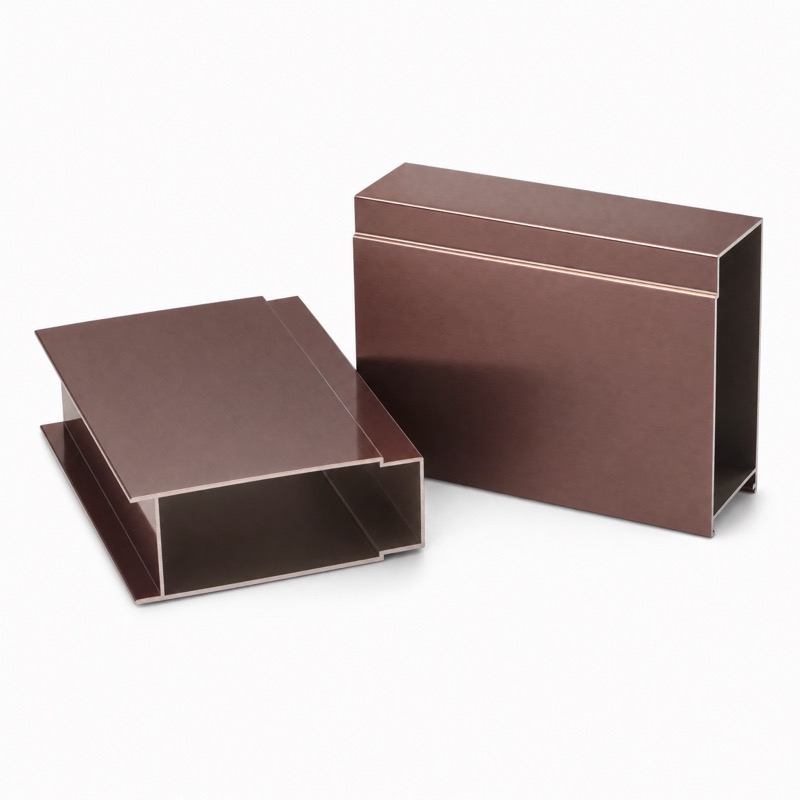
Two aluminum window frames may look similar from the outside while performing very differently in service. The internal structure of the extrusion determines much of the system's capability.
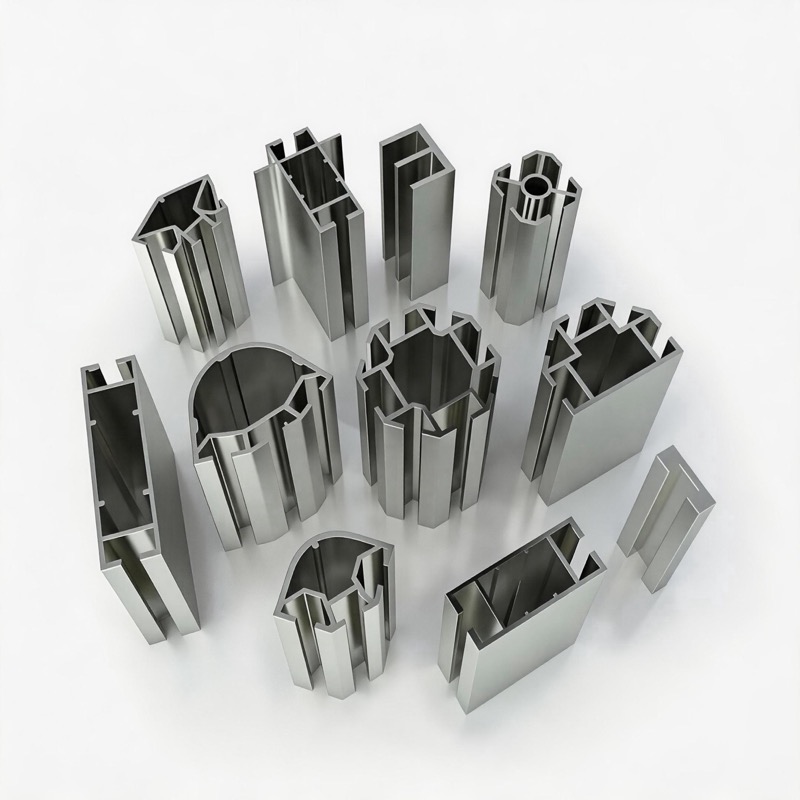
A well-engineered aluminum profile may include:
- Multi-chamber geometry for stiffness and drainage.
- Separate glazing and hardware grooves.
- Defined gasket locations.
- Water-drainage paths.
- Screw ports and connection points.
- Thermal-break cavities.
- Reinforced areas for hinges, locks, rollers, or handles.
- Glass-bead retention zones.
- Interfaces for insect screens, shutters, or accessory systems.
For export projects, these design details affect fabrication efficiency, installation accuracy, sealing reliability, and the ability to source compatible accessories locally.
A common misunderstanding is that all aluminum windows perform poorly in thermal insulation. Aluminum is a highly conductive metal, so an untreated solid aluminum frame can transfer heat relatively easily between indoor and outdoor environments.
The modern solution is the thermal-break aluminum profile.
A thermal-break profile separates the exterior and interior aluminum sections with a low-conductivity insulating barrier, commonly a glass-fiber-reinforced polyamide strip. This interrupts the direct heat-flow path through the metal frame. Instead of one continuous aluminum bridge, the frame becomes a composite structure with separated inner and outer sections.
The result can be a significant improvement in thermal performance, interior comfort, and condensation control potential when the full window system is correctly designed and installed.
A thermal break helps to:
- Reduce heat transfer through the frame.
- Support lower whole-window U-factor values.
- Improve indoor surface temperatures in cold weather.
- Reduce the risk of interior condensation under suitable conditions.
- Support cooling-load management in hot climates.
- Improve occupant comfort near windows.
- Make aluminum more suitable for energy-conscious building designs.
The U-factor measures how readily heat moves through a window assembly. A lower U-factor indicates better insulating performance. Product ratings should be evaluated for the complete window or door—not only the aluminum frame—because glazing, spacers, seals, sash design, and air tightness all influence the final result.
A thermal break is important, but it is not a complete performance guarantee. A high-performing aluminum window also depends on:
| System Element | Why It Matters |
|---|---|
| Aluminum profile geometry | Determines stiffness, drainage, sealing zones, and assembly capability |
| Thermal-break width and material | Reduces conductive heat transfer through the frame |
| Glass configuration | Influences insulation, solar control, safety, sound control, and condensation risk |
| Spacer system | Affects edge-of-glass thermal performance |
| Gaskets and seals | Help control air leakage and water penetration |
| Hardware quality | Supports secure, smooth, repeatable operation |
| Fabrication accuracy | Prevents sash distortion, poor sealing, and alignment problems |
| Installation quality | Determines whether the window performs as designed in the wall opening |
For this reason, professional buyers should avoid selecting aluminum window profiles based only on visible width, color, or price per meter. A more useful approach is to review the complete technical package.
Window frames face rain, UV exposure, temperature swings, dust, pollution, salt-laden air, and repeated cleaning. In many projects, especially coastal, high-humidity, industrial, or high-UV locations, surface durability becomes a major specification issue.
Aluminum naturally forms a thin oxide layer when exposed to air. Surface finishing can further improve appearance, corrosion resistance, color stability, and long-term protection.
The most common architectural finishes are:
- Powder coating for extensive color choice and a durable decorative surface.
- Anodizing for a metallic appearance and an electrochemically formed oxide layer.
- PVDF-based coating systems for demanding exterior façades and harsh exposure conditions.
- Wood-grain transfer finishes for projects seeking a timber-like appearance with aluminum performance.
- Brushed, polished, or special-effect finishes for premium architectural applications.
Anodizing increases the thickness of aluminum's oxide layer through an electrochemical process, while powder coating applies and cures a protective decorative coating on the surface. The right choice depends on the desired appearance, environmental exposure, performance specification, maintenance plan, and local market preference.
For standard urban projects, a quality powder-coated finish may meet visual and durability requirements effectively. For coastal buildings, high-rise façades, tropical environments, or industrial zones, the pretreatment process, coating system, film thickness, sealing quality, and corrosion-performance requirements should be reviewed more carefully.
AAMA 2605 is widely recognized as a demanding specification for superior-performing organic coatings applied to architectural aluminum extrusions and panels. It is particularly relevant when projects require stronger expectations for exterior durability, color retention, gloss retention, humidity resistance, and salt-spray performance.
At Dapeng Aluminum, surface treatment selection should be considered early in the project process. The best finish is not always the most expensive one. It is the finish that matches the building's exposure, expected service life, visual requirements, and maintenance reality.
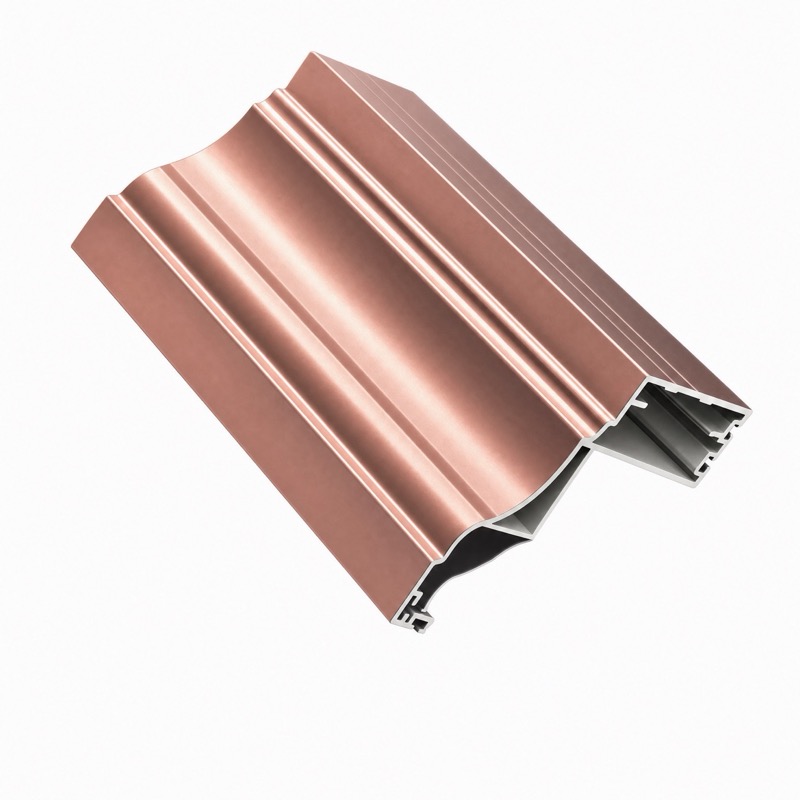
Aluminum extrusion is highly adaptable. Manufacturers can produce profiles with precise shapes that support different window systems, opening styles, glazing options, and regional hardware requirements.
Common aluminum window and door configurations include:
- Casement windows.
- Tilt-and-turn windows.
- Awning windows.
- Sliding windows.
- Folding windows.
- Fixed picture windows.
- Top-hung and bottom-hung windows.
- Lift-and-slide doors.
- Swing doors.
- French doors.
- Curtain wall systems.
- Thermal-break façade profiles.
- Custom industrial glazing systems.
This versatility is valuable for developers and fabricators because one aluminum supplier may be able to support multiple product categories within the same project.
Custom extrusion development is especially useful when a project requires:
1. A unique visible frame design.
2. Specific wall thickness or moment-of-inertia targets.
3. Compatibility with local hardware brands.
4. Particular glazing thicknesses.
5. Non-standard gasket systems.
6. Integrated drainage structures.
7. Special thermal-break widths.
8. Enhanced sound-insulation configurations.
9. Custom powder-coated colors.
10. Branded or proprietary system profiles.
A capable aluminum profile manufacturer can support this process through die design, sample extrusion, dimensional inspection, alloy and temper selection, surface treatment coordination, fabrication support, and export packaging.
For B2B buyers, the ideal supplier is not simply a producer of aluminum bars. It is a partner that understands how the profile must perform after it becomes a finished window or door.
Aluminum frames generally require limited routine maintenance. Unlike painted wood frames, they do not typically need frequent repainting. Their stability also helps preserve frame alignment over time when the profile system is properly designed, fabricated, and installed.
Routine maintenance usually includes:
- Cleaning the frame with water and a mild, non-abrasive cleaner.
- Removing dust, salt deposits, and pollutants from drainage areas.
- Checking drainage holes for blockage.
- Inspecting gaskets for aging, shrinkage, or damage.
- Lubricating moving hardware according to the hardware supplier's instructions.
- Checking screws, hinges, rollers, locks, and handles.
- Repairing deep scratches or coating damage promptly where required.
For coastal projects, cleaning frequency should be increased because salt deposits can accumulate on exterior surfaces. For high-rise buildings, maintenance planning should be included in the façade strategy before installation.
Aluminum has strong value in circular manufacturing because it can be recycled repeatedly. Recycled aluminum requires far less energy than producing primary aluminum from raw materials.
The Aluminum Association states that recycled aluminum can save approximately 95% of the energy required to produce new aluminum. The International Aluminium Institute similarly reports that recycled aluminum requires substantially less primary energy than primary production.
This does not mean every aluminum window automatically has a low environmental impact. The actual outcome depends on factors such as recycled content, alloy selection, manufacturing energy sources, transport distance, coating process, product lifespan, replacement cycle, and end-of-life recovery.
Still, aluminum's recyclability is an important advantage for projects focused on material recovery, long service life, and responsible resource use.
Selecting an aluminum window frame should begin with the project's performance needs—not with a catalog picture or a low initial price.
Use the following checklist when evaluating an aluminum window profile supplier.
Clarify:
- Climate zone.
- Coastal or inland location.
- Wind-load conditions.
- UV intensity.
- Rainfall exposure.
- Building height.
- Air pollution level.
- Heating and cooling priorities.
- Required acoustic performance.
A profile suitable for a mild inland residential project may not be suitable for a coastal hotel, a high-rise commercial tower, or a heavy-duty industrial facility.
Specify the required opening configuration:
- Fixed.
- Casement.
- Sliding.
- Tilt-and-turn.
- Awning.
- Folding.
- Lift-and-slide.
- Curtain wall.
Each system places different demands on profile design, reinforcement, drainage, seals, hardware, and fabrication tolerances.
Do not assess insulation based on the thermal-break strip alone. Review the complete system, including:
- Frame U-factor.
- Whole-window U-factor.
- Glass type.
- Low-emissivity coatings.
- Double or triple glazing.
- Spacer system.
- Air tightness.
- Installation method.
- Condensation-control requirements.
Solar Heat Gain Coefficient, often shortened to SHGC, indicates how much solar heat passes through a window system. Lower values generally reduce solar heat gain, which can be helpful in cooling-dominated climates, while the best selection depends on orientation, climate, shading, glazing, and building-use conditions.
Ask the supplier about:
- Pretreatment process.
- Coating type.
- Coating thickness.
- Color consistency.
- Corrosion-performance requirements.
- Relevant finish specifications.
- Batch control.
- Packaging protection.
- Recommended cleaning procedures.
A dependable aluminum profile manufacturer should be able to explain its approach to:
- Billet and alloy control.
- Extrusion tolerances.
- Die management.
- Straightness and twist inspection.
- Wall-thickness control.
- Surface-defect inspection.
- Mechanical-property verification where applicable.
- Thermal-break assembly.
- Surface-treatment quality checks.
- Packaging and container loading.
Guangdong Dapeng Aluminum Industry Co., Ltd. is a modern aluminum manufacturing enterprise focused on the research, production, and export of aluminum profiles and aluminum alloy solutions.
We provide:
- Industrial aluminum profiles.
- Architectural aluminum profiles.
- Thermal-break aluminum profile solutions.
- Customized aluminum extrusion development.
- Deep-processing and fabrication support.
- Surface treatment options.
- Export-oriented packaging and delivery coordination.
- Technical communication for global customers.
Our aluminum profile solutions serve applications in construction, industrial manufacturing, transportation, renewable energy, and other sectors that require reliable, precisely manufactured aluminum components.
For window and door manufacturers, developers, contractors, distributors, and project buyers, we can support the process from profile concept to export delivery. Our team focuses on stable quality, practical engineering communication, controlled production processes, and long-term customer value.
If you are developing a new aluminum window system, sourcing thermal-break profiles, upgrading an existing frame design, or looking for a dependable export supplier, contact Guangdong Dapeng Aluminum Industry Co., Ltd. to discuss your drawings, samples, technical requirements, finish options, and target market.
Yes. Aluminum window frames can be an excellent choice for homes, especially when homeowners want slim frames, large glass areas, modern styling, long service life, and low routine maintenance. For improved energy performance, choose a thermally broken aluminum system with suitable glazing and professional installation.
Aluminum itself does not automatically cause condensation. Condensation occurs when a surface temperature falls below the dew point of indoor air. A thermal-break frame, appropriate glazing, good air sealing, humidity management, and correct installation can help reduce condensation risk.
For many projects, yes. Thermal-break aluminum windows can improve frame insulation, increase indoor comfort, and reduce heat transfer compared with non-thermal-break aluminum frames. Their value is highest in climates with substantial heating or cooling demand, as well as projects with higher energy-performance requirements.
The best finish depends on the project. Powder coating offers broad color choice and decorative flexibility. Anodizing is often selected for its metallic appearance and durable oxide layer. Higher-performance coating systems may be appropriate for coastal, high-UV, or high-rise exterior applications.
Yes. Aluminum profiles can be customized in cross-section, wall thickness, thermal-break design, glazing capacity, hardware compatibility, drainage structure, color, finish, length, machining details, and packaging requirements. Custom tooling may be required for a new proprietary profile design.
Service life depends on the profile design, finish quality, exposure conditions, fabrication, maintenance, and installation. Properly specified and maintained aluminum window systems can provide long-term service in residential, commercial, and industrial applications.
Aluminum is often preferred for large windows because of its strength and ability to support thinner profiles and larger glass panels. uPVC may be suitable for many residential applications, but large openings, heavy glazing, narrow sightlines, and complex architectural designs frequently favor aluminum systems.
- [Bor USA — Why Is Aluminum Used for Window Frames?]
- [ENERGY STAR — Residential Windows, Doors & Skylights]
- [ENERGY STAR — Independently Tested and Certified Energy Performance]
- [U.S. Department of Energy — Purchasing Energy-Efficient Residential Windows, Doors, and Skylights]
- [National Fenestration Rating Council — Window, Door, and Skylight Ratings]
- [The Aluminum Association — Recycling]
- [International Aluminium Institute — Aluminium Recycling and Energy Savings]
- [FGIA — AAMA 2605-22 Architectural Coating Specification]
- [SAF — Choosing Between Anodizing, Painting, and Powder Coating]


