


Views: 229 Author: Dapeng Aluminum Publish Time: 2026-08-09 Origin: Site


Content Menu
>> Typical Roll Formed Channel Features
>> Typical Extruded Channel Features
● Roll Forming vs. Aluminum Extrusion at a Glance
● Geometry: The First Selection Filter
>> Choose Roll Forming for Simple Open Channels
>> Choose Aluminum Extrusion for Integrated Profiles
● Strength, Weight, and Material Performance
>> Why Section Shape Matters More Than Material Alone
● Tooling, Lead Time, and Production Volume
>> Volume Break-Even Is Not a Fixed Number
● Tolerances and Straightness for Long Channels
>> A Practical Tolerance Checklist
● Secondary Operations and Assembly Impact
>> Example: Reducing a Three-Part Assembly
● Surface Finish and Corrosion Requirements
>> Questions to Ask About Finish
● A Decision Framework for Buyers
● When Aluminum Extrusion Delivers the Better Result
● Partner With Guangdong Dapeng Aluminum Industry Co., Ltd.
● FAQ
>> Is roll forming cheaper than aluminum extrusion?
>> Can aluminum be roll formed into channels?
>> Can roll forming make hollow channels?
>> Which process is better for a lightweight structural channel?
>> Can extruded aluminum channels include holes and slots?
>> What information should I provide for a custom aluminum channel quotation?
When engineers source long, constant cross-section channels, the central manufacturing decision is often roll forming vs. aluminum extrusion. Both methods can produce reliable U-channels, C-channels, hat sections, rails, guides, trims, and structural members—but they create value in very different ways.
For buyers in construction, industrial equipment, transport, solar mounting, and energy projects, the best process is rarely determined by unit price alone. Profile geometry, alloy requirements, annual volume, surface expectations, fabrication needs, and total installed cost all matter. Guangdong Dapeng Aluminum Industry Co., Ltd. helps international customers evaluate these variables and develop aluminum profile solutions that match functional, commercial, and export requirements.
Roll forming is a continuous cold-forming process. A metal coil passes through a sequence of precisely designed roller stations, with each station gradually bending the strip into the required profile.
For long channels, the process normally begins with flat coil and ends with a cut-to-length section. Depending on the production line, punching, embossing, notching, labeling, and cutoff operations can be integrated in-line.
Roll formed channels are usually made from thin-gauge coil. Steel is common, but aluminum coil can also be roll formed when a lightweight, thin-wall, open profile is required.
Roll forming is particularly suitable for channels with:
- Open C, U, hat, J, or Z geometries
- Relatively uniform wall thickness
- Long production runs
- Repeating holes, slots, or notches
- Thin material sections
- Straight, continuous lengths
- High output requirements
The method is highly repeatable once the line is correctly set up. However, the roller tooling must be engineered around the strip material, bend radii, springback behavior, line speed, and final tolerance requirement.
Aluminum extrusion forms a profile by heating an aluminum billet and forcing it through a shaped die. The metal exits as one continuous profile with the same cross-section along its length, then it is cooled, stretched, cut, heat-treated when required, and finished.
This process is fundamentally different from bending coil. Instead of shaping a flat strip progressively, extrusion creates the complete profile section in a single die-controlled forming stage.
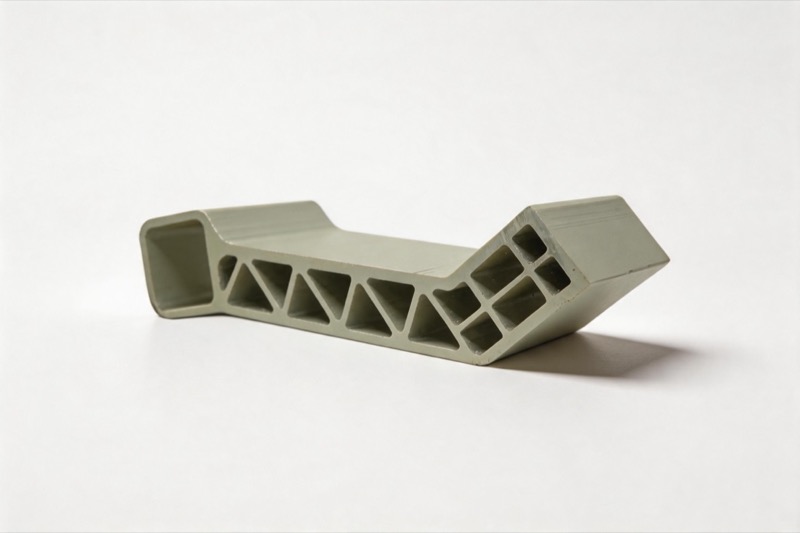
Aluminum extrusion is especially strong when a channel needs more than simple bends. It can integrate ribs, screw ports, internal cavities, snap-fit details, thermal features, rounded transitions, and complex wall relationships directly into the profile.
Aluminum extrusion is often preferred for:
- Solid, semi-hollow, and hollow profiles
- Channels with integrated grooves or screw bosses
- Thicker walls and structural sections
- Multi-cavity designs
- Architectural and decorative surfaces
- Heat sinks and electronic enclosures
- Modular framing systems
- Custom profiles that reduce assembly steps
A well-designed extrusion can combine functions that might otherwise require several fabricated components. That can reduce fasteners, welding, machining, inventory complexity, and installation time.
| Decision Factor | Roll Forming | Aluminum Extrusion |
|---|---|---|
| Starting material | Flat metal coil | Aluminum billet |
| Forming method | Progressive bending through rollers | Billet pushed through a die |
| Best geometry | Open, relatively simple thin-wall channels | Simple to highly complex channels |
| Internal cavities | Not practical in the base profile | Possible with hollow-profile die designs |
| Wall thickness | Usually based on available coil gauge | More design flexibility across the profile |
| Production economics | Often favorable for long, high-volume runs | Often favorable when design integration adds value |
| Tooling concept | Multi-station roll tooling | Extrusion die |
| In-line punching | Often highly efficient | Usually performed after extrusion |
| Surface finish | Depends on coil finish and forming marks | Supports mill finish, anodizing, powder coating, and fabrication |
| Material options | Steel, aluminum, stainless, and other coil metals | Primarily aluminum alloys |
| Design change impact | Roll tooling changes may be substantial | Die changes are often more straightforward for new profiles |
The comparison should not be reduced to "roll forming is cheaper" or "extrusion is more flexible." Either statement can be true in the wrong context. The right question is: Which process produces the required channel at the lowest total project cost and risk?
Geometry is usually the fastest way to narrow the decision.
A basic open channel with uniform material thickness may be a strong roll forming candidate. For example, a thin U-channel used as a trim, guide, shelf rail, or protective edge may be produced efficiently from aluminum coil, particularly when the order requires many identical long lengths.
By contrast, an aluminum extrusion becomes more compelling when the channel needs structural depth, multiple functional zones, or enclosed details. A profile may combine a load-bearing outer wall, concealed fastener channel, gasket groove, drainage path, and decorative visible face in one extrusion.
Roll forming is worth evaluating when the channel has:
- Straight bends rather than complex contours
- A consistent, thin material gauge
- Large annual footage requirements
- Repeated perforations or slots
- Limited need for integrated features
- An open section that does not require enclosed voids
For example, a solar mounting rail component or a long protective channel may be suitable for roll forming if its function depends primarily on shape, length, and repetitive perforation.
Extrusion is usually the stronger option when a channel requires:
- Internal passages or hollow chambers
- Multiple grooves, rails, or fastening points
- Thicker structural walls
- Curved external surfaces
- Tight integration with adjacent components
- A clean architectural appearance
- Improved corrosion resistance through aluminum alloy and finishing selection
An extruded aluminum channel can replace a built-up assembly. This is a major advantage in products where labor, field installation, or part count is more expensive than the profile itself.
Material selection should be evaluated separately from process selection. Roll forming can use aluminum coil, but many roll formed channels are produced from steel because steel coil is widely used for high-strength framing and structural applications.
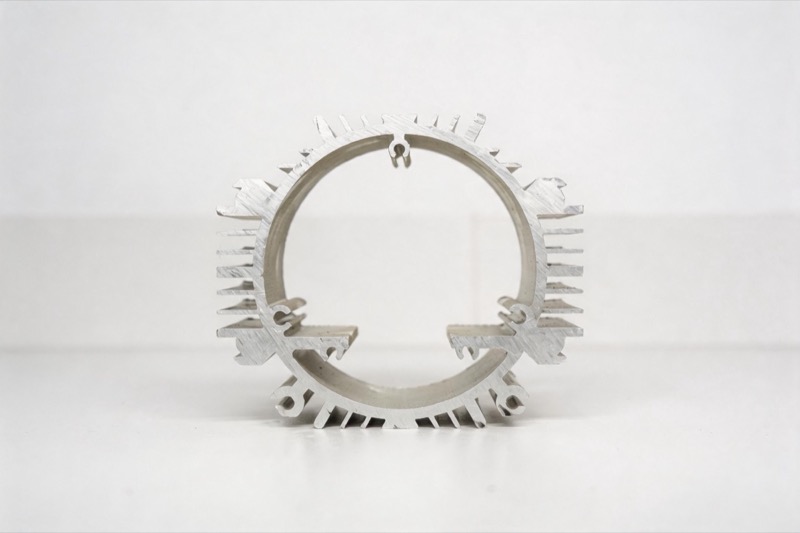
Aluminum extrusion provides a compelling balance of low weight, corrosion resistance, and design freedom. This is valuable in transportation equipment, modular systems, architectural frames, machinery guards, battery enclosures, and renewable-energy structures.
Extruded aluminum also supports alloy and temper selection based on the application. A profile intended for decorative architectural use may prioritize surface quality and finish response, while an industrial channel may prioritize mechanical properties, machinability, or corrosion resistance.
A common sourcing mistake is comparing material thickness without comparing section efficiency. A thinner but well-designed extruded profile may deliver better stiffness than a thicker flat-bend channel because its geometry places material farther from the neutral axis.
In practical terms, two channels may use similar amounts of metal but perform very differently under load. The section's depth, ribs, corner radii, wall arrangement, and support conditions all influence deflection and strength.
Do not approve a channel based only on thickness. Review load cases, span, fixing positions, safety factors, and deformation limits before finalizing the profile.
Tooling affects both launch timing and long-term economics.
Roll forming requires multiple roller stations. The tooling set must gradually transform the flat strip without causing excessive stress, distortion, cracking, or undesirable springback. Complex roll tooling can be a significant investment, especially when it includes in-line punching, pre-cutting, post-cutting, or other integrated operations.
Aluminum extrusion uses a die designed around the profile cross-section. For many custom profiles, the die is less complex than a full roll-forming toolset, although the final cost and lead time depend on profile size, complexity, alloy, tolerances, and whether the section is solid, semi-hollow, or hollow.
There is no universal volume at which roll forming automatically becomes better than aluminum extrusion. Some industry guidance suggests that roll forming becomes especially attractive once annual volumes reach very high linear footage, but the true break-even point changes with material, geometry, secondary operations, scrap, freight, and tooling amortization.
Use a total-cost model that includes:
1. Material cost and yield.
2. Tooling investment and expected life.
3. Production rate and changeover time.
4. Secondary fabrication requirements.
5. Surface treatment and packaging.
6. Quality inspection and rejection risk.
7. Shipping length, container utilization, and handling.
8. Assembly labor saved by profile integration.
For export programs, logistics can shift the decision materially. A design that reduces component count may lower packing labor, simplify customs documentation, and improve container loading efficiency.
Long channels create a special challenge: a profile can have an acceptable cross-section but still be difficult to install if it has bow, twist, camber, or inconsistent cut length.
Both processes require realistic tolerance planning. Roll forming can achieve strong repeatability after setup, but residual stress, coil variation, and progressive bending can influence final shape. Aluminum extrusions also require clear acceptance criteria for straightness, twist, flatness, and dimensional variation.
Before releasing a purchase order, define:
- Nominal profile drawing dimensions
- Critical functional dimensions
- Cross-section tolerance limits
- Straightness over a stated length
- Twist allowance over a stated length
- Cut-length tolerance
- Surface acceptance standard
- Burr and edge requirements
- Hole position tolerance, if fabricated
- Inspection method and sampling plan
The measurement method must be agreed before production. A tolerance has little value unless both supplier and buyer measure it the same way.
For long constant cross-section channels, Guangdong Dapeng recommends reviewing a full drawing, intended installation method, and sample assembly early in the project. This reduces the risk of specifying a profile that looks correct on paper but is difficult to align in production or on site.
Secondary operations are one of the most overlooked factors in the roll forming vs. aluminum extrusion decision.
Roll forming lines can integrate repeated operations efficiently. If every channel requires regularly spaced holes or slots, in-line punching can be a major advantage. This is especially relevant for high-volume brackets, shelving rails, framing members, and mounting systems.
Extruded aluminum channels may require cutting, drilling, milling, tapping, punching, bending, or CNC machining after the extrusion process. However, a better extrusion design can eliminate some of those operations entirely.
Consider a long equipment channel that initially uses:
- One bent outer channel
- One separate fastening rail
- One cover strip
An extrusion may combine all three into a single profile with an integrated screw raceway and snap-on cover feature. The profile may cost more per meter than a simple bent channel, but the complete assembly may cost less after labor, fasteners, inspection, packaging, and installation are included.
This is where experienced profile engineering creates measurable value. The lowest material price is not always the lowest finished-system cost.
For visible architectural channels and exterior industrial applications, finish selection deserves early attention.
Roll formed aluminum commonly begins with pre-finished coil or may receive finishing after forming, depending on the design and handling requirements. Bending can affect coatings at tight radii if the coating system and bend design are not compatible.
Aluminum extrusion can be supplied with mill finish, anodized finish, powder coating, electrophoretic coating, wood-grain effects, polishing, brushing, or customized surface treatments. This makes extrusion particularly useful when the channel is exposed, decorative, or used in corrosive environments.
- Will the channel be visible after installation?
- Is it used indoors, outdoors, or in a coastal environment?
- Does the product contact water, chemicals, or dissimilar metals?
- Is color consistency important across batches?
- Will the profile be cut or machined after finishing?
- Does the design need masking, protective film, or custom packaging?
A channel's corrosion performance depends on more than the base metal. Alloy selection, surface treatment, drainage design, fasteners, and contact with other materials should all be reviewed.
Use this process when selecting between roll forming and aluminum extrusion for long channels.
1. Define the function. Identify the channel's load, span, environment, connection method, and visible surfaces.
2. Classify the geometry. Determine whether the section is a simple open bend profile or a multi-feature engineered profile.
3. Select the material strategy. Compare aluminum, steel, or other candidates based on weight, corrosion, conductivity, strength, and finish.
4. Estimate annual demand. Use realistic annual linear meters, order frequency, and batch size rather than a one-time forecast.
5. Map secondary operations. List every hole, slot, cut, machining step, fastener, welded part, and assembly action.
6. Calculate total delivered cost. Include tooling, production, finishing, scrap, packing, freight, installation, and quality costs.
7. Validate with samples. Review first articles and assembly trials before committing to full production.
Aluminum extrusion is often the better long-term choice when the design needs lightweight performance, corrosion resistance, clean surfaces, custom functionality, or integrated features.
It is particularly effective for:
- Architectural channel systems
- Curtain wall and window components
- Industrial machine frames
- Automation rails and guards
- Electric vehicle components
- Battery and energy-storage enclosures
- Solar and renewable-energy structures
- Transportation and marine applications
- Electronics housings and heat-management channels
For these applications, an optimized aluminum profile can improve performance while simplifying manufacturing and assembly.
The best channel is not simply the one that is easiest to manufacture. It is the profile that performs reliably, installs efficiently, protects product quality, and supports your commercial goals across the full lifecycle.
Guangdong Dapeng Aluminum Industry Co., Ltd. provides industrial aluminum profiles, architectural aluminum profiles, and customized deep-processing services for global customers. From concept review and die development to extrusion, finishing, fabrication, inspection, and export packaging, our team can help convert your channel requirement into a practical aluminum solution.
Send us your drawing, application details, annual volume, alloy preference, finish requirement, and target market. Our engineering team will help you assess whether a custom aluminum extrusion can create a stronger, lighter, and more efficient channel system.
Roll forming can be more economical for very high-volume, simple, thin-wall open channels, particularly when in-line punching is required. Aluminum extrusion may offer lower total cost when it combines multiple parts or fabrication steps into one profile.
Yes. Aluminum coil can be roll formed into open channels and similar profiles. The final design must account for alloy condition, thickness, bend radii, springback, surface finish, and required structural performance.
Roll forming does not normally create a fully enclosed hollow profile from a single flat strip without additional joining operations. Aluminum extrusion is generally better for channels with internal cavities, enclosed sections, or integrated voids.
Aluminum extrusion is often the better option because the profile can be engineered with efficient wall placement, ribs, hollow sections, and integrated fastening features. The final choice should be verified through structural analysis and application testing.
Yes. Holes, slots, threads, and other features can be added through secondary fabrication such as CNC machining, drilling, punching, milling, or tapping. In some cases, redesigning the extrusion can reduce the number of secondary operations required.
Provide a 2D or 3D drawing, required alloy and temper, surface finish, profile length, tolerances, annual quantity, fabrication requirements, intended application, packing needs, and destination port or country.
1. Aluminum Extruders Council, [Material Comparisons] — comparative information on extrusion properties, tooling context, and material performance. [aec]
2. Hydro, [Extruded Aluminum Profiles] — explanation of solid, hollow, and semi-hollow extruded profile capabilities. [hydro]
3. The Aluminum Association, [Understanding Aluminum Extrusion Tolerances Video Series] — guidance on straightness and dimensional tolerance concepts for aluminum extrusions. [aluminum]
4. The Fabricator, [Understanding Metal Roll Forming and Its Tooling] — overview of roll forming lines and integrated forming, punching, and cutting operations. [thefabricator]
5. The Fabricator, [Is Roll Forming an Option?] — discussion of roll-forming tolerances, repeatability, distortion considerations, and volume economics. [thefabricator]
6. Zetwerk, [Roll Forming vs. Extruded Aluminum: Key Differences] — process-level comparison of production speed, profile complexity, and application fit. [zetwerk]


