


Views: 289 Author: Dapeng Aluminum Publish Time: 2026-10-09 Origin: Site


Content Menu
● How Does the Aluminum Extrusion Process Work?
>> 1. Profile Design and Die Preparation
>> 2. Billet Heating and Extrusion
>> 3. Controlled Cooling and Straightening
>> 4. Aging, Finishing, and Fabrication
● What Shapes Can Aluminum Extrusion Produce?
>> Standard Profiles vs. Custom Aluminum Extrusions
● Choosing Aluminum Extrusion Alloys and Tempers
>> What Is the Difference Between T5 and T6?
● Aluminum Extrusion Design Guidelines That Prevent Rework
>> Use Balanced Wall Thickness and Smooth Transitions
>> Reserve Tight Tolerances for Critical Interfaces
● Surface Finishing for Architectural and Industrial Profiles
>> Anodizing
>> Mechanical and Decorative Finishes
● Where Are Extruded Aluminum Profiles Used?
● Quality Inspection: What Buyers Should Verify
>> Material and Mechanical Verification
>> Dimensions, Straightness, and Appearance
● What Determines Custom Aluminum Extrusion Cost?
>> Compare Quotations on an Equivalent Basis
● Sustainability: Evaluate Evidence, Not Broad Claims
● How to Prepare a Custom Aluminum Extrusion Enquiry
● Conclusion: Build the Right Profile Before Production Begins
>> 1. What Is Aluminum Extrusion in Simple Terms?
>> 2. Is Aluminum Extrusion Better Than Casting?
>> 3. Which Alloy Is Better: 6061 or 6063?
>> 4. Can Extruded Aluminum Profiles Be Machined?
>> 5. Can Aluminum Extrusion Produce Hollow Profiles?
>> 6. What Information Is Needed for an Accurate Quotation?
Aluminum extrusion is a manufacturing process that forces heated aluminum alloy through a shaped steel die to produce profiles with a consistent cross-section. From window frames and industrial equipment to transportation components and solar mounting systems, aluminum extrusion helps manufacturers combine lightweight construction with application-specific geometry.
For buyers, understanding the process is only the beginning. Successful sourcing also depends on alloy selection, dimensional control, surface finishing, and clear communication with the manufacturer.
This guide explains how aluminum extrusion works, where it delivers value, and what to check before ordering custom aluminum profiles.
Think of extrusion as shaping material through a controlled opening. Unlike casting, however, conventional hot aluminum extrusion does not require the metal to become liquid. The heated billet remains solid but becomes sufficiently workable under pressure.
The die establishes the cross-sectional shape. Subsequent cooling, stretching, heat treatment, and fabrication determine whether the finished profile meets its intended requirements.
Production begins with a drawing specifying geometry, alloy, temper, tolerances, and surface requirements.
The manufacturer evaluates whether the design can be extruded reliably. Thin walls, deep channels, uneven thickness, and demanding cosmetic surfaces can increase tooling difficulty.
A steel die is then manufactured and prepared for production. Approving the drawing before tooling helps avoid expensive changes later.
The aluminum billet and tooling are heated under controlled conditions. A hydraulic ram pushes the billet through the die, creating a continuous profile.
Direct extrusion is widely used: metal flows through the die in the direction of ram movement. Indirect extrusion uses a different tooling arrangement to reduce billet-container friction.
The appropriate process depends on the alloy, geometry, equipment, and required properties.
As the profile exits the press, it is cooled using an appropriate method, such as air or water-based quenching.
Cooling is not simply a waiting period. For heat-treatable alloys, the cooling conditions influence the properties achievable during subsequent aging.
Profiles are normally stretched to improve straightness and manage residual stresses, then cut to specified lengths.
Depending on the material specification, profiles undergo natural or artificial aging.
They may then receive anodizing, powder coating, or additional operations such as drilling, tapping, milling, and assembly.
The final inspection should assess the delivered condition, not only the profile immediately after extrusion.
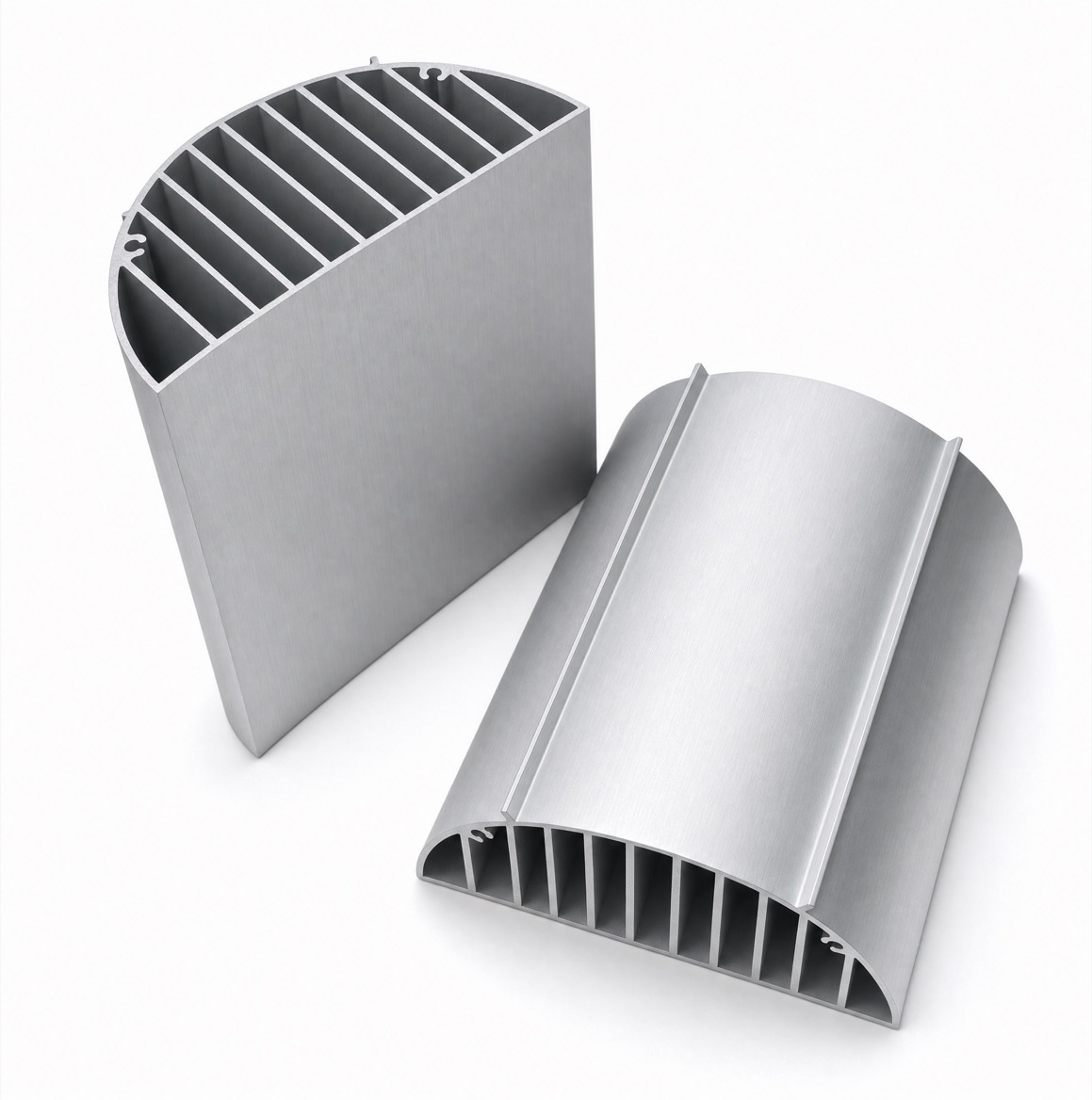
Extruded aluminum profiles fall into three broad categories:
- Solid profiles: bars, angles, channels, and open sections.
- Hollow profiles: tubes and sections containing enclosed cavities.
- Semi-hollow profiles: shapes with partially enclosed spaces and restricted openings.
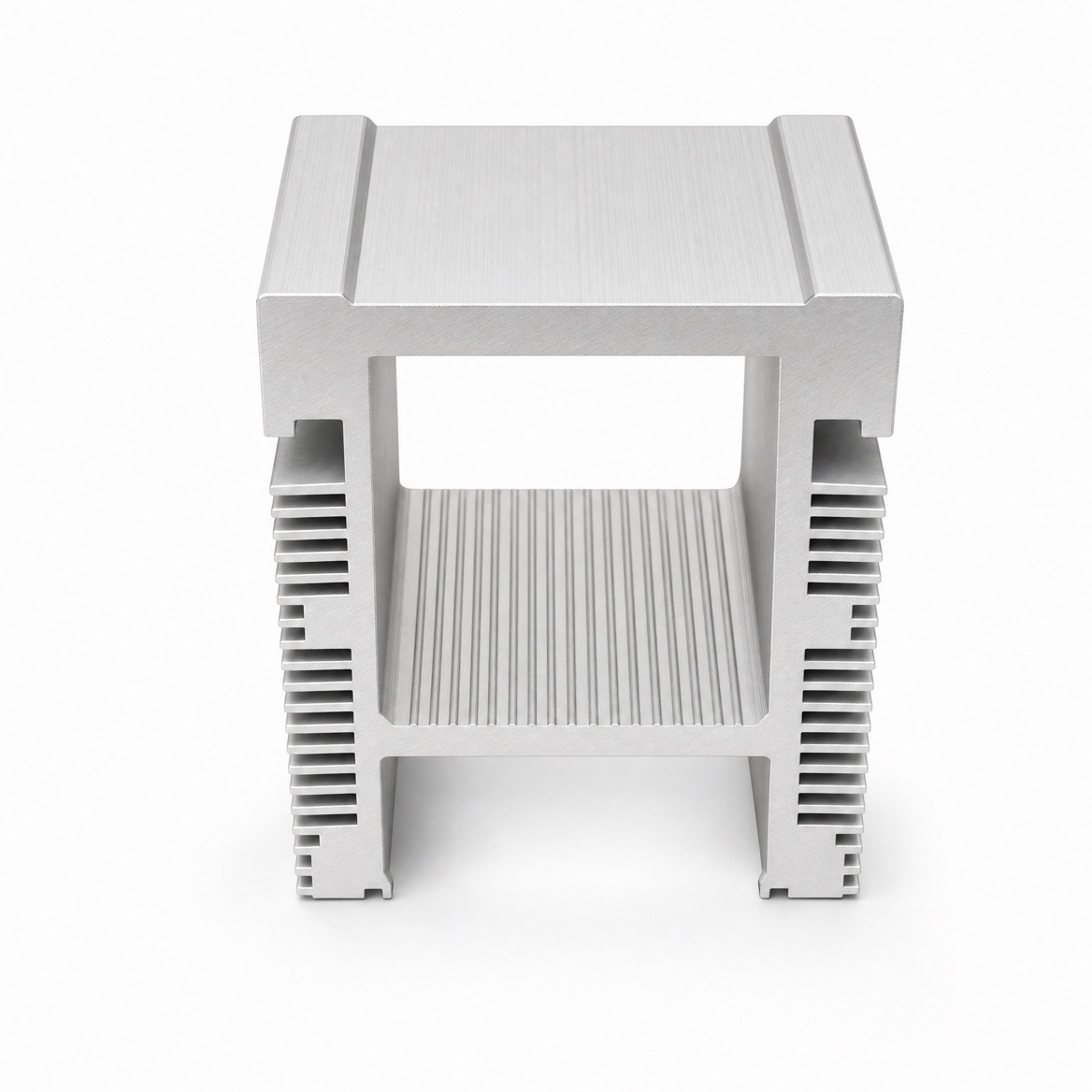
Custom sections can incorporate screw ports, mounting tracks, ribs, and joining features directly into the profile.
This integration can reduce separate components and secondary machining. However, every feature affects metal flow and die complexity.
A useful design question is: "Does this feature improve the finished product enough to justify its manufacturing difficulty?"
Standard profiles suit projects where available shapes already meet the functional requirements. They can simplify sourcing and avoid new tooling.
Custom aluminum extrusions are more appropriate when a product requires unique assembly interfaces, optimized weight, or integrated functions.
The choice should reflect total project economics rather than tooling cost alone.
Alloy selection affects strength, corrosion behavior, machinability, finish quality, and manufacturing feasibility. Temper identifies the material condition after thermal or mechanical processing.
Always specify both. "6063 aluminum" is less complete than "6063-T5 aluminum."
| Alloy | Typical selection priority | Common applications | Important consideration |
|---|---|---|---|
| 6063 | Extrudability and surface appearance | Windows, doors, decorative profiles | Often preferred for visible anodized surfaces |
| 6061 | Structural performance and machining | Equipment components and fabricated assemblies | Evaluate temper and post-fabrication requirements |
| 6060 | Appearance and complex profile production | Architectural and decorative systems | Confirm required mechanical properties |
| 6082 | Structural applications | Load-bearing industrial components | Review geometry and production feasibility |
These are starting points, not automatic approvals. Section thickness, service conditions, and applicable specifications also influence suitability.
T5 means the material is cooled from an elevated-temperature shaping process and artificially aged.
T6 means the material is solution heat-treated and artificially aged.
These designations describe processing conditions, not a universal strength ranking across different alloys.
For welded or heavily fabricated parts, assess properties in the final assembly condition. The original material certificate alone does not establish the performance of every finished joint.
The most valuable design review happens before die manufacture.
A practical engineering approach is to separate essential functional requirements from dimensions that merely reflect design preferences. This helps protect performance without making production unnecessarily difficult.
Abrupt transitions between thick and thin areas can create uneven flow, distortion, or surface problems.
Where possible:
- Maintain reasonably consistent wall thickness.
- Introduce smooth transitions between sections.
- Avoid unnecessarily sharp internal corners.
- Keep the profile balanced around its main structure.
- Review narrow channels and deep cavities with the manufacturer.
There is no universal minimum wall thickness suitable for every profile. Feasibility depends on alloy, overall size, geometry, and press capability.
Not every dimension needs the tightest achievable tolerance.
Identify the features that control assembly, sealing, movement, and alignment. Apply tighter requirements where they deliver functional value.
For precision interfaces, combining extrusion with selective machining may be more practical than demanding machining-level accuracy across the entire profile.
Also clarify whether dimensions apply before or after finishing. Coatings can affect clearances, particularly around sliding interfaces and threaded features.
Surface treatment should match the operating environment as well as the desired appearance.
Anodizing creates a controlled oxide layer that improves surface protection and provides a metallic appearance.
It is commonly used for architectural profiles, visible industrial components, and decorative products.
Specify the finish requirements and approve representative samples. Alloy choice and processing conditions can influence appearance, so a color name alone is not a complete specification.
Powder coating provides a colored protective finish through electrostatic application and curing.
For exterior products, discuss exposure conditions, pretreatment, coating performance, and acceptable appearance.
Do not assume every powder-coated profile offers equivalent outdoor durability.
Brushing, polishing, abrasive blasting, and woodgrain effects provide additional appearance options.
Define which surfaces are visible after installation. Hidden surfaces may not require the same cosmetic standard.
Avoid treating sanding as a universal repair method: it can alter appearance or damage an existing protective finish.
Extrusion is particularly useful when a long component benefits from a consistent cross-section.
| Sector | Typical products | Main design priorities |
|---|---|---|
| Architecture | Window frames, doors, curtain wall members | Weather resistance, appearance, system compatibility |
| Industrial manufacturing | Machine frames, guides, equipment housings | Assembly accuracy, stiffness, serviceability |
| Transportation | Rails, frames, structural components | Weight, joining method, application-specific loads |
| Renewable energy | Solar frames and mounting profiles | Outdoor exposure, connections, structural verification |
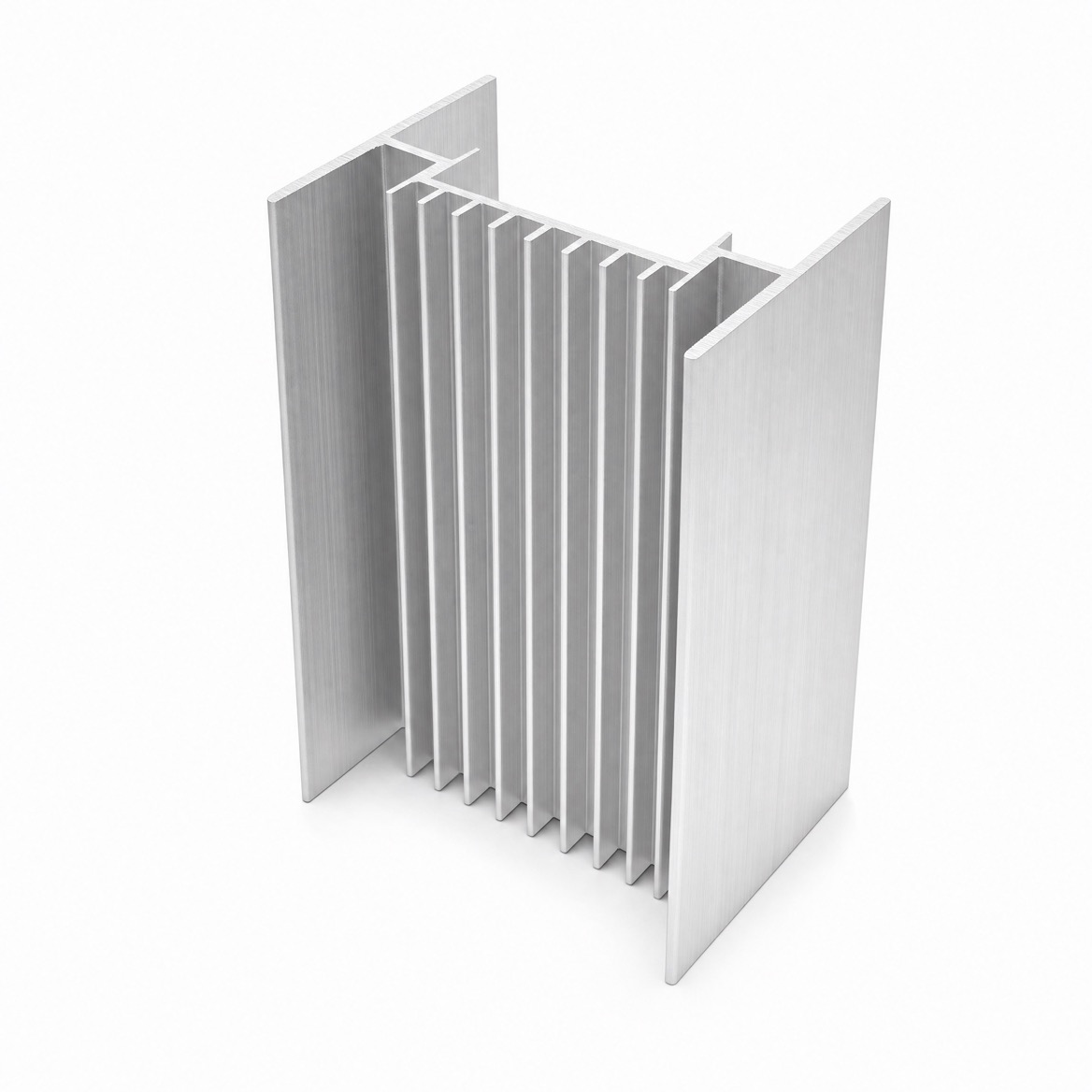
| Electronics | Heat sinks and enclosures | Thermal performance, mounting, surface requirements |
These applications illustrate opportunities, not blanket suitability. Structural and safety-related components require appropriate engineering verification.
For example, a solar mounting profile must satisfy more than an attractive section drawing. Connections, support spacing, environmental exposure, and loading conditions also matter.
A polished sample does not establish consistent production quality. Buyers need measurable acceptance criteria.
Before placing an order, agree on the inspection scope and reporting format.
Request documentation linking the delivered material to the specified alloy and temper.
Depending on the application, verification may include chemical composition, tensile properties, or other agreed tests.
Hardness can support process control, but it should not automatically replace mechanical testing required by the specification.
Inspection requirements should address:
- Critical cross-sectional dimensions.
- Cut length and cut-end condition.
- Straightness, twist, and flatness where relevant.
- Machined holes and assembly interfaces.
- Finish appearance and agreed coating characteristics.
- Packaging protection and identification.
Specify the applicable tolerance standard and edition where necessary. Also identify any drawing requirements that differ from that standard.
For new tooling, approve initial samples before full production.
Check the actual mating parts rather than relying exclusively on isolated measurements. A dimensionally acceptable profile can still create assembly problems if the complete tolerance stack was overlooked.
Record approved deviations clearly. An informal email saying "looks acceptable" leaves too much room for disagreement.
The price per kilogram tells only part of the story.
Total cost includes tooling, material, extrusion, heat treatment, finishing, machining, inspection, packaging, and transport.
A lighter profile is not necessarily cheaper if its complexity reduces production speed or increases rejection.
Ask suppliers to clarify:
1. Alloy, temper, and finish.
2. Included machining and inspection.
3. Tooling ownership and maintenance terms.
4. Minimum order quantity and delivery lengths.
5. Packaging and shipment responsibilities.
6. Sample approval and production lead-time assumptions.
Comparing these details reduces the risk of choosing a low quotation that excludes essential operations.
Aluminum can be recycled, and recycling generally requires far less energy than primary production. An industry benchmark commonly cited is an energy saving of approximately 95%.
However, that figure does not establish the environmental footprint of a particular extrusion order.
When sustainability matters, request evidence of recycled content and, where available, a product-specific environmental declaration.
Check the reporting boundary, production location, and whether the document covers the supplied finish.
Design also matters. Durable profiles, efficient material use, repairable assemblies, and separable components can support better resource use throughout the product lifecycle.
A complete enquiry helps a manufacturer assess feasibility and prepare a meaningful quotation.
Provide:
- A dimensioned drawing and relevant three-dimensional files.
- Intended application and operating environment.
- Alloy and temper, or performance requirements.
- Critical tolerances and mating-part information.
- Surface finish and visible-surface requirements.
- Machining, fabrication, and inspection needs.
- Order quantity, delivery length, and schedule.
- Packaging requirements and delivery destination.
Where a requirement is uncertain, explain the function rather than guessing a specification.
For example, describe the required sliding fit or outdoor exposure. That gives the technical team a clearer basis for recommending a practical solution.
Aluminum extrusion combines material selection, cross-sectional design, and controlled manufacturing. Its greatest value comes from developing these elements together.
Guangdong Dapeng Aluminum Industry Co., Ltd. focuses on aluminum profile research, production, and export. Our offering includes industrial profiles, architectural profiles, and customized further-processing services for construction, manufacturing, transportation, and renewable-energy applications.
Send us your drawings, application details, quantity, and finishing requirements to request a project-specific feasibility review and quotation. Establishing the technical requirements early helps create a clearer path from initial design to consistent delivery.
It is the process of pushing workable aluminum through a shaped die to create a long profile. The cross-section remains consistent until secondary operations modify individual areas.
Neither process is universally better. Extrusion suits continuous cross-sections, while casting accommodates more varied three-dimensional shapes. Compare geometry, material requirements, production volume, and finishing needs.
6061 commonly suits structural and machined components. 6063 is frequently selected for architectural appearance and anodizing. The correct choice depends on geometry, temper, loads, and finish expectations.
Yes. Profiles can undergo cutting, drilling, tapping, and milling. Combining extrusion with targeted machining can provide functional precision without machining the entire component from solid stock.
Yes. Appropriate dies can produce enclosed cavities. Where pressure integrity or other demanding performance is required, discuss seam characteristics, manufacturing routes, and testing before approving the design.
Provide drawings, alloy and temper, finish, tolerances, quantity, lengths, and processing requirements. Application details, inspection expectations, packaging, and destination also help define the quotation accurately.
1. [FONNOV ALUMINIUM — "A Complete Guide to Aluminum Extrusion"]. Original article reviewed for topic coverage, manufacturing explanations, applications, and procurement information. Competitor-specific claims and examples have not been attributed to Guangdong Dapeng Aluminum Industry Co., Ltd. [fonnovaluminium]
2. [Aluminum Extruders Council — "Aluminum Extrusion Alloys & Tempers"]. Technical basis for alloy families, heat-treatable materials, temper selection, and the definitions of T5 and T6. [aec]
3. [Aluminum Extruders Council — "Extrusion Design Tips"]. Basis for balanced geometry, wall-thickness transitions, rounded corners, and manufacturing-oriented profile design. [aec]
4. [Aluminum Extruders Council — "FAQs"]. Technical support for solid-state extrusion, cooling methods, stretching, tolerance considerations, hollow-profile seams, and application-specific capability review. [aec]
5. [Hydro — "6063 Alloy"]. Support for architectural applications, extrudability, anodizing appearance, and comparison with structural alloy requirements. [hydro]
6. [Hydro — "6061 Alloy"]. Support for structural applications, machining, welding considerations, and selection relative to 6063. [hydro]
7. [Hydro — "Alloys for Extruded Aluminum Profiles"]. Support for application-based alloy selection and the importance of specifying temper alongside alloy. [hydro]
8. [The Aluminum Association — "Sustainability: Recycling"]. Source of the approximately 95% energy-saving benchmark for recycled aluminum compared with new primary aluminum production; this is not a verified footprint for Dapeng products. [aluminum]
9. [Guangdong Dapeng Aluminum Industry Co., Ltd.] — company description supplied with this writing brief. Source for the company's stated business focus, product categories, customization services, and application sectors. No public company-page URL was supplied; none has been invented.[dapeng-alu]


