


Views: 241 Author: Dapeng Aluminum Publish Time: 2026-09-06 Origin: Site


Content Menu
● Why Aluminum Extrusion Is Used Across So Many Industries
>> Core Advantages of Aluminum Extrusion
● Main Aluminum Extrusion Applications
>> Construction and Architectural Systems
>> Industrial Machinery and Automation Equipment
>> Transportation, Automotive, and Electric Vehicles
>> Solar Energy and Renewable-Energy Projects
>> LED Lighting, Electronics, and Thermal Management
>> Furniture, Retail Displays, and Interior Products
>> Marine and Outdoor Equipment
● How Aluminum Extrusion Works
● How to Design a Better Custom Aluminum Extrusion
>> 1. Define the Profile's Real Function
>> 2. Use Tolerances Strategically
>> 3. Avoid Difficult Geometry Where Possible
>> 4. Plan Finishing and Fabrication Early
● Choosing the Right Alloy and Finish
● What to Ask an Aluminum Extrusion Supplier
>> What are aluminum extrusions mainly used for?
>> What is the difference between industrial and architectural aluminum profiles?
>> Which aluminum alloy is better for extrusion: 6061 or 6063?
>> Can aluminum extrusions be customized?
>> What information is needed to obtain a quotation for custom aluminum extrusion?
>> Are aluminum extrusions suitable for outdoor applications?
>> Can aluminum extrusion reduce product manufacturing cost?
Aluminum extrusions are used to create lightweight, durable, and highly configurable components for buildings, machinery, vehicles, solar systems, electronics, and many other products. By pushing heated aluminum alloy through a precision die, manufacturers can produce complex cross-sectional profiles that combine structural strength, functional features, and attractive appearance in one continuous part.
For buyers, engineers, contractors, and product developers, the value of custom aluminum extrusion is not simply the metal itself. It is the opportunity to reduce assembly steps, replace multiple fabricated components with one optimized profile, improve corrosion performance, and create a repeatable solution for large-scale production.
Guangdong Dapeng Aluminum Industry Co., Ltd. develops, manufactures, and exports aluminum alloy profiles for global customers. With integrated production equipment, quality management procedures, technical support, and deep-processing capabilities, we help customers turn drawings, concepts, and application requirements into practical industrial and architectural aluminum solutions.
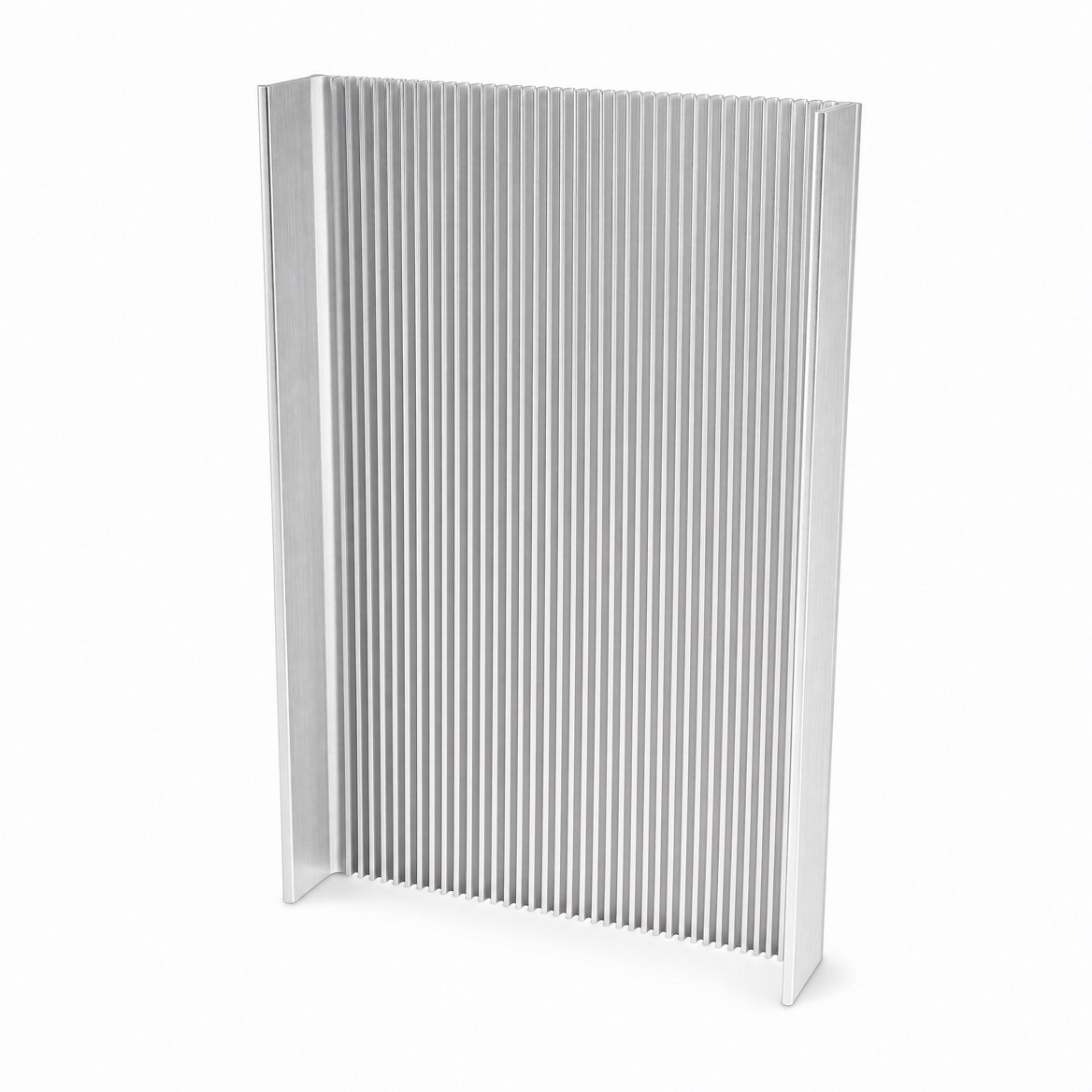
Aluminum extrusion is a manufacturing process that creates long aluminum profiles with a consistent cross-sectional shape. The profile may be simple, such as an angle, channel, tube, or flat bar. It may also be highly engineered, including grooves, screw ports, ribs, thermal features, drainage paths, interlocking sections, and mounting locations.
This flexibility makes aluminum extrusion suitable for products that need a balance of strength, weight control, corrosion resistance, appearance, and manufacturability.
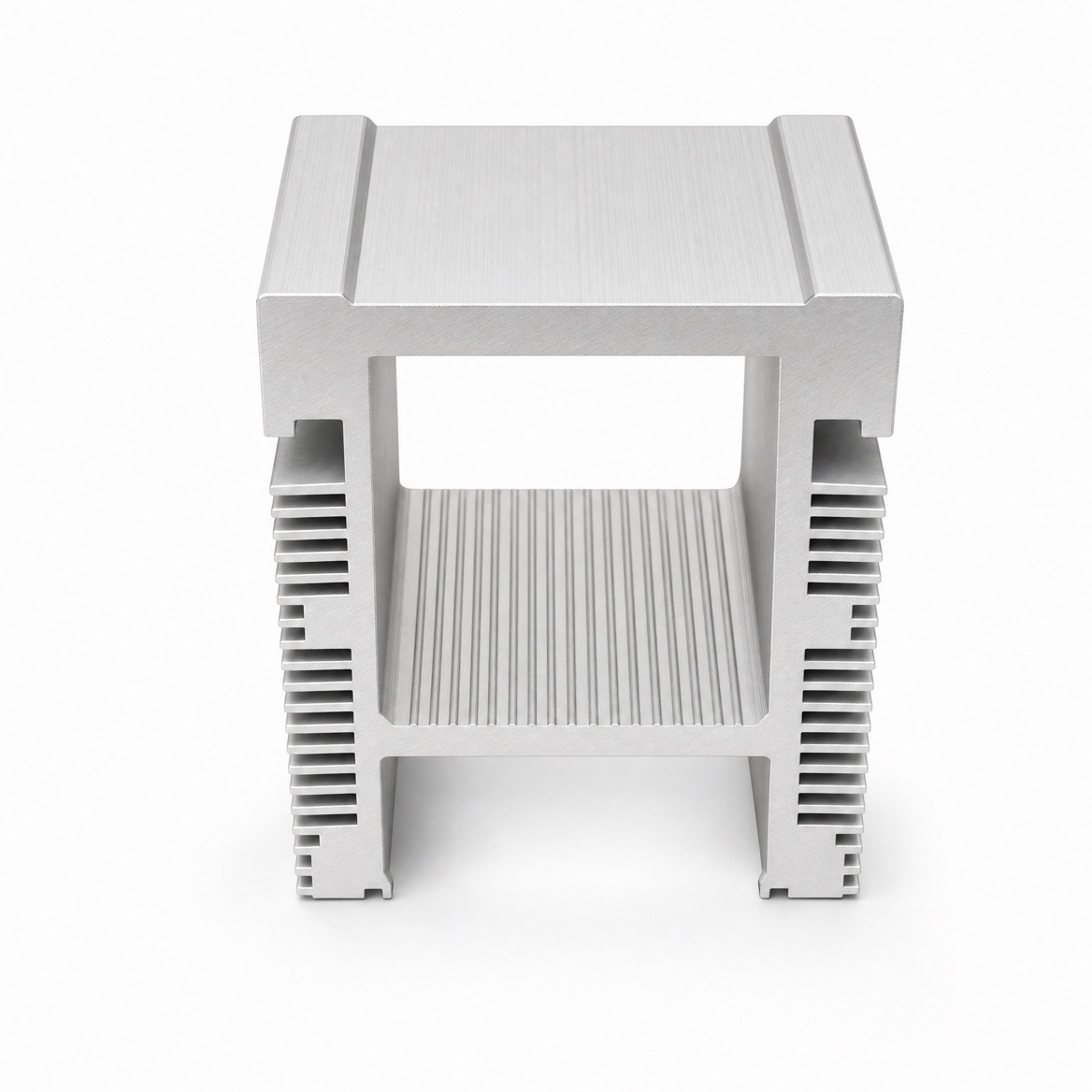
Unlike many conventional fabrication approaches, extrusion can integrate multiple functions into a single profile. For example, a machine-frame extrusion can include structural walls, T-slots, wire-routing channels, protective edge geometry, and locations for fasteners. A window profile can include glazing pockets, drainage cavities, gasket grooves, and decorative visible surfaces.
Aluminum profiles are widely selected because they offer practical advantages throughout product design, manufacturing, transport, installation, and long-term use.
- Lightweight performance: Aluminum has a much lower density than steel, helping reduce the weight of finished structures and moving equipment.
- High strength potential: Alloy selection, wall design, temper, and geometry can be engineered to meet structural requirements.
- Corrosion resistance: Aluminum naturally forms a protective oxide layer. Anodizing, powder coating, electrophoretic coating, and other surface treatments can further improve appearance and environmental resistance.
- Complex profile capability: Extrusion enables hollow, semi-hollow, and solid shapes that would be more difficult or costly to produce through machining or welding alone.
- Good finishing options: Aluminum profiles can be anodized, powder coated, polished, brushed, painted, wood-grain finished, or supplied with a mill finish.
- Efficient downstream processing: Profiles can be cut, punched, drilled, milled, bent, welded, assembled, and packaged according to project requirements.
- Recyclability: Aluminum can be recycled repeatedly. The International Aluminium Institute states that recycled aluminum requires substantially less energy than primary aluminum production, making recycled content an important consideration for customers with resource-efficiency targets.
The question "what are aluminum extrusions used for?" has a broad answer because the process supports both standard profiles and highly customized components. Below are the most important application areas for industrial aluminum extrusions and architectural aluminum profiles.
Architectural aluminum extrusion is used extensively in residential, commercial, industrial, and public-building projects. It allows fabricators and developers to create modern systems with clean lines, large glazed areas, durable surfaces, and flexible design options.
Common applications include:
- Aluminum window frames
- Aluminum door frames
- Curtain wall systems
- Sliding doors and folding doors
- Skylight frames
- Sunshade louvers
- Railings and balustrades
- Partition systems
- Aluminum ceiling and façade systems
- Exterior decorative trims
- Glass-room and conservatory structures
For visible building components, alloy choice and finish quality are especially important. 6063 aluminum alloy is commonly selected for architectural profiles because of its excellent extrusion behavior and ability to achieve smooth, attractive finished surfaces. It is widely associated with windows, doors, trims, roof systems, furniture, and other appearance-sensitive uses.
A well-designed building profile should be evaluated beyond basic dimensions. Buyers should also consider drainage performance, wall thickness, thermal-break configuration, glazing compatibility, installation method, visible-surface standards, coating requirements, and local project specifications.
Industrial aluminum extrusion is a practical foundation for modular manufacturing equipment. Machine builders value aluminum profiles because systems can be assembled, adjusted, expanded, and reconfigured with less welding than traditional steel-frame construction.
Typical industrial uses include:
- Machine frames
- Automation workstations
- Conveyor supports
- Safety guards and machine enclosures
- Robotics cells
- Inspection stations
- Production-line structures
- Laboratory benches
- Material-handling systems
- Cleanroom frames
- Display fixtures and equipment stands
T-slot aluminum extrusion is particularly useful for modular assemblies. T-slots allow brackets, panels, fasteners, accessories, and other components to be mounted at different positions without drilling every connection point into the main structure.
For a production manager, the benefit is clear: a properly designed extrusion system can support faster prototyping, easier maintenance, and more flexible future modifications. It can also improve the appearance and organization of an industrial workspace by integrating cable routing, panels, doors, guards, and adjustable accessories.
Transportation industries use aluminum extrusions to reduce vehicle weight while maintaining functional strength and durability. Weight reduction can support better fuel efficiency in conventional vehicles and can help offset the additional mass of battery systems in electric vehicles.
Common transportation applications include:
- Automotive roof rails
- Battery-tray structures
- EV battery enclosures
- Crash-management components
- Bus body structures
- Railway interior systems
- Truck and trailer frames
- Cargo-floor supports
- Luggage racks
- Marine and recreational-vehicle components
- Bicycle and mobility-device parts
The right aluminum extrusion for transportation depends on load paths, joining methods, fatigue conditions, corrosion exposure, surface requirements, and safety criteria. In strength-focused applications, 6061 aluminum alloy is frequently considered because it generally offers higher strength than 6063, while 6063 may be preferred for extrusion complexity and surface appearance.
For critical automotive, rail, aerospace, or safety-related projects, material selection should always be validated against the applicable engineering, regulatory, and testing requirements. A supplier should not treat alloy names alone as a complete performance specification.
Aluminum extrusion plays an important role in solar mounting and photovoltaic system design. Solar-frame and mounting components need to remain stable outdoors while being economical to transport, install, and maintain.
Extruded aluminum profiles are commonly used for:
- Solar panel frames
- Ground-mount rails
- Rooftop mounting rails
- Clamps and support brackets
- Inverter housings
- Cable-management systems
- Carport structures
- Building-integrated photovoltaic supports
For outdoor solar installations, corrosion resistance, dimensional consistency, coating selection, and connection design are essential. The profile must work with fasteners, clamps, roof interfaces, and module dimensions while tolerating weather exposure over an extended operating life.
A custom aluminum extrusion can simplify a solar assembly by integrating positioning features, water drainage, fastener channels, or cable-routing spaces directly into the profile geometry. This can reduce the number of separate components required on site.
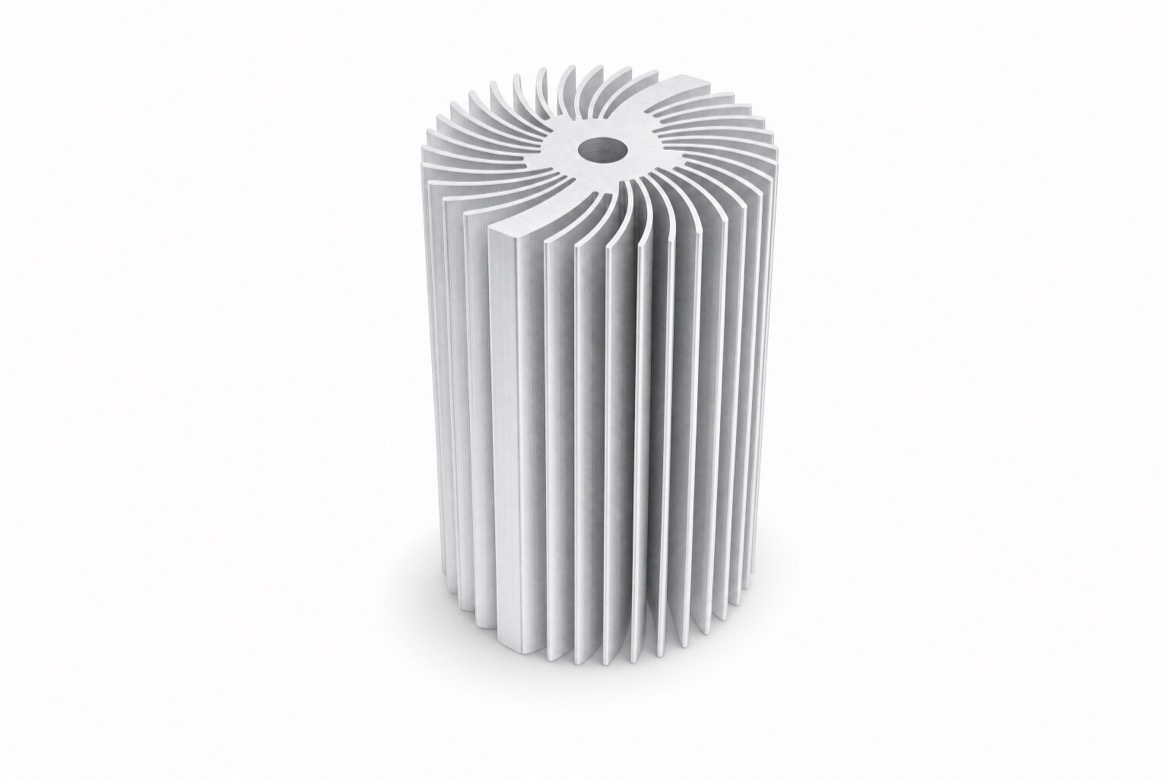
Aluminum is widely used in lighting and electronics because it can combine mechanical housing, visual design, and heat-dissipation functions. Extruded profiles are especially common in LED lighting systems, where the shape can be designed around the LED strip, diffuser, mounting method, wire routing, and thermal path.
Applications include:
- LED linear-light housings
- LED heat sinks
- Architectural lighting channels
- Street-light components
- Electronic enclosures
- Power-supply housings
- Control-panel frames
- Charging-equipment casings
- Telecom and network-equipment components
An effective heat-sink profile requires more than adding fins. Designers must consider available airflow, fin spacing, profile orientation, contact area, mounting interfaces, surface treatment, heat-source position, and the final operating environment.
For example, a compact LED profile installed inside a sealed decorative enclosure may need a very different thermal design from an industrial heat sink operating in a ventilated cabinet. Early supplier involvement can prevent costly redesigns after tooling has begun.
Aluminum profiles offer a clean, contemporary visual style and work well in products that require frequent assembly, adjustment, or transportation. Their corrosion resistance also makes them suitable for some outdoor products.
Common uses include:
- Modular office partitions
- Cabinet frames
- Wardrobe systems
- Display racks
- Exhibition stands
- Retail shelving
- Office furniture
- Decorative trims
- Outdoor furniture
- Glass display cabinets
For consumer-facing and interior applications, surface appearance matters as much as mechanical performance. Anodized silver, champagne, black, bronze, brushed finishes, powder coating, and wood-grain treatments can be specified to match a project's visual identity.
Marine and outdoor environments can expose metal components to moisture, salt, ultraviolet light, vibration, and changing temperatures. Aluminum profiles are used in these sectors because they can provide a favorable combination of low weight and corrosion resistance when the appropriate alloy, finish, design, and maintenance plan are selected.
Typical applications include:
- Boat frames
- Marine windows and doors
- Deck accessories
- Dock structures
- Outdoor railings
- Canopies and pergolas
- Camping equipment
- Trailer components
- Outdoor equipment housings
Marine projects require careful engineering. Saltwater exposure, dissimilar-metal contact, water drainage, fastener selection, coating compatibility, and maintenance access can all influence long-term results. A profile that performs well indoors may not be suitable for coastal use without the correct material specification and protective treatment.
Understanding the production process helps buyers communicate more effectively with manufacturers and identify potential risks before placing an order.
In a typical aluminum extrusion process:
1. Aluminum billets are prepared. The billet is a cylindrical piece of aluminum alloy selected according to the required mechanical, extrusion, finishing, and application properties.
2. The billet is heated. Heating makes the aluminum sufficiently workable for extrusion without melting it.
3. The aluminum is pressed through a die. A powerful press forces the softened billet through a precisely engineered die opening, creating the requested cross-sectional profile.
4. The profile is cooled and stretched. Cooling and stretching help stabilize the profile and improve straightness.
5. The profile is cut to length. Extrusions are typically cut into manageable lengths or customer-specified sizes.
6. Heat treatment may be applied. Some alloys require aging or heat treatment to develop the required mechanical properties.
7. Fabrication and finishing are completed. Profiles may be cut, drilled, punched, CNC-machined, bent, welded, anodized, powder coated, assembled, protected, and packed.
The die is one of the most important elements in custom extrusion. It determines the profile geometry, but it also influences production difficulty, material flow, surface quality, tolerance capability, die life, and production efficiency.
A high-performing aluminum extrusion begins with practical design choices. A profile should not only look correct in CAD software; it must also be manufacturable, measurable, finishable, assemblable, and cost-effective.
Before finalizing a drawing, identify what the profile must do.
Ask these questions:
- Does it carry a static load, dynamic load, or vibration load?
- Is weight reduction a priority?
- Does it need to dissipate heat?
- Will it be indoors, outdoors, coastal, or chemically exposed?
- Will it connect to glass, plastic, steel, rubber, or other aluminum parts?
- Which dimensions are essential for assembly?
- Is appearance critical on every visible surface?
- Will the profile need drilling, machining, bending, or welding?
This functional review helps avoid a common purchasing mistake: specifying every dimension as highly precise even when only a few dimensions are critical to assembly.
Tighter tolerances can increase manufacturing complexity, inspection demands, yield loss, and cost. They should be applied only where the function requires them.
European Aluminium guidance notes that tolerance requirements affect productivity and price. Its general rules of thumb include approximately ±1% for linear dimensions, ±5–10% for wall thickness, and ±2 degrees for angular geometry, although actual achievable tolerances depend on profile design, alloy, press capability, size, and applicable standards.
A practical drawing should clearly separate:
- Critical assembly dimensions
- Functional mating surfaces
- Non-critical profile features
- Straightness and twist requirements
- Cut-length tolerances
- Surface-finish zones
- Post-machining requirements
Some profile features are technically possible but may increase tooling cost, extrusion difficulty, scrap risk, or lead time.
Design features that deserve early review include:
- Extremely thin walls
- Deep narrow channels
- Very sharp corners
- Large differences in wall thickness
- Unbalanced profile geometry
- Small internal cavities
- Long unsupported fins
- Tight tolerances across large dimensions
Industry design guidance recommends maintaining reasonable corner radii, avoiding knife-edge features, and using smoother transitions where wall thickness changes. Symmetrical designs are generally easier to extrude consistently than heavily unbalanced profiles.
Finishing and deep processing should not be treated as an afterthought. Anodizing and powder coating add material to surfaces, while drilling, CNC machining, cutting, bending, and assembly can affect dimensional requirements and visible appearance.
If a profile will be anodized, powder coated, or fitted with precision mating parts, discuss the final dimension basis with the supplier. The drawing should clarify whether key dimensions apply before finishing, after finishing, or after machining.
The best alloy depends on the product's mechanical, visual, environmental, and processing requirements. Below is a simplified comparison for early-stage selection.
| Consideration | 6063 Aluminum Alloy | 6061 Aluminum Alloy |
|---|---|---|
| Common use | Architectural and appearance-sensitive profiles | Strength-focused structural and industrial components |
| Extrusion suitability | Excellent for many complex and smooth profiles | Suitable, but profile complexity may require more review |
| Surface finish | Often preferred for anodized visible surfaces | Can be finished, but may not be the first choice for decorative architectural surfaces |
| Relative strength | Moderate | Generally higher |
| Typical applications | Windows, doors, curtain walls, trims, lighting, furniture | Machinery, transportation, structural parts, frames, brackets |
| Selection priority | Surface quality, extrudability, architectural design | Mechanical performance and structural requirements |
This table is a starting point, not a substitute for engineering validation. Other alloys, tempers, and product forms may be more appropriate depending on the application.
Surface treatment should also be selected according to the use environment:
- Mill finish: Suitable where appearance is not critical or where later processing will occur.
- Anodizing: Enhances corrosion resistance and provides a metallic architectural appearance.
- Powder coating: Provides a wide range of colors and can support exterior decorative applications.
- Electrophoretic coating: Can provide a uniform, durable finish for selected architectural uses.
- Wood-grain transfer: Supports decorative applications that require a wood-like appearance with aluminum durability.
A capable aluminum extrusion manufacturer should be able to support more than the basic production of a profile. The best supplier relationship begins with clear technical communication and continues through tooling, sampling, production, inspection, finishing, packaging, and shipment.
Before requesting a quotation, prepare as much of the following information as possible:
- 2D drawings and 3D models
- Alloy and temper requirements
- Profile cross-section dimensions
- Wall-thickness expectations
- Required tolerances
- Surface-finish specifications
- Fabrication requirements
- Cut lengths and quantity per length
- Annual or project volume
- Packaging requirements
- Application environment
- Required inspection documents
- Destination market and shipping terms
At Guangdong Dapeng Aluminum Industry Co., Ltd., we work with customers across industrial manufacturing, construction, transportation, and new-energy sectors. Our service scope can include industrial aluminum profiles, architectural aluminum profiles, customized extrusion development, and deep processing according to project needs.
A better inquiry produces a better quotation. When drawings, tolerances, finishing expectations, and application details are defined early, the supplier can provide more reliable advice on die design, alloy selection, manufacturability, cost, lead time, and quality-control planning.
Aluminum extrusions are used wherever a product needs a lightweight, durable, customizable, and scalable structural solution. From curtain walls and solar frames to machine guards, EV components, LED housings, and marine equipment, a well-designed aluminum profile can improve performance while simplifying manufacturing and assembly.
The strongest results come from treating extrusion as an engineering solution rather than a commodity purchase. Profile design, alloy selection, tolerance strategy, surface finish, fabrication method, and supplier capability should be considered together.
If you are developing a new aluminum profile or sourcing a reliable aluminum extrusion manufacturer, share your drawings, application conditions, material requirements, and estimated order volume with Guangdong Dapeng Aluminum Industry Co., Ltd. Our technical and production teams can help evaluate your project and develop an aluminum alloy solution tailored to your market and application.
Aluminum extrusions are mainly used in construction, industrial machinery, transportation, solar-energy systems, LED lighting, electronics, furniture, marine equipment, and customized structural assemblies. Their main advantage is the ability to create a complex, consistent profile with multiple functions in one part.
Industrial aluminum profiles are usually designed around mechanical function, assembly, loading, machine integration, or equipment structure. Architectural aluminum profiles are often designed for windows, doors, curtain walls, façades, railings, and decorative applications, where appearance, weather resistance, glazing interfaces, and finishing quality are especially important.
Neither alloy is universally better. 6063 is often preferred for architectural profiles and attractive anodized surfaces because of its extrudability and surface quality. 6061 is commonly selected where higher mechanical strength is a key requirement. The final choice should depend on the application, geometry, finish, strength needs, and production method.
Yes. Custom aluminum extrusion can be designed based on a drawing, sample, functional concept, or existing component. Manufacturers can develop custom dies and offer additional services such as cutting, drilling, punching, CNC machining, bending, welding, anodizing, powder coating, assembly, and export packaging.
The most useful information includes a 2D drawing or 3D model, alloy and temper requirements, tolerances, surface finish, cut length, required fabrication, order quantity, application environment, inspection requirements, packaging needs, and delivery destination.
Yes, aluminum extrusions are often suitable for outdoor applications such as windows, doors, solar mounting systems, railings, lighting fixtures, canopies, and transportation components. However, alloy selection, surface treatment, drainage design, fastener compatibility, and exposure conditions should be evaluated carefully, especially in coastal or industrial environments.
It can. A well-designed profile may replace multiple welded, stamped, or machined components with one extruded section. This can reduce part count, assembly time, material waste, and production complexity. Cost savings depend on the profile design, tooling investment, production volume, required fabrication, and finishing specifications.
- [Bor USA: What Are Aluminum Extrusions Used For?]
- [The Aluminum Association: Industry Standards]
- [European Aluminium: Extruded Products]
- [Clinton Aluminum: A Comparison of 6063 vs. 6061 in Aluminum Extrusions]
- [Aluminum Extruders Council: Aluminum Extrusion Design Tips]


