


Views: 243 Author: Dapeng Aluminum Publish Time: 2026-08-19 Origin: Site


Content Menu
● What Is an Aluminum Channel?
● Main Types of Aluminum Channels
● Aluminum Channel Profile Comparison
● Choosing Between 6063 and 6061 Aluminum Channels
● How to Specify an Aluminum Channel Correctly
● Design Tips That Help Control Cost
● Surface Finishes for Aluminum Channels
● A Manufacturing Perspective: From Drawing to Delivery
● Request a Custom Aluminum Channel Quote
● FAQ
>> What is the most common type of aluminum channel?
>> What is the difference between an aluminum U channel and C channel?
>> Which aluminum alloy is best for architectural channels?
>> Can aluminum channels be used outdoors?
>> Can aluminum channels be customized?
>> What information is needed for an aluminum channel quotation?
>> Are aluminum channels suitable for solar and new-energy applications?
Aluminum channels are among the most adaptable extruded profiles used in architectural systems, industrial equipment, transportation components, display structures, and renewable-energy installations. For buyers, engineers, fabricators, and project managers, choosing the right aluminum channel profile affects structural performance, installation speed, surface appearance, corrosion resistance, and total project cost.
At Guangdong Dapeng Aluminum Industry Co., Ltd., we work with customers who need more than a standard section. They may require a precisely sized aluminum U channel, a load-bearing C channel, a water-managing Z profile, or a custom-machined extrusion with holes, slots, powder coating, and controlled tolerances. This guide explains the main types of aluminum channels, how to select them, and what to specify before production begins.
An aluminum channel is an extruded aluminum profile with an open cross-section. Its shape typically resembles a letter such as U, C, Z, J, or a hat. The open section makes it useful for holding panels, guiding moving parts, covering edges, supporting frames, creating drainage paths, and forming lightweight structures.
Unlike generic steel channel products, extruded aluminum channels can be engineered with highly specific wall thicknesses, radii, grooves, screw bosses, drainage features, and decorative surfaces. This makes aluminum extrusion especially valuable when a project needs both functional integration and an attractive finish.
Common benefits include:
- Low weight for easier handling, transport, and assembly
- Good corrosion resistance for indoor, outdoor, and humid environments
- High design flexibility through custom extrusion tooling
- Strong surface-finish options, including anodizing and powder coating
- Efficient secondary processing, such as cutting, drilling, punching, bending, machining, and assembly
- Long service life when alloy, finish, and installation details are correctly matched to the environment
Aluminum weighs approximately one-third as much as steel by volume, which can reduce handling demands in many non-heavy-duty applications.
The aluminum U channel is one of the most common and versatile profiles. It has a flat base with two parallel vertical legs, creating a U-shaped opening.
U channels are often used where a panel, glass sheet, board, door edge, or structural member needs to be retained, framed, protected, or guided.
Typical applications include:
- Glass partitions and shower enclosures
- Architectural wall panels and cladding
- Signage frames
- Cabinet and furniture edging
- Solar-panel mounting components
- Machine guards and protective rails
- LED lighting housings
- Display fixtures
For architectural applications, 6063 aluminum is frequently selected because it extrudes well, provides a clean surface, and responds well to anodizing. 6063 is widely known as an architectural alloy, while 6061 is commonly selected where higher strength is more important.
An aluminum C channel has a C-like cross-section, usually featuring a web and two flanges that extend in the same direction. Compared with a U channel, C channels are often better suited to framing, supports, tracks, rails, and structural assemblies.
C channels can be produced in thin, decorative dimensions or in heavier sections for industrial use. The profile can also include lips, ribs, grooves, screw ports, or interlocking geometry.
Common uses include:
- Equipment frames and enclosures
- Conveyor and automation systems
- Ceiling grids and support rails
- Vehicle interior structures
- Curtain wall components
- Storage racks and shelving
- Cable-management systems
- Industrial workstations
When a C channel must carry meaningful loads, profile dimensions alone are not enough. Buyers should evaluate alloy, temper, unsupported span, load direction, connection method, safety factor, and potential deflection.
An aluminum Z channel has a stepped Z-shaped cross-section. It is particularly useful when two surfaces need to overlap, transition, or shed water.
In building-envelope systems, Z channels are often used as flashing, panel supports, cladding transitions, siding trims, and rainscreen components. Their geometry can help direct water away from sensitive joints when integrated into a properly designed drainage system.
Common applications include:
- Metal wall panels
- Roofing and flashing details
- Exterior siding transitions
- Rainscreen cladding systems
- Window and door trim
- Overlapping panel assemblies
- Solar mounting and weather-protection components
For exterior use, the profile should be selected together with the coating system, fastening material, drainage design, and local climate. A durable extrusion cannot compensate for poor water-management details or incompatible fasteners.
An aluminum J channel has one longer leg and one shorter return, creating a profile similar to the letter J. It is generally used as an edge trim, starter trim, termination profile, or panel-retention solution.
J channels are popular because they provide a neat finished edge while helping conceal cut panel edges and installation gaps.
Typical uses include:
- Wall-panel edging
- Ceiling-panel finishing
- Decorative trims
- Composite panel systems
- Signboards
- Furniture and cabinet edges
- Interior partitions
- Exterior cladding terminations
For exposed architectural surfaces, finish consistency is important. Matching gloss level, color, coating thickness, and batch control can make a visible difference across a large façade or interior installation.
An aluminum hat channel, also called a furring channel, has a raised central section with flanges extending outward on both sides. Its cross-section resembles a top hat.
Hat channels create a separation between a substrate and a finished surface. This cavity can support leveling, ventilation, drainage, insulation, wiring, or attachment systems.
They are commonly used for:
- Rainscreen façade systems
- Wall furring and leveling
- Ceiling support structures
- Acoustic wall assemblies
- Ventilated cladding systems
- Insulation support
- Equipment covers
- Lightweight industrial frames
In exterior wall systems, the cavity behind the cladding may support drainage and ventilation when the entire assembly is designed correctly. For this reason, hat channels are often specified as part of broader façade and weather-management systems rather than as isolated components.
Standard profiles are useful for common applications, but custom aluminum channels often provide stronger commercial value when the product will be produced repeatedly or when multiple functions can be integrated into one extrusion.
A custom profile may combine:
- Panel-retention grooves
- Screw ports
- Drainage holes or channels
- Snap-fit features
- Reinforcing ribs
- Wire-management cavities
- Thermal-break interfaces
- Decorative reveal lines
- Protective edge geometry
- Assembly alignment features
A well-designed custom extrusion can reduce the need for separate brackets, welding, fasteners, or post-production assembly. The Aluminum Extruders Council recommends balanced wall thicknesses, generous transitions, minimized unnecessary hollows, and avoidance of sharp knife edges to improve extrusion practicality.
| Channel Type | Typical Shape | Main Function | Common Industries |
|---|---|---|---|
| U channel | Open U | Retention, framing, edging, guides | Construction, furniture, displays, glass systems |
| C channel | Open C | Structural framing, rails, tracks | Industrial equipment, transport, architecture |
| Z channel | Offset Z | Overlap, transition, flashing | Roofing, cladding, wall panels |
| J channel | J-shaped return | Trim, panel edge finishing | Interiors, façades, signage |
| Hat channel | Raised center with flanges | Furring, spacing, support | Rainscreens, ceilings, wall systems |
| Custom channel | Application-specific | Integrated functions | Industrial, energy, transport, OEM products |
For many projects, alloy selection is the first technical decision. The two most frequently discussed options for extruded channels are 6063 and 6061 aluminum.
| Consideration | 6063 Aluminum | 6061 Aluminum |
|---|---|---|
| Common positioning | Architectural alloy | Structural/general-purpose alloy |
| Extrudability | Excellent for complex shapes | Good, but generally more demanding |
| Surface appearance | Excellent | Good |
| Anodizing suitability | Excellent | Good |
| Relative strength | Moderate | Higher |
| Typical applications | Windows, doors, trim, decorative profiles | Frames, brackets, structural components |
| Corrosion resistance | Excellent | Excellent in many environments |
6063 is commonly chosen for intricate architectural channels because it supports complex extrusion geometry and high-quality visible finishes. 6061 is often selected for applications requiring higher strength, good machinability, and robust mechanical performance. Published comparisons commonly place 6061 tensile strength above 6063, though actual performance depends on temper, dimensions, manufacturing conditions, and the final design.
Do not select an alloy based only on a general label such as "architectural" or "structural." A suitable choice should consider the full application: loading, span, joint design, coating, machining requirements, visible-surface expectations, and use environment.
A clear specification reduces quotation delays, avoids production misunderstandings, and improves consistency between design intent and delivered product.
Before requesting a quotation, prepare the following information:
1. Profile drawing
Provide a 2D drawing, CAD file, sample, or dimensioned sketch. Identify critical dimensions, wall thicknesses, radii, and functional surfaces.
2. Alloy and temper
Specify the preferred material, such as 6063-T5, 6063-T6, or 6061-T6, if your design requires a particular grade.
3. Surface treatment
State whether you need mill finish, anodizing, powder coating, electrophoresis, wood-grain transfer, brushing, or polishing.
4. Length and cutting tolerance
Confirm standard extrusion length, final cut length, quantity per bundle, and tolerance requirements.
5. Secondary processing
Include drilling, punching, milling, tapping, bending, welding, assembly, protective film, labeling, and packaging requirements.
6. Application environment
Indicate whether the channel will be installed indoors, outdoors, near the coast, in high-humidity areas, or in contact with other metals.
7. Quality requirements
Define inspection expectations for dimensions, surface appearance, color consistency, coating thickness, mechanical properties, and packaging.
The most economical aluminum channel is not necessarily the profile with the lowest price per kilogram. A low-cost extrusion can become expensive if it requires excessive machining, difficult assembly, high scrap rates, or repeated installation adjustments.
To improve manufacturability:
- Keep wall thicknesses as balanced as possible
- Avoid unnecessary ultra-thin sections
- Use reasonable corner radii instead of sharp edges
- Limit deep, narrow cavities where practical
- Identify only genuinely critical tolerances
- Design holes and slots for efficient punching or machining
- Consider whether one custom extrusion can replace several assembled parts
- Match finish requirements to the real exposure and appearance needs
Extrusion design guidance emphasizes balanced walls, symmetry where possible, rounded corners, and minimizing difficult hollow geometry. These decisions can improve production feasibility and help support stable quality.
Surface finish is not only an aesthetic choice. It can influence corrosion resistance, cleanability, UV durability, scratch resistance, and perceived product quality.
| Finish | Best Use | Key Benefit |
|---|---|---|
| Mill finish | Hidden parts, further fabrication | Economical untreated aluminum surface |
| Anodized finish | Architectural trim, frames, visible profiles | Durable metallic appearance and improved surface hardness |
| Powder coating | Colored façades, equipment, branded components | Broad color choice and protective coating layer |
| Electrophoresis | Architectural applications | Uniform, refined surface appearance |
| Brushed or polished | Decorative interiors, retail displays | Premium visual effect |
| Wood-grain finish | Doors, windows, architectural systems | Decorative wood-like appearance with aluminum performance |
For projects requiring a consistent visual finish, request approved samples before mass production. This is especially important for long visible profiles, large façade systems, and projects combining multiple production batches.
In our experience, the strongest aluminum channel projects start with early technical communication. A buyer may initially request a simple U channel, but the actual installation can reveal needs for drainage, screw retention, improved stiffness, better panel alignment, or easier assembly.
For example, a wall-panel manufacturer may use separate trims, brackets, and spacers for a cladding system. By redesigning the section as a custom aluminum channel with integrated fastening grooves and drainage features, the system can reduce part count and simplify installation.
At Guangdong Dapeng Aluminum Industry Co., Ltd., we support customers from profile development through extrusion, surface finishing, precision processing, inspection, and export packaging. Our capabilities cover industrial aluminum profiles, architectural aluminum profiles, and customized deep-processing services for global markets.
The goal is not simply to deliver aluminum extrusions. It is to help customers receive a profile that fits the real demands of manufacturing, assembly, appearance, logistics, and end use.
Whether you need standard aluminum U channels, C channels, Z channels, J channels, hat channels, or a fully customized extrusion, the right profile begins with a clear technical review.
Send Guangdong Dapeng Aluminum Industry Co., Ltd. your drawing, target application, alloy requirement, finish preference, order quantity, and processing needs. Our technical team can help evaluate profile feasibility, recommend suitable material options, and develop an aluminum channel solution tailored to your project.
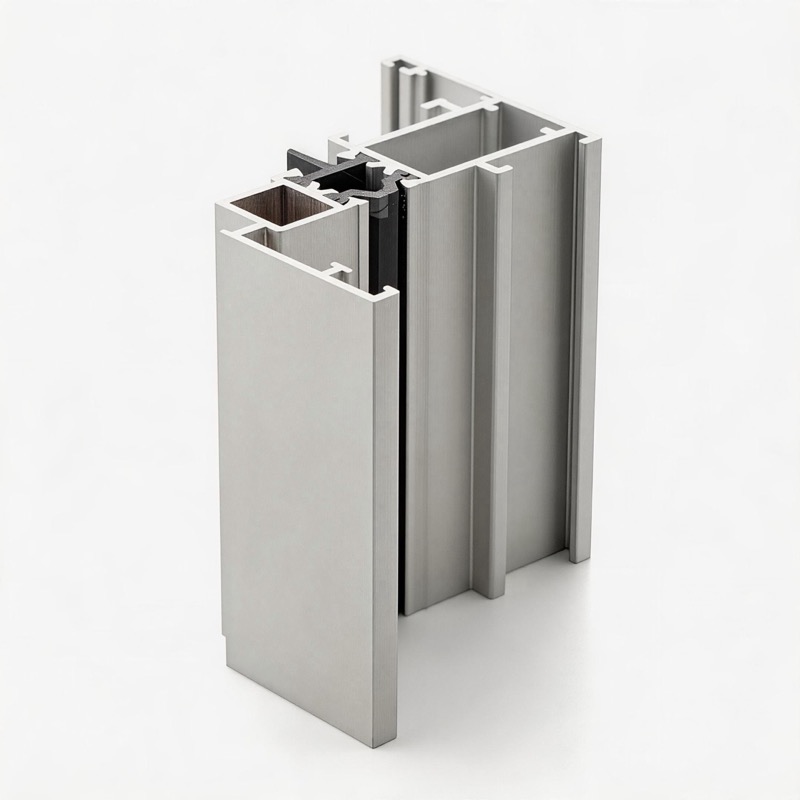
U channels and C channels are among the most commonly used aluminum channel profiles. U channels are widely used for edging, panel retention, and glass systems, while C channels are frequently used for framing, rails, and industrial structures.
A U channel has two parallel legs extending from a flat base. A C channel has flanges extending in the same direction, creating a more open structural shape. The best option depends on how the profile will carry loads, connect to other components, and be installed.
6063 is often selected for architectural channels because it offers strong extrudability, corrosion resistance, surface quality, and anodizing performance. 6061 may be more suitable when the application requires greater mechanical strength.
Yes. Aluminum channels are widely used outdoors because aluminum naturally forms a protective oxide layer. For long-term exterior exposure, the correct alloy, coating, drainage design, fasteners, and installation method remain important.
Yes. Custom aluminum channels can be produced with specialized dimensions, wall thicknesses, grooves, holes, slots, reinforcing ribs, surface finishes, and machining. Custom profiles are particularly useful for recurring production programs and applications requiring integrated functions.
Provide a drawing or sample, dimensions, alloy and temper, required quantity, final length, finish, secondary processing needs, tolerance requirements, application environment, and packaging expectations.
Yes. Aluminum channels can be used in solar mounting structures, equipment housings, battery-system frames, cable-management components, and lightweight support assemblies. The specific alloy, cross-section, finish, and structural design should be selected according to the load and environment.
- [Eagle Aluminum: The Architect's Guide to Aluminum Channels]
- [Aluminum Extruders Council: Key Design Considerations]
- [Aluminum Extruders Council: Extrusion Design Tips]
- [Aluminum Extruders Council: Aluminum Extrusion Manual]
- [Kloeckner Metals: Comparing 6061 vs. 6063 Aluminum]
- [Orange Aluminum: 6061 vs. 6063 Aluminum]
- [Tri-State Aluminum: Alloy Specifications and Selection Guide]


