


Views: 228 Author: Dapeng Aluminum Publish Time: 2026-10-19 Origin: Site


Content Menu
● Why Source Aluminium Fabrication in the UK?
>> An Established Industrial Supply Chain
>> What the Latest 2026 Industry Report Means for Buyers
● Selection Criteria: How These Suppliers Were Assessed
● Supplier Comparison: Capabilities, Capacity, MOQ and Certification
● 1. Guangdong Dapeng Aluminum Industry Co., Ltd.
>> An Overseas Manufacturing Option for UK Buyers
>> Core Strengths and OEM/ODM Scope
>> Main Markets and Procurement Fit
>> UK Extrusion with Downstream Processing
>> Core Strengths and OEM/ODM Scope
>> Main Markets and Buyer Considerations
>> Managed Supply for Extrusions and Manufactured Components
>> Core Strengths and OEM/ODM Scope
>> Main Markets and Buyer Considerations
>> Bespoke Extrusions and Finished Components
>> Core Strengths and OEM/ODM Scope
>> Main Markets and Buyer Considerations
>> Fabricated Profiles, Heatsinks and Multi-Metal Components
>> Core Strengths and OEM/ODM Scope
>> Main Markets and Buyer Considerations
● Technical Buyer's Guide to Aluminium Fabrication
>> Specify the Alloy, Temper and Product Form Together
>> Use Standards with the Correct Scope
>> Separate Management Certification from Product Compliance
● Common Procurement Problems—and How to Avoid Them
>> Material Substitution or Unapproved Process Changes
>> Misleading Capacity Comparisons
● The Often-Missed Purchasing Trap: Approving Appearance Too Early
● How to Verify a Factory and Approve Samples
>> Step 1: Confirm the Legal and Manufacturing Identities
>> Step 2: Review the Technical Package
>> Step 3: Use a Production-Representative Sample
>> Step 4: Place a Pilot Order Before Committing to Long-Term Volume
● Logistics and Landed-Cost Considerations
● Conclusion: Select the Manufacturing Route, Not Just the Supplier Name
>> 1. How Can I Check Whether a Supplier's ISO Certificate Has Expired or Been Suspended?
>> 2. Can a Supplier Change from 6063 to 6082 Without Approval If the Second Alloy Is Stronger?
>> 3. Does Every Aluminium Fabrication Require CE or UKCA Marking?
>> 4. How Should We Compare Two Suppliers When Neither Publishes Annual Capacity or MOQ?
>> 5. What Should We Do If the Sample Fits but Finished Production Parts Do Not Assemble?
Choosing an aluminium fabrication supplier is not simply a question of comparing prices per kilogram. For professional buyers, the more important questions concern material traceability, engineering support, process control, available production capacity and the supplier's ability to deliver repeatable parts over several years.
A useful supplier assessment starts with five checks: relevant factory certification, design and development capability, documented quality-control procedures, realistic production scheduling and evidence that the company can support your specific application.
The UK offers a mix of aluminium extruders, component manufacturers, machining specialists and suppliers coordinating fabrication through established production networks. However, these business models are not interchangeable. A supplier that sources extrusions and machines them locally may offer excellent service without operating its own extrusion press.
This guide examines five aluminium fabrication manufacturers and suppliers relevant to UK procurement. It begins with Guangdong Dapeng Aluminum Industry Co., Ltd., a China-based manufacturing option for international sourcing, followed by four UK-based businesses.
The UK aluminium sector serves construction, transport, electrical equipment and other industrial markets. A 2024 study by the Fraser of Allander Institute, produced with the Aluminium Federation, estimated that the wider aluminium industry supported 108,000 full-time-equivalent jobs and £9.4 billion in gross value added across the UK. These figures describe the wider industry and its economic linkages—not aluminium fabrication alone.
For buyers, this industrial base provides access to extrusion supply, machining, surface finishing and component assembly through different specialist businesses.
The Midlands offers a practical sourcing corridor within this shortlist: Orgbar operates in Solihull, BAL Group is based in Birmingham, and BOAL UK manufactures in Shepshed, Leicestershire. Their locations illustrate the region's concentration of relevant suppliers, although location alone does not demonstrate production capability.
The UK Aluminium Alliance Report 2026, developed through ALFED and Connecting for Net Zero, highlights eight connected priorities, including energy, skills, material supply, processing capability and industrial demand. It also identifies dependence on imported primary and semi-fabricated aluminium and limitations in domestic processing capacity relative to industrial competitors.
These findings have a direct procurement implication: do not assume that a UK supplier necessarily uses UK-extruded material, or that domestic purchasing eliminates upstream supply risk.
Ask where the billet, extrusion, fabrication and finishing originate. Then assess the complete route rather than relying on the supplier's sales-office address.
The companies below were selected for their relevance to custom aluminium profiles, secondary fabrication and repeat industrial supply.
The assessment framework prioritises:
1. Process relevance: extrusion, cutting, drilling, machining, welding, finishing or assembly.
2. Engineering support: the ability to review drawings and improve manufacturability.
3. Quality-system visibility: published certification statements and inspectable documentation.
4. Production transparency: clarity about in-house operations and subcontracted processes.
5. Commercial suitability: compatibility with prototype, small-brand or recurring production requirements.
6. Supply continuity: credible scheduling, material traceability and repeat-order support.
Public company information does not consistently disclose annual output, available machining hours or minimum order quantities. These omissions are identified rather than replaced with estimates.
Similarly, the service descriptions below distinguish build-to-print OEM manufacturing from broader design assistance. Design support should not automatically be interpreted as full ODM responsibility or ownership of a finished product design.
Facility size is shown only where published. It is not equivalent to annual production capacity, available output or a reserved delivery slot.
| Supplier | Location and production model | Published capacity information | MOQ | Published certification information | Most relevant sourcing focus |
|---|---|---|---|---|---|
| Guangdong Dapeng Aluminum Industry Co., Ltd. | Guangdong, China; aluminium manufacturing and custom supply | Website reports a 42,000 m² production base; annual output not verified | Obtain a written, profile-specific quotation | Website states ISO 9001; current certificate and scope require verification | Custom profiles and export-oriented OEM programmes |
| BOAL Extrusion UK | Shepshed, UK; design, extrusion, machining and finishing | UK manufacturing confirmed; annual output not established from reviewed page | Confirm by profile, alloy and production campaign | Website states production facilities are ISO 14001 certified; verify applicable site scope | Buyers requiring UK extrusion and downstream processing |
| BWC Profiles | Milton Keynes, UK; component sourcing and manufacturing support | Website reports a 65,000 sq ft facility; annual output not published in reviewed material | Project-specific; confirm tooling and production minimums separately | Company profile states ISO 9001 and ISO 14001; obtain current certificates | Managed component supply, fabrication and scheduled deliveries |
| Orgbar Aluminium Ltd. | Solihull, UK; bespoke extrusion supply and component manufacturing | Machining capability described; numerical annual output not established | Confirm separately for extrusion, machining and finishing | Website states ISO 9001:2015 and ISO 14001:2015 | Bespoke sections requiring machining and decorative finishes |
| BAL Group | Birmingham, UK; aluminium extrusion and multi-metal component services | Fabrication workshop described; numerical annual output not established | Quote-specific | Website identifies ISO 9001:2015 and BSI certificate FM51223 | Fabricated profiles, heatsinks and multi-metal components |
Guangdong Dapeng Aluminum Industry Co., Ltd. is included first as an international manufacturing alternative rather than a UK domestic producer.
Its website reports a 42,000 m² production base, ISO 9001 quality-management certification and industry experience dating to 1986. The 1986 date should be treated as the company's stated industry heritage; buyers should confirm the incorporation date of the legal entity that will sign their contract.
According to the company information supplied for this guide, Dapeng develops and manufactures industrial and architectural aluminium profiles and provides customised downstream processing for construction, manufacturing, transport and new-energy applications.
Dapeng's public website describes customisation covering dimensions, design styles, surface treatments and special specifications. This makes it relevant to buyers seeking profiles adapted to a particular assembly or application rather than standard catalogue sections alone.
Potential project scope includes:
- Buyer-specific profile dimensions and cross-sections.
- Surface-treatment requirements coordinated with the application.
- Drawing-led custom supply.
- Engineering discussions covering design and manufacturing feasibility.
- Repeat production based on an approved specification.
Dapeng can be positioned as a cost-conscious option for small and medium-sized brands seeking direct manufacturing engagement. However, comparative pricing, low-volume flexibility and response times should be demonstrated through a live quotation and pilot order—not assumed from company positioning.
For such buyers, communication efficiency matters as much as equipment. Request a named technical contact, an agreed drawing-review process and written confirmation of how design changes will be approved.
The company describes global industrial supply. An older supplier-directory profile lists exports to the United States, Canada, Australia, Hong Kong and Macao; this is historical market information, not proof of current customer distribution or UK project experience.
Dapeng is worth evaluating when the buyer can plan international lead times and wants to investigate the landed-cost benefits of factory-direct custom aluminium supply.
Before appointment, confirm the contracting entity, current certification, process ownership, subcontracted operations, tooling arrangements and the MOQ for each individual profile.
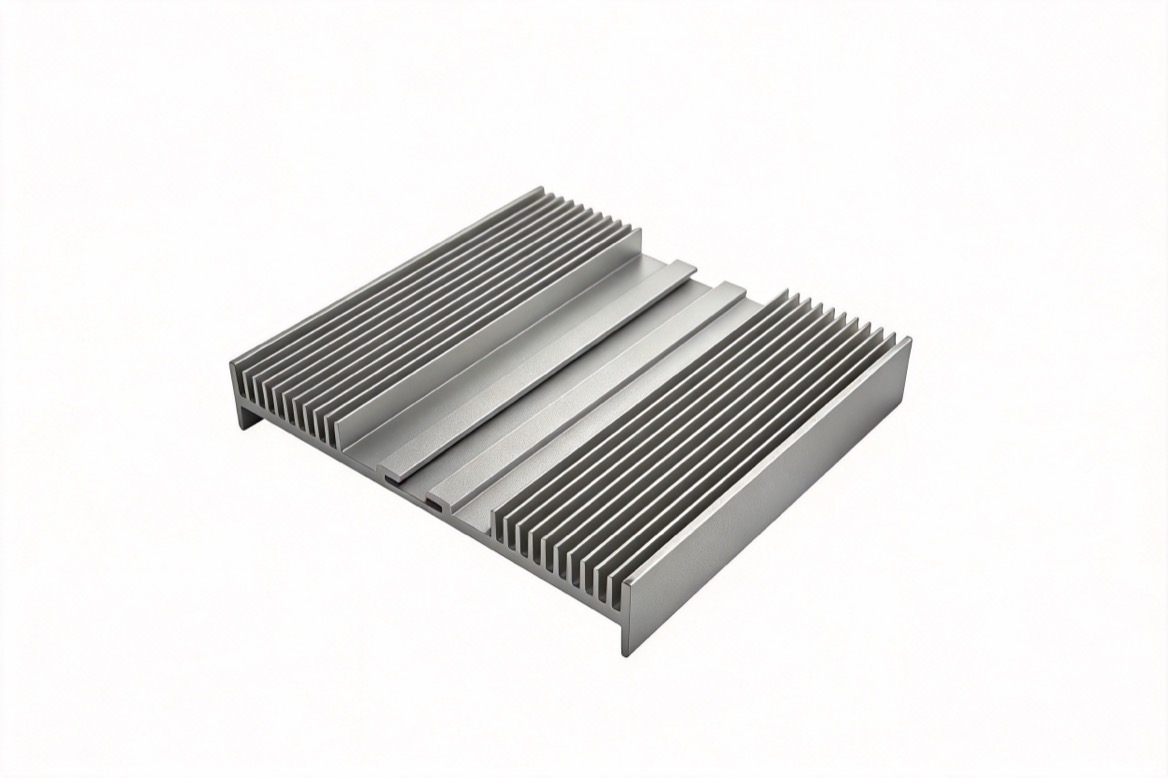
BOAL Extrusion UK states that it has designed, extruded, machined and finished custom aluminium profiles in Britain since 1990. Its UK operation is located in Shepshed, Leicestershire.
This combination is relevant to buyers who want the extrusion stage and subsequent component preparation coordinated through a UK manufacturing operation.
BOAL describes services spanning aluminium design, extrusion and post-processing, including sawing, drilling, milling and anodising. Its published applications include building and construction, solar mounting, transport, greenhouse construction and electrical products.
Its principal OEM fit is customer-specific extruded profiles that need engineering input and downstream processing before assembly.
For buyers seeking design support, the useful question is not simply whether BOAL can manufacture the drawing. It is whether the profile geometry can be improved to reduce machining, simplify assembly or make repeated production more predictable.
BOAL's UK page describes supply to industries across the UK. It also discusses recycled and low-carbon billet and states that its production facilities hold ISO 14001 certification.
Buyers with sustainability requirements should obtain evidence specific to their order: material route, carbon-accounting boundary, recycled-content definition and the certification scope of the supplying site.
Request a profile-specific production proposal rather than treating general manufacturing experience as confirmation of available capacity.
BWC Profiles states that it was established in 1999 and operates from a 65,000 sq ft facility in Milton Keynes. Its published offering spans aluminium extrusion, plastic extrusion, injection moulding and manufactured-component supply.
This breadth makes it relevant to procurement teams trying to reduce the number of suppliers involved in a mixed-material product.
BWC describes support from concept and prototyping through manufacture, fabrication, finishing and delivery. Its aluminium services include machining, drilling, cutting, anodising, powder coating and assembly support.
Its OEM fit includes bespoke profiles and prepared components supplied to an approved drawing. Its broader design involvement should be scoped contractually, particularly where the buyer expects calculations, validation or design ownership.
BWC also advertises stockholding and scheduled supply, which may suit recurring orders where buyers prefer call-off deliveries rather than receiving an entire manufacturing batch at once.
BWC's published company profile describes supplying aluminium and plastic components used across UK products and applications. It also states ISO 9001 and ISO 14001 certification.
Before contracting, clarify:
- Which operations take place at the named facility.
- Which extrusion mills and finishers are used.
- Who owns and insures stock held for call-off.
- Whether machining, tooling and finishing have separate minimum charges.
- How a change of upstream mill will be controlled.
A coordinated supply model can simplify purchasing, but buyers still need visibility of the critical manufacturing stages.
Orgbar Aluminium Ltd. is based in Earlswood, Solihull, and describes itself as a bespoke aluminium extrusion specialist and component manufacturer. Its services include design consultation, cutting, machining and finishing.
A founding year was not established from the reviewed official material. Buyers requiring this information for supplier qualification should verify it against the contracting entity's registration records.
Orgbar's published capabilities include machining, anodising, polishing, powder coating and welding. It also states that it can machine components from solid aluminium when extrusion is unsuitable.
This flexibility is useful when a project contains both long extruded members and smaller machined accessories.
Its OEM scope is particularly relevant to:
- Bespoke profile supply.
- Machined holes, slots, pockets and other features.
- Finished trims and end caps.
- Components requiring coordinated decorative surface treatment.
Orgbar presents itself as a UK-based supplier of bespoke aluminium components, although the reviewed pages do not quantify its domestic and export sales split. Its website states ISO 9001:2015 and ISO 14001:2015 approval.
For appearance-sensitive projects, ask Orgbar to define the approved surface standard before production. A colour name or finish description alone is insufficient to establish an acceptable visual result.
Also confirm where welding and finishing will occur and whether those processes fall within the relevant quality-system scope.
BAL Group describes itself as a manufacturer of aluminium extrusions, heatsinks and multi-metal components. Its published company profile identifies Birmingham as its headquarters location and describes global supply activity.
A founding year was not verified from the reviewed official pages and should be confirmed during company qualification.
BAL's aluminium fabrication page lists cutting, drilling, welding and bending, together with machining and assembly-related capability. It identifies applications including automotive, construction, electrical engineering, transport and renewable energy.
Its OEM relevance lies in profiles that require further processing before installation, especially where the project also involves heatsinks or multi-metal components.
For a thermal-management application, the buyer should separate manufacturing capability from thermal-design responsibility. A supplier may manufacture a heatsink accurately without undertaking complete system-level thermal validation.
BAL's published material describes a broad industrial customer base. Its services page identifies ISO 9001:2015 certification, certificate number FM51223, issued by BSI. Buyers should verify the current certificate status, legal entity, site and activity scope directly.
Before placing an order, establish whether the quotation includes all secondary operations, finishing, inspection, assembly and packaging. These stages can materially change the economics of an apparently competitive extrusion price.
"Aluminium profile" is not a complete material specification.
A useful drawing or purchase specification identifies the alloy, temper, product form, applicable standard and required inspection evidence.
Common material considerations include:
| Alloy | Relevant characteristics | Procurement implication |
|---|---|---|
| EN AW-6063 | Suitable for anodising, with good corrosion resistance | Consider for appearance-sensitive profiles, subject to engineering requirements |
| EN AW-6082 | Higher-strength structural alloy with good corrosion resistance and weldability | Check the required temper, section dimensions and post-weld design assumptions |
| EN AW-5083 | Good seawater resistance and weldability | Consider for suitable marine-related fabricated applications; do not assume it is an interchangeable extrusion substitute |
Alloy suitability depends on the application and product form, not simply on a higher alloy number.
One important detail is that welding can reduce strength in the weld zone of 6082. A calculation based only on the unwelded parent material can therefore be inappropriate for the finished assembly.
Relevant specifications may include:
- EN 755 for extruded aluminium products, including delivery conditions, mechanical properties and dimensional requirements.
- EN 12020 for precision extruded profiles within its specified alloy and product scope.
- ISO 7599 for specifying decorative and protective anodic oxidation coatings.
- EN 1090-1 and applicable execution requirements, including EN 1090-3, where structural aluminium components fall within the relevant construction-product framework.
Do not write "all tolerances to EN 12020" without confirming that the alloy and profile qualify.
Likewise, extrusion tolerances do not automatically establish the final acceptance limits for a machined, welded or coated component. Define critical dimensions on the finished-part drawing and identify the stage at which they will be measured.
ISO 9001 concerns a quality-management system. ISO 14001 concerns environmental management. Neither should be presented as proof that every supplied component complies with every application-specific legal requirement. UKAS provides separate verification routes for accredited management-system certification, while government guidance sets out product-conformity requirements.
For construction products in Great Britain, current government guidance continues to recognise CE marking and identifies accepted marking routes. Northern Ireland has a distinct framework, so the destination market must be established before compliance documents are agreed.
Do not request a generic "CE/RoHS certificate" as a substitute for an application-specific compliance review. Require the supplier to identify the legislation, product scope, declarations and supporting evidence relevant to the actual item being purchased.
A sample can meet expectations while a later production order uses a different material source or manufacturing route.
Reduce this risk by requiring:
- Written prohibition of unapproved alloy and temper substitution.
- Material and batch traceability.
- Defined inspection documents.
- Advance notification of changes to the extrusion mill, finisher or production route.
- A clear process for approving deviations.
These requirements should appear in the purchase specification, not only in informal correspondence.
A large factory is not proof that your project has a reliable production slot.
The more useful questions are:
- Which machine or process is the bottleneck?
- What capacity is available during the required delivery window?
- Is the finishing slot confirmed?
- What happens if the first production batch requires rework?
- Is the promised dispatch date based on a released drawing and approved tooling?
This is particularly relevant given the processing-capability and supply-chain constraints identified in the 2026 UK Aluminium Alliance report.
Ask suppliers to separate:
1. Tooling and development charges.
2. Extrusion minimums.
3. Machining setup charges.
4. Finishing minimum-batch charges.
5. Packaging and transport.
A low extrusion MOQ does not necessarily produce a low-cost finished order. Evaluate the complete quotation against the quantity of accepted, usable parts.
For decorative aluminium fabrication, a common specification weakness is approving the raw profile while leaving the finished visual standard undefined.
ISO 7599 explicitly recognises the importance of aluminium grade and pretreatment in achieving the required anodised appearance or texture. This means an approved raw extrusion is not, by itself, an adequate reference for an appearance-critical anodised assembly.
A practical control is to approve a finished reference assembly produced through the intended manufacturing route.
Include:
- The actual alloy and surface preparation.
- Representative machined and joined features.
- The intended anodising or coating process.
- Defined visible surfaces.
- Agreed viewing conditions and acceptance criteria.
- Retained reference samples for both buyer and supplier.
For adjacent visible components, ask the supplier how it will manage finish consistency across production batches. This turns an ambiguous complaint—"the colour looks different"—into an inspectable contractual requirement.
Match the company name on the quotation, bank details, certificates and contract.
Then identify the actual sites responsible for extrusion, machining, welding and finishing. A trading or managed-supply business may be commercially suitable, but the buyer should understand that model before approval.
Provide:
- Revision-controlled 2D drawings and, where appropriate, 3D files.
- Alloy and temper requirements.
- Critical dimensions and inspection datums.
- Finish and cosmetic requirements.
- Annual demand and release quantities.
- Packaging and destination information.
Ask the supplier to return a documented manufacturability review, including any exceptions.
The sample should represent the intended alloy, tooling, machining route and finishing process.
Request a dimensional report tied to the drawing revision. Where relevant, also require material evidence, coating checks, assembly trials and functional testing.
Use the pilot to evaluate repeatability, documentation, packaging and delivery—not only the appearance of a selected sample.
Agree how nonconforming parts will be identified, contained, replaced or credited before the first commercial shipment.
When comparing UK and overseas aluminium suppliers, request a delivered-cost breakdown rather than comparing ex-factory prices alone.
For international supply, the quotation should identify:
- The agreed Incoterm and named place.
- Export packaging.
- Freight and insurance responsibilities.
- Customs-clearance responsibility.
- Applicable classification and origin documentation.
- Inspection arrangements before dispatch.
- Replacement and claims procedures.
Long profiles and cosmetic components deserve a project-specific packaging specification. Define protection for ends, corners and visible surfaces, and approve how profiles will be separated and restrained.
For repeat programmes, compare the inventory commitment as well as the unit price. A lower purchase price may require larger stock holdings, while a local call-off arrangement may offer different working-capital and replenishment benefits.
The strongest sourcing decision starts by matching the supplier's operating model to the project.
BOAL Extrusion UK offers a UK extrusion-led route. BWC Profiles provides coordinated component supply and supporting services. Orgbar focuses on bespoke extrusion and fabricated components, while BAL Group is relevant to profiles, heatsinks and multi-metal requirements.
Guangdong Dapeng Aluminum Industry Co., Ltd. adds a China-based option for buyers evaluating custom profiles and export-oriented manufacturing. Its published manufacturing base and customisation offering justify further qualification, while pricing, small-order flexibility and UK-specific requirements should be established through a documented enquiry.
To start a meaningful discussion with Dapeng, submit your drawing, alloy and temper, finish requirements, annual demand, initial order quantity and delivery destination. Request a manufacturability review, an itemised quotation and a sample-approval plan before committing to repeat production.
Start with the certificate number, certified legal entity, site address, scope and certification body.
For claims of UKAS-accredited management-system certification, use UKAS CertCheck. It allows buyers to verify certification claims and track changes in status. If the certificate cannot be located, contact the issuing certification body rather than concluding immediately that it is invalid.
Distinguish the supplier's management-system certificate from the certification body's accreditation. These are related but separate checks.
It should not be accepted as an automatic substitution.
The alloys have different characteristics, and selection can affect appearance, fabrication and application suitability. Moreover, properties depend on temper and product form, while welding can alter local strength. Require written engineering approval for any substitution.
The purchase specification should state that a proposed "upgrade" is still a material change.
No blanket conclusion should be drawn from the material alone.
Determine the product category, intended use, destination market and applicable legislation. Structural construction components may fall within an EN 1090-related conformity route, but that does not make the same requirements applicable to every machined aluminium part.
For Great Britain, current government guidance continues to recognise CE marking for construction products. Check the relevant route at the time of supply rather than relying on an old transition deadline.
Issue the same technical package and demand schedule to both.
Request profile-specific answers covering batch minimums, bottleneck processes, tooling lead time, available production slots, inspection and finishing. Ask each supplier to identify assumptions and exclusions.
A written, project-specific capacity commitment is more useful than an unsupported annual tonnage figure that may refer to unrelated products.
First check whether sample approval covered the final manufacturing condition.
Compare the drawing revision, datums, coating state, inspection method and assembly conditions. Then review the supplier's first-article report and production records.
For future orders, specify whether critical dimensions apply before or after finishing, and approve a representative finished assembly. Keep extrusion tolerances and final component tolerances distinct. Relevant extrusion and coating standards have different scopes and should not be treated as interchangeable acceptance criteria.
- [Aluminium Federation — UK industry association]
- [UK Aluminium Alliance Report 2026 — current industry priorities and supply-chain challenges]
- [Fraser of Allander Institute — The Aluminium Industry in the UK]
- [UK Government — Construction Products Regulation in Great Britain]
- [UK Government — Designated Standards]
- [UKAS CertCheck — accredited management-system certification verification]


