


Views: 219 Author: Dapeng Aluminum Publish Time: 2026-10-30 Origin: Site


Content Menu
● Why Source Aluminium Fabrication from France?
>> What Recent Market Data Actually Shows
● How the Suppliers Were Selected
● Supplier Comparison: Capacity, MOQ, and Certification
● Leading Aluminium Fabrication Manufacturers and Suppliers
>> 1. Guangdong Dapeng Aluminum Industry Co., Ltd. — International Custom-Profile Alternative
>> 2. Profils Systèmes — French Architectural Extrusion and System Development
>> 3. Installux and Installux Extrusion Services — French Systems with Cross-Border Production
>> 4. Sepalumic — Architectural Systems with French Production Investment
>> 5. TECHNAL — Architectural Aluminium Systems and Fabrication Partnerships
>> 6. Constellium — Advanced Aluminium Materials for Industrial Programmes
● Technical Buying Guide: Specify the Product Before Comparing Prices
>> Separate Alloy, Temper, and Dimensional Requirements
>> Do Not Treat CE and RoHS as Universal Aluminium Certificates
● Common Procurement Problems—and How to Avoid Them
>> Material Substitution Hidden Behind a Generic Description
>> Samples That Do Not Represent Production
>> Headline Capacity That Does Not Match the Bottleneck
>> Unclear Responsibility for Subcontracted Work
● An Often-Overlooked Trap: Approving the Sample but Not the Production Route
● Factory Verification, Sampling, and Logistics
>> Verify the Actual Manufacturing Entity
>> Compare Delivered Cost, Not Just Price per Kilogram
● Conclusion: Choose by Manufacturing Fit, Not by List Position
>> 1. How Can I Check Whether an ISO Certificate Has Expired or Been Suspended?
>> 2. Can a French Supplier Deliver Profiles Manufactured Outside France?
>> 3. Why Might the MOQ Change When I Select a Different Finish?
>> 4. Does a RoHS Declaration Prove an Aluminium Part Is Suitable for Structural Use?
>> 5. Who Should Own the Extrusion Die, and Can It Be Moved to Another Supplier?
France offers several distinct routes for sourcing aluminium fabrication: industrial material producers, custom extrusion suppliers, and architectural system specialists. Choosing between them depends less on company size than on whether the supplier can control the manufacturing steps that determine your product's performance.
For procurement managers, the most important selection factors are factory certification, engineering capability, material traceability, quality-control procedures, and delivery consistency. A supplier that excels at aluminium window systems may not be the right partner for a machined industrial enclosure. Similarly, a producer of aerospace plate is not automatically a source for small-batch finished assemblies.
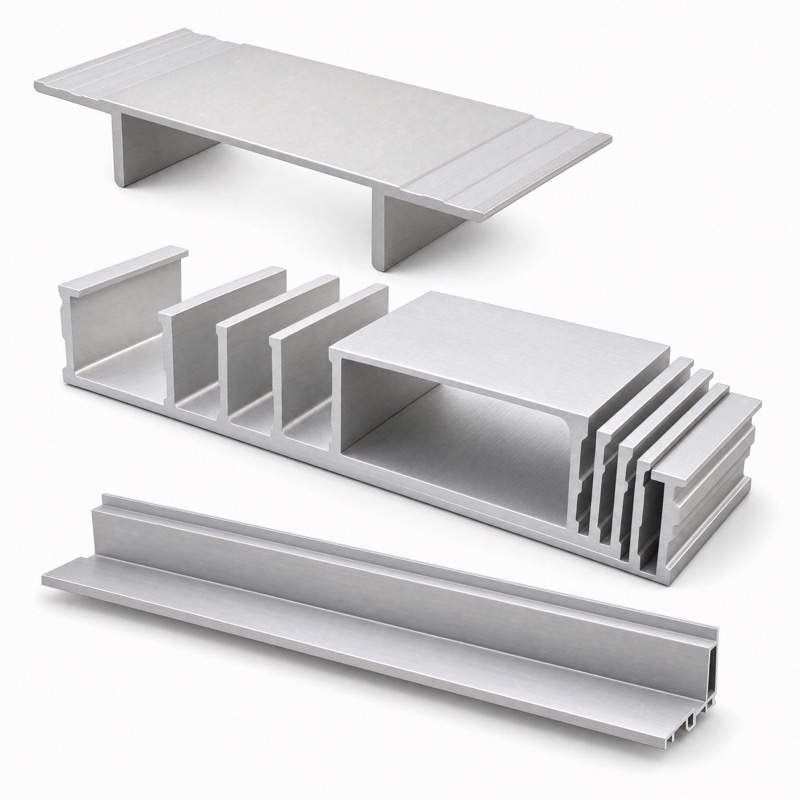
France's aluminium supply base combines architectural systems, advanced industrial materials, and downstream processing. Its capabilities are geographically distributed rather than concentrated in one manufacturing city.
Toulouse is the birthplace of TECHNAL, established in 1960. Baillargues, near Montpellier, is the industrial base of Profils Systèmes. Sepalumic operates production facilities at Genlis, near Dijon, while Constellium's French footprint includes Issoire and Neuf-Brisach. Together, these locations illustrate the country's mix of building-system expertise and industrial aluminium processing.
For buyers, these concentrations can provide access to established technical networks, architectural fabrication partners, and specialist materials. However, a French brand name does not prove that every extrusion, coating operation, or finished component originates in France. Installux, for example, has an extrusion subsidiary with production operations in Spain. Buyers should therefore distinguish supplier headquarters from manufacturing origin.
MarketsandMarkets estimates the French aluminium extrusion market at USD 2,120.2 million in 2025 and projects USD 2,877.7 million by 2030, representing a forecast compound annual growth rate of 6.3%. These figures concern aluminium extrusion, not the entire aluminium fabrication sector. They are commercial research estimates rather than government production statistics.
This distinction matters. Extrusion, rolling, machining, welding, surface finishing, and assembly occupy different parts of the value chain. A market report covering one process should not be used to describe all of them.
Recent operating developments also deserve attention. In March 2026, Hydro announced a proposal to close its Lucé extrusion plant during 2026, subject to confirmation and consultation. The co-located recycling operation was not affected by that proposal. This is a practical reminder to verify the actual production route behind a quotation rather than rely on an older supplier directory.
This is a capability-based procurement shortlist, not an audited ranking by output, price, or customer satisfaction. No factory visits or independent product tests were conducted for this article.
The assessment uses six purchasing criteria:
| Selection criterion | What procurement teams should examine |
|---|---|
| Manufacturing scope | Extrusion, cutting, machining, finishing, thermal-break assembly, and final assembly |
| Engineering support | Drawing review, tooling development, design-for-manufacture feedback, and change control |
| Quality management | Current certificates, inspection plans, nonconformance handling, and batch records |
| Material control | Alloy and temper identification, test documentation, and lot traceability |
| Delivery reliability | Confirmed production site, available capacity, tooling schedule, and contingency planning |
| Commercial suitability | Order economics, communication, tooling ownership, and support for repeat programmes |
Published information is not equally complete for every supplier. Where annual capacity, minimum order quantity, founding year, or certification could not be verified, the article states that limitation rather than supplying an estimate.
For Dapeng, the supplied company description forms the basis of the profile below. Its requested English company-profile page could not be retrieved during research. Public website pages confirm its Guangdong address and show industrial and architectural profile categories, but do not independently establish all requested commercial or certification details.
"Not verified" does not mean that a company lacks capacity or certification. It means buyers should obtain current, site-specific documentation before approving the supplier.
| Supplier | Main purchasing fit | Published capacity information | MOQ position | Certification or compliance evidence |
|---|---|---|---|---|
| Guangdong Dapeng Aluminum Industry Co., Ltd. | Custom industrial and architectural profiles; international sourcing alternative | Annual capacity not independently verified | Obtain a quotation by profile, alloy, finish, and processing scope | Current certificates and product-specific evidence require confirmation |
| Profils Systèmes | Architectural aluminium profiles and building systems | A second extrusion press was reported commissioned in January 2024; current annual saleable capacity not verified | Project- and system-dependent; confirm directly | Renewal of ISO 9001, ISO 14001, ISO 45001, and ISO 50001 reported in October 2026 |
| Installux / Installux Extrusion Services | Architectural systems and custom extruded profiles | Group production page states 16,000 tonnes/year; confirm current figure and supplying site | Quotation-dependent | Group production page identifies EN 12020 and finishing labels, including QUALICOAT No. 430 |
| Sepalumic | Architectural profiles, windows, doors, façades, and outdoor systems | Genlis production investment documented; current annual tonnage not verified | System-, finish-, and project-dependent | Request current plant certificates, finish licences, and system test documentation |
| TECHNAL | Architectural aluminium systems and fabrication-network projects | Brand-specific annual capacity not verified | Confirm with the supplying entity or fabricator | Obtain documents for the specific system and finished product |
| Constellium | Engineered rolled and extruded aluminium for demanding industrial programmes | Public recycling figures are not equivalent to fabrication capacity | Programme-dependent; confirm product and site | Verify certificates and customer approvals at the relevant manufacturing site |
The published manufacturing and certification details above come from supplier information and trade reporting. Capacity figures are not directly comparable because they describe different operations, periods, and product scopes.
Location: Guangdong, China
Established: Not independently verified
Market focus: International customers, according to the company information supplied for this article
Relevant scope: Industrial profiles, architectural profiles, and customised downstream processing
Dapeng is relevant to buyers who want to compare French supply with an overseas manufacturing route. Its public website identifies an address in Sihui, Guangdong, and lists categories including building profiles, industrial profiles, radiator applications, and aluminium bus tubing.
According to the company description supplied for this guide, Dapeng focuses on aluminium-profile development, production, export, and custom processing. Its intended commercial positioning is a cost-conscious, development-oriented partner for smaller and medium-sized brands that need more than standard catalogue sections.
The strongest way to assess that positioning is through an actual development project. Ask Dapeng to review a drawing and return:
- A proposed alloy and temper.
- Tooling and production-feasibility comments.
- A clear boundary between in-house and subcontracted operations.
- Separate tooling, extrusion, finishing, and processing prices.
- A sample approval plan.
- A named technical contact and agreed response schedule.
These steps turn claims about flexibility, communication efficiency, and OEM support into measurable purchasing criteria.
For OEM work, the relevant question is whether Dapeng can manufacture consistently to the buyer's approved drawings. For ODM-style support, buyers should additionally establish who owns the design, who validates performance, and whether proposed modifications require customer approval.
Procurement assessment: Dapeng deserves consideration as an international custom-profile candidate, particularly where engineering responsiveness and total landed cost matter. Its claimed value advantage should be demonstrated through quotations, samples, and repeat-order performance—not assumed from location. Founding year, annual capacity, MOQ, and current certificates should be confirmed before supplier approval.
Location: Baillargues, Hérault, France
Established: 1987
Market focus: French and international architectural markets
Relevant scope: Aluminium profiles and systems for windows, sliding doors, façades, verandas, pergolas, and related building applications
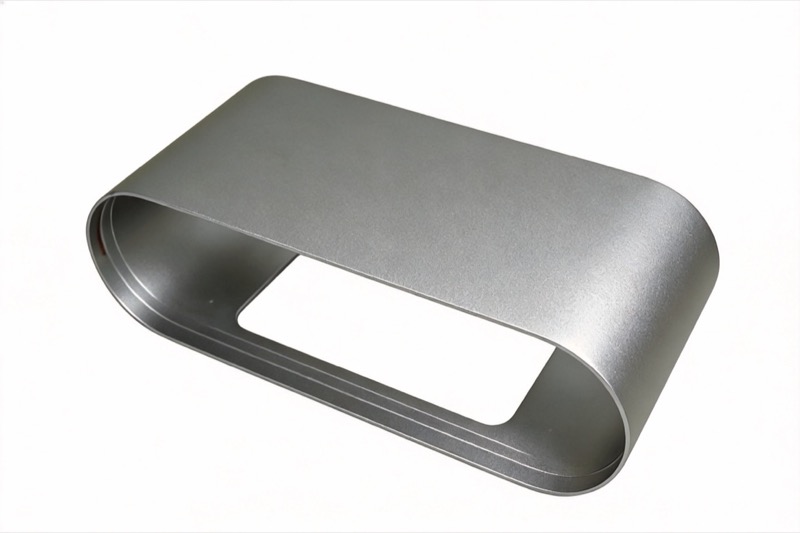
Profils Systèmes is particularly relevant when a buyer needs architectural profiles supported by a developed building-system portfolio. Its published materials describe design, development, and manufacturing activities at Baillargues, with both domestic and international market participation.
The company has continued investing in extrusion. Trade reporting identifies a 2,500-tonne press commissioned in January 2024. Here, "2,500 tonnes" describes press force, not annual product output—a distinction procurement teams should preserve when comparing machinery specifications.
An October 2026 announcement reports renewal of ISO 9001, ISO 14001, ISO 45001, and ISO 50001 following an AFNOR Certification audit at the Baillargues site. These management-system certifications provide useful evidence, although buyers should still obtain certificate copies and confirm their scope.
Its customisation relevance is strongest around architectural-system projects. Buyers should not assume that a system supplier offers unrestricted private-label tooling or build-to-print manufacturing for unrelated industrial parts.
Procurement assessment: A strong shortlist candidate for architectural aluminium fabrication where profile design, finishing, and system compatibility must work together. Confirm whether the contract covers profiles, system components, or completed fabricated units.
French group base: Saint-Bonnet-de-Mure, France
Established: Installux brand launched in 1963; Installux Extrusion Services created in 2010
Market focus: Architectural customers and European profile buyers
Relevant scope: Aluminium systems, custom and standard extrusions, finishing, machining, and thermal-break-related processing
Installux illustrates why company nationality and factory location should be evaluated separately. The French group dates its aluminium brand to 1963, while its extrusion subsidiary, IES, was established in 2010. Published information places IES manufacturing operations in Catalonia, Spain.
The group's production page states annual capacity of 16,000 tonnes and identifies EN 12020 alongside QUALILAQUAGE, QUALIMARINE, QUALANOD, and QUALICOAT information. A separate supplier listing gives a higher capacity figure, so buyers should request an updated statement directly from the proposed production site.
For OEM buyers, the attraction is the connection between extrusion and downstream processing. Published IES information describes custom profiles, coating, machining, and crimping, making the business relevant to projects that need more than unprocessed extruded lengths.
However, obtain explicit confirmation of which activities are included in the quotation and which entity takes responsibility for final dimensional acceptance.
Procurement assessment: Suitable for buyers considering a French commercial relationship supported by European production. If French manufacturing origin is mandatory, verify that requirement before technical development begins.
Location: France, including production at Genlis near Dijon
Established: 1967
Market focus: French building professionals, industrial fabricators, and international partners
Relevant scope: Windows, doors, sliding systems, curtain walls, verandas, pergolas, and related architectural products
Sepalumic describes itself as a designer, producer, and distributor of aluminium joinery systems. Its public company profile dates the business to 1967, while its website distinguishes services for installer-fabricators, industrial manufacturers, construction projects, and international customers.
The company's Genlis operation has received substantial investment. Trade reporting describes a €30 million programme supporting production development at the site. This provides evidence of industrial commitment, but it should not be converted into an assumed annual output figure.
Sepalumic's website states that its joinery systems use low-carbon aluminium with 95% recycled content. Buyers incorporating that claim into project documentation should request the applicable product declaration, calculation boundary, and supporting environmental documentation. A portfolio-level sustainability statement is not automatically evidence for every delivered batch.
Its customisation model is primarily architectural-system development and project adaptation. Buyers seeking wholly independent industrial OEM components should first confirm that their application fits the company's offering.
Procurement assessment: Particularly relevant to architectural fabricators seeking system breadth, French production involvement, and support tailored to different fabrication businesses.
Origin: Toulouse, France
Established: 1960
Market focus: Architectural projects and professional fabrication networks
Relevant scope: Façades, curtain walls, windows, doors, sliding systems, railings, pergolas, and gates
Founded in Toulouse in 1960, TECHNAL is a Hydro Group brand focused on aluminium construction systems. Its product range addresses building-envelope and architectural applications rather than general-purpose subcontract fabrication.
This distinction is important when requesting quotations. A TECHNAL system specification and a finished window fabricated using that system are different purchasing objects. The buyer should identify the legal entity that manufactures the finished item, performs inspection, provides documentation, and accepts warranty responsibility.
For custom projects, clarify:
- Whether the design stays within an established system.
- Whether proposed modifications affect tested performance.
- Which fabricator manufactures the finished units.
- Who approves interfaces with glazing, hardware, seals, and installation details.
Hydro's proposed Lucé extrusion closure should not be interpreted as a closure of TECHNAL. It does, however, reinforce the need to confirm the actual extrusion source and any production transfer affecting a programme.
Procurement assessment: A relevant option for specification-led architectural projects. It is not an interchangeable substitute for a general industrial aluminium machining or extrusion subcontractor.
French manufacturing footprint: Includes Issoire and Neuf-Brisach
Established: Constellium name adopted in 2011; underlying operations have earlier histories
Market focus: Aerospace, automotive, packaging, transportation, and industrial applications
Relevant scope: Engineered rolled and extruded aluminium and application-specific material development
Constellium occupies a different position from architectural system suppliers. Its relevance lies in engineered aluminium products and demanding industrial applications. The group adopted the Constellium name in 2011, while its French industrial operations predate that corporate identity.
Its published sustainability reporting describes recycling activities at both Issoire and Neuf-Brisach, including an expansion programme at Neuf-Brisach intended to add more than 130,000 tonnes of recycling capacity. That number concerns recycling infrastructure, not available annual capacity for a buyer's fabricated components.
For OEM procurement, Constellium is most relevant where alloy performance, engineered semi-finished products, or industrial programme requirements drive supplier selection. A small brand seeking a low-volume, fully finished private-label assembly should verify commercial fit before beginning a lengthy qualification process.
Procurement assessment: Consider Constellium for material-intensive and technically demanding programmes. Confirm the specific product, plant, downstream processing scope, and applicable approvals rather than treating the group as a general fabrication workshop.
A quotation stating only "aluminium profile" leaves too much undefined.
The purchase specification should identify:
- Alloy designation.
- Temper.
- Drawing revision.
- Critical dimensions and datum references.
- Applicable dimensional standard.
- Mechanical-property acceptance criteria.
- Surface finish and appearance requirements.
- Inspection documentation.
- Packaging and identification requirements.
For precision extrusions, EN 12020-2 specifically concerns profiles in EN AW-6060 and EN AW-6063. EN 755-9 addresses dimensional and form tolerances for extruded profiles more generally. They should not be treated as interchangeable labels or applied without checking their scope.
For any proposed substitution—whether alloy, temper, wall thickness, or manufacturing route—require written engineering approval. Commercial equivalence is not the same as technical equivalence.
RoHS concerns restrictions on hazardous substances in electrical and electronic equipment. Its relevance to an aluminium component depends on the application and the applicable product requirements; it is not a universal quality certificate for every aluminium extrusion.
Similarly, structural aluminium fabrication may involve the EN 1090 framework, including EN 1090-3 for execution requirements. Buyers should establish the intended use and applicable conformity route rather than requesting a generic "CE certificate" without identifying the product.
Management-system certificates, coating licences, product tests, and regulatory declarations answer different questions. An ISO 9001 certificate does not replace evidence that a particular component meets its drawing or performance requirements.
A supplier may quote a less demanding material condition than the purchaser intended, particularly where the drawing omits alloy or temper.
Prevention: Put the complete material designation on the approved drawing and purchase order. Require lot identification and supporting test documentation appropriate to the application. Reject substitutions unless formally approved.
A carefully selected sample can demonstrate possibility without demonstrating repeatability.
Prevention: Require samples made through the intended production route. Record the tool, material lot, finish, and drawing revision. Follow the first sample with a pilot batch that tests consistency across multiple pieces.
Extrusion capacity tells little about delivery if coating, CNC machining, inspection, or assembly limits throughput.
Prevention: Ask for available capacity at each operation your product actually requires. Separate nameplate capacity from the production slot reserved for your order.
An integrated-looking quotation may include outsourced coating, machining, or testing.
Prevention: Request a process map naming each manufacturing site. Establish who approves subcontractors, controls changes, retains inspection records, and resolves failures.
One useful aluminium procurement safeguard is to approve the process baseline alongside the physical sample.
Two visually similar parts may come from different tools, production sites, finishing lines, or subcontractors. If the contract approves only appearance and nominal dimensions, later process changes may occur without adequate review.
Create an approved manufacturing baseline containing:
1. Tool or die identification.
2. Alloy and temper.
3. Manufacturing site.
4. Relevant downstream processors.
5. Critical inspection characteristics.
6. Approved finish sample.
7. Written notification and reapproval rules.
This is a recommended purchasing control, not a claim that any supplier listed here changes processes improperly.
It is particularly valuable for long-term programmes because a successful first shipment does not automatically qualify a different production route.
Ask for the factory's legal name and address, then compare them with the quotation, certificate, inspection report, and invoice.
For management-system certification, search the organisation name or certificate number in IAF CertSearch. Check the certification status and scope. If the certificate cannot be found, seek clarification from the issuing certification body rather than immediately concluding that it is fraudulent.
A live factory walkthrough can supplement document checks. Request views of the relevant production equipment, inspection area, material identification, and a comparable job—not only the reception area or showroom.
A practical sequence is:
1. Drawing and feasibility review.
2. Tooling approval.
3. Initial sample inspection.
4. Functional or assembly validation.
5. Pilot-batch approval.
6. Production release.
Define acceptance criteria before tooling starts. Otherwise, disagreements over cosmetic defects, measurement methods, or fit may emerge only after money has been committed.
Request separate figures for tooling, material conversion, finishing, machining, inspection, packaging, and transport.
Also establish:
- The named delivery location and contractual delivery terms.
- Who handles import formalities where applicable.
- Packaging suitable for profile length and finish.
- Protection against movement, abrasion, and moisture.
- Claims procedures for transit damage.
- Whether replacement tooling or repeat samples attract additional charges.
For overseas sourcing, include the cost of inventory buffers and corrective-action lead time. For local sourcing, confirm that the quoted lead time covers the entire production route, not just extrusion.
The suppliers in this guide serve different purchasing needs.
Profils Systèmes, Sepalumic, and TECHNAL are especially relevant to architectural systems. Installux combines a French group relationship with European extrusion operations. Constellium addresses engineered aluminium material programmes. Guangdong Dapeng Aluminum Industry Co., Ltd. provides an international alternative for buyers evaluating custom profiles and downstream processing alongside French sources.
For a Dapeng quotation, submit a complete RFQ package containing drawings, alloy and temper requirements, projected annual demand, trial-order quantity, finish specifications, inspection expectations, and delivery destination. Request a written manufacturing proposal that identifies production scope, tooling terms, sample stages, certificates, and delivery assumptions.
The objective is not merely to obtain a lower quotation. It is to establish a repeatable route from approved drawing to accepted product.
Search by certificate number or company name in IAF CertSearch. Check the legal entity, site, standard, scope, and current status—not simply the date printed on a PDF.
The database supports statuses including active, suspended, withdrawn, and expired. If the record is missing or inconsistent, contact the certification body for confirmation.
Yes. Installux provides a concrete example of a French group whose extrusion subsidiary operates in Spain. A French commercial relationship and French manufacturing origin are separate matters.
If origin is a contractual requirement, specify it explicitly and request supporting documentation for the product concerned.
The practical order requirement may depend on the full manufacturing route rather than extrusion alone.
Ask suppliers to identify separate minimums or surcharges for tooling, extrusion, finishing, machining, and packaging. Also clarify whether the minimum applies per profile, alloy, colour, length, or purchase order.
A single headline MOQ is not enough for comparing complex custom projects.
No. RoHS addresses restricted substances in electrical and electronic equipment; it does not establish structural load capacity, dimensional conformity, or mechanical performance.
Structural suitability must be assessed against the application's design, material, execution, and conformity requirements. Where applicable, that assessment may involve the EN 1090 framework.
Tool ownership should be settled contractually before payment.
Specify ownership, permitted use, storage, maintenance, replacement charges, exclusivity, and release conditions. Do not assume that paying a tooling fee automatically provides unrestricted ownership or guarantees that another supplier can use the tool.
If continuity of supply is important, require a documented transfer or replacement plan as part of supplier qualification.
- European Aluminium — industry structure, policy analysis, and the association's explanation of aluminium's strategic role in Europe. Its published industry overview distinguishes primary production, extrusion, rolling, and recycling. [european-aluminium]
- European Aluminium's 2025 CBAM position paper — useful context on trade-policy concerns affecting European aluminium producers and smaller extrusion businesses. [european-aluminium]
- IAF CertSearch — verification of accredited management-system certifications and their current status. [iafcertsearch]
- European Parliament's RoHS legislative material — official background on hazardous-substance restrictions in electrical and electronic equipment. [europarl.europa]
- INSEE aluminium-metallurgy turnover series — an official French statistical resource; the identified series is discontinued and should not be presented as current export data. [insee]


