


Views: 237 Author: Dapeng Aluminum Publish Time: 2026-10-21 Origin: Site


Content Menu
● Why Source Aluminum Extrusion Bars From China?
>> A substantial manufacturing and materials ecosystem
>> Industrial clusters support different purchasing requirements
● How These Aluminum Extrusion Bar Manufacturers Were Selected
● Supplier Comparison: Capacity, MOQ, and Certification
● The Top 10 Aluminum Extrusion Bar Manufacturers In China
>> 1. Guangdong Dapeng Aluminum Industry Co., Ltd.
>> 2. Guangdong Xingfa Aluminum
>> 3. Guangdong Fenglu Aluminium Co., Ltd.
>> 4. Guangdong JMA Aluminium Profile Factory (Group) Co., Ltd.
>> 5. Guangya Aluminum Co., Ltd.
>> 6. AAG / Guangdong AsiaAlum Senyuan Aluminum Co., Ltd.
>> 7. Guangdong Haomei New Material Co., Ltd.
>> 8. Shandong Nanshan Aluminium Co., Ltd.
>> 9. Conglin Aluminum Technology
>> 10. Wellste
● Technical Buying Guide: Specify the Bar Before Comparing Prices
>> Distinguish extruded bars from other aluminum products
>> Match alloy and temper to the application
>> Understand what compliance documents actually establish
● Common Procurement Problems and How to Avoid Them
>> Alloy substitution or incomplete material evidence
>> Samples that do not represent mass production
>> Low prices based on a different specification
● An Overlooked Insider Check: Test the Bar After Machining
● Sampling, Factory Verification, and Logistics
>> Confirm trade exposure before committing
>> 1. How can I verify whether a manufacturer's ISO certificate has expired or been suspended?
>> 2. Is an EN 10204 Type 3.1 certificate the same as independent third-party testing?
>> 3. Why can a bar pass hardness testing but still fail after machining?
>> 4. Does an aluminum extrusion bar require CE marking and RoHS certification?
>> 5. How can I determine whether a supplier has enough capacity for my order?
China offers professional buyers a broad choice of aluminum extrusion bar manufacturers, from integrated industrial groups to flexible factories supporting custom designs and smaller purchasing programs. The challenge is not finding a supplier. It is identifying a manufacturing partner that can consistently deliver the specified alloy, temper, dimensions, finish, and documentation.
An attractive quotation alone cannot establish that capability. Purchasing managers need to examine billet traceability, extrusion equipment, heat-treatment control, inspection records, and the factory's ability to repeat an approved sample under normal production conditions.
This guide compares ten Chinese suppliers worth considering for aluminum extrusion bars and related custom profiles. Guangdong Dapeng Aluminum Industry Co., Ltd. appears first as the featured manufacturer for buyers seeking a customization-focused partner. The remaining companies represent different strengths in production scale, industrial engineering, surface treatment, and integrated processing.
Editorial disclosure: This is a commercially oriented supplier shortlist, not an independently audited ranking. Dapeng's positioning incorporates company information provided for this article. Other company details draw on manufacturer disclosures, certification records, and public filings. Missing capacity, minimum order quantity, and certification information is identified rather than estimated.
China's National Bureau of Statistics reported approximately 45.02 million tonnes of primary aluminum production in 2025, an increase of 2.4% over 2024. This measures upstream primary metal production—not extrusion bar output—but illustrates the scale of the country's aluminum supply base.
For a more application-specific perspective, a December 2025 industry update published by ALUMINIUM CHINA estimated Chinese aluminum extrusion consumption at approximately 22.87 million tonnes in 2025, compared with 22.32 million tonnes in 2024. These are industry estimates of extrusion consumption and should not be confused with official production or export statistics.
China also maintains a substantial export trade in aluminum products. China Customs reported 3.396 million tonnes of exports under the broad category "unwrought aluminium and aluminium products" in January–June 2026, up 16.3% year on year. That category includes products beyond extrusion bars, so it should not be presented as bar-specific export volume.
The manufacturers in this shortlist illustrate three useful sourcing locations:
- Foshan and the surrounding Guangdong region: a concentration of architectural and industrial extrusion suppliers, including Xingfa, Fenglu, JMA, and Guangya.
- Zhaoqing: a significant Guangdong location for extrusion manufacturing, including the AAG production base.
- Longkou, Shandong: a location for integrated aluminum processing and engineered industrial products, represented by Nanshan and Conglin.
For buyers, the practical advantage is the opportunity to compare several production models within established manufacturing regions. However, location should narrow the search—not replace a factory audit.
The assessment prioritizes six procurement considerations:
1. Manufacturing capability: extrusion equipment, tooling resources, surface treatment, and secondary processing.
2. Technical development: support for alloy selection, drawing review, die design, and product improvement.
3. Quality control: material identification, dimensional inspection, mechanical testing, and batch documentation.
4. Compliance evidence: certificates relevant to the contracted entity, production site, and intended application.
5. Delivery suitability: available press capacity, repeat-order planning, and control of outsourced operations.
6. Commercial fit: whether the supplier's operating model matches the buyer's volume, engineering requirements, and service expectations.
The order below is not a largest-to-smallest ranking. Large annual capacity does not necessarily indicate suitability for a small custom bar order.
Likewise, a company's involvement in aluminum extrusion does not establish that it can manufacture every solid bar size or alloy. Buyers should confirm the requested cross-section, maximum extrusion envelope, cutting length, tolerances, and heat-treatment route before shortlisting.
Capacity figures below are published company or association disclosures, not verified available capacity. They may cover a broader product portfolio than extrusion bars.
"Quotation required" means no dependable, current, product-specific MOQ was established from the reviewed sources. It does not mean that the supplier accepts unrestricted small orders.
| Manufacturer | Published annual capacity or equipment indicator | Aluminum extrusion bar MOQ | Certification evidence and limitations | Primary purchasing fit |
|---|---|---|---|---|
| Guangdong Dapeng Aluminum Industry Co., Ltd. | No current tonnage verified | Quotation required | Current certificates require direct verification | Custom industrial and architectural projects |
| Xingfa Aluminum | More than 1 million tonnes, company-disclosed | Quotation required | Obtain current site-specific certificates | Large, repeat extrusion programs |
| Fenglu Aluminium | More than 600,000 tonnes | Quotation required | Company lists automotive, railway, Qualicoat, and Qualanod credentials; verify scope | Large-section and technically demanding profiles |
| JMA Aluminium | More than 600,000 tonnes | Quotation required | ASI Performance Standard certificate 560; certification began May 2026 | Industrial and architectural programs |
| Guangya Aluminum | Current comparable figure not verified | Quotation required | ASI membership verified; membership alone is not certification | Architectural and industrial profiles |
| AAG / Guangdong AsiaAlum Senyuan Aluminum | Up to 600,000 tonnes in ASI member profile | Quotation required | ASI Performance Standard certificate 563, listed for August 2026–August 2029 | Volume extrusion and finishing programs |
| Guangdong Haomei New Material | Current comparable figure not verified from the reviewed corporate profile | Quotation required | Laboratory accreditation is disclosed; obtain certificates relevant to the order | Engineered profiles and downstream processing |
| Shandong Nanshan Aluminium | Extrusion-specific tonnage not verified | Quotation required | Group discloses ISO systems and ASI certification; confirm entity and scope | Integrated industrial supply programs |
| Conglin Aluminum | 15 extrusion lines reported | Quotation required | Railway, welding, and management-system credentials disclosed; verify producing subsidiary | Transport and fabricated industrial assemblies |
| Wellste | 100,000 tonnes, company-disclosed | Quotation required | ISO 9001 and ISO 14001 claimed; current editions and validity require verification | Custom profiles and processed components |
Sources for the comparison: Dapeng product information; Xingfa, Fenglu, JMA, Haomei, Nanshan, Conglin, and Wellste corporate disclosures; and ASI member and certification records.
Founded: Not independently verified for the exact legal entity and supplied website.
Market coverage: International customers, according to the company information supplied for this article; regional sales shares were not independently verified.
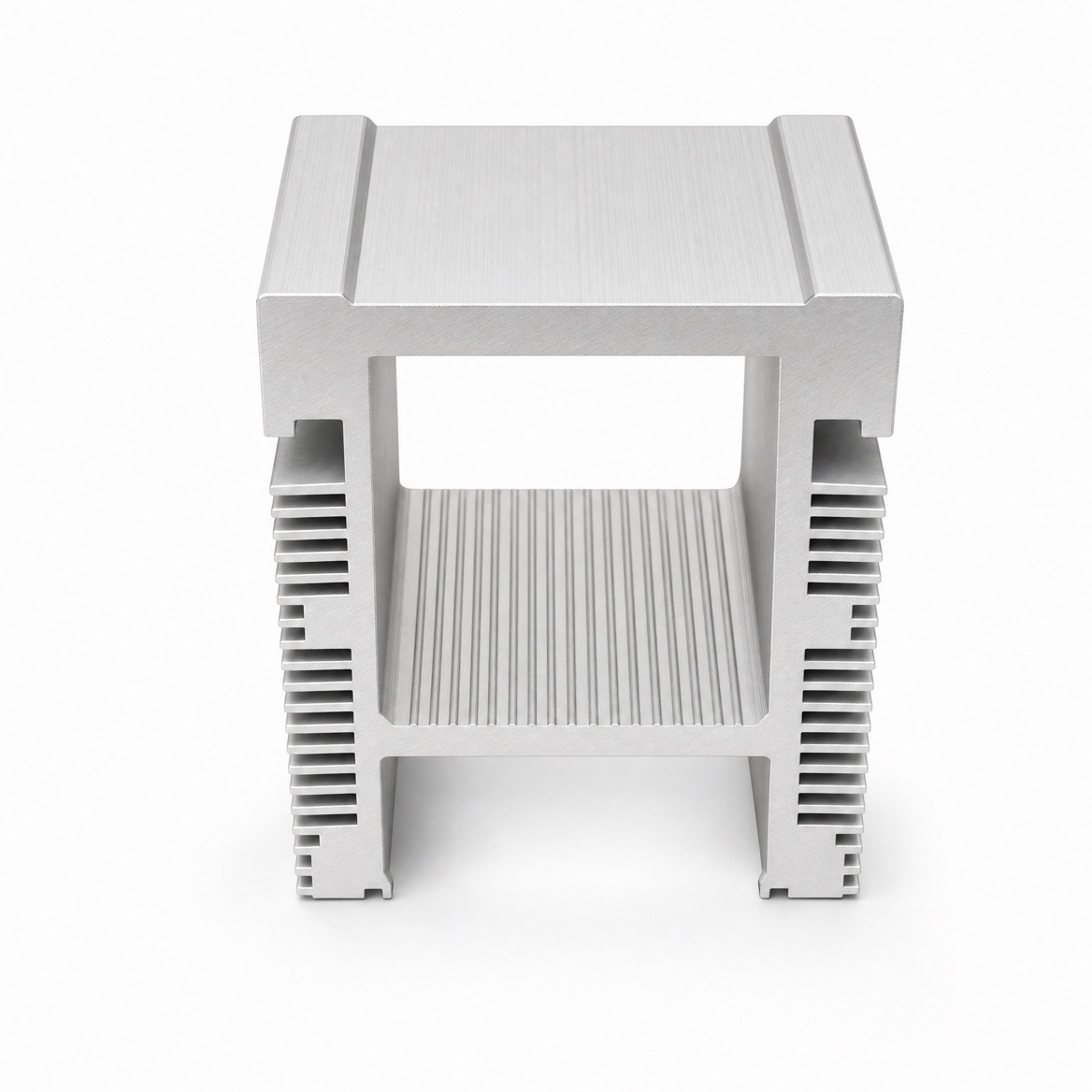
Dapeng is presented as a development-oriented manufacturer offering industrial aluminum profiles, architectural profiles, and customized downstream processing. Its published industrial-profile page describes extrusion-based production, complex cross-sections, modular applications, and customization support.
For small and midsized brands, the relevant purchasing proposition is flexibility: reviewing a new drawing, discussing practical design changes, coordinating finishing requirements, and supporting a custom product without treating it solely as a standard catalog transaction.
Dapeng should therefore be evaluated as a potential value-focused development partner rather than assumed to compete with the largest groups on total tonnage. Its company-supplied positioning emphasizes research and development, communication efficiency, and close support for customized projects. Those service advantages should be tested during the quotation and sampling stages.
OEM/ODM scope to discuss:
- Custom solid bars and industrial profiles.
- Drawing-based extrusion development.
- Cutting and specified downstream processing.
- Architectural and industrial finishing requirements.
- Packaging and repeat-order specifications.
Buyer's checkpoint: Request the business license, confirmed incorporation date, current certificates, equipment list, and a sample inspection package. The supplied About Us page could not be retrieved during research, so this guide does not assign an unverified capacity or certification to Dapeng.
Founded: 1984.
Market orientation: Chinese and international architectural and industrial projects; obtain current regional references for the intended application.
Xingfa is a large extrusion manufacturer with a multi-site production network. Its corporate disclosure describes seven major Chinese production bases and more than 100 complete production lines, with annual capacity exceeding 1 million tonnes. The disclosed manufacturing chain includes casting, tooling, extrusion, surface treatment, and thermal-break profiles.
Its principal relevance is scale and process breadth. Buyers planning recurring orders across multiple sections may benefit from discussing a coordinated supply program rather than purchasing each profile separately.
OEM/ODM scope: Custom profile development, tooling, architectural systems, industrial extrusions, and surface-treatment coordination.
Buyer's checkpoint: Specify the production site in the quotation and approval documents. Group-level capacity does not establish which plant, press, or inspection team will handle the order.
Founded: 1990.
Reported export coverage: Europe, the Americas, and more than 100 countries and regions.
Fenglu reports annual capacity exceeding 600,000 tonnes and more than 100 extrusion production lines. Its disclosed equipment includes 20,000-tonne, 12,500-tonne, and 10,000-tonne presses, supported by smaller press sizes. The company also describes die development, alloy research, surface treatment, and precision downstream processing.
This equipment range makes Fenglu particularly relevant when the requested section requires a substantial extrusion envelope or specialized industrial processing. However, a very large press is not inherently preferable for a small, straightforward bar.
OEM/ODM scope: Custom extrusion design, alloy and tooling development, industrial profiles, finishing, and precision processing.
Buyer's checkpoint: Ask which press size and manufacturing route are proposed for the actual part. Confirm that the quotation reflects suitable equipment, not simply the group's maximum capability.
Founded: 1993.
Reported export coverage: More than 70 countries and regions.
JMA combines architectural and industrial extrusion production with substantial finishing and testing resources. Its corporate profile reports more than 600,000 tonnes of annual capacity, 62 automatic extrusion lines, machining resources, and applications spanning machinery, electronic communications, solar products, transportation, and construction.
A 2026 ASI audit provides an additional evidence point. It reports approximately 272,000 tonnes of post-casting products for 2025 and an export share of approximately 15%. This is reported output within the audit's defined scope—not the same measure as the company's advertised capacity.
OEM/ODM scope: Custom industrial sections, architectural profiles, tooling, surface treatment, machining, and system-related development.
Buyer's checkpoint: Compare actual output, installed capacity, and available production slots separately. These figures answer different procurement questions.
Founded: 1996.
Market orientation: Architectural and industrial applications; current geographic sales concentration was not established from the reviewed association profile.
Guangya's ASI member profile identifies a Foshan-based manufacturer integrating research and development, design, production, and sales. Its product scope includes architectural aluminum profiles, industrial profiles, and aluminum doors, windows, and curtain walls.
It is a relevant candidate when a purchasing program combines straightforward extrusion requirements with architectural or industrial profile development.
OEM/ODM scope: Drawing-based profiles, building-system components, industrial sections, and associated product development.
Buyer's checkpoint: Verify credentials independently. An association membership demonstrates participation in that organization, but it must not be described as proof that a specific factory holds an active certification.
Founded: 1990, according to its ASI member profile.
Market orientation: Architectural and industrial projects, including automotive, electronics, telecommunications, and related applications.
AAG's ASI profile reports annual production capacity of up to 600,000 tonnes at its Zhaoqing manufacturing location. The profile lists a broad range of industrial applications and an ASI Performance Standard certification period running from August 11, 2026, to August 10, 2029.
Its manufacturing disclosures also describe extrusion, powder coating, painting, and anodizing resources. This makes the company relevant for buyers requiring coordinated extrusion and finishing at significant scale.
OEM/ODM scope: Custom extrusion profiles, surface-treatment programs, architectural components, and industrial sections.
Buyer's checkpoint: Ensure that the purchase contract, certificate holder, manufacturing site, and exporter are correctly identified. A familiar group name does not eliminate the need to verify the legal contracting entity.
Founded: 1991.
Market orientation: Architectural and industrial profile applications; request current references for the destination market.
Haomei's corporate history dates its founding to 1991 in Dali, Foshan. Its current corporate profile identifies the listed company under stock code 002988 and describes an integrated chain covering melting and casting, die design and manufacturing, extrusion, powder coating, and downstream processing.
The company is a relevant candidate where buyers need engineering support across several manufacturing stages rather than extrusion alone.
OEM/ODM scope: Custom profiles, tooling development, finishing, and deeper processing of industrial and architectural components.
Buyer's checkpoint: Confirm the exact company identity. Several unrelated aluminum businesses use similar English names. Match the Chinese legal name, registration details, address, and bank beneficiary before placing an order.
Founded: 1993.
Market orientation: Industrial sectors including automotive, aerospace, rail transport, power, shipping, and building systems.
A public filing identifies Shandong Nanshan Aluminium as established on March 18, 1993. Nanshan's corporate profile describes an integrated aluminum chain encompassing upstream processing, casting, extrusion, rolling, and recycling. Its extrusion equipment includes presses ranging from 35 MN to 150 MN.
That integration makes Nanshan relevant to buyers developing long-term industrial supply programs with demanding material and process requirements.
OEM/ODM scope: Engineered industrial profiles, sector-specific material development, and aluminum components within broader supply programs.
Buyer's checkpoint: Isolate the extrusion business in the qualification process. Group-wide aluminum capability should not be treated as evidence of available capacity for a particular bar specification.
Founded: 1992, according to its Clinalu corporate presentation.
Market orientation: Rail transit, lightweight vehicles, marine equipment, and engineered industrial applications; regional sales shares were not verified.
Conglin's disclosures describe extrusion, welding, large-format machining, and lightweight equipment manufacturing. Its English corporate profile reports 15 extrusion lines and identifies railway, welding, classification-society, and management-system qualifications across relevant subsidiaries.
The company is especially relevant when an extrusion bar or profile becomes part of a fabricated assembly. In that situation, machining, joining, and inspection capabilities can matter as much as the extrusion operation.
OEM/ODM scope: Industrial extrusions, machined sections, welded aluminum structures, and lightweight assemblies.
Buyer's checkpoint: Establish which subsidiary will perform each process and which certificates cover it. Do not assume a welding qualification applies throughout the group.
Founded: 1996.
Reported market coverage: International customers across multiple countries and regions; independently verified regional sales shares were not available.
Wellste markets custom aluminum extrusion services and reports annual production capacity of 100,000 tonnes. Its published materials describe extrusion, anodizing, coating, and integrated profile supply.
The company is a relevant candidate for buyers comparing drawing-based custom profiles and processed components.
OEM/ODM scope: Custom cross-sections, tooling coordination, finishing, and downstream profile processing.
Buyer's checkpoint: Request current certificates directly from the issuing body or a recognized verification platform. Some publicly accessible Wellste pages display older standard editions, so website wording should not substitute for checking current certification status.
A purchasing inquiry should identify whether the requirement is:
- A solid round, square, rectangular, or hexagonal extrusion bar.
- A custom solid section.
- A hollow profile.
- A precision-machined component made from an extrusion.
ASTM B221/B221M covers aluminum and aluminum-alloy extruded bars, rods, wire, profiles, and tubes. The EN 755 series addresses extruded rod, bar, tube, and profiles, with separate provisions for mechanical properties and different product geometries. Select the applicable standard and edition in the purchase specification.
Avoid a quotation request that says only "aluminum bar." It leaves too much room for differences in product route, tolerance, and inspection obligations.
Common sourcing discussions involve 6063, 6061, and 6082:
| Alloy | Typical purchasing consideration | What to establish before approval |
|---|---|---|
| 6063 | Complex profiles and appearance-sensitive applications | Required strength, surface quality, and finish consistency |
| 6061 | Structural and machined components | Mechanical properties, machining behavior, and distortion limits |
| 6082 | Higher-strength industrial applications | Applicable product standard, section size, and temper requirements |
These are starting points, not interchangeable material specifications. Alloy selection must be tied to the application, drawing, and required test results.
The order should state the alloy and temper together. It should also identify the mechanical acceptance criteria under the selected standard. A supplier's general claim to produce "T6 aluminum" is insufficient.
Different credentials answer different questions:
- ISO 9001 concerns the quality management system; it does not prove that a shipment meets the drawing.
- An EN 10204 Type 3.1 inspection certificate contains results from specific inspection and is validated by the manufacturer's authorized representative independent of manufacturing.
- CE marking is a regulatory marking, not a universal factory-quality certificate. Its applicability depends on the product and intended use.
- RoHS addresses restricted substances within its regulatory scope; it does not certify alloy strength.
- ASI certification must be checked for the named entity, standard, scope, and validity period.
For construction products, applicable routes can involve standards such as EN 15088. Do not assume that every loose extrusion bar requires the same documentation as a fabricated structural component.
A generic material declaration may not demonstrate which billet batch produced the delivered bars.
Require traceability between the shipment labels, production records, and inspection documents. For critical applications, agree on chemistry verification and mechanical testing rather than relying solely on a general certificate of conformity.
Treat sample approval as approval of both the product and its proposed production route.
Record:
1. Drawing revision and acceptance criteria.
2. Alloy and temper.
3. Die identification.
4. Finishing specification.
5. Inspection method.
6. Approved manufacturing location.
Require notification before material, tooling, site, or processing changes. This makes the approved sample a controlled reference rather than an isolated demonstration piece.
Normalize quotations before comparing price per kilogram.
Ask each supplier to quote the same:
- Alloy, temper, and dimensional tolerances.
- Surface-treatment requirements.
- Cutting length and machining scope.
- Inspection documents.
- Packaging method.
- Order quantity and delivery basis.
- Tooling ownership and maintenance terms.
A lower unit price has limited meaning if it excludes machining, certification, protective packaging, or a required inspection.
An extrusion can meet incoming dimensional checks yet distort after substantial material removal.
Research hosted by the U.S. Department of Energy documents how residual stresses introduced during quenching can cause distortion during machining of age-hardening aluminum alloys, including 6061. Separate machining research also identifies residual stresses as a driver of distortion in thin-walled aluminum components.
For a buyer ordering extrusion stock for machining, this creates an important qualification gap: straightness before machining does not necessarily establish dimensional stability afterward.
A practical approval procedure is to:
1. Obtain production-representative material.
2. Machine it using the intended removal sequence and workholding.
3. Release it from the fixture.
4. Measure flatness, twist, and critical dimensions.
5. Agree on acceptance limits before volume production.
Do not solve the problem by demanding an arbitrary stress-relief process. Ask the supplier and machining team to propose a route that preserves the required material properties while controlling distortion.
This check can reveal a failure mode that a polished sample, hardness result, or incoming visual inspection will miss.
A practical purchasing sequence is:
1. Document review: business license, manufacturing address, certificates, equipment, and process flow.
2. Technical review: drawing, alloy, temper, finish, tolerances, and inspection plan.
3. Initial sample: dimensional report and agreed material evidence.
4. Production-representative pilot: assembly, machining, finishing, and packaging validation.
5. Controlled release: approved specification, change-control requirements, and delivery schedule.
Factory discussions should include outsourced processes. If coating, heat treatment, testing, or machining occurs elsewhere, identify the subcontractor and the controls applied.
Trade measures can materially change landed cost. A U.S. Federal Register notice published in August 2026 confirms continuing antidumping administrative proceedings covering aluminum extrusions from China. The applicable treatment depends on the product scope, exporter, producer, and relevant entry circumstances. Buyers should obtain a current assessment from their customs broker before shipment.
Also agree on practical logistics details:
- Whether the bars ship at full length or cut length.
- Bundle dimensions and lifting requirements.
- Surface protection and moisture precautions.
- Net versus gross weight.
- Inspection access before loading.
- Responsibility for damage claims.
- Consistency among invoice, packing list, and product description.
Choosing among aluminum extrusion bar manufacturers in China requires more than comparing company size or quoted price. The strongest purchasing decision connects the supplier's equipment and engineering resources with the exact alloy, geometry, finishing requirements, documentation, and delivery program.
Large groups such as Xingfa, Fenglu, JMA, and Nanshan offer different forms of scale and integration. Conglin warrants consideration for fabricated industrial assemblies. Dapeng provides a customization-focused option for buyers seeking a closer development relationship, subject to the same document, sample, and production checks applied to every supplier.
To begin a project discussion with Guangdong Dapeng Aluminum Industry Co., Ltd., submit the drawing, alloy and temper, annual demand, initial order quantity, finishing requirements, destination market, and required inspection documents. Request a technical review and production-representative sample before approving volume supply.
Check the legal entity, manufacturing address, standard, certificate number, scope, and validity dates.
Use the certification body's verification service or IAF CertSearch, which supports searches by company name and certificate details. Confirm that the certificate covers manufacturing activities relevant to the order, not merely a sales office. If the database result is unclear, contact the issuing body directly.
No. A Type 3.1 certificate includes results from specific inspection and is validated by the manufacturer's authorized inspection representative independent of manufacturing. It is not automatically an independent laboratory report.
Type 3.2 involves additional validation by the purchaser's authorized representative or an inspector designated under applicable regulations. Specify the document required before ordering.
Hardness does not assess every relevant property or reveal every source of distortion. Residual stresses can redistribute as material is removed, changing the finished part's shape.
For heavily machined components, qualify the material using a representative machining trial as well as the agreed material and dimensional tests.
There is no universal answer based only on the material being aluminum.
CE marking depends on the applicable product legislation and intended use. RoHS concerns restricted substances within its scope, particularly electrical and electronic equipment. Obtain application-specific advice and documentation rather than requesting a generic "CE/RoHS factory certificate."
Separate published capacity from demonstrated output and available production time.
Request the proposed press, production site, finishing route, current scheduling window, and inspection resources. Then validate performance through a pilot and repeat order. JMA's public information illustrates the distinction: advertised annual capacity and audited annual output are different measures, not conflicting versions of the same figure.
- [National Bureau of Statistics of China — Industrial Production Operation in December 2025]: official 2025 industrial and primary aluminum production figures. [stats.gov]
- [General Administration of Customs of China — Major Exports by Quantity and Value, June 2026]: official export statistics for unwrought aluminum and aluminum products. [english.customs.gov]
- [U.S. Federal Register — Aluminum Extrusions From China, August 2026 Administrative Review]: destination-market trade-remedy context. [federalregister]
- [ALUMINIUM CHINA — Aluminium Extrusion Industry Shows Stable Rise Through 2032]: December 2025 extrusion-market estimates. [aluminiumchina]
- [Aluminium Stewardship Initiative — Guangya Member Profile]: company establishment and business scope. [aluminium-stewardship]
- [Aluminium Stewardship Initiative — AAG Member and Certification Profile]: company information and certification period. [aluminium-stewardship]
- [Aluminium Stewardship Initiative — JMA Performance Standard Audit Report]: 2026 certification and audited entity information. [aluminium-stewardship]
- [IAF CertSearch — Accredited Certification Validation]: certificate-status verification. [iafcertsearch]
- [Hydro — Interpretations of Technical Specifications]: ASTM B221 and EN 755 product-standard context. [hydro]
- [Alumeco — Certificates and Declarations]: inspection-document types and regulatory distinctions. [alumeco]
- [U.S. Department of Energy OSTI — Overcoming Residual Stresses and Machining Distortion]: technical research on aluminum machining distortion. [osti]
- [Dapeng — Industrial Profiles]. [dapeng-alu]


