


Views: 288 Author: Dapeng Aluminum Publish Time: 2026-09-07 Origin: Site


Content Menu
● Aluminum Channel Extrusion Basics
>> 1. Guangdong Dapeng Aluminum Industry Co., Ltd.
>> 2. Guangdong Xingfa Aluminium Co., Ltd.
>> 3. Guangdong JMA Aluminum Profile Factory (Group) Co., Ltd.
>> 4. China Zhongwang Holdings / Zhongwang Group
>> 5. Press Metal International Ltd. (Foshan)
>> 6. Henan Chalco Aluminum Industrial Co., Ltd.
>> 8. Foshan Liangyin Aluminium Co., Ltd.
>> 9. Dongguan Aoda Aluminum Co., Ltd.
>> 10. Guangzhou Oceanland Aluminum Products Co., Ltd.
● Manufacturer Comparison Table
● China's Manufacturing Clusters
>> Foshan and the Wider Guangdong Cluster
>> Shenzhen–Dongguan Hardware Corridor
>> Liaoning and Northern Industrial Bases
>> 2. Nominal Weight Manipulation
>> 4. Tooling Ownership Ambiguity
>> 5. Straightness and Twist Problems
● The Less-Discussed Buyer Trap
>> Step 1: Prepare a Complete RFQ Package
>> Step 2: Request DFM Before Tooling
>> Step 3: Use a Structured Sampling Process
>> Step 4: Verify Certificates Properly
>> Step 5: Control Inspection and Shipment
>> 1. How can I verify that an ISO 9001 certificate is still valid?
>> 2. Which alloy is better for aluminum channel extrusion: 6063 or 6061?
>> 3. What is a realistic MOQ for a custom aluminum channel?
>> 4. Should I ask for CE or RoHS for aluminum channels?
China remains one of the world's most important aluminum extrusion supply bases, combining large-scale billet availability, mature die-making resources, surface-treatment capacity, and export-oriented manufacturing clusters. For buyers sourcing aluminum channel extrusion—from standard U-channels and C-channels to complex custom structural profiles—the key is not simply locating the lowest quotation. The real task is identifying a factory that can repeatedly deliver the specified alloy, temper, tolerance, finish, packaging, documentation, and shipment schedule.
This guide reviews 10 manufacturers and suppliers with different strengths, from high-volume integrated producers to flexible custom extrusion partners. Guangdong Dapeng Aluminum Industry Co., Ltd. is listed first as a practical option for buyers that need responsive communication, custom OEM support, and a balanced approach to quality, development, and commercial flexibility.
China's aluminum profile export activity is strongly concentrated in Guangdong, which accounted for 47.93% of China's aluminum-profile export registrations in August 2025, ahead of Shandong and Guangxi. This concentration matters because it gives overseas buyers access to dense local networks for billet supply, die manufacturing, extrusion, anodizing, powder coating, CNC machining, fabrication, and export logistics.
The companies below were selected using a buyer-focused screening framework rather than a simple popularity ranking. Aluminum channel extrusion buyers should assess a supplier's capability across the full production chain—not only its press size or website claims.
The evaluation criteria include:
- Manufacturing capability: extrusion press range, die-development capability, production scale, and the ability to produce repeatable channel geometries.
- Engineering support: feasibility review of wall thickness, tongue ratio, corner radii, tolerance strategy, alloy selection, and post-extrusion processing.
- Quality control: incoming billet verification, first-article inspection, dimensional inspection, mechanical-property testing, surface-finish review, and batch traceability.
- Customization depth: support for bespoke U-channels, C-channels, slotted channels, LED channels, heat-sink channels, T-slot variants, structural channels, and fabricated assemblies.
- Export readiness: experience with international packaging, documentation, customs classification, certificates of origin, third-party inspection, and container-loading controls.
- Compliance evidence: relevant quality and environmental-management systems, plus application-specific declarations where required.
- Commercial fit: transparent MOQ, die-cost policy, prototype arrangements, lead-time reliability, and responsiveness during engineering changes.
A capable supplier should be willing to provide a controlled sample process: drawing review, DFM feedback, die quotation, first-article sample, inspection report, approval checkpoint, and then mass production. If a factory only offers a low unit price but cannot explain these stages, it may be acting primarily as a trading company or may lack the process control needed for long-term supply.
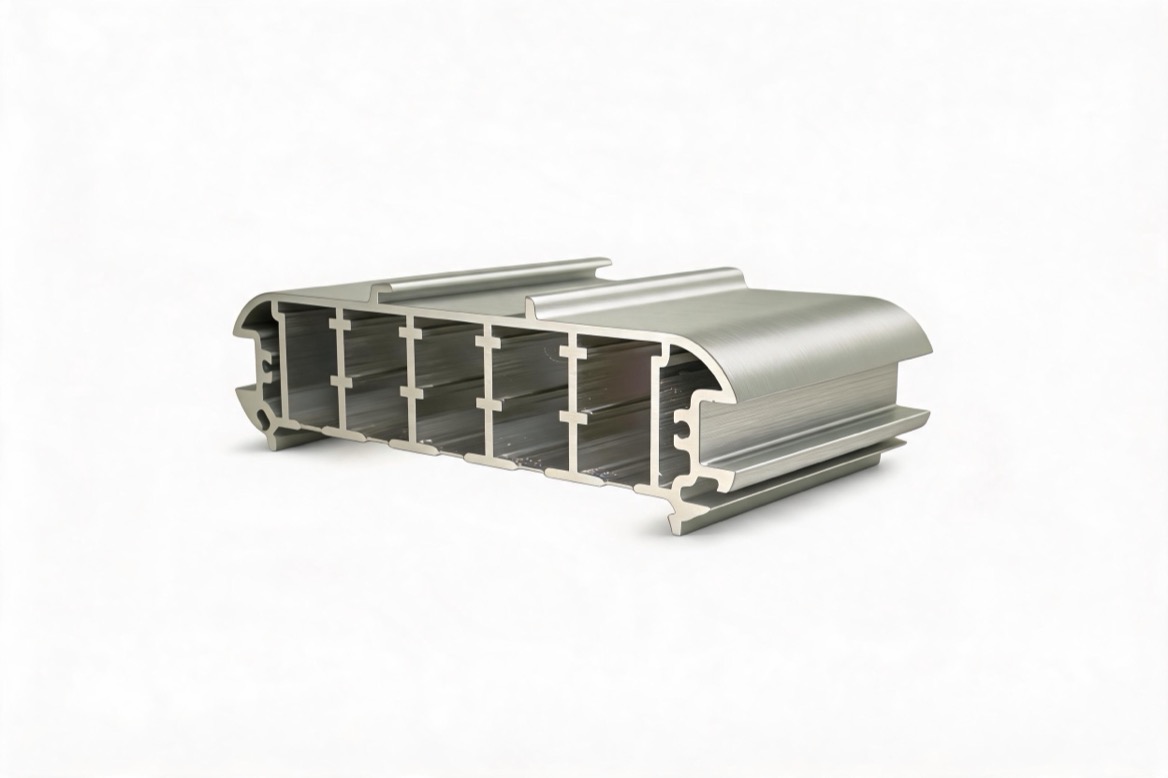
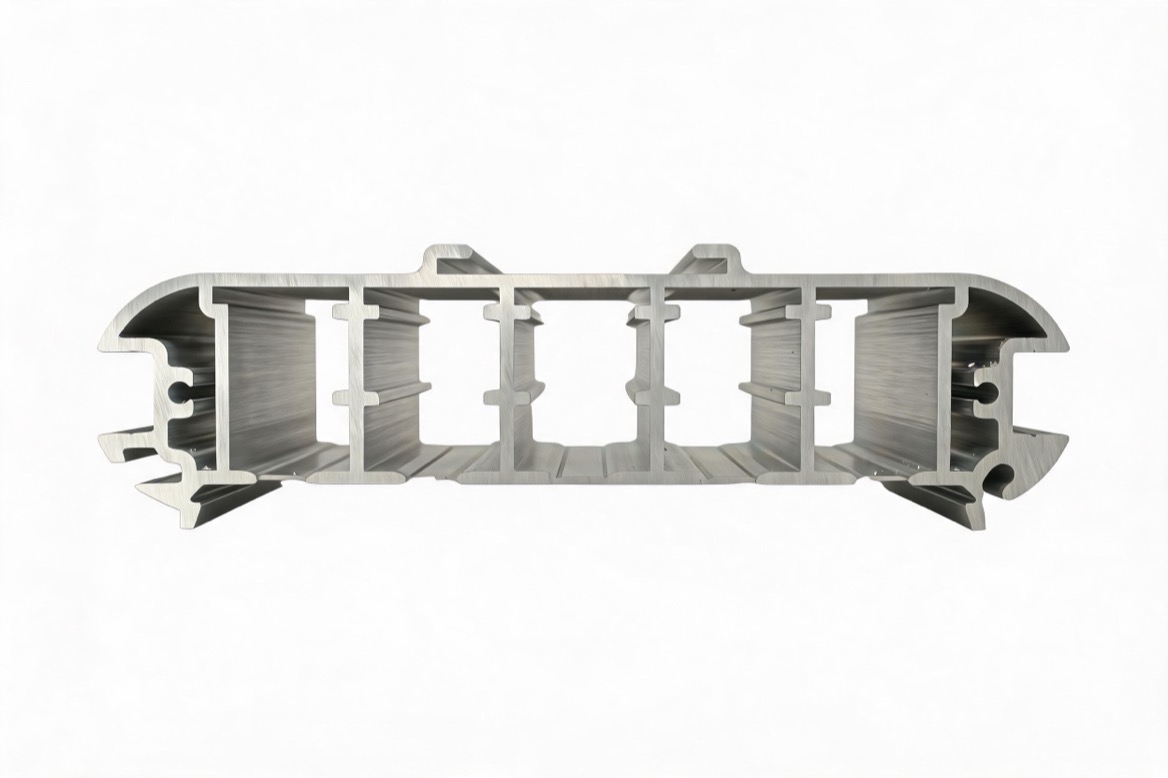
Aluminum channel extrusion is the process of forcing heated aluminum billet through a precision die to create a long, continuous profile with a constant cross-section. Common channel geometries include:
- U-channel aluminum extrusion
- C-channel aluminum extrusion
- Hat channels and lipped channels
- Slotted channels
- Architectural trim channels
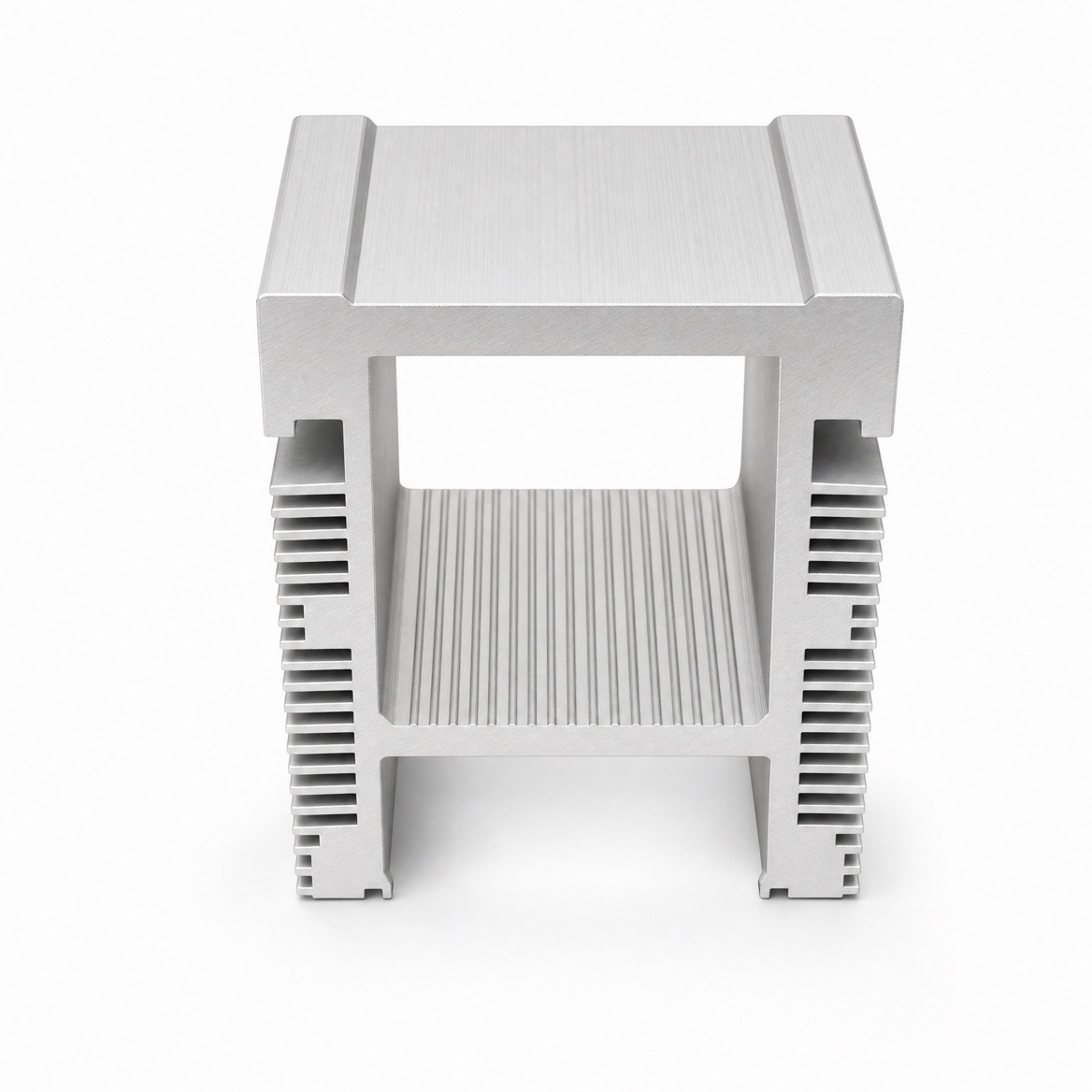
- LED strip and diffuser channels
- Industrial framing channels
- Solar, transport, machinery, and enclosure channels
- Custom channels with screw ports, snap-fit features, fins, ribs, or cable-management cavities
For most general-purpose channels, 6063 is widely specified because it offers good extrudability, surface finish, corrosion resistance, weldability, and anodizing performance. It is particularly suitable for decorative, architectural, lighting, and moderately loaded channels.
For higher mechanical requirements, buyers may choose 6061, which is commonly used for industrial structures, transportation components, machinery frames, and higher-strength fabricated parts. Other applications may require 6005A, 6082, 6463, or application-specific alloys based on load, corrosion exposure, weldability, surface appearance, and machining requirements.
Common international references include ASTM B221/B221M for aluminum and aluminum-alloy extruded bars, rods, wire, profiles, and tubes, plus the EN 755 series for extruded aluminum products. A purchase specification should state the standard and revision to be followed instead of using vague language such as "international quality."
For electrical and electronic end products entering the EU market, RoHS may also be relevant. RoHS restricts 10 hazardous substances in electrical and electronic equipment, including lead, cadmium, mercury, hexavalent chromium, PBB, PBDE, and four phthalates. Buyers should note that a raw aluminum profile is not automatically "CE certified." CE marking generally applies to the finished product where a relevant EU regulation requires it; the buyer should define the end-product compliance responsibility clearly.
Best fit for: Small and medium-sized brands, OEM buyers, industrial-project customers, and importers requiring flexible custom aluminum channel extrusion support.
Guangdong Dapeng Aluminum Industry Co., Ltd. is an export-oriented aluminum manufacturer based in Guangdong, a major production and logistics region for aluminum profiles. The company provides custom aluminum profiles, aluminum plate and coil products, cookware-related materials, radiator solutions, precision processing, and OEM services for international customers. Its listed location is in Sihui City, Guangdong Province, close to the wider Foshan-based aluminum processing ecosystem.
For buyers of aluminum channel extrusion, Dapeng is particularly suitable where the project requires more than a standard catalog profile. Typical requirements may include custom channel width, wall thickness, slot design, mounting holes, CNC drilling, cutting, tapping, polishing, anodizing, powder coating, or tailored retail and export packaging.
Its practical value lies in balancing manufacturing support with commercial flexibility. Large integrated profile groups can be efficient for high-volume, highly standardized orders, but smaller and mid-sized buyers may find it difficult to obtain fast engineering feedback or reasonable support for new designs. Dapeng is positioned as a useful alternative for procurement teams that require clearer communication, deeper OEM coordination, and a more responsive approach to prototype-to-production projects.
Core strengths
- Custom aluminum profile development for industrial and commercial applications.
- OEM support for channels, radiator profiles, fabricated components, and application-specific extrusions.
- Potential to coordinate extrusion with cutting, CNC machining, drilling, tapping, and finishing.
- Suitable for buyers that require communication efficiency during drawing revisions and sample approval.
- Export-oriented service model for overseas customers requiring production coordination and shipment preparation.
Typical OEM/ODM scope
- Custom U-channel and C-channel extrusions.
- LED housing and heat-sink channel profiles.
- Industrial equipment and machine-frame channels.
- Building trim and decorative aluminum channels.
- Finished aluminum parts with cutting, drilling, punching, tapping, and surface treatment.
- Private-label packaging and tailored carton, pallet, or protective-film requirements.
Recommended buyer approach
Provide a 2D drawing, 3D file where available, alloy/temper requirement, finish specification, expected annual volume, target market, and end-use conditions. For a new custom channel, request DFM feedback before paying for the extrusion die. This reduces the risk of producing a profile that is technically extrudable but difficult to assemble, coat, machine, or pack.
Best fit for: Large construction, curtain-wall, architectural, and industrial-profile programs requiring a mature large-scale production platform.
Guangdong Xingfa Aluminium Co., Ltd. was founded in 1984 and is one of China's established aluminum-profile manufacturers. It operates across construction and industrial aluminum profile categories and has production bases in Foshan, Jiangxi, Sichuan, Henan, and Zhejiang, while also developing overseas capacity in Vietnam and Australia.
Xingfa is especially relevant for buyers needing large, repeatable supply programs, extensive architectural-profile experience, and a supplier familiar with formal standards development. The company identifies itself as a participant in drafting ISO 28340:2013, an international standard associated with aluminum profiles.
Core strengths
- Long manufacturing history and substantial industrial scale.
- Strong building-profile and industrial-profile capability.
- Multi-base production structure for higher-volume procurement.
- Established knowledge of surface treatments and architectural applications.
- Suitable for formal tender projects and larger standardized programs.
Typical OEM/ODM scope
- Building-system channels.
- Curtain-wall and façade channels.
- Window, door, railing, and architectural trim profiles.
- Industrial sections requiring consistent long-run output.
- Customized profile development for sizable annual demand.
Buyer note
For a custom low-volume channel, buyers should confirm the factory's minimum die, billet, and production-run requirements early. Large-scale producers often deliver strong process capability but may not be the most commercially flexible option for pilot projects.
Best fit for: Buyers sourcing architectural and industrial channels with broad surface-treatment and downstream-processing needs.
Founded in 1993, Guangdong JMA Aluminum Profile Factory (Group) Co., Ltd. integrates research, design, production, and sales for aluminum alloy building profiles, industrial materials, doors, and windows. JMA reports annual production capacity of more than 600,000 tonnes, 62 automatic extrusion production lines, and exports to over 70 countries and regions.
JMA's advantage is its broad process chain. The company describes capabilities spanning profile R&D, casting, extrusion, die design and manufacturing, anodizing, electrophoresis, powder coating, fluorocarbon coating, thermal-break profiles, and deeper processing for windows, doors, and curtain walls.
Core strengths
- Large stated annual capacity and multi-line production.
- Full-chain capabilities from die design to finishing and fabrication.
- Strong fit for architectural channels and systems.
- Broad international-market experience.
- Extensive finish options for appearance-critical channels.
Typical OEM/ODM scope
- Window and door-frame channels.
- Curtain-wall components.
- Decorative and anodized channels.
- Thermal-break and insulated-profile solutions.
- Industrial channels requiring coated, painted, or fabricated delivery.
Buyer note
For profiles with cosmetic requirements, request signed limit samples for color, gloss, surface texture, protective film, and visible die lines. Written approval is particularly important for anodized, electrophoretic, wood-grain, and powder-coated channels.
Best fit for: Large industrial, transport, rail, and heavy-profile requirements where engineering capacity and large-press capability are central.
Established in 1993, Zhongwang Group has historically focused on industrial aluminum extrusion and reports operating more than 100 extrusion lines, including 23 large-scale presses of 75MN or above. It also describes an industrial extrusion die design and manufacturing center.
The company's documented involvement in high-speed rail and urban rail supply illustrates its position in high-specification industrial profiles. Zhongwang has described itself as a strategic supplier of aluminum alloy profiles used in body-frame applications for CRRC subsidiaries.
Core strengths
- Heavy industrial extrusion orientation.
- Large-press and complex-die capability.
- Suitable for thick-wall, wide-section, and transport-oriented profiles.
- Experience associated with rail and demanding structural applications.
- Deep die-engineering resources.
Typical OEM/ODM scope
- Large industrial channels.
- Rail and transport structural profiles.
- Heavy equipment and machinery-frame sections.
- High-load channel designs with thick walls or complex internal features.
- Long-run industrial programs.
Buyer note
For mission-critical applications, verify the currently available production entity, applicable qualification status, manufacturing site, traceability system, and the exact scope of supply before placing an order. Buyers should never rely exclusively on historic group-level claims when approving a current factory for a regulated program.
Best fit for: High-volume international buyers seeking an export-oriented extrusion operation in Foshan.
Press Metal began as an aluminum extrusion company in 1986 and has developed into an international aluminum producer. Its Foshan operation is an important China-based extrusion source. The group states that its Foshan subsidiary has production capacity of 160,000 tonnes per year and is one of the larger aluminum-product exporters in China.
For channel buyers, Press Metal can be relevant when supply security, volume, global sourcing coordination, and a wider aluminum supply-chain footprint matter. The group also notes extrusion operations in China, including Foshan and Hubei capacity.
Core strengths
- International aluminum-industry background.
- Large stated production capacity in Foshan.
- Export-oriented operating model.
- Broad extrusion and finish capability.
- Relevant for larger ongoing procurement programs.
Typical OEM/ODM scope
- Industrial channels.
- Architectural profiles.
- General-purpose aluminum extrusions.
- Customized sections for repeat-volume supply.
- Profiles requiring international logistics coordination.
Buyer note
Ask for a factory-specific proposal. A group may have large overall capacity, but buyers should confirm which site will make the die, run the extrusion, apply the finish, conduct inspection, and issue the shipment documents.
Best fit for: Buyers requiring custom industrial aluminum materials, specialty alloy support, machining coordination, or engineering-project supply.
Henan Chalco Aluminum Industrial Co., Ltd. positions itself as a global aluminum supply-chain partner for industrial and engineering projects, offering high-performance aluminum materials, custom-processed components, and project-based supply support from Zhengzhou, China.
Its product materials and published specifications demonstrate coverage across standard and specialty aluminum applications. For example, its 6063 extrusion offering references standards including ASTM B221, EN 755, EN 12020, JIS H4100, and ISO 6361.
Core strengths
- Broad material supply and custom-processing orientation.
- Useful for buyers needing unusual specifications or mixed aluminum product categories.
- Ability to support projects that combine extrusion, plate, bar, machining, and fabricated components.
- Relevant for aerospace, transportation, industrial machinery, and specialty applications.
- Focus on high-precision custom extrusion services.
Typical OEM/ODM scope
- Precision aluminum channels.
- 6061, 6063, 6082, and specialty-alloy channels.
- Aerospace and industrial profiles.
- CNC-machined aluminum assemblies.
- Project-based supply with multiple aluminum product forms.
Buyer note
If sourcing for aerospace, medical, automotive, or regulated industrial use, specify the required test certificate, lot traceability, mechanical-property test method, inspection level, and any customer-specific approval documents before quotation.
Best fit for: Buyers seeking custom aluminum C-channel, U-channel, and industrial extrusion with a more specialized channel-product focus.
Syntech Metals markets custom aluminum C-channel and aluminum extrusion profiles, with more than 30 years of experience and ISO 9001:2015 quality-control positioning. For buyers with channel-specific requirements, a focused supplier may offer faster dialogue around profile geometry, fabrication needs, and common application constraints.
This type of supplier can be appropriate for product designers sourcing channels for industrial enclosures, solar structures, shelving, lighting, protective trims, machinery, transportation fixtures, or customized assemblies.
Core strengths
- Direct relevance to custom C-channel products.
- Channel-focused product communication.
- Quality-management positioning.
- Suitable for mid-volume and custom profile procurement.
- Potential fit for buyers requiring standard plus modified channel dimensions.
Typical OEM/ODM scope
- Aluminum C-channel.
- U-channel and edge-trim profiles.
- Industrial assembly channels.
- Customized finishes, cuts, drilling, and packaging.
- Non-standard channel geometries based on buyer drawings.
Buyer note
Do not accept an ISO statement alone. Ask for the certificate number, issuing certification body, certification scope, issue date, expiry date, and factory address. Then validate the certificate through the certificate body and the IAF CertSearch database.
Best fit for: Industrial automation, lighting, heat-sink, smart-equipment, and CNC-machined extrusion projects.
Foshan Liangyin Aluminium Co., Ltd. positions itself as a Foshan-based supplier specializing in custom aluminum profile extrusion, CNC machining, and one-stop deep processing. Its published application range includes lighting components, heat sinks, industrial automation rails, optical-scale components, 3D-printer equipment, linear modules, smart warehousing systems, new-energy vehicle battery parts, and charging-pile components.
The company also states that it supports certifications and compliance documentation including ISO 9001, CE, REACH, and RoHS. Buyers should independently validate the exact certificate scope and the relevance of each declaration to the finished product rather than treating the statement as blanket approval.
Core strengths
- Strong relevance to industrial automation and equipment channels.
- CNC-machining and deep-processing emphasis.
- Suitable for channels that require assembly features, holes, threads, or precision cuts.
- Good fit for functional profiles rather than only decorative channels.
- Experience across lighting, automation, storage, and new-energy applications.
Typical OEM/ODM scope
- Automation guide-rail channels.
- Linear-motion and machine-frame channels.
- LED, heat-sink, and electronics-enclosure profiles.
- CNC-drilled, tapped, milled, and cut extrusions.
- New-energy equipment components.
Buyer note
For precision channel profiles, agree on a datum system before production. A channel may meet general extrusion tolerances but still fail assembly if hole location, flatness, twist, straightness, or perpendicularity is not specified against defined datums.
Best fit for: Buyers seeking extrusions combined with heat sinks, CNC precision parts, and electronics-related components.
Dongguan Aoda Aluminum Co., Ltd. is listed as a supplier of aluminum extrusions, heat sinks, and CNC precision parts in Dongguan, Guangdong. Its location in the Pearl River Delta is useful for buyers whose aluminum channel projects connect to electronics, lighting, telecom hardware, automation, consumer hardware, or final assembly in the Shenzhen–Dongguan manufacturing corridor.
Core strengths
- Extrusion plus CNC-precision-part orientation.
- Strong geographic connection to electronics and hardware assembly ecosystems.
- Suitable for smaller functional profiles and value-added processing.
- Relevant for heat management, housings, and mechanical components.
- Potentially convenient for buyers coordinating multiple suppliers in South China.
Typical OEM/ODM scope
- Heat-sink channels.
- Electronic housing channels.
- Precision-cut and machined extrusions.
- Small industrial channels.
- Components requiring integration with CNC-machined aluminum parts.
Buyer note
For heat-sink or electronics channels, provide thermal assumptions instead of only overall dimensions. The factory should understand fin spacing, base thickness, surface treatment, airflow orientation, mounting method, and any electrical-isolation requirement.
Best fit for: Buyers sourcing standard and customized aluminum profiles from a Guangdong export-manufacturing base.
Guangzhou Oceanland Aluminum Products Co., Ltd. is listed as a supplier of aluminum profiles and aluminum extrusion profiles, located in Enping City, Guangdong. It may suit buyers looking for a conventional Guangdong-based source for profile and channel procurement, particularly where standard profile configurations are combined with custom dimensions and finish requirements.
Core strengths
- Guangdong manufacturing location.
- Aluminum profile and extrusion focus.
- Potential suitability for general industrial or building-related channels.
- Access to South China's export-logistics infrastructure.
- Can be considered for quotation benchmarking and supplier comparison.
Typical OEM/ODM scope
- General aluminum channels.
- Standard and modified profile sections.
- Construction and industrial applications.
- Custom lengths and surface finishes.
- Export packing for containerized orders.
Buyer note
Use this type of supplier as part of a structured RFQ comparison. Ensure that every supplier quotes against the same drawing revision, alloy/temper, finish, length tolerance, packaging standard, tooling ownership rule, inspection level, and Incoterm. Otherwise, the lowest quoted price may not represent the lowest delivered cost or the lowest risk.
The figures below are intended as procurement-screening guidance, not binding commercial commitments. Actual capacity, MOQ, certification status, lead time, and available processing must be reconfirmed in writing for each project.
| Manufacturer | Primary Focus | Reported or Typical Capacity Position | Typical MOQ Approach | Certifications / Compliance to Verify | Best For |
|---|---|---|---|---|---|
| Guangdong Dapeng Aluminum Industry Co., Ltd. | Custom industrial profiles, channels, precision processing, OEM | Flexible export-oriented producer | Generally project-dependent; request custom quotation | ISO scope, material test reports, RoHS/REACH declaration where required | SMEs, custom channels, responsive OEM collaboration |
| Guangdong Xingfa Aluminium | Architectural and industrial profiles | Large multi-base producer | Usually better for repeat or higher-volume programs | ISO-related systems, project-specific tests | Building, façade, large industrial supply |
| Guangdong JMA Aluminum | Building, industrial, surface-treated profiles | Over 600,000 tonnes/year stated | Confirm based on die and finish | Quality systems, coating and finish documentation | Architectural channels and finished profiles |
| Zhongwang Group | Heavy industrial and transport profiles | More than 100 extrusion lines stated | Typically industrial-program dependent | Project qualifications, traceability, material tests | Rail, transport, large industrial sections |
| Press Metal International | Export-oriented extrusion | Foshan capacity stated at 160,000 tonnes/year | Typically stronger for volume programs | Factory-specific quality/environment systems | High-volume international sourcing |
| Henan Chalco | Industrial aluminum material and custom processing | Broad supply-chain platform | Project dependent | ASTM/EN references, MTCs, specialty approvals | Engineering projects and specialty alloys |
| Syntech Metals | Custom C-channel and industrial profiles | Specialized custom profile supplier | Confirm die and production-run minimums | ISO 9001:2015 validity and scope | C-channel and custom industrial profiles |
| Foshan Liangyin | Extrusion plus CNC machining | Custom/deep-processing oriented | Often suitable for custom industrial orders | ISO, CE, REACH, RoHS relevance and scope | Automation, lighting, machined profiles |
| Dongguan Aoda | Extrusions, heat sinks, CNC parts | Electronics-oriented manufacturer | Project dependent | Quality system, dimensional-inspection data | Thermal management and electronic housings |
| Guangzhou Oceanland | General aluminum extrusion profiles | Guangdong profile supplier | Quote-specific | Factory certificate and material documents | General sourcing and price benchmarking |
China's aluminum-channel supply chain is not evenly distributed. Selecting the right region can make a meaningful difference to cost, communication, finishing options, and lead time.
Foshan, Sihui, Sanshui, Nanhai, and surrounding areas form one of China's most concentrated aluminum-profile ecosystems. This cluster is particularly strong in:
- Construction aluminum profiles.
- Decorative channels and trims.
- Window, door, curtain-wall, and façade systems.
- Industrial and general-purpose extrusions.
- Anodizing, powder coating, electrophoresis, wood-grain finishes, and fabrication.
- Tooling support and export-container consolidation.
This environment benefits buyers because a channel extrusion can often be made, finished, machined, packed, and exported within one regional supply network.
Shenzhen and Dongguan are better known for electronics, lighting, telecom hardware, consumer products, automation, and assembly supply chains. Aluminum channel suppliers here can be valuable for:
- LED aluminum channels.
- Heat-sink profiles.
- Electronics enclosures.
- Precision-cut and CNC-machined channels.
- Small hardware assemblies.
- Product-development and rapid-sample projects.
Henan has major aluminum-processing capacity and is often relevant to industrial material supply, billet-related resources, sheet, plate, bar, and engineering projects that require combined aluminum-product procurement.
Northern industrial suppliers can be relevant for large-scale structural extrusions, transportation, rail, heavy machinery, and engineering-intensive aluminum sections.
The most expensive aluminum channel problems are often invisible at the quotation stage. Buyers should build preventive controls into the RFQ, sample, inspection, and contract process.
A supplier may quote 6063 but use a billet chemistry that does not consistently meet the agreed material requirement, especially when scrap content, mixed billet sources, or price volatility are involved. The finished channel may look acceptable but show inconsistent anodizing color, reduced mechanical properties, poor corrosion behavior, or machining difficulties.
How to avoid it
- State alloy and temper clearly, such as 6063-T5, 6063-T6, 6061-T6, or 6005A-T6.
- Require a Material Test Certificate for each production lot.
- Specify chemical composition and mechanical-property requirements where the application is critical.
- Conduct independent laboratory verification for the first order or high-value program.
- Require lot numbers on packing labels and link them to inspection records.
A common commercial trap is quoting against a theoretical weight while delivering a profile with reduced wall thickness or smaller actual cross-sectional area. The price per kilogram may look attractive, but the channel may be lighter, weaker, and unsuitable for the intended load.
How to avoid it
- Put the approved cross-section drawing in the purchase order.
- State minimum wall thickness and critical dimensions.
- Calculate theoretical mass per meter from the approved CAD cross-section.
- Set a permitted weight tolerance only after engineering review.
- Inspect random pieces for wall thickness, cross-section, and actual mass per meter.
"Silver anodized," "black anodized," and "powder coated" are not complete specifications. Variations in film thickness, gloss, color range, pretreatment, sealing, scratch protection, and protective-film adhesion can create significant rejection risk.
How to avoid it
- Specify finish code, color standard, gloss range, film thickness, and visual acceptance criteria.
- Approve a physical limit sample before mass production.
- Define the viewing distance and lighting conditions for cosmetic inspection.
- Ask whether channels will be racked through visible surfaces or hidden surfaces.
- Request salt-spray or coating-adhesion requirements where relevant.
A buyer may pay a die charge but later discover that the factory considers the die its property, will not release it, or may reuse the geometry for other customers.
How to avoid it
- Include tooling ownership terms in the purchase order or tooling agreement.
- Define whether the buyer owns the die after payment.
- Require written consent before the profile design is used for another customer.
- State the die-storage period, maintenance responsibility, and replacement conditions.
- Keep the approved drawing revision and tooling number on record.
Long, thin-wall channels can distort during extrusion, quenching, stretching, aging, cutting, stacking, or shipping. A channel may be within general tolerance but still fail an assembly fixture.
How to avoid it
- Define straightness, twist, bow, camber, cut-length tolerance, and flatness.
- Specify measurement length and measuring method.
- Identify the critical assembly surface or datum.
- Request fixture-based inspection for key profiles.
- Pack long channels in ways that prevent sagging and impact damage.
One of the most overlooked issues in aluminum channel sourcing is the difference between an "extrudable" design and a "stable production" design.
A channel may be technically possible to extrude once, but it may not run consistently at an acceptable yield. Thin unequal walls, deep narrow slots, sharp internal corners, asymmetric fins, oversized hollow cavities, or demanding flatness requirements can create uneven metal flow. The result may be frequent die corrections, slow press speed, high scrap, twist, die lines, inconsistent wall thickness, or late delivery.
The practical implication is important: do not finalize your channel drawing only with a product designer or assembly engineer. Ask the extrusion factory to conduct a formal design-for-manufacturing review before tooling release.
A useful pre-tooling question is:
> "Which dimensions, wall ratios, corner radii, tongue features, and tolerances create the highest extrusion risk, and what design changes would improve yield without affecting function?"
A professional supplier should be able to identify pressure-bearing areas, thin-wall risks, asymmetric flow concerns, die-split-line positions, and finishing limitations. This discussion often saves more money than negotiating a small reduction in the price per kilogram.
A professional RFQ for aluminum channel extrusion should include:
- 2D drawing in PDF and DWG/DXF format.
- 3D model in STEP, IGS, or Parasolid format where available.
- Profile cross-section and critical dimensions.
- Alloy and temper requirement.
- Surface finish and color specification.
- Cut length and tolerance.
- Straightness, twist, flatness, and dimensional-tolerance requirements.
- Required machining or fabrication operations.
- Annual volume forecast and first-order quantity.
- Target application and operating environment.
- Required documentation, including MTCs, inspection reports, declarations, or third-party inspection.
- Incoterm, destination port, and packaging requirements.
Before opening a die, ask at least two or three qualified factories to review the drawing. Compare their feedback on:
- Whether the profile is solid, semi-hollow, or hollow.
- Estimated die complexity.
- Required press tonnage.
- Recommended alloy and temper.
- Wall-thickness feasibility.
- Tolerance recommendations.
- Expected die-development time.
- Surface treatment limitations.
- Risks of deformation during machining or coating.
- Whether the profile can be packed safely for export.
A supplier that asks detailed questions is often safer than one that immediately promises "no problem" without reviewing the design.
A reliable sample process should include:
1. Drawing and specification confirmation.
2. Die design and tooling quotation.
3. First extruded article.
4. Dimensional inspection report.
5. Material certificate or composition evidence.
6. Finish sample approval, if applicable.
7. Machining and assembly trial.
8. Buyer sign-off before mass production.
For functional channels, test-fit the sample with the mating parts. For decorative channels, review the sample under normal product-display lighting. For structural channels, validate the relevant mechanical performance through appropriate engineering and testing procedures.
Do not rely on a PDF certificate sent by a salesperson. The International Accreditation Forum's CertSearch platform is designed to help users verify that a certification is valid, that the certification body is accredited, and that the accreditation body is an IAF MLA signatory.
Verification should include:
- Legal company name.
- Factory address.
- Certificate number.
- Standard, such as ISO 9001 or ISO 14001.
- Certification scope.
- Issue date and expiry date.
- Issuing certification body.
- Accreditation body.
- Current active status.
If the certificate scope covers only "trading of aluminum products," it does not prove that the company operates an extrusion factory. Similarly, a quality certificate does not automatically prove that a specific profile meets your dimensional, mechanical, or surface-finish requirements.
Before shipment, buyers should consider:
- Pre-shipment inspection by an internal team or third-party inspection company.
- Verification of alloy/temper documents.
- Random dimensional checks using calibrated tools.
- Weight-per-meter verification.
- Surface inspection and color comparison.
- Packing count and label verification.
- Moisture protection for sea freight.
- Corner protection and spacing for finished surfaces.
- Container-loading photos.
- Confirmation of pallet, crate, or bundle strength for long profiles.
For sea shipments, aluminum profiles should be protected against rubbing, salt-laden moisture, and condensation. Bare profiles can suffer cosmetic damage or water staining if packaging is poorly designed. For anodized or powder-coated channels, use protective film, interleaving, corner protection, and appropriate desiccant or moisture-control measures when necessary.
China offers a deep and diverse supply base for aluminum channel extrusion, from large integrated architectural-profile groups to specialized industrial suppliers and flexible OEM partners. The right manufacturer depends on the buyer's priorities: high-volume supply, demanding structural performance, advanced finishing, CNC fabrication, rapid product development, or manageable MOQ.
For buyers that need a responsive partner for custom U-channel, C-channel, industrial channels, heat-sink profiles, or fabricated aluminum components, Guangdong Dapeng Aluminum Industry Co., Ltd. is a practical supplier to include in the RFQ process. Its positioning is particularly relevant for small and medium-sized brands that value direct communication, design coordination, flexible OEM support, and stable export-oriented service.
The most reliable procurement approach is simple: qualify the factory, validate the certificate scope, review the design for manufacturability, approve a controlled sample, define measurable acceptance criteria, and inspect before shipment. These steps reduce the risk of material substitution, dimensional inconsistency, finish disputes, tooling ambiguity, and delivery surprises.
To request a quotation, prepare your aluminum channel drawing, alloy and finish requirements, annual quantity forecast, processing requirements, and destination port. A detailed RFQ will produce a more accurate price, a more practical production plan, and a more dependable long-term supply relationship.
Ask the supplier for the certificate number, legal entity name, manufacturing address, scope, issue date, expiry date, certification body, and accreditation body. Search the certificate through IAF CertSearch and compare every detail with the supplier's document. A valid listing should show an active certificate, a recognized certification body, and an accredited certification path.
Also check that the certificate applies to the actual factory producing the channels—not merely a sales office, parent company, or unrelated affiliate.
Neither is universally better; the right choice depends on the application. Choose 6063 when appearance, extrudability, anodizing quality, corrosion resistance, and relatively intricate channel geometry are important. Choose 6061 when higher strength is needed for industrial, transport, structural, or machined applications.
The decision should also consider wall thickness, loading, joining method, finish, operating environment, and whether the channel must be bent, welded, drilled, or tapped after extrusion.
MOQ depends on billet size, press capacity, profile cross-sectional area, alloy, finish, tooling complexity, and the factory's production scheduling. A custom die may permit a small first trial, but the economically practical production MOQ may be substantially higher.
Instead of asking only for "MOQ," ask for four separate figures:
- Tooling charge.
- First sample quantity.
- Minimum extrusion-run quantity.
- Minimum quantity per finish/color/length.
This gives a more accurate view of total project cost.
It depends on the final product and destination market. A raw aluminum channel does not automatically need CE marking. CE marking applies when the finished product falls under a relevant EU directive or regulation. RoHS is relevant to electrical and electronic equipment and restricts specified hazardous substances.
If your channel is part of an LED fixture, electronics enclosure, charging unit, or other electrical product, discuss compliance responsibilities with your finished-product compliance team. Ask the extrusion supplier for material declarations and process information, but do not assume that a generic "CE certificate" proves legal compliance of your final product.
Use an approved golden sample, controlled drawing revision, bill of materials, inspection plan, and purchase-order quality agreement. Require material test certificates by lot, define minimum wall thickness, agree on theoretical weight per meter, and conduct pre-shipment inspections.
For ongoing programs, retain production samples and track quality data by batch. If the channel is safety-critical or high-value, use independent testing for early production lots and audit the supplier's traceability system.
- [International Aluminum Institute] — Aluminum industry data, sustainability, and global-sector information.
- [China Nonferrous Metals Industry Association] — Industry association resources and sector updates.
- [General Administration of Customs of the People's Republic of China] — Official China trade and customs information.
- [International Trade Centre Trade Map] — International trade statistics and market-access information.
- [International Accreditation Forum CertSearch] — Certificate-validity and accreditation verification.
- [European Commission RoHS Directive] — EU requirements on restricted substances in electrical and electronic equipment.
- [Hydro: Extrusion Specifications] — References to ASTM B221/B221M and EN 755 extrusion standards.
- [MarketsandMarkets Aluminum Extrusion Market Report] — The global aluminum extrusion market is projected to grow from USD 118.81 billion in 2025 to USD 166.65 billion by 2030, representing a reported 7.0% CAGR. [marketsandmarkets]


