


Views: 261 Author: Dapeng Aluminum Publish Time: 2026-08-24 Origin: Site


Content Menu
● Why Source Aluminum Applications From China?
● How We Selected These Manufacturers
>> 1. Guangdong Dapeng Aluminum Industry Co., Ltd.
>> 2. Guangdong Xingfa Aluminium Co., Ltd.
>> 3. Guangdong Fenglu Aluminium Co., Ltd.
>> 4. Guangdong JMA Aluminum Profile Factory (Group) Co., Ltd.
>> 5. Guangdong AsiaAlum Senyuan Aluminum Co., Ltd.
>> 6. Aluminum Corporation of China Limited (Chalco)
>> 7. Shandong Nanshan Aluminium Co., Ltd.
>> 8. Guangdong Huachang Aluminum Factory Co., Ltd.
>> 9. Foshan Shenghai Aluminum Co., Ltd.
>> 10. Zhongwang / Liaoning Zhongwang Group
● Capacity, MOQ, and Certification Comparison
● Technical Requirements Buyers Should Specify
>> Common alloys and applications
>> 1. Alloy substitution without clear disclosure
>> 2. Nominal wall thickness versus actual minimum thickness
>> 3. Surface-quality disputes caused by vague specifications
>> 4. Tooling ownership confusion
>> 5. The internal pitfall: "same die, different press" is not always the same product
● Buyer's Verification Process
>> Step 1: Shortlist based on application fit
>> Step 2: Request a technical quotation package
>> Step 3: Verify certificates directly
>> Step 4: Conduct sample validation
>> Step 5: Use pre-shipment inspection
>> Step 6: Plan logistics and trade compliance
● FAQ
>> 1. How can I verify whether an ISO certificate has expired?
>> 2. Is a mill test certificate enough to confirm the aluminum alloy?
>> 3. What MOQ should I expect for a custom aluminum extrusion?
>> 4. How do I prevent a supplier from changing the material or wall thickness after sampling?
>> 5. Should I choose a large aluminum group or a flexible OEM-oriented factory?
China remains a major global supply base for aluminum profiles, fabricated aluminum components, and application-specific alloy solutions. In 2025, China exported approximately 6.13 million tonnes of unwrought aluminum and aluminum products, with a reported export value of about US$21.34 billion. For buyers, the opportunity is not simply lower procurement cost: it is access to mature extrusion clusters, tooling resources, surface-treatment capacity, machining support, and export-oriented supply chains.
For aluminum applications—including building systems, industrial frames, solar structures, rail and vehicle components, electronics housings, and customized fabricated parts—the correct supplier depends on more than extrusion capacity. Buyers should evaluate material traceability, die engineering, dimensional control, finishing consistency, technical communication, compliance documentation, and delivery reliability.
China's aluminum manufacturing ecosystem is concentrated in several specialized industrial regions:
- Foshan and Nanhai, Guangdong: Architectural profiles, windows and doors, curtain-wall systems, industrial extrusions, powder coating, anodizing, and downstream fabrication.
- Zhaoqing, Guangdong: Large-scale aluminum extrusion and surface-finishing operations, with supply-chain access to the Pearl River Delta export infrastructure.
- Shandong: Integrated aluminum materials, transportation-related aluminum products, and large-volume industrial supply.
- Henan and central China: Primary aluminum, rolled products, industrial materials, and broader upstream supply support.
The scale of the sector is substantial. China produced 45.016 million tonnes of electrolytic aluminum in 2025, according to official statistics. This deep upstream base, combined with established extrusion and fabrication clusters, gives purchasers flexibility in alloy selection, tooling development, surface treatment, and order configuration.
However, supplier selection should not be based on quoted price alone. A low quotation can conceal lower-grade billet, recycled-content uncertainty, underspecified wall thickness, inconsistent coating thickness, reduced machining allowances, or weak packaging control.
This list is not a ranking based only on claimed output. It is a procurement-oriented shortlist based on factors that matter in long-term aluminum sourcing.
| Evaluation area | What professional buyers should review |
|---|---|
| Manufacturing foundation | Extrusion presses, die workshop, melting/casting support, machining, finishing, inspection equipment |
| Material control | Alloy specification, billet source, mill test certificates, chemical composition, temper control |
| Product engineering | CAD drawing review, DFM support, die design, tolerance analysis, prototype capability |
| Quality management | Incoming-material inspection, first-article inspection, in-process checks, final inspection, traceability |
| Compliance | ISO 9001, ISO 14001, ISO 45001 where relevant; CE, RoHS, REACH, EN standards or project-specific testing where applicable |
| Export readiness | Documentation accuracy, packaging design, Incoterm experience, container loading, destination-market familiarity |
| Customization capability | OEM/ODM engineering, private-label support, machining, CNC, drilling, punching, assembly, special finishes |
| Delivery stability | Tooling lead time, production scheduling, capacity planning, responsiveness during design changes |
For electrical and electronic applications, RoHS requirements may be relevant to the finished product or assembly rather than the aluminum profile alone. Buyers should request a material declaration and clarify the exact component scope. China's updated GB 26572-2025 standard reinforces restricted-substance and documentation expectations for electrical and electronic products.
| Manufacturer | Primary focus | Reported capacity / scale | Suitable buyer profile |
|---|---|---|---|
| Guangdong Dapeng Aluminum Industry Co., Ltd. | Industrial and architectural profiles; customized fabrication | Quote-dependent | Small and mid-sized brands requiring flexible OEM support |
| Guangdong Xingfa Aluminium Co., Ltd. | Architectural and industrial aluminum profiles | Over 800,000 tonnes/year | Large construction and standardized-volume programs |
| Guangdong Fenglu Aluminium Co., Ltd. | Extrusions for construction, transport, industrial use | Over 600,000 tonnes/year | Technical high-volume projects |
| Guangdong JMA Aluminum Profile Factory (Group) Co., Ltd. | Building, industrial, door/window, curtain-wall profiles | Over 600,000 tonnes/year | Building-system and international distributor buyers |
| Guangdong AsiaAlum Senyuan Aluminum Co., Ltd. | Large-scale aluminum alloy profiles and finishing | Up to 600,000 tonnes/year | Major project and volume extrusion programs |
| Aluminum Corporation of China Limited (Chalco) | Upstream aluminum and engineered material supply | Large integrated group | Buyers seeking upstream material strength |
| Shandong Nanshan Aluminium Co., Ltd. | Aluminum materials for transport, industrial, and engineered applications | Project-dependent | Transportation and industrial-material programs |
| Guangdong Huachang Aluminum Factory Co., Ltd. | Architectural and industrial aluminum profiles | Quote-dependent | Exporters needing mature profile supply |
| Foshan Shenghai Aluminum Co., Ltd. | Custom extrusion and industrial aluminum profiles | Quote-dependent | Flexible custom-profile programs |
| Zhongwang / Liaoning Zhongwang Group | Industrial aluminum extrusions and transportation-related applications | Project-dependent | Large-section industrial extrusion buyers |
*Capacity figures are manufacturer-reported or publicly reported and should be reconfirmed during RFQ qualification. Capacity does not equal available capacity for a specific alloy, press size, surface treatment, or delivery window.*
Guangdong Dapeng Aluminum Industry Co., Ltd. is a practical option for importers that need a supplier capable of supporting customized aluminum applications without imposing the operational rigidity often associated with very large-volume mills.
Its positioning is especially relevant for small and mid-sized brands, project contractors, industrial-equipment manufacturers, and distributors that require responsive drawing review, sample iterations, manageable order quantities, and clear coordination from quotation through shipment.
Core strengths
- Industrial aluminum profiles, architectural aluminum profiles, and deep-processing customization.
- Support for OEM projects involving customized cross-sections, cut-to-length supply, drilling, punching, machining, and application-specific packaging.
- Suitable for buyers requiring a balance between cost control and engineering communication.
- Practical fit for brands that cannot commit to the high annual volumes usually preferred by large integrated groups.
- Communication efficiency can be a material advantage when drawings change, tooling is being optimized, or shipment requirements are customized.
Recommended applications
- Industrial equipment frames and automation-line components.
- Custom building profiles and architectural accessory systems.
- Solar, transportation, furniture, enclosure, display, and fabricated-profile projects.
- Private-label and OEM programs requiring customized dimensions, surface finishes, or packaging.
What buyers should verify before ordering
- Available press tonnage and maximum profile envelope for the required section.
- Alloy and temper availability, such as 6063-T5/T6, 6061-T6, 6005A, 6082, or project-specific equivalents.
- Tooling ownership terms, die correction policy, and annual maintenance responsibility.
- Inspection standards for straightness, twist, wall thickness, color difference, coating thickness, and machining dimensions.
- Production lead time for samples, first order, and repeat production.
For buyers prioritizing flexibility, customized service, and direct technical coordination, Dapeng can be evaluated as a supplier that bridges the gap between small specialized workshops and large standardized extrusion groups.
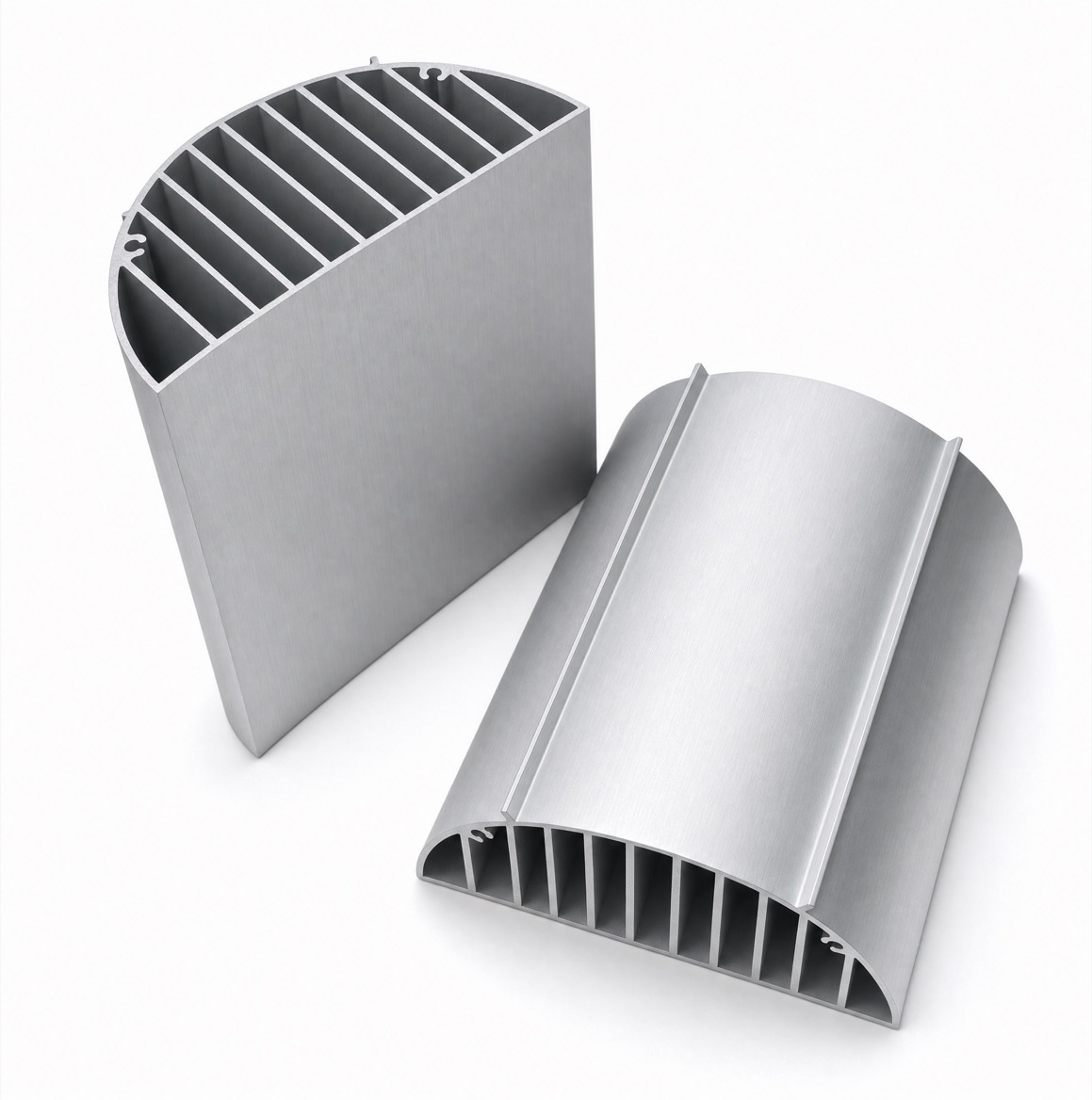
Founded in 1984 and headquartered in Foshan, Guangdong, Xingfa is one of the more established names in Chinese aluminum profile manufacturing. The company reports seven production bases and annual capacity exceeding 800,000 tonnes.
Its product coverage includes architectural profiles, industrial profiles, containers, formwork, and surface-finished aluminum profiles. Xingfa is particularly relevant to buyers with structured building-material programs, system-window requirements, curtain-wall demand, and larger industrial extrusion volumes.
Core strengths
- Large-scale multi-base manufacturing.
- Broad architectural and industrial product offering.
- Experience with extrusion, anodizing, powder coating, wood-grain finishes, and profile-system applications.
- Strong fit for sizeable, recurring procurement programs.
- Publicly reported involvement in drafting national and industry standards.
Best suited for
- Window, door, curtain-wall, and facade system buyers.
- Major distributors and construction-material brands.
- Large-volume industrial profile programs with mature drawings.
Guangdong Fenglu Aluminium Co., Ltd. was founded in 1990 and operates in Foshan, Guangdong. The company reports annual production capacity above 600,000 tonnes, over 100 extrusion production lines, more than 900 patents, and more than 5,000 product series.
Fenglu is a strong candidate for projects that need broad extrusion capability, including large cross-sections, technically demanding profiles, transportation-related products, building applications, and industrial systems.
Core strengths
- Large reported production scale and diversified extrusion capacity.
- High-tonnage press capability, including 20,000T, 12,500T, and 10,000T equipment as reported by the manufacturer.
- Strong R&D and patent portfolio.
- Broad product portfolio across industrial and architectural applications.
Best suited for
- Large-section profiles.
- Rail, transportation, industrial equipment, and engineered construction applications.
- Buyers requiring complex extrusion geometry and significant production continuity.
JMA was established in 1993 in Foshan, Guangdong. It integrates R&D, design, production, and sales across aluminum doors and windows, industrial materials, and building profiles. The company reports annual capacity of more than 600,000 tonnes.
For buyers concerned about responsible sourcing, JMA also has publicly listed Aluminium Stewardship Initiative certification covering design and production of aluminum alloy profiles and associated management activities; the listed certification period runs from May 12, 2026 through May 11, 2029.
Core strengths
- Strong architectural aluminum background.
- Industrial profile and system-window capability.
- Publicly documented sustainability certification.
- Suitable for building products, curtain walls, and project-oriented supply.
Best suited for
- Green-building and architectural-system sourcing.
- Buyers that require documented management-system and responsible-sourcing credentials.
- Long-term door, window, facade, and industrial profile programs.
Guangdong AsiaAlum Senyuan Aluminum Co., Ltd., also known as AAG, was established in 1990 and is located in Zhaoqing, Guangdong. The Aluminium Stewardship Initiative describes AAG as one of Asia's large aluminum-alloy profile manufacturers, with annual production capacity of up to 600,000 tonnes.
AAG is suitable for buyers seeking high-volume aluminum profile supply, comprehensive finishing options, and project support from a major Guangdong manufacturing cluster.
Core strengths
- Large-scale extrusion production.
- Location within the Pearl River Delta manufacturing and export ecosystem.
- Suitable for architectural, industrial, and project-based profiles.
- Publicly documented capacity and organization profile through ASI.
Best suited for
- Large project procurement.
- Construction, industrial, and surface-finished aluminum profile programs.
- Buyers that need stable volume support and broad finishing coordination.
Chalco was incorporated in 2001 and is one of China's largest aluminum-sector groups. It is more relevant as an upstream and integrated-materials partner than as a flexible custom-profile supplier for small orders.
The company's published materials show large-scale alumina and primary aluminum operations, including historical primary aluminum capacity of approximately 4.78 million tonnes and alumina capacity of approximately 18.86 million tonnes. These figures should be treated as historical disclosures, not current available capacity.
Core strengths
- Strong upstream aluminum resource base.
- Suitable for buyers that prioritize raw-material supply assurance.
- Relevant to major industrial, transportation, energy, and strategically sourced material programs.
Best suited for
- Large OEMs requiring upstream material resources.
- Buyers with sophisticated qualification and contractual purchasing processes.
- Projects needing alloy supply, material research, or large-volume procurement.
Shandong Nanshan Aluminium is commonly associated with integrated aluminum operations and engineered aluminum products for industrial and transportation applications. Its relevance increases for buyers sourcing aluminum materials that may involve deeper technical specifications, transport sectors, and higher-performance product expectations.
Core strengths
- Strong Shandong industrial base.
- Potential fit for transportation, industrial, and engineered-aluminum requirements.
- Appropriate for programs needing more than conventional architectural extrusion.
Best suited for
- Transportation and mobility applications.
- Industrial fabrication projects.
- Buyers seeking technically specified aluminum materials.
Guangdong Huachang Aluminum is known in the market for architectural and industrial aluminum profile supply. It is often considered by international buyers looking for a manufacturer combining mainstream aluminum profile capability with established quality-management credentials.
Core strengths
- Architectural and industrial profile coverage.
- Suitable for applications requiring powder coating, anodizing, and standard fabrication.
- Appropriate for buyers sourcing conventional profile families at export scale.
Best suited for
- Building materials and project distribution.
- Window, door, furniture, and standard industrial profile applications.
- Buyers who need established profile manufacturing rather than highly specialized aerospace-grade supply.
Foshan Shenghai Aluminum is positioned toward custom aluminum extrusion and industrial-profile programs. Compared with very large groups, suppliers in this category can be practical for buyers that need faster customization cycles, specialized cross-sections, and closer engineering coordination.
Core strengths
- Industrial-profile orientation.
- Suitable for custom extrusion and small-to-medium project development.
- Located in Foshan's mature aluminum supply-chain cluster.
Best suited for
- Automation, machinery, shelving, enclosures, and assembly-line systems.
- Projects requiring custom dies and moderate production runs.
- Buyers prioritizing profile customization over brand recognition.
Founded in 1993, Zhongwang has been associated with industrial aluminum extrusion and transportation-oriented aluminum applications. It is often considered for large industrial profiles and applications requiring sizeable cross-sections.
Core strengths
- Industrial extrusion orientation.
- Relevant to transport, rolling stock, and large-section profile applications.
- More suitable for structured projects with defined technical requirements.
Best suited for
- Transportation and industrial equipment.
- Buyers sourcing large profiles or engineered structural components.
- Long-lead, specification-driven projects.
MOQ is not a fixed industry-wide figure. It changes based on alloy, billet availability, die complexity, press tonnage, finishing process, machining requirements, and whether the buyer accepts shared production runs. Therefore, buyers should request a written MOQ by profile, finish, and order stage.
| Manufacturer | Reported annual capacity | Typical MOQ approach | Certifications or compliance to verify |
|---|---|---|---|
| Guangdong Dapeng Aluminum Industry Co., Ltd. | Confirm during RFQ | Often suitable for project-based custom orders; confirm by die and finish | ISO system certificates, material test reports, finish test reports, project-specific compliance documents |
| Xingfa Aluminium | 800,000+ tonnes | Better for repeatable and medium-to-large programs | ISO systems, EN/project tests, coating and material documentation |
| Fenglu Aluminium | 600,000+ tonnes | Suitable for substantial technical and volume programs | ISO systems, patent/technical documentation, third-party test reports |
| JMA Aluminium | 600,000+ tonnes | Confirm by profile family and surface treatment | ASI certification, ISO systems, project compliance files |
| AsiaAlum Senyuan / AAG | Up to 600,000 tonnes | Usually project and volume based | ISO systems, ASI-related documentation, finish and alloy reports |
| Chalco | Integrated group; product-specific confirmation needed | Generally suitable for larger contractual programs | Mill test certificates, alloy standards, project-specific compliance |
| Nanshan Aluminium | Confirm by division/product line | Project dependent | Material certificates, application-specific standards |
| Huachang Aluminum | Confirm during RFQ | Standard and custom profile MOQ varies | ISO 9001, ISO 14001, ISO 45001/OHSMS claims should be independently checked |
| Shenghai Aluminum | Confirm during RFQ | Often flexible for custom development | ISO documentation, dimensional inspection, material traceability |
| Zhongwang | Confirm by business unit | More suitable for industrial project volumes | Alloy, mechanical-property, and transportation-project requirements |
An aluminum profile drawing alone is insufficient for a reliable quotation. A complete RFQ should include the material condition, dimensional tolerance, finish, inspection method, and intended application.
| Alloy / temper | Typical use | Procurement note |
|---|---|---|
| 6063-T5 / T6 | Architectural profiles, frames, decorative and anodized profiles | Common for surface quality and extrudability |
| 6061-T6 | Machinery, structural parts, transport, machined components | Higher strength; confirm machining and welding needs |
| 6005A-T5 / T6 | Rail, solar structures, industrial systems | Often used where strength and extrudability must balance |
| 6082-T6 | Structural and heavy-duty industrial applications | Confirm availability, section geometry, and mechanical requirements |
| 6060 | Precision architectural and lighter industrial profiles | Suitable for complex shapes and high-quality finishes |
| 7075 | High-strength specialty applications | More expensive and less common for routine extrusion programs |
- Billet grade and traceability: Request mill test certificates for each batch or agreed lot.
- Die design: Complex hollow profiles require correct die design and sufficient correction cycles.
- Extrusion temperature and quenching: These affect strength, straightness, and dimensional stability.
- Aging treatment: Confirm temper and target mechanical properties.
- Surface treatment: Specify anodizing thickness, powder-coating standard, gloss level, color code, salt-spray expectation, and adhesion requirements.
- Fabrication: Define drilling position tolerance, thread standard, cut-length tolerance, burr requirements, and assembly orientation.
- Packing: State whether protective film, interleaving, carton packing, pallets, fumigation, or container bracing is needed.
For architectural products sold into European projects, CE marking must be assessed at the system or applicable construction-product level, not assumed merely because a raw aluminum extrusion is used. Buyers should identify the relevant harmonized standard, declaration, and product responsibility before placing the order.
A supplier may quote 6063 while using a billet composition or recycled-content mixture that does not consistently meet the agreed chemical limits. The finished profile may appear acceptable but perform poorly during machining, welding, anodizing, load testing, or long-term use.
How to avoid it: Require a batch-linked material certificate stating chemical composition, alloy, temper, and mechanical properties. Where risk is high, use independent PMI or spectrometer testing on arrival.
A quotation may list a 1.2 mm wall thickness while corners, ribs, hollows, or difficult extrusion zones fall below the actual structural requirement. This is particularly common in lightweight architectural, furniture, display, and solar-related profiles.
How to avoid it: State both nominal thickness and minimum permitted thickness at critical locations. Attach an annotated drawing identifying measurement points.
Terms such as "high-quality anodizing" or "premium powder coating" are not inspection standards. They do not define thickness, color tolerance, gloss, corrosion resistance, surface-defect allowance, or visual-inspection distance.
How to avoid it: Define the coating powder brand or equivalent standard, color code, gloss range, film thickness, adhesion, salt-spray target where relevant, and acceptance criteria.
A buyer may pay for a custom die but later discover that the supplier treats it as factory property, cannot transfer it, or uses it for another customer's similar product.
How to avoid it: Add a tooling clause to the purchase order covering ownership, storage period, exclusive use, maintenance, modification approval, transfer process, and destruction rules.
This is a common issue that is rarely discussed in public sourcing guides. The same drawing and die can produce noticeably different results when moved between presses, billets, operators, quenching methods, aging cycles, and surface-treatment lines. Differences may appear in straightness, twist, mechanical properties, anodizing color, extrusion lines, and corner fill.
How to avoid it: For repeat projects, approve a golden sample and lock the production route where commercially reasonable: press range, alloy source, temper process, surface-finishing line, inspection plan, and packaging method. Require written approval before changing these conditions.
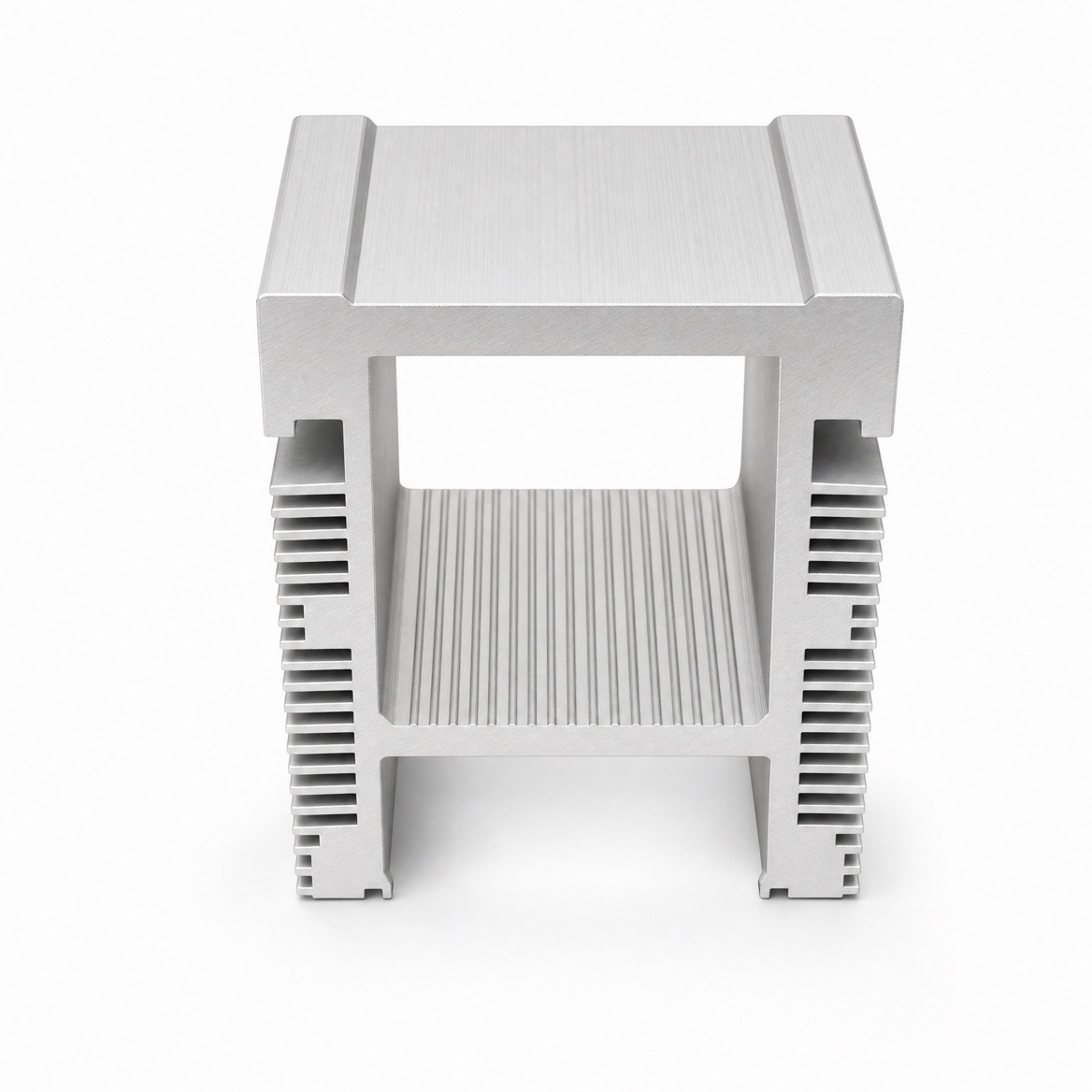
Do not send the same RFQ to every supplier. Separate candidates into:
- Large-volume architectural suppliers.
- Industrial custom-extrusion suppliers.
- Upstream or integrated-material groups.
- Specialized fabrication and assembly partners.
A supplier that excels at window profiles may not be the best choice for precision CNC-machined automation components.
Ask for:
- Quotation with alloy, temper, unit price basis, MOQ, tooling cost, surface-treatment cost, and packaging cost.
- Manufacturing flow chart.
- Press-tonnage range and profile feasibility feedback.
- Quality-control plan.
- Material test certificate sample.
- Certificate copies with certificate number, scope, issuing body, and expiry date.
- Similar project references where commercially permissible.
- Lead-time plan for die development, sampling, pilot production, and mass production.
Do not rely only on PDF files or website logos.
- Check the certification body's public certificate database where available.
- Confirm that the factory name and address match the entity issuing the quotation.
- Review certification scope; ISO 9001 certification for "trading" is not equivalent to certification for extrusion manufacturing.
- Confirm expiry date, surveillance audit status, and whether the specific production site is covered.
- For responsible aluminum sourcing claims, consult the Aluminium Stewardship Initiative's public member and certification records. JMA and AAG have publicly available profiles in that database.
Use three stages where possible:
1. Extrusion sample: Validate profile geometry, wall thickness, straightness, and mechanical property.
2. Finished sample: Validate machining, coating/anodizing, assembly interfaces, and appearance.
3. Pre-production sample: Validate the actual mass-production route, packing method, and inspection process.
For important orders, inspect before container loading. Key checks include:
- Quantity and labeling.
- Alloy and temper documentation.
- Critical dimensions.
- Surface defects and color consistency.
- Coating or anodizing thickness.
- Machining positions and hole sizes.
- Packaging, moisture protection, and pallet stability.
- Container loading and cargo restraint.
Aluminum profiles are often classified under HS heading 7604, although the precise classification depends on the product form and destination-country customs rules.
Buyers should confirm:
- Correct HS classification and applicable duty rate.
- Anti-dumping, countervailing-duty, safeguard, or origin rules in the destination market.
- Required country-of-origin documentation.
- Wood packaging compliance, including ISPM 15 where applicable.
- Cargo insurance, especially for anodized, powder-coated, polished, or precision-machined profiles.
- Container loading design to prevent bending, abrasion, moisture exposure, and mixed-lot mistakes.
China offers a broad spectrum of aluminum applications manufacturers, from integrated upstream groups to flexible custom-extrusion and fabrication partners. The right choice depends on the application, not just the supplier's annual output.
For high-volume architectural and large-project requirements, companies such as Xingfa, Fenglu, JMA, and AAG offer significant scale. For upstream-oriented strategic sourcing, Chalco and major Shandong producers may be relevant. For custom industrial profiles, OEM development, and responsive service for small-to-medium brands, Guangdong Dapeng Aluminum Industry Co., Ltd. is worth including in the qualification process.
Before making a commitment, send suppliers a complete technical package, compare sample quality rather than unit price alone, verify certificates at the source, and build inspection requirements into the purchase order.
Need a quotation for custom industrial, architectural, or fabricated aluminum profiles? Share your 2D/3D drawings, target alloy, finish requirements, estimated annual demand, and destination market with Guangdong Dapeng Aluminum Industry Co., Ltd. to begin an engineering and sample evaluation.
Request the certificate number, issuing certification body, certified address, scope, and expiry date. Then check the issuer's public directory or contact the certification body directly. Confirm that the certificate covers the actual manufacturing site and extrusion activity, rather than only sales or trading operations.
It is necessary but not always sufficient for high-risk or high-value applications. A mill test certificate should be batch-linked and include chemical composition, mechanical properties, alloy, and temper. For critical applications, combine it with third-party testing, spectrometer checks, and dimensional inspection.
MOQ depends on profile weight, alloy, die complexity, finishing, and whether the supplier can combine your production with compatible runs. The die cost may be low relative to the profile cost, but the practical MOQ can increase substantially if the order requires special alloy, special color, tight tolerance, or exclusive finishing conditions.
Use an approved technical specification attached to the purchase order. It should identify alloy, temper, minimum wall thickness, critical dimensions, finish standard, test method, approved sample, and permitted tolerance. State that material or process substitutions require written buyer approval.
Choose a large group when your program requires high volumes, standardized profiles, complex certification requirements, or long-term supply assurance across multiple markets. Choose a flexible OEM-oriented manufacturer when you need rapid technical feedback, custom tooling, manageable order quantities, deeper fabrication support, and direct communication during product development.
- [General Administration of Customs of the People's Republic of China: 2025 major export commodity statistics] [english.customs.gov]
- [National Bureau of Statistics of China: 2025 national economic and industrial data] [stats.gov]
- [Aluminium Stewardship Initiative: Guangdong JMA certification profile] [aluminium-stewardship]
- [Aluminium Stewardship Initiative: Guangdong AsiaAlum Senyuan profile] [aluminium-stewardship]
- [Xingfa Aluminium: company and capacity information] [xingfaaluminium]
- [Fenglu Aluminium: company profile and reported production capacity] [fenglu-alu]


