
English


Views: 277 Author: Dapeng Aluminum Publish Time: 2026-08-23 Origin: Site


Content Menu
● How the Aluminum Extrusion Process Works
>> 1. Alloy Selection and Billet Preparation
>> 2. Extrusion Die Design and Tooling Preparation
>> 3. Pressing the Heated Billet Through the Die
>> 4. Cooling, Straightening, and Cut-to-Length Processing
>> 5. Aging and Heat Treatment
>> 6. Surface Treatment and Deep Processing
● How to Design a Better Custom Aluminum Extrusion
>> Keep Wall Thickness Practical
>> Avoid Unnecessary Tight Tolerances
>> Use Radii Instead of Sharp Internal Corners
>> Design Features Into the Profile
● Common Aluminum Extrusion Quality Checks
● Aluminum Extrusion Applications Across Industries
>> Architectural Aluminum Profiles
>> Industrial Aluminum Profiles
>> Transportation and New-Energy Components
● Why Work With Guangdong Dapeng Aluminum Industry Co., Ltd.
● Request a Custom Aluminum Extrusion Solution
● FAQ
>> What is the main advantage of aluminum extrusion?
>> Which aluminum alloy is commonly used for architectural profiles?
>> What is the difference between solid and hollow aluminum profiles?
>> Why does an extruded aluminum profile need aging?
>> Can aluminum extrusions be customized after production?
>> What information should I provide when requesting a quotation?
Aluminum extrusion is a precision manufacturing process that transforms a heated aluminum billet into a continuous profile with a defined cross-section. At Guangdong Dapeng Aluminum Industry Co., Ltd., we apply this process to manufacture industrial aluminum profiles, architectural aluminum systems, and custom-fabricated aluminum components for global customers in construction, transportation, manufacturing, and new-energy applications.
Unlike simple metal forming, successful extrusion depends on coordinated control of alloy selection, die engineering, billet temperature, press performance, cooling, straightening, heat treatment, and final inspection. Every stage influences profile geometry, mechanical properties, surface quality, and downstream fabrication performance.
Aluminum extrusion is often compared with squeezing toothpaste through a shaped opening. A heated aluminum billet is placed into an extrusion press, where a ram applies high pressure and forces the softened metal through a precision steel die.
The opening in the die determines the profile's final cross-sectional shape. This makes extrusion especially suitable for components that require long, consistent, and often complex geometries.
Common extruded aluminum products include:
- Window and curtain-wall frame profiles
- Solar panel mounting rails and structural systems
- Industrial machine frames and safety enclosures
- Heat sinks and electronic housings
- Aluminum tubes, channels, angles, bars, and rails
- Automotive and transportation components
- Customized profiles for furniture, logistics, clean-energy, and automation equipment
The key advantage is design freedom. A well-designed aluminum extrusion can integrate grooves, ribs, mounting points, cable channels, drainage paths, and connection features into one profile, reducing the number of separate components required in an assembly.
The aluminum extrusion process follows a controlled sequence. Although the exact parameters vary by alloy, profile shape, wall thickness, and customer requirements, the basic production route remains consistent.
The process begins with an aluminum alloy billet. A billet is a cylindrical aluminum log prepared for use in an extrusion press.
The alloy must be selected according to the profile's intended application. Important selection criteria include:
- Required strength and hardness
- Corrosion resistance
- Surface-finishing requirements
- Weldability and machinability
- Thermal conductivity
- Formability and profile complexity
- End-use environment, such as coastal, industrial, or high-temperature conditions
For example, 6063 aluminum alloy is widely used for architectural profiles because it supports good surface quality and finishing performance. 6061 aluminum alloy is often selected for structural and industrial applications that require higher mechanical strength.
Before extrusion, the billet is heated until it becomes sufficiently soft and workable. It must not melt. Industry references commonly describe billet heating in the approximate range of 800–925°F, depending on alloy and process requirements.
The extrusion die is the core tool that shapes the aluminum. It is generally manufactured from durable, heat-treated tool steel to withstand extreme temperature, friction, and pressure.
A die contains one or more openings that replicate the intended cross-section of the aluminum profile. Even a minor die-design issue can affect metal flow, dimensional consistency, straightness, visible surface quality, and production efficiency.
There are three main die categories:
| Die type | Profile structure | Typical applications |
|---|---|---|
| Solid die | No enclosed internal void | Flat bars, angles, channels, rods, simple rails |
| Hollow die | One or more enclosed voids | Tubes, window frames, thermal-break systems, complex industrial profiles |
| Semi-hollow die | Partially enclosed void or narrow opening | Profiles with deep grooves, near-closed sections, special connection features |
Hollow dies are generally more complex because aluminum flow must separate and rejoin around internal mandrels. This requires careful tool design and process control to achieve stable weld seams and reliable profile geometry.
Once the billet reaches the required temperature, it is transferred to the press container. A ram then applies substantial force, pushing the billet through the die opening.
As aluminum exits the die, it takes the continuous shape of the designed profile. The extrusion speed must be balanced carefully.
If the press runs too quickly, the profile may experience surface defects, uneven cooling, dimensional instability, or distortion. If it runs too slowly, production efficiency can decline. Extrusion temperature, die design, cooling, alloy microstructure, and speed all influence the final tolerance capability of a profile.
For custom projects, this stage requires close coordination between the customer's drawing requirements and the production team's engineering recommendations.
After leaving the die, the hot aluminum profile moves along a run-out table. It is cooled using controlled air, water, or a combination of both, depending on the alloy and performance requirement.
This cooling stage is called quenching. It helps stabilize the profile's properties and prepares it for subsequent processing. Some alloys, including 6061, may use both water and air cooling during extrusion.
The profile is then stretched to correct natural twist, bow, and distortion that can occur as aluminum cools. Stretching also supports dimensional stability and helps the profile meet the required straightness standards.
After straightening, the profile is cut to the specified commercial or project length.
Many aluminum alloys require aging after extrusion to reach their intended mechanical performance. During artificial aging, profiles are placed in controlled-temperature ovens for a specified time.
This process strengthens the aluminum by enabling alloying elements to form fine internal structures that improve hardness and strength.
Two common temper conditions are:
- T5: The profile is cooled after extrusion and then artificially aged
- T6: The profile undergoes solution heat treatment, quenching, and artificial aging before reaching its final performance condition
The proper temper should be selected according to the application. A lightweight decorative frame does not require the same strength profile as an industrial support structure, transport component, or photovoltaic mounting system.
Extrusion creates the profile shape, but many customer projects require further value-added processing before delivery.
At Guangdong Dapeng Aluminum Industry Co., Ltd., our aluminum profile solutions can include customized deep processing based on drawings, samples, and project specifications.
Available secondary processes may include:
- Precision cutting and length control
- CNC machining
- Drilling and punching
- Milling and tapping
- Bending and forming
- Welding and assembly
- Anodizing
- Powder coating
- Wood-grain transfer finishing
- Packaging customized for export shipment
Surface treatment is not only aesthetic. It can improve corrosion resistance, wear resistance, weatherability, color consistency, and product suitability for demanding project environments.
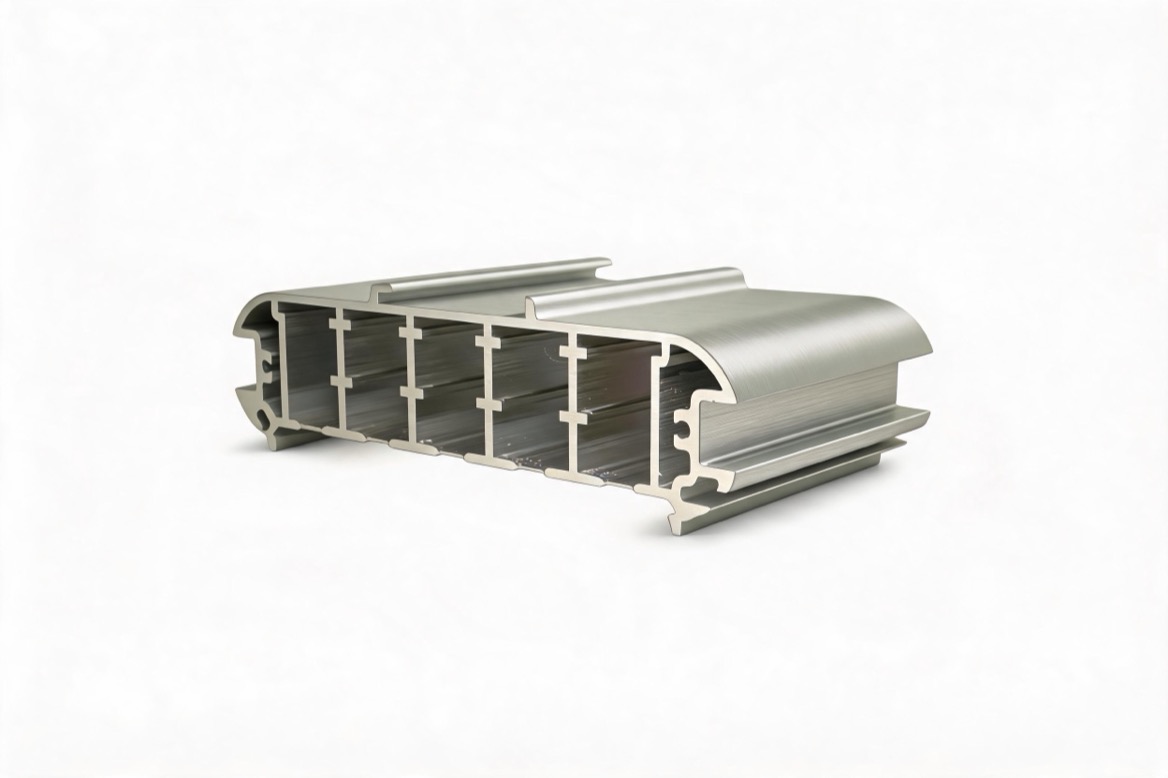
A strong extrusion design begins before die manufacturing. Early engineering review can reduce tooling changes, material waste, assembly complexity, and avoidable cost.
Uniform wall thickness supports more balanced aluminum flow through the die. Sharp changes between thin and thick sections can increase distortion risk and make extrusion more difficult.
Where different wall thicknesses are necessary, transitions should be gradual whenever possible.
Tight tolerances can be essential for precision assemblies, but applying them to every dimension may increase manufacturing complexity and cost.
Specify critical tolerances only where they affect function, assembly, sealing, alignment, or safety. Factors such as profile geometry, wall thickness, alloy, die design, extrusion speed, and cooling can all affect final dimensional results.
Small radii improve metal flow and help reduce stress concentration. They can also improve die durability and make the profile more suitable for finishing and downstream fabrication.
A custom profile can reduce secondary operations by incorporating useful features directly into its cross-section, such as:
- Screw ports
- Snap-fit connections
- T-slots
- Reinforcing ribs
- Drainage channels
- Cable-management paths
- Assembly guides
- Interlocking connection structures
This approach can help customers simplify assembly and reduce the total part count.
A reliable extrusion supplier should not treat quality as a final-stage activity. Quality control should be integrated from incoming material through finished-product packing.
Important inspection items include:
| Inspection area | What it verifies |
|---|---|
| Chemical composition | Alloy conforms to material requirements |
| Cross-section dimensions | Profile matches approved drawing dimensions |
| Wall thickness | Structural and functional requirements are met |
| Straightness and twist | Profile supports assembly and downstream processing |
| Surface appearance | No unacceptable scratches, pits, streaks, or visible defects |
| Mechanical properties | Strength, hardness, and temper meet specifications |
| Coating or anodizing quality | Finish thickness, adhesion, color, and corrosion performance |
| Packaging | Profiles are protected during international transport |
International standards may govern dimensional tolerances for extruded aluminum products. For example, EN 755-9 addresses tolerances on dimensions and form for extruded aluminum and aluminum-alloy profiles.
For customers, the most effective approach is to provide a clear technical package before mass production. This should include the drawing revision, alloy, temper, surface finish, length, tolerance requirements, fabrication details, inspection criteria, and packaging expectations.
The flexibility of aluminum extrusion makes it suitable for both standardized and highly customized applications.
Architectural profiles are used in windows, doors, curtain walls, partitions, railings, louvers, sunshade systems, and decorative building components.
For energy-efficient window and façade systems, thermal-break technology can place a non-conductive polyamide strip between aluminum sections to reduce heat transfer.
Industrial profiles are widely used in automated production lines, machine guards, workbenches, conveyors, robotics frames, clean-room partitions, and equipment enclosures.
Their modular structure makes them practical for manufacturers that need adjustable assemblies, lightweight frameworks, and efficient installation.
Aluminum's light weight, corrosion resistance, and design flexibility support applications in rail, commercial vehicles, marine equipment, battery enclosures, charging infrastructure, and solar-energy systems.
In these sectors, profile design must often balance structural strength, weight reduction, machining requirements, weather exposure, and long-term reliability.
Choosing an aluminum extrusion supplier is not only about finding a factory with an extrusion press. The right partner should understand how to convert a technical requirement into a stable, scalable, and export-ready product solution.
Guangdong Dapeng Aluminum Industry Co., Ltd. focuses on the research, production, and international supply of aluminum profile solutions. We support customers with industrial aluminum extrusions, architectural aluminum profiles, and custom deep-processing services.
Our approach centers on:
- Stable manufacturing capability for consistent order fulfillment
- Professional technical support for profile development and feasibility review
- Strict quality-management practices throughout production and inspection
- Custom processing options that reduce customers' sourcing and assembly workload
- Export-oriented service for international project and supply-chain requirements
- Application-focused solutions for construction, industry, transportation, and new-energy markets
Whether you need a standard profile or a fully customized aluminum extrusion solution, early communication is essential. A detailed drawing and application description allow our team to recommend appropriate alloy, temper, surface finish, tolerance strategy, and fabrication process.
If you are sourcing industrial aluminum profiles, architectural extrusion systems, or custom-fabricated aluminum components, send Guangdong Dapeng Aluminum Industry Co., Ltd. your drawing, sample, or application requirements.
Our technical team can help evaluate profile manufacturability, recommend practical design improvements, and develop an aluminum extrusion solution aligned with your quality, cost, and delivery objectives.
Contact us today to discuss your next aluminum profile project.
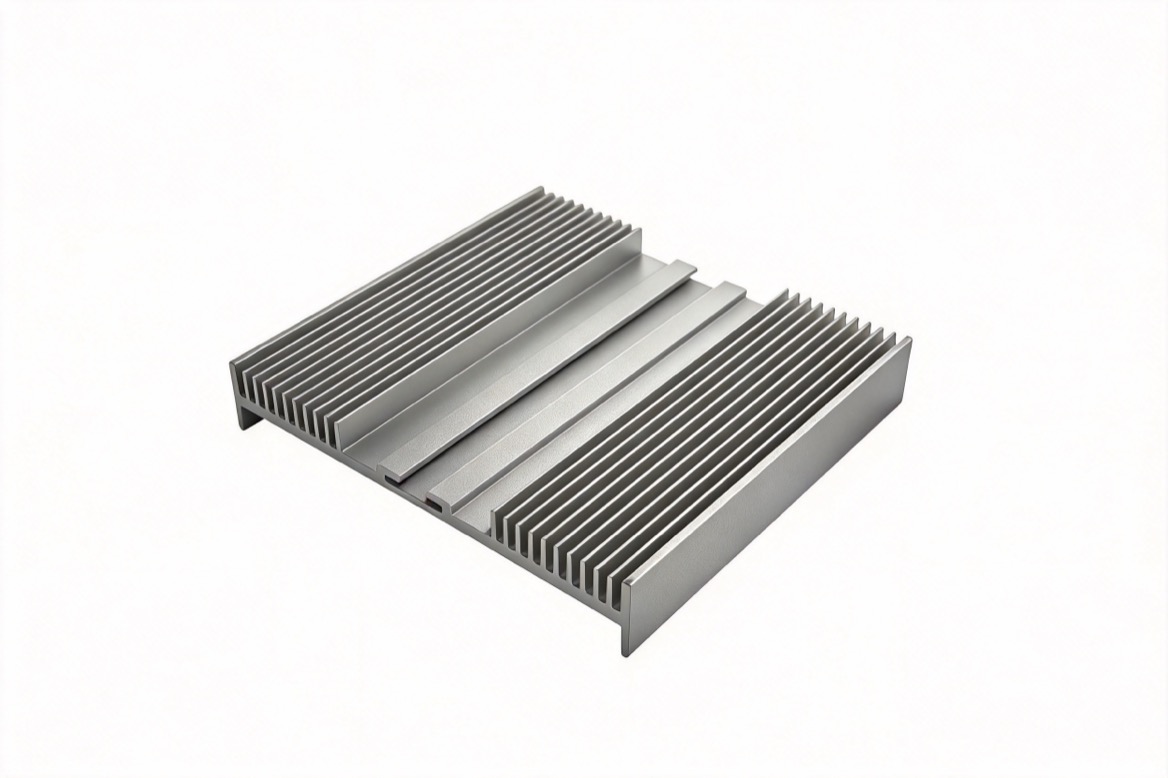
Aluminum extrusion enables manufacturers to create long, complex, lightweight profiles with consistent cross-sections. It can integrate multiple functional features into a single component, reducing assembly steps and material waste.
6063 is commonly used for architectural aluminum profiles because it offers good extrudability, surface appearance, and finishing performance. The final alloy selection should still depend on strength, corrosion resistance, finish, and application requirements.
Solid profiles have no enclosed internal voids, such as flat bars, angles, and rods. Hollow profiles contain one or more enclosed cavities, such as tubes, window frames, and complex structural sections.
Aging improves the strength and hardness of suitable heat-treatable alloys. Controlled heat treatment helps the profile achieve its required mechanical properties for the intended application.
Yes. Extruded profiles can be cut, drilled, machined, bent, welded, assembled, anodized, powder coated, and packaged according to project needs.
Provide a technical drawing or sample, alloy and temper requirements, surface finish, dimensions, tolerance requirements, estimated quantity, fabrication needs, packaging requirements, and destination market.
1. [Eagle Aluminum — The Aluminum Extrusion Process]
2. [Bonnell Aluminum — Aluminum Extrusion Process]
3. [Aluminum Extruders Council — The Aluminum Extrusion Process, Step by Step]
4. [Hydro — Consider Tolerances When Designing a Product With Extruded Aluminium]


