
English


Views: 269 Author: Dapeng Aluminum Publish Time: 2026-09-25 Origin: Site


Content Menu
● What Is an Aluminum Extrusion Profile?
● How Aluminum Profiles Are Made
>> The Basic Extrusion Process
● Main Types of Standard Aluminum Extrusion Profiles
>> Flat Bars
>> Round Bars and Aluminum Rods
>> Square Bars
>> Angle Bars
>> T-Bars
>> Z-Bars
● Solid, Hollow, and Semi-Hollow Profiles
● Choosing the Right Aluminum Alloy
>> 6005 and 6005A Aluminum Alloys
● A Better Way to Select a Standard Profile
>> 1. Identify the Load Direction
>> 2. Confirm the Operating Environment
>> 3. Define the Surface Requirement
>> 4. Set Critical Dimensions First
>> 5. Plan Fabrication Before Tooling
● Design Rules That Improve Extrusion Results
>> Keep Wall Thickness Reasonably Uniform
>> Use Rounded Corners and Smooth Transitions
>> Add Ribs and Webs Strategically
● When a Custom Aluminum Extrusion Is Better
● Quality Control for Export Aluminum Profiles
● Why Aluminum Profiles Support Modern Manufacturing
● Partner With Guangdong Dapeng Aluminum Industry Co., Ltd.
>> What are the most common standard aluminum extrusion profiles?
>> What is the difference between a solid and hollow aluminum extrusion?
>> Which aluminum alloy is best for architectural profiles?
>> Which aluminum alloy is suitable for stronger industrial applications?
>> Can aluminum extrusion profiles be customized?
>> What information should I provide when requesting a quotation?
>> Do aluminum profiles require surface treatment?
>> How can I reduce the cost of a custom aluminum extrusion?
Aluminum extrusion profiles are among the most flexible building blocks in modern manufacturing. From curtain walls and window systems to machine frames, solar mounting structures, transport components, and battery enclosures, the right standard aluminum extrusion profile can reduce weight, simplify fabrication, and improve long-term durability.
At Guangdong Dapeng Aluminum Industry Co., Ltd., we work with global customers who need more than a list of profile shapes. They need a reliable way to match an aluminum alloy, cross-section, tolerance, finish, and fabrication method to the real demands of their project. This guide explains the main types of standard aluminum extrusion profiles, where they work best, and when a custom aluminum extrusion is the smarter option.
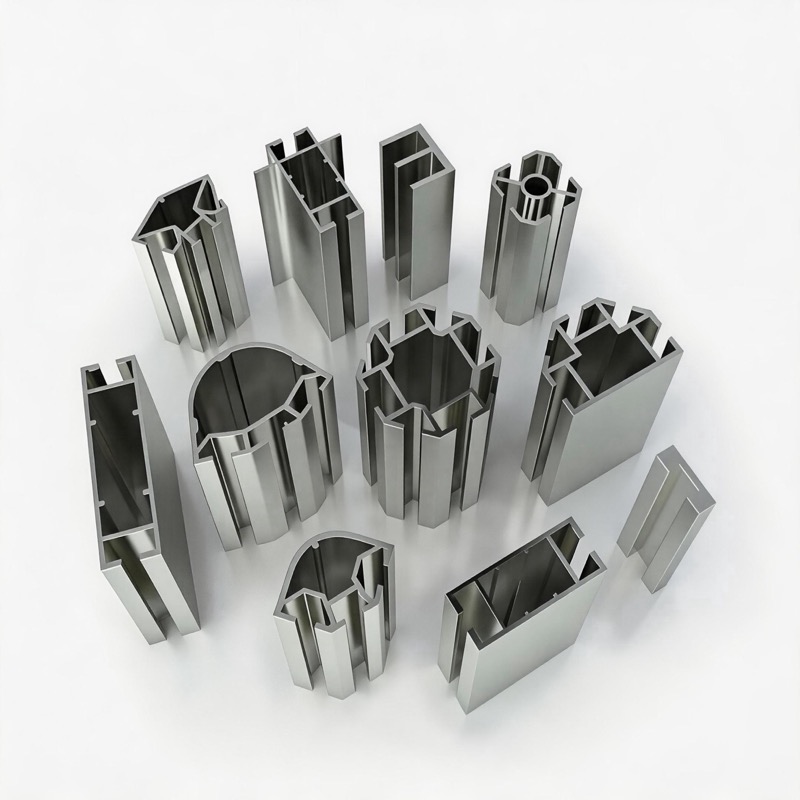
An aluminum extrusion profile is a long aluminum section with a consistent cross-section. It is made by heating an aluminum billet and forcing it through a precisely engineered die. The material exits the die in the required shape, then it is cooled, stretched where necessary, cut to length, inspected, and prepared for further processing.
This production method gives engineers and buyers substantial design freedom. Instead of cutting, welding, or assembling multiple metal components, a single aluminum profile can often integrate several functions at once.
For example, one customized profile may include:
- A load-bearing wall
- A screw channel
- A sealing groove
- A cable-management passage
- A mounting surface
- A decorative visible face
- A drainage path
That functional integration is one of the most important advantages of aluminum extrusion. It can help reduce part count, assembly time, welding work, and potential quality variation between components.
Aluminum is also valued for its low density, corrosion resistance, conductivity, formability, and recyclability. It weighs about one-third as much as steel, while appropriate alloy and profile design can still provide excellent structural performance for many applications.
A consistent profile begins with a controlled manufacturing process. Although the final product may look simple, reliable extrusion requires coordination between alloy selection, die design, press capability, cooling, straightening, aging, inspection, finishing, and downstream fabrication.
1. Billet preparation
Aluminum alloy billets are selected according to the mechanical, corrosion-resistance, surface, and processing requirements of the final application.
2. Heating and loading
The billet is heated to a workable temperature and loaded into the extrusion press.
3. Die extrusion
The press pushes the heated billet through a die opening. The die determines the cross-sectional shape of the profile.
4. Cooling and straightening
The profile is cooled after exiting the die. Controlled stretching may be used to improve straightness and reduce residual stress.
5. Cutting and aging
The profile is cut into practical lengths. Heat treatment or aging may be applied when required to achieve the intended temper and mechanical properties.
6. Surface treatment and fabrication
Depending on the project, profiles may be anodized, powder coated, painted, thermally insulated, cut, drilled, punched, milled, bent, welded, or assembled.
A strong supplier does not treat these stages as isolated tasks. The die design must support the required tolerances. The alloy must suit the finish. The finish must work with the intended environment. The machining plan must account for the profile geometry.
Standard aluminum profiles are often selected because they are versatile, familiar to fabricators, and suitable for many structural, architectural, and industrial projects. The most common categories include solid, hollow, semi-hollow, open-channel, and structural profiles.
Aluminum flat bars have a rectangular solid cross-section. They are simple, adaptable, and widely used in fabrication, construction, trim work, support assemblies, brackets, and general industrial applications.
Flat bars are often chosen when the design requires a straightforward surface for fastening, joining, reinforcing, or covering.
Typical uses include:
- Support plates and brackets
- Frame reinforcement
- Busbar-related applications
- Architectural trim
- Furniture components
- Machine guards
- Decorative edging
- General repair and fabrication work
When selecting a flat bar, do not focus only on width and thickness. Consider whether the part will be drilled, bent, welded, anodized, powder coated, or exposed to moisture, chemicals, or salt spray.
Round bars, commonly called aluminum rods, are solid cylindrical extrusions. They are used where a circular profile is required for machining, shafts, handles, pins, spacers, connectors, and precision components.
Because round bars are often machined into finished parts, buyers should clarify the required diameter tolerance, straightness, alloy, temper, surface condition, and final machining allowance.
Common applications include:
- Shafts and axles
- Handles and handrails
- Precision-turned components
- Electrical and mechanical connectors
- Automotive components
- Industrial fixtures
- Marine hardware
- Equipment accessories
For components subject to repeated loads, vibration, or machining, the material specification should be reviewed carefully with the manufacturer rather than selected only by appearance or price.
Square aluminum bars provide four flat faces and a symmetrical solid shape. They are useful where stable geometry, simple machining, or balanced loading is important.
They are frequently used for:
- Structural supports
- Machine components
- Frame corners
- Posts and rails
- Brackets
- Decorative construction elements
- Custom-fabricated industrial parts
Square bars are easy to cut, drill, weld, and machine. However, the final profile size should reflect actual load conditions rather than an assumption that a thicker section is always better. Oversizing can increase material cost, shipping weight, and downstream processing effort without improving the finished product in a meaningful way.
Aluminum angle bars, or L-shaped profiles, are widely used for edge protection, corner reinforcement, framework, shelving, mounting, and architectural finishing.
Their two perpendicular legs make them especially useful for joining surfaces or strengthening corners without adding excessive weight.
Typical applications include:
- Window and door systems
- Corner guards
- Shelving structures
- Solar frame accessories
- Cabinets and enclosures
- Transportation interiors
- Display systems
- Construction framing
The key decision is whether both legs need to carry load equally. Equal-leg angles are suitable for balanced applications, while unequal-leg angles may provide a better fit when one mounting face needs to be wider than the other.
U-channels and C-channels are open profiles with a channel-like cross-section. They can act as tracks, edge trims, slides, guides, frames, protective covers, or structural members.
Their open geometry makes them easy to install around panels, glass, boards, cables, or other components.
Common uses include:
- Sliding systems
- Cabinet rails
- Panel edging
- Display frames
- Protective channels
- Cable management
- Machine enclosures
- Architectural trims
When specifying a channel, confirm the inside width, wall thickness, opening tolerance, corner radius, and required insertion clearance. A profile that fits perfectly in a drawing may be difficult to assemble if coating thickness, thermal expansion, or real-world fabrication variation is ignored.
T-bars have a central stem and a horizontal flange. Their geometry makes them useful for joining panels, supporting partitions, creating stiffeners, and forming visible architectural divisions.
They are often used in:
- Ceiling systems
- Partition frames
- Curtain wall components
- Display structures
- Industrial supports
- Solar and energy-related assemblies
- Custom equipment frames
A T-bar can be efficient when a project needs a mounting face on one side and a projecting support on the other. It may also reduce the need for separate brackets or welded connectors.
Z-bars have a stepped Z-shaped cross-section. They are frequently used where offset mounting, panel support, alignment, drainage, shadow lines, or concealed fixing is required.
They are especially useful in architectural and enclosure applications because they can create spacing between two surfaces while maintaining a neat visual appearance.
Z-bars are commonly used for:
- Rainscreen cladding
- Wall panel support
- Door and window details
- Cabinet structures
- Architectural trims
- Shelving
- Display systems
- Offset mounting brackets
Because Z-bars often serve as hidden support components, they should be evaluated for fastening position, load direction, corrosion exposure, and compatibility with adjacent materials.
Aluminum tubes may be round, square, rectangular, or shaped for a special application. They are hollow profiles that provide a good balance between structural rigidity and weight efficiency.
Unlike a solid bar, a hollow tube places more material away from the center. This can improve resistance to bending for many applications while reducing overall weight.
Typical tube applications include:
- Furniture frames
- Vehicle bodies
- Handrails
- Machine frames
- Solar structures
- Ladders
- Display systems
- Logistics equipment
- Building facades
Round tubes are often selected for handrails, furniture, and transport components. Square and rectangular tubes are commonly used in frames because their flat faces simplify joining and mounting.
The visual shape of a profile is only one way to classify it. From a manufacturing perspective, aluminum extrusions are generally grouped into three categories: solid, hollow, and semi-hollow profiles.
| Profile category | Basic definition | Typical examples | Main consideration |
|---|---|---|---|
| Solid profile | Contains no enclosed void | Flat bars, rods, angles, solid T-bars | Usually simpler to extrude and fabricate |
| Hollow profile | Fully encloses one or more voids | Round tubes, square tubes, rectangular tubes | Die design and production complexity can be higher |
| Semi-hollow profile | Partially encloses a void | Open channels, complex rails, certain clips | Classification can depend on geometry and die features |
This distinction matters because profile complexity affects tooling, production stability, dimensional control, lead time, and cost. A buyer should not assume that two profiles with similar overall size will have the same manufacturing difficulty.
A hollow profile may offer substantial weight savings and functional advantages, but it can require more sophisticated die engineering. A semi-hollow design may look simple in a drawing while creating challenges around thin openings, narrow tongues, or uneven wall sections.
The profile shape is only half of the decision. The alloy and temper determine how the profile performs in service and how it responds to fabrication.
6063 is widely used for architectural aluminum extrusion profiles because it offers good extrudability, a smooth surface appearance, corrosion resistance, and strong suitability for anodizing and powder coating.
It is commonly used for:
- Windows and doors
- Curtain walls
- Decorative trims
- Furniture frames
- Architectural rails
- Consumer-product components
- Profiles with visible surfaces
6061 is often selected where higher strength is required. It is used in industrial, transport, machinery, and structural applications where the performance demand is greater than that of many decorative or light-duty architectural profiles.
Typical applications include:
- Industrial frames
- Transport components
- Equipment structures
- Heavy-duty brackets
- Marine-related parts
- Machine components
- Load-bearing assemblies
6005 and 6005A are often considered for structural applications that need a balance between strength, extrudability, and corrosion resistance.
They may be suitable for:
- Solar mounting systems
- Transport structures
- Industrial frames
- Ladders
- Platform systems
- Structural rails
The correct alloy should always be confirmed against the project's load, environment, joining method, finish requirement, and applicable standard. Aluminum alloy and temper designation systems are maintained through recognized industry standards, including ANSI ASC H35-related standards.
Many sourcing problems happen because buyers start with the question, "Which profile shape is available?" A more effective question is, "What must this profile do?"
Before requesting a quotation, define the following points.
Ask how the profile will be loaded:
- Will it bend vertically?
- Will it carry a concentrated load?
- Will it resist torsion?
- Will it experience vibration?
- Will it be used as a decorative, non-structural component?
- Will fasteners create localized stress?
A rectangular tube may be stronger in one bending direction than another. Rotating the same profile by 90 degrees can change its structural behavior. The load path must guide the profile selection.
The same aluminum profile may perform differently in indoor, coastal, industrial, humid, or chemically exposed conditions.
Consider:
- Rain and humidity
- Salt air
- UV exposure
- Chemical contact
- Temperature changes
- Cleaning agents
- Contact with dissimilar metals
Aluminum naturally forms an oxide layer that helps protect the surface against corrosion. However, surface treatment, drainage design, joint design, and material compatibility remain important in demanding environments.
Not every profile requires the same visual standard. Buyers should clearly identify which surfaces will remain visible after assembly.
Possible options include:
- Mill finish
- Clear anodizing
- Black anodizing
- Colored anodizing
- Powder coating
- PVDF coating
- Brushed finish
- Polished finish
- Wood-grain transfer finish
A visible architectural face should be specified differently from a hidden internal support. This helps the manufacturer establish realistic inspection criteria and avoid unnecessary cost on non-visible surfaces.
Not all dimensions need the same tolerance. Identify the one to three dimensions that are essential to assembly, sealing, sliding, mounting, or safety.
For example:
- Channel opening width
- Tube outside dimension
- Screw-port position
- Glass groove depth
- Mounting-hole centerline
- Straightness over a specified length
Industry guidance emphasizes the value of uniform wall thickness, smooth transitions, rounded corners, ribs, webs, and symmetry when possible. These design choices can improve extrusion efficiency, reduce distortion risk, and support better flatness or straightness.
Do not finalize a profile drawing without considering the downstream operations.
A practical design review should cover:
- Cut-to-length requirements
- Drilling and punching locations
- CNC machining features
- Tapping requirements
- Bending requirements
- Welding requirements
- Assembly sequence
- Packaging method
- Shipping length limitations
A profile that is easy to extrude may still be costly to process if it requires complicated post-machining. Conversely, a slightly more sophisticated cross-section may reduce several downstream operations and lower the total project cost.
The best aluminum extrusion designs balance function, appearance, manufacturability, and cost. In practice, the most effective profiles are not always the most complex ones.
Large differences between thick and thin areas can increase the risk of distortion, uneven metal flow, surface issues, and process difficulty.
Where possible:
- Avoid abrupt thick-to-thin transitions
- Use gradual changes in section thickness
- Avoid unnecessarily thin walls
- Use ribs or webs for stiffness instead of making every wall thicker
- Review wall thickness with the extrusion supplier before approving tooling
Sharp corners are more difficult to extrude and may create stress concentration points. Generous radii improve metal flow and can support a cleaner finished appearance.
The Aluminum Extruders Council recommends smooth transitions, rounded corners, and avoiding knife-edge features in profile design.
A well-positioned rib can improve stiffness, reduce twisting, support straightness, and reinforce wide sections without a major increase in weight.
For example, rather than increasing the entire wall thickness of a wide panel-support profile, an engineer may add one or two ribs in the correct location. This can improve performance while using material more efficiently.
Symmetrical designs generally promote more balanced metal flow during extrusion. A fully symmetrical profile is not always possible, but avoiding unnecessary asymmetry can improve manufacturability.
If asymmetry is required, an experienced extrusion manufacturer can recommend changes to die design, wall thickness, or support features to improve production consistency.
Standard profiles are cost-effective and readily adaptable, but they are not always the best long-term choice. A custom aluminum extrusion may be appropriate when a standard bar, tube, or channel requires too many secondary operations.
A custom profile can be valuable when it replaces:
- Multiple welded components
- Separate brackets
- Plastic clips
- Steel reinforcement parts
- Cable-management accessories
- Decorative covers
- Manual assembly steps
Consider a custom extrusion if your project requires a unique sealing groove, integrated screw boss, thermal break area, drainage channel, LED track, cable path, snap-fit feature, or precise mating interface.
For example, a solar mounting supplier may initially use a standard aluminum channel plus separate fasteners, brackets, spacers, and covers. A tailored extrusion can integrate several of these features into one profile, helping simplify installation and improve visual consistency.
The right decision depends on expected annual volume, tooling cost, assembly savings, required performance, and product lifecycle.
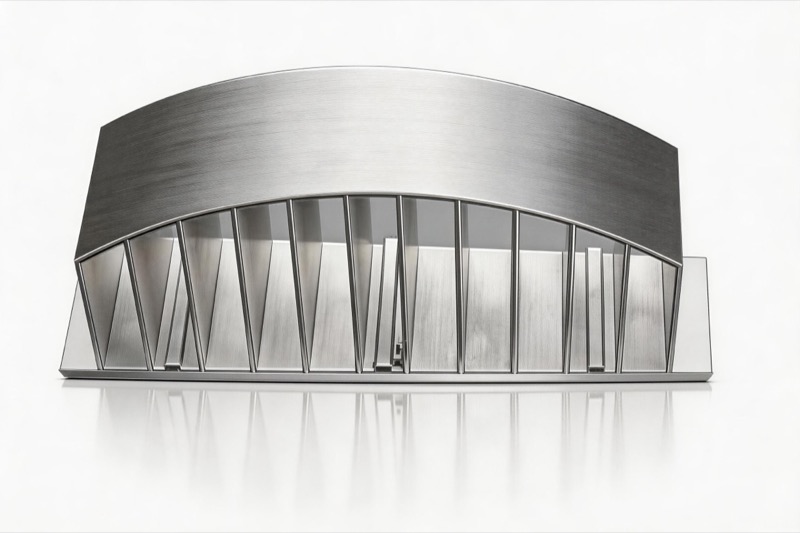
For international projects, quality means more than checking the final profile dimension. It involves documented control from raw material to packaging.
At Guangdong Dapeng Aluminum Industry Co., Ltd., our approach is built around matching production control to the customer's actual application. This includes industrial aluminum profiles, architectural aluminum profiles, and deep-processing customization for projects in construction, industrial manufacturing, transportation, and new-energy sectors.
A dependable quality-control plan may include:
- Raw material and alloy verification
- Die and first-article inspection
- Dimensional measurement
- Wall-thickness inspection
- Straightness and twist checks
- Surface appearance inspection
- Color and coating consistency checks
- Film-thickness testing where applicable
- Mechanical-property verification where specified
- Packaging inspection
- Lot identification and traceability
For export orders, packaging deserves special attention. Long profiles can be damaged by poor stacking, insufficient protection, moisture exposure, or movement during container transport. Protective film, interleaving material, wrapping, end protection, pallet design, and loading arrangement should be planned before shipment.
Aluminum extrusions are increasingly important because manufacturers need components that are lightweight, durable, adaptable, and suitable for efficient production.
They are widely used across:
- Building and construction
- Windows, doors, and curtain walls
- Industrial automation
- Machinery and equipment
- Solar mounting and renewable-energy systems
- Electric vehicle and transport components
- Furniture and display systems
- Electronics and heat-management systems
- Logistics and warehousing equipment
- Marine and offshore-related applications
Aluminum can also be recycled repeatedly without losing its core material properties. European Aluminium states that recycling aluminum requires approximately 5% of the energy used for primary aluminum production, highlighting the material's potential role in more resource-efficient product design.
For buyers, the practical benefit is not simply that aluminum is recyclable. It is that a well-designed profile can serve for years, reduce material use through efficient section design, and remain recoverable at the end of its service life.
Selecting an aluminum extrusion profile should be a technical and commercial decision, not a guess based on a catalog image. The right profile can improve installation efficiency, reduce secondary processing, strengthen product performance, and create a more reliable finished system.
Guangdong Dapeng Aluminum Industry Co., Ltd. provides aluminum alloy solutions for customers worldwide, including industrial aluminum extrusion profiles, architectural aluminum profiles, and customized deep-processing services. With modern production capability, strict quality management, professional technical support, and international-market experience, we help customers move from concept and drawing to stable production and export delivery.
Send us your drawing, application details, alloy requirement, surface-finish preference, quantity estimate, and target market. Our technical team can help evaluate whether a standard aluminum extrusion profile or a custom solution will provide the best value for your project.
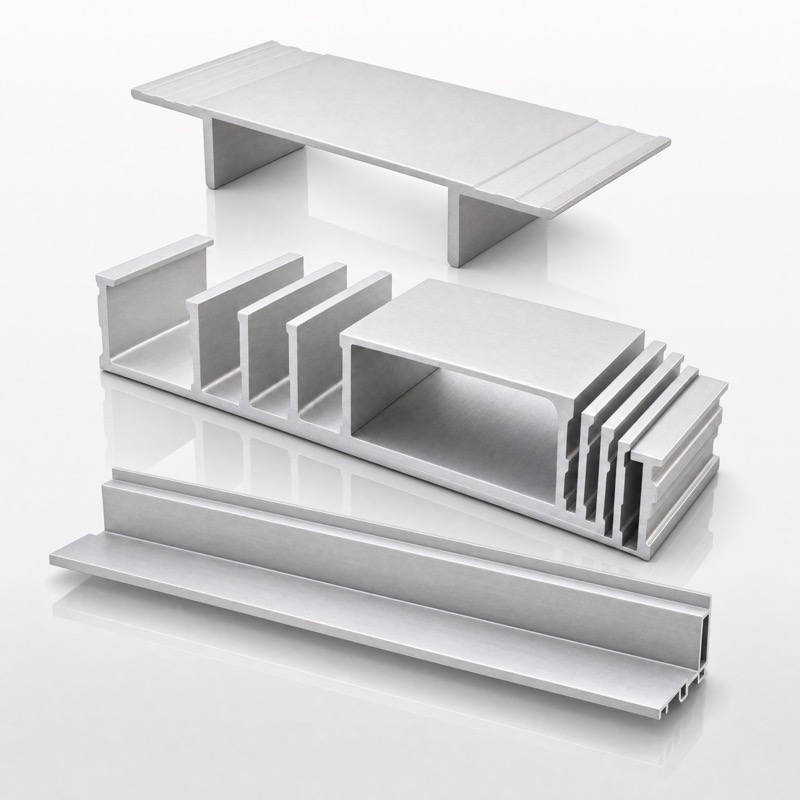
The most common standard profiles include flat bars, round bars, square bars, angle bars, U-channels, C-channels, T-bars, Z-bars, round tubes, square tubes, and rectangular tubes. Each profile serves different structural, architectural, fabrication, and decorative needs.
A solid extrusion has no fully enclosed internal void, such as a flat bar or solid angle. A hollow extrusion contains one or more enclosed voids, such as a round or rectangular tube. Hollow profiles can offer an efficient strength-to-weight balance but may involve more complex tooling and production control.
6063 is commonly used for architectural aluminum profiles because it provides good extrudability, corrosion resistance, surface quality, and compatibility with anodizing and powder coating. The final selection should still consider strength, environmental exposure, finish, and fabrication requirements.
6061, 6005, and 6005A are frequently considered for industrial or structural applications requiring higher strength. The best choice depends on the required temper, cross-section, load condition, joining method, and service environment.
Yes. Custom aluminum extrusion profiles can be developed for specific functional needs, including mounting grooves, screw ports, drainage systems, cable channels, sealing grooves, heat-dissipation fins, snap-fit details, and decorative surfaces. A custom profile can also reduce welding and assembly work.
Provide a profile drawing or sample, alloy and temper requirement, dimensions, tolerances, surface finish, length, quantity, fabrication needs, packing requirements, destination country, and intended application. If you do not have a complete drawing, provide photos, sketches, dimensions, and a clear description of how the profile will be used.
Not always. Mill-finish aluminum may be suitable for hidden or non-decorative applications. However, anodizing, powder coating, painting, or other treatments may be appropriate when the profile requires improved appearance, color consistency, additional environmental resistance, or specific branding requirements.
Start by simplifying unnecessary features, keeping wall thickness more uniform, reducing extreme tolerance requirements, using smooth transitions, and consolidating multiple assembled parts into one functional profile where practical. Discuss annual volume and downstream fabrication needs early, because these factors affect tooling and total project cost.
1. [Understanding the Different Types of Standard Aluminum Extrusion Profiles — Orange Aluminum]
2. [Aluminum Extrusion Design Tips — Aluminum Extruders Council]
3. [Industry Standards — The Aluminum Association]
4. [The Material: Aluminium Properties, Production and Recycling — European Aluminium]
5. [Aluminum Extrusion Manual — Aluminum Extruders Council]
6. [Designing Aluminum Extrusions: Alloys, Finishes and Tolerances — Bonnell Aluminum]
7. [Aluminum Extrusion Profiles: Shapes, Types, Series and Best Practices — MISUMI]


