
English


Views: 282 Author: Dapeng Aluminum Publish Time: 2026-08-22 Origin: Site


Content Menu
● Square Tubing vs Round Tubing at a Glance
● Square Aluminum Tubing: Strengths and Limitations
>> Why Square Tubing Is Easy to Fabricate
>> Structural Considerations for Square Tubing
>> When Square Tubing May Not Be Ideal
● Round Aluminum Tubing: Strengths and Limitations
>> Why Round Tubing Performs Well Under Multi-Directional Loads
>> Round Tubing and Bending Performance
>> Round Tubing Fabrication Challenges
● Square Tubing vs Round Tubing: Strength and Load Behavior
>> Do Not Compare Tube Shapes by Appearance Alone
● Manufacturing Insights for Custom Aluminum Tubing
>> Maintain Balanced Wall Thickness
>> Choose the Alloy for the Job
>> Consider Secondary Processing Early
● How to Choose Between Square and Round Tubing
>> 1. Define the Primary Function
>> 2. Identify the Connection Method
>> 3. Review Fabrication Requirements
>> 4. Verify Structural Performance
● Typical Application Examples
● Work With a Custom Aluminum Tubing Manufacturer
● FAQ
>> Is square tubing stronger than round tubing?
>> Is round aluminum tubing easier to bend?
>> Is square aluminum tubing easier to weld?
>> Which tubing shape is better for machine frames?
>> Can aluminum square tubing be anodized?
>> Can aluminum round tubing be powder coated?
>> What information is needed for a custom aluminum tube quotation?
When comparing square tubing vs round tubing, the best choice is not simply the shape with the highest theoretical strength. It is the profile that delivers the right balance of load performance, fabrication efficiency, installation convenience, appearance, material use, and long-term cost for your specific product.
At Guangdong Dapeng Aluminum Industry Co., Ltd., our engineering and export teams regularly support customers choosing between extruded square aluminum tubing and round aluminum tubing for architectural systems, machine frames, transport components, solar structures, display products, and customized industrial assemblies. In real projects, the "better" tube profile depends on how the part will be loaded, joined, machined, handled, and finished.
This guide explains the practical differences between square and round aluminum tubing, helping engineers, procurement teams, fabricators, and product designers make a more confident specification decision.
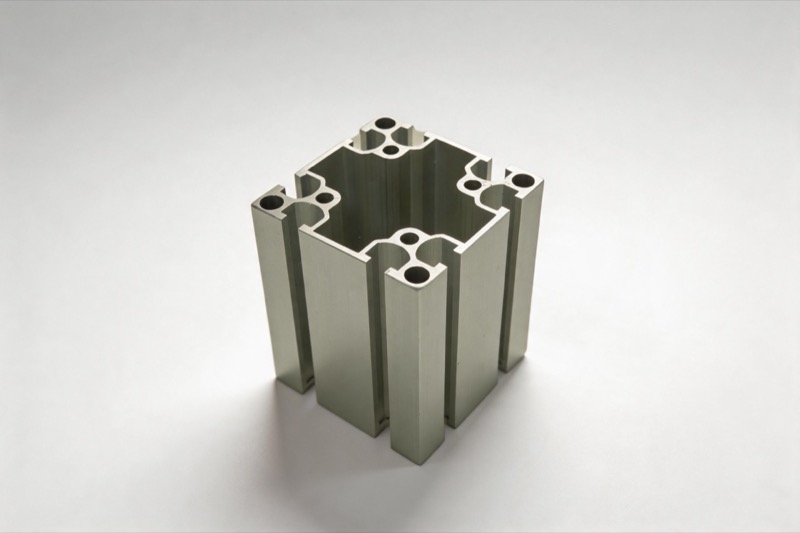
Square tubing has four flat sides and four corners. Round tubing has a continuous circular wall with no corners. That simple geometric difference changes how each profile handles loads, bending, torsion, welding, assembly, and visual design.
| Comparison Factor | Square Aluminum Tubing | Round Aluminum Tubing |
|---|---|---|
| External geometry | Four flat sides with corners | Continuous circular surface |
| Hardware mounting | Excellent for brackets, panels, and fasteners | Often requires clamps, saddles, or custom fittings |
| Resistance to twisting | Can be effective, but corners may create stress concentration | Often preferred for smooth, multi-directional loading |
| Bending and forming | More prone to localized distortion during bending | Usually easier to bend smoothly with suitable tooling |
| Welding access | Flat faces simplify fixturing and straight weld runs | Curved surfaces can require more skilled fit-up |
| Space efficiency | Fits corners, frames, and rectangular layouts well | Best for compact, flowing, or ergonomic designs |
| Appearance | Modern, technical, architectural | Clean, streamlined, ergonomic |
| Common uses | Frames, racks, enclosures, support structures | Handrails, furniture, transport parts, fluid-related assemblies |
Both shapes can be extruded in common aluminum alloys such as 6063 and 6061, then supplied with mill finish, anodizing, powder coating, polishing, machining, drilling, bending, welding, or other custom fabrication services.
Square aluminum tubing is one of the most versatile hollow profiles for fabrication-driven projects. Its flat surfaces make it especially useful where components need to be mounted, aligned, welded, or assembled quickly.
The greatest advantage of square tubing is its flat working surface. Fabricators can position the tube more easily in a vise, fixture, saw, drill press, or welding jig. Brackets and panels sit naturally against a flat side, reducing the need for special connectors.
Square tubing is often the practical choice when a project requires:
- Repeated drilling or tapping operations
- Flat-to-flat welding connections
- Brackets, plates, hinges, or covers
- Panel-frame construction
- Rectangular machine guards or workstations
- Tight integration into corners or wall-adjacent spaces
- A clean, angular architectural appearance
For example, a modular equipment frame may require dozens of mounting positions for sensors, guards, motors, cable trays, and access panels. Square aluminum tubing provides straightforward reference surfaces for these assemblies.
Square tube can provide excellent performance in compression, bending, and frame construction when its dimensions and wall thickness match the design load. However, the corners may concentrate stress under certain loading conditions, particularly around sharp transitions, drilled holes, weld zones, or aggressive bends.
The profile should not be selected based only on outside dimensions. A reliable selection must consider:
- Alloy and temper
- Wall thickness
- Unsupported span
- Load direction and load frequency
- Connection method
- Required deflection limit
- Exposure to vibration or torsion
- Surface finish and corrosion environment
For structural applications, engineers should calculate section properties and verify the design against the applicable aluminum structural standard rather than assuming that a larger-looking square tube will always perform better. The Aluminum Association's design resources include section-property information for round, rectangular, and square tube shapes.
Square tubing may be less suitable when the component must undergo tight-radius bending, frequent rotational movement, or repeated multi-directional loading. During bending, the flat walls can wrinkle, flatten, or buckle if tooling, bend radius, and wall thickness are not properly matched.
This does not mean square aluminum tubing cannot be bent. It means bending should be planned early, with prototype testing or professional forming advice for demanding applications.
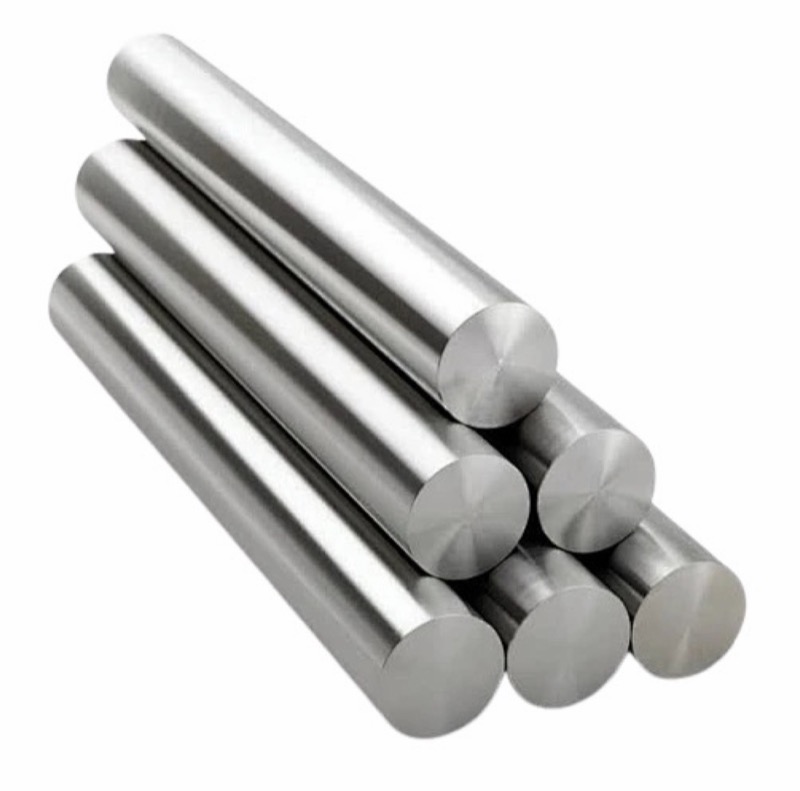
Round aluminum tubing is defined by its smooth, continuous circumference. Because it has no sharp corners, it distributes load around the wall more evenly and is frequently chosen for products that require bending, handling comfort, streamlined aesthetics, or smooth directional movement.
A round tube has the same geometric form in every rotational direction. This makes it particularly useful where loads may come from different angles or where the part may rotate, bend, or experience vibration.
Round aluminum tubing is commonly selected for:
- Handrails and grab bars
- Bicycle and mobility components
- Furniture frames
- Vehicle accessories
- Sports equipment
- Conveyor and roller-related systems
- Curved display frames
- Lightweight tubular structures
- Small fluid or gas transfer applications
The absence of corners can also reduce snagging risk and improve user comfort. For consumer-facing products such as handrails, exercise equipment, stroller frames, and tool handles, round tubing often offers a more natural grip.
For formed parts, round tubing is often easier to bend consistently than square tubing, provided the correct bending process is used. A properly selected mandrel, die, lubricant, and bend radius can help maintain the tube's shape and reduce wrinkling or flattening.
However, round tube bending is not automatically simple. Thin walls, large diameters, small bend radii, and hard tempers can still cause distortion. A successful specification should define:
1. Outside diameter
2. Wall thickness
3. Alloy and temper
4. Minimum centerline bend radius
5. Bend angle and orientation
6. Surface-finish requirement
7. Acceptable ovality or deformation tolerance
For projects with visible surfaces, prototype validation is especially important. A structurally acceptable bend may still be rejected if it produces visible marks, flattening, or surface damage after anodizing.
Round tubing can require more specialized joining and mounting methods. A flat bracket does not naturally sit against a curved wall, so the assembly may need tube clamps, saddle brackets, shaped end fittings, welded tabs, or machined interfaces.
Welding is also more sensitive to fixture alignment. The weld path follows a curved surface, and gaps between mating parts can be harder to control. For large production volumes, a well-designed fixture can solve much of this challenge.
Neither profile is universally stronger. The correct answer depends on the load case and the section dimensions being compared.
A round tube may perform efficiently when the load direction is uncertain or when the part is exposed to torsion, bending, or rotational forces. Square tubing may be highly effective when its flat faces and corners support the assembly geometry, especially in frame-based construction.
A larger square tube can look stronger than a smaller round tube, but visual size does not determine actual load capacity. Important mechanical factors include cross-sectional area, moment of inertia, wall thickness, alloy grade, heat-treatment condition, member length, support condition, and the type of loading.
For example:
- A long, lightly supported tube may be governed by deflection.
- A vertical support may be governed by buckling.
- A bracketed frame member may be governed by local stress near fasteners.
- A rotating component may be governed by torsional stiffness.
- A welded assembly may be governed by heat-affected-zone performance.
A professional design review should evaluate the full system, not only the tube profile.
Profile selection affects not only performance, but also manufacturability, tooling complexity, material yield, finishing quality, and production consistency.
For both square and round aluminum tubing, relatively uniform wall thickness helps metal flow more consistently during extrusion. Significant thick-to-thin changes can increase the likelihood of distortion, dimensional variation, surface defects, or more complex die design.
Industry extrusion guidance recommends maintaining symmetry where practical, using generous radii at transitions, and avoiding sharp knife-edge details. These principles can improve profile stability and reduce production risk.
For square tubing, corner radii are especially important. A completely sharp theoretical corner is not practical in standard extrusion. Specifying realistic internal and external radii supports smoother metal flow and more stable production.
Common choices include:
- 6063 aluminum alloy: Frequently selected for architectural and decorative extrusion applications because of its surface finish and anodizing suitability.
- 6061 aluminum alloy: Often used where higher strength is needed for industrial, transport, and structural components.
- 6005A aluminum alloy: A useful option for structural profiles requiring good strength and extrudability.
The final material choice should also consider welding requirements, corrosion exposure, machining needs, surface treatment, and applicable customer standards.
A tube that is economical to extrude may become expensive if it requires extensive secondary machining. Early design coordination can reduce downstream work.
For square tubing, integrated grooves, screw ports, locator features, or mounting faces may reduce separate brackets and machining steps. For round tubing, adding a controlled flat, internal feature, or compatible connector interface may simplify assembly.
This is where custom extrusion can create meaningful value: the profile can combine multiple functions into one component.
Use the following practical selection process before requesting a quotation.
Ask what the tube must do first:
- Support a vertical or horizontal load
- Form a frame
- Carry a panel or attached hardware
- Create an ergonomic handle
- Follow a curved path
- Improve appearance
- Transfer air, liquid, or gas
- Reduce weight in a moving system
A clear primary function prevents the team from choosing a profile only because it is familiar.
If the design uses flat plates, bolts, screws, brackets, hinges, or panels, square tubing is often easier to integrate.
If the design relies on clamps, sockets, curved fittings, or rotational assemblies, round tubing may be more natural.
Consider whether the part requires:
- Straight cutting
- Drilling and tapping
- CNC machining
- MIG or TIG welding
- Bending
- Polishing
- Anodizing
- Powder coating
- Tight dimensional tolerances
A profile that reduces handling steps can lower total project cost even when its raw material price is slightly higher.
Do not rely on general statements such as "round tube is stronger" or "square tube is more rigid." Provide the intended dimensions, span, loads, support conditions, and safety requirements for an engineering review.
For a new product, a sample run can reveal practical issues before mass production, including:
- Fit between tube and connector
- Surface quality after finishing
- Weld distortion
- Bending consistency
- Assembly time
- Packaging performance
- Visual acceptance
| Industry | Square Tubing Example | Round Tubing Example |
|---|---|---|
| Construction | Window-frame reinforcement, façade support, partition frames | Handrails, balustrade components, canopy supports |
| Industrial equipment | Machine frames, guarding systems, equipment enclosures | Rollers, handles, lightweight support arms |
| Transportation | Cargo frames, vehicle partitions, storage systems | Bicycle parts, rails, mobility components |
| New energy | Solar mounting frames, battery cabinet structures | Cable-management supports, specialized tubular components |
| Furniture | Tables, shelving, display cabinets | Chairs, garment rails, outdoor furniture frames |
| Retail display | Square display racks and modular booths | Hanging rails, curved display frames, handle structures |
The right aluminum tube profile should solve more than one problem. It should meet the required strength, fit your fabrication process, support the desired finish, and help control total project cost.
Guangdong Dapeng Aluminum Industry Co., Ltd. provides industrial aluminum profiles, architectural aluminum profiles, aluminum square tubing, aluminum round tubing, and customized deep-processing services for international customers. Our team can assist from drawing review and alloy selection through extrusion, surface treatment, precision cutting, machining, packaging, and export delivery.
If you are deciding between square aluminum tubing vs round aluminum tubing, send us your drawing, dimensions, target application, required alloy, surface finish, estimated order quantity, and any loading or assembly requirements. We can help evaluate a practical profile solution for your project.
It depends on the tube dimensions, wall thickness, material grade, temper, span, and load direction. Round tubing can be effective under multi-directional loading, while square tubing is often highly practical for frames and hardware-mounted assemblies.
In many cases, yes. Its continuous curved wall generally supports smoother bending than a square profile. However, bending results still depend on wall thickness, alloy, temper, bend radius, and tooling.
Square tubing is often easier to fixture and join because it has flat faces and straight edges. Round tubing can also be welded effectively, but curved surfaces may require more precise fit-up and welding control.
Square aluminum tubing is frequently preferred for machine frames because flat surfaces simplify mounting, alignment, panel attachment, drilling, and welding. The final choice should still be based on structural calculations and assembly requirements.
Yes. Aluminum square tubing can be anodized to improve corrosion resistance and create a durable decorative finish. Alloy selection, surface quality, and pretreatment all influence the final appearance.
Yes. Round aluminum tubing can be powder coated in a wide range of colors and textures. Proper pretreatment is essential for coating adhesion and long-term environmental resistance.
Provide the profile drawing or dimensions, alloy, temper, wall thickness, length, surface finish, fabrication requirements, tolerance needs, order quantity, destination country, and packaging expectations.
1. [Orange Aluminum — Square Tubing vs. Round Tubing: Differences & Applications]
2. [The Aluminum Association — 2020 Aluminum Design Manual Release]
3. [Aluminum Extruders Council — Extrusion Design Tips]


