


Views: 233 Author: Dapeng Aluminum Publish Time: 2026-08-11 Origin: Site


Content Menu
● How the Aluminum Extrusion Process Works
>> 1. Define the Profile and Performance Requirements
>> 2. Design and Manufacture the Extrusion Die
>> 3. Heat the Aluminum Billet
>> 4. Press the Billet Through the Die
>> 5. Cool, Stretch, Cut, and Age
● Why Aluminum Extrusion Is Used Across Industries
● Choosing the Right Alloy and Temper
>> 6000 Series Alloys for Structural Profiles
>> Questions to Ask Before Specifying Material
● Surface Finishes That Protect and Differentiate
>> Anodizing
>> Mechanical and Fabrication Finishes
● Industrial Aluminum Profiles: From Modular Frames to Automation
● Architectural Aluminum Profiles: Performance Beyond Appearance
● A Practical Design Checklist for Custom Aluminum Extrusion
● Quality Control That Buyers Should Expect
● Work With a Manufacturer From Drawing to Delivery
● FAQ
>> What is the difference between aluminum extrusion and aluminum casting?
>> Can aluminum extrusions be customized?
>> Which aluminum alloy is best for extrusions?
>> Are aluminum extrusions suitable for outdoor use?
>> Can extruded aluminum be welded?
>> What information is needed for a custom extrusion quotation?
Extruded aluminum is an aluminum alloy that has been heated, pressed through a precision die, and formed into a continuous profile with a fixed cross-section. From window frames and curtain walls to machine guards, EV battery structures, solar mounting systems, and transport components, aluminum extrusion gives engineers a practical way to combine strength, light weight, corrosion resistance, and design freedom in one component.
At Guangdong Dapeng Aluminum Industry Co., Ltd., we develop, manufacture, and export aluminum profiles for customers that need dependable material performance and adaptable production support. Our work covers industrial aluminum profiles, architectural aluminum profiles, and value-added fabrication for construction, industrial manufacturing, transportation, and new-energy applications.
For buyers, the important question is not simply "What is extruded aluminum?" It is: How can the profile, alloy, temper, finish, and fabrication process work together to improve the finished product?
An aluminum extrusion is a long aluminum profile with a consistent cross-section. It can be a simple angle, channel, flat bar, tube, or a sophisticated multi-cavity shape designed for a specific assembly.
The process is often compared with squeezing toothpaste from a tube. The material exits in the shape of the opening. In aluminum manufacturing, that opening is a carefully engineered steel die, and the result is a profile that can be cut, machined, drilled, bent, joined, and finished for its final application.
Extruded profiles generally fall into three categories:
- Solid profiles: Flat bars, angles, rods, and other sections without enclosed voids.
- Semi-hollow profiles: Shapes with partially enclosed channels or openings.
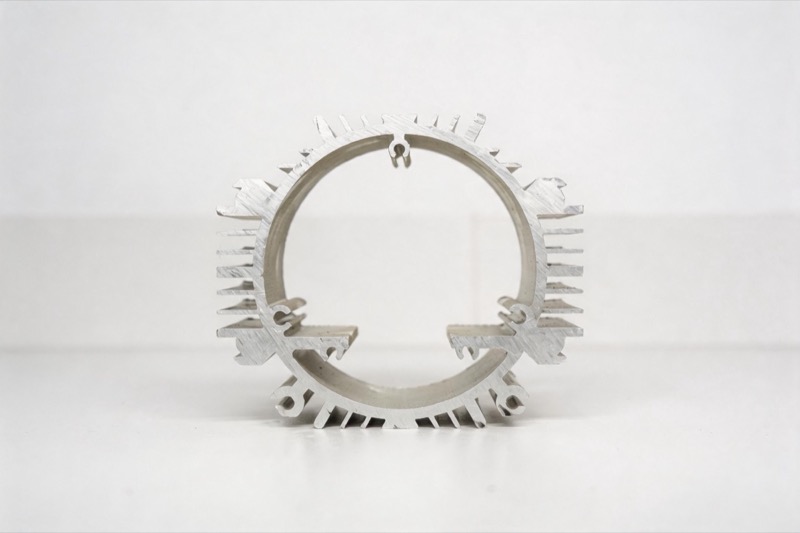
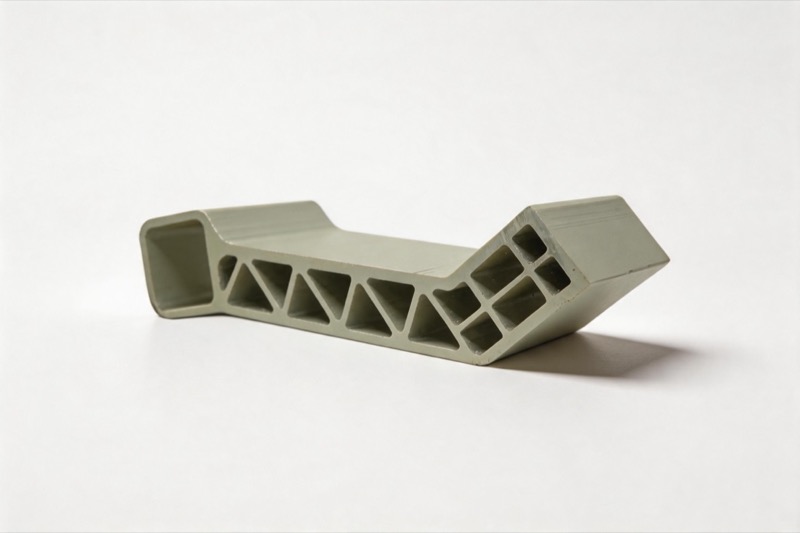
- Hollow profiles: Tubes, rectangular sections, heat-sink profiles, and multi-void structural designs.
This flexibility makes custom aluminum extrusion especially useful when a product needs to integrate several functions into a single part. A well-designed profile may combine mounting slots, cable channels, sealing grooves, heat-dissipation fins, and structural ribs—reducing assembly steps and the number of separate components.
Reliable extrusion starts long before the press runs. It begins with application requirements, a profile drawing, alloy selection, and tooling design.
The first step is to identify what the profile must do in service. A construction profile may prioritize weather resistance and appearance. A machine frame may prioritize rigidity and easy assembly. A transport component may require a balance of low weight, strength, and controlled dimensions.
A complete requirement review should address:
- Cross-sectional drawing and target dimensions
- Wall thickness and hollow areas
- Alloy and temper requirement
- Mechanical-performance expectations
- Surface-finish specification
- Required length and packing method
- Secondary fabrication needs
- Intended application and assembly method
Clear information at this stage helps prevent costly changes after die production begins.
The die controls the profile's shape. Its design affects metal flow, surface quality, dimensional stability, extrusion speed, and production efficiency.
Complex profiles are possible, but complexity must be balanced with manufacturability. Very thin walls, sharp transitions, deep narrow channels, or uneven section thickness can make metal flow more difficult. A manufacturing review can identify areas where a small design adjustment improves consistency without changing the profile's intended function.
An aluminum billet is a cylindrical piece of alloy prepared for extrusion. It is heated until it becomes soft enough to flow under pressure, while remaining below its melting point.
Temperature control matters because it influences surface quality, dimensional stability, and final mechanical properties. The correct production window depends on the selected alloy, die structure, profile geometry, and target extrusion speed.
The heated billet enters the extrusion press. A hydraulic ram applies force and pushes the softened aluminum through the die opening. As the aluminum exits, it takes the exact cross-sectional shape of the die.
This is the stage where experience becomes especially important. Press conditions, billet temperature, die temperature, and extrusion speed must work together. Poor control can affect straightness, surface quality, dimensions, and material performance.
After leaving the press, the profile is cooled on a run-out table. It is then stretched to improve straightness and relieve distortion before being cut into required lengths.
Many alloys also undergo controlled aging. This heat-treatment stage develops the temper and helps the profile achieve its intended strength level. The profile can then proceed to finishing, fabrication, inspection, packing, and shipment.
Aluminum profiles are widely selected because they solve both engineering and production challenges. They are not automatically the right answer for every project, but they are highly effective where shape efficiency, corrosion resistance, and weight reduction matter.
| Advantage | Practical Value for Buyers |
|---|---|
| Low weight | Supports easier handling, lower transport weight, and lightweight product design |
| Strength-to-weight performance | Enables robust structures without relying on excessively heavy sections |
| Corrosion resistance | Suitable for many indoor, outdoor, humid, and marine-adjacent environments when the right alloy and finish are selected |
| Design flexibility | Allows integrated ribs, grooves, channels, chambers, and mounting features |
| Thermal conductivity | Useful for heat sinks, electronics housings, lighting, and energy equipment |
| Surface versatility | Can be anodized, powder coated, painted, polished, brushed, or supplied with mill finish |
| Recyclability | Supports material recovery at the end of product life |
Aluminum's ability to form complex hollow and multi-chamber shapes is particularly valuable. Instead of welding several separate pieces, a single custom extrusion can often create a cleaner, more repeatable structural solution.
There is no universal "best" aluminum alloy. The correct choice depends on the application, forming requirements, corrosion exposure, joining method, finish, and required mechanical properties.
The 6000 series is widely used for architectural and industrial aluminum profiles. These alloys typically offer a practical combination of extrudability, corrosion resistance, surface quality, and strength after heat treatment.
For example, 6063 is frequently selected when surface appearance and extrusion complexity are important, such as window systems, doors, decorative trims, and visible architectural components. 6061 is commonly considered for applications requiring higher strength, although profile geometry and manufacturing requirements must still be evaluated.
The alloy name alone is not enough. The temper also matters. Temper describes the material condition after processing and heat treatment. It can affect strength, hardness, machining behavior, and the profile's suitability for subsequent forming.
Before finalizing a profile, ask:
1. What load will the part carry in real use?
2. Will it be exposed to moisture, salt, chemicals, or UV light?
3. Is appearance critical after anodizing or powder coating?
4. Does the part require welding, bending, drilling, tapping, or CNC machining?
5. Are close tolerances essential for assembly?
6. Is lightweight performance more important than maximum strength?
7. Does the project need recycled-content or material-traceability documentation?
A manufacturer should review these questions with the drawing rather than recommending material based only on the profile's general category.
A profile leaving the press has a mill finish. This can be suitable for hidden industrial structures or parts that will receive further processing. For visible or demanding applications, secondary finishing can improve durability, appearance, or both.
Anodizing creates a controlled oxide layer on the aluminum surface. It can enhance corrosion resistance and provide a clean metallic appearance. Natural silver, bronze, black, champagne, and other visual effects may be available depending on the finish system.
Anodizing is often specified for architectural profiles, electronics enclosures, decorative trims, and components where a metallic appearance is desired.
Powder coating applies a colored protective layer to the aluminum surface. It offers broad color flexibility and can provide matte, gloss, textured, metallic, or wood-grain visual effects.
For outdoor projects, the coating specification should reflect the expected environment. Color alone is not a performance specification. Buyers should also clarify coating thickness, pretreatment requirements, gloss level, adhesion expectations, and weather-resistance needs.
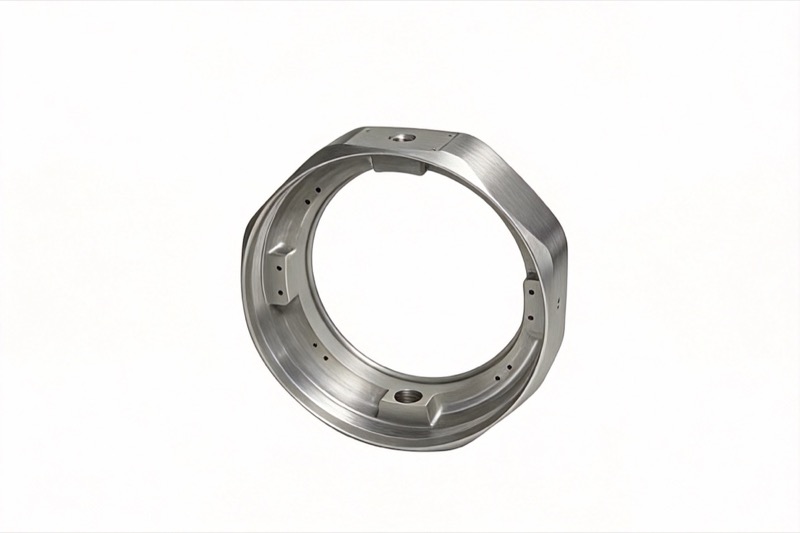
Brushing, polishing, sanding, and machining can create a specific visual or functional surface. CNC machining, drilling, punching, tapping, bending, and cutting can then turn a standard extrusion length into a ready-to-assemble component.
The best approach is to plan finishing and fabrication together. For instance, cutting before coating versus cutting after coating can affect edge appearance, protection, handling, and packing requirements.
Industrial aluminum profiles are commonly used to build flexible structures without extensive welding. T-slot systems, for example, allow users to connect frames, panels, brackets, guards, and accessories with bolts and specialized fasteners.
Typical uses include:
- Automation equipment frames
- Conveyor supports
- Assembly workstations
- Safety fences and machine guards
- Robotics platforms
- Testing equipment
- Storage racks and carts
- Cleanroom structures
- Solar-energy support systems
The value of modular profiles is not only material performance. It is reconfigurability. Equipment layouts can be modified, expanded, or repaired with less disruption than a permanently welded structure.
For heavy-load applications, however, profile selection should be based on actual loading conditions, span, connection design, deflection limits, and safety requirements. A larger profile is not always the most efficient solution; the right internal geometry and joint design are often equally important.
Architectural aluminum extrusion is used in windows, doors, curtain walls, partitions, railings, louvers, ceilings, sunshades, and decorative systems. These profiles must often balance appearance with structural performance, water management, thermal requirements, glazing compatibility, and long-term weather exposure.
A high-quality architectural profile should be assessed as part of a complete system. The profile itself matters, but so do gaskets, thermal-break components, drainage pathways, sealants, fasteners, glass interfaces, coatings, and installation conditions.
For export projects, document clarity is essential. Drawings should define dimensions, alloy, temper, finish, visible-face requirements, packing method, length tolerances, and inspection expectations. This reduces the risk of misunderstandings across different markets and project teams.
Many extrusion issues can be prevented before tooling begins. Use this checklist during early design review:
- Keep wall thickness as consistent as practical.
- Avoid unnecessary sharp corners; use suitable radii where possible.
- Review deep channels and narrow gaps for die feasibility.
- Consider how the profile will be held during machining or assembly.
- Confirm whether finished dimensions apply before or after coating.
- Identify visible surfaces and acceptable cosmetic standards.
- Define straightness, twist, flatness, and dimensional requirements clearly.
- Plan drainage, ventilation, and corrosion isolation for outdoor assemblies.
- Check whether the profile can be nested efficiently for shipping.
- Include test samples and first-article approval in the project plan.
This review is not about limiting creativity. It is about turning a functional concept into a profile that can be produced consistently at an appropriate cost.
Quality should be verified throughout production, not only at final packing. A robust control process typically includes raw-material verification, first-piece confirmation, in-process checks, final inspection, and packing review.
Key inspection points may include:
- Profile dimensions and wall thickness
- Straightness, twist, and cut length
- Surface quality and visible defects
- Alloy and temper documentation
- Finish color, coating thickness, or anodized appearance
- Hole position and machining accuracy
- Packing protection and label accuracy
The inspection plan should match the application. A concealed support profile and a visible decorative extrusion do not require the same acceptance criteria. Likewise, a basic cut-to-length profile and a fully machined assembly require different control methods.
A successful extrusion project depends on early technical communication. Share the drawing, application, required quantity, material preference, finish, fabrication scope, target market, and delivery expectation as early as possible.
Guangdong Dapeng Aluminum Industry Co., Ltd. supports customers with industrial aluminum profiles, architectural aluminum profiles, and customized deep-processing services. Our team can help review profile feasibility, align material and finish requirements, and develop a production approach suited to your application.
Send us your drawing or sample requirement to start a technical review and receive a tailored aluminum extrusion solution.
Extrusion pushes softened aluminum through a die to create a long profile with a consistent cross-section. Casting pours molten aluminum into a mold to create a near-net shape. Extrusion is generally better for continuous profiles, while casting is often suitable for more three-dimensional shapes.
Yes. Custom aluminum extrusion can include a unique cross-section, alloy selection, temper, cut length, anodizing, powder coating, drilling, tapping, CNC machining, punching, bending, and assembly support. Tooling is usually required for a new profile design.
The best alloy depends on the product's strength, surface, corrosion, fabrication, and cost requirements. Many industrial and architectural profiles use 6000 series alloys, but a manufacturer should confirm the final selection after reviewing the application and drawing.
Yes, provided the alloy, surface treatment, connection design, and installation conditions suit the environment. Anodizing or powder coating may improve long-term appearance and protection, especially in exposed locations.
Many aluminum extrusions can be welded, but welding may affect the local mechanical condition and surface appearance. The alloy, temper, joint design, filler material, and post-weld requirements should be considered before production.
Provide a profile drawing or sample, dimensions, alloy or strength requirement, temper, surface finish, fabrication details, cut length, order quantity, packing needs, destination, and target delivery schedule. If some details are unknown, the intended application is still a useful starting point.
1. [Eagle Aluminum — What Is Extruded Aluminum? Definition, Types, & Benefits]
2. [The Aluminum Association — Processing 101]
3. [Hydro — What Are Aluminum Extrusions?]
4. [MISUMI — An Introduction to Aluminum Extrusion and Profiles]
5. [The Aluminum Association — Sustainability and Recycling]
6. [The Aluminum Association — Extruded Aluminum Environmental Product Declaration]


