
English


Views: 238 Author: Dapeng Aluminum Publish Time: 2026-09-17 Origin: Site


Content Menu
● What Is PVDF Coating for Aluminum?
● What Is Powder Coating for Aluminum?
● PVDF Coating vs. Powder Coating: Quick Comparison
● PVDF Coating Performance in Exterior Aluminum Applications
>> Strong Resistance to UV Exposure
>> Better Long-Term Color Stability
>> Strong Suitability for Harsh Environments
● Powder Coating Performance in Aluminum Manufacturing
>> Excellent Appearance Flexibility
>> Strong Mechanical Resistance
>> Efficient and Lower-Waste Production
● The Most Important Difference: Weathering Grade
● PVDF vs. Powder Coating in Coastal Areas
● PVDF vs. Powder Coating for Windows and Doors
● PVDF vs. Powder Coating for Industrial Aluminum Profiles
● Coating Thickness and Pretreatment Matter
● A Practical Coating Selection Checklist
>> 1. Where Will the Aluminum Be Installed?
>> 2. How Long Must the Finish Look Consistent?
>> 3. Which Color Is Required?
>> 4. What Is the Real Budget?
● Expert Recommendation by Application
● Common Mistakes When Selecting Aluminum Coatings
>> Assuming All Powder Coatings Are the Same
>> Using an Exterior Coating for an Extreme Climate Without Verification
>> Failing to Define Inspection Requirements
● Work With an Aluminum Profile Manufacturer That Understands the Finish
● FAQ
>> Is PVDF coating better than powder coating?
>> Can powder coating be used outdoors?
>> Is PVDF coating suitable for aluminum windows?
>> Which coating is best for coastal aluminum profiles?
>> Does coating thickness determine coating quality?
>> What should I include in an aluminum coating specification?
>> Can PVDF and powder-coated aluminum have the same color?
When specifying a finish for aluminum extrusions, PVDF coating vs. powder coating is not simply a question of color or initial cost. The decision affects long-term appearance, corrosion protection, maintenance needs, project risk, and the perceived value of the finished product.
For architectural façades, curtain walls, windows, doors, transportation components, industrial equipment, and renewable-energy structures, aluminum profiles are frequently exposed to UV radiation, rain, humidity, airborne pollutants, salt, abrasion, and temperature changes. A suitable coating system must therefore be selected according to the real service environment—not only the product drawing or the quotation price.
At Guangdong Dapeng Aluminum Industry Co., Ltd., we work with customers who require aluminum alloy solutions for building, industrial manufacturing, transport, and new-energy applications. From a manufacturing and export perspective, the best coating choice is the one that aligns material performance, project location, expected service life, appearance expectations, and total ownership cost.
This guide compares PVDF coating and powder coating in detail, explains where each system performs best, and provides a practical process for selecting the right surface finish for aluminum profiles.
PVDF coating is a liquid fluoropolymer coating system commonly used for high-performance exterior architectural aluminum. PVDF stands for polyvinylidene fluoride, a fluoropolymer resin known for strong resistance to ultraviolet exposure, weathering, fading, chalking, moisture, and chemical pollutants.
PVDF finishes are usually applied to prepared aluminum surfaces through a controlled spray process. Depending on the required appearance and durability level, the system may include:
- A pretreatment layer for adhesion and corrosion resistance
- A primer layer
- A PVDF color coat
- A clear protective topcoat or additional color layer
In premium architectural applications, PVDF systems are often specified for aluminum curtain walls, exterior cladding, louvers, sunshades, roofing elements, window systems, and decorative façade profiles.
The major advantage of PVDF coating is its ability to retain color and gloss during long-term outdoor exposure. This is particularly important for high-rise buildings, landmark projects, coastal developments, hot climates, and projects with dark or highly saturated colors.
Powder coating is a dry finishing method in which electrostatically charged powder particles are sprayed onto a prepared aluminum profile. The coated profile is then heated in an oven. During curing, the powder melts, flows, and cross-links to create a continuous protective film.
Powder coating is widely used across both architectural and industrial aluminum applications. It offers a broad color range, multiple textures, good mechanical performance, efficient material use, and strong production flexibility.
Common powder-coated aluminum products include:
- Aluminum windows and doors
- Interior partitions and decorative trims
- Industrial aluminum profiles
- Equipment frames and machine guards
- Furniture profiles
- Lighting housings
- Transportation components
- Solar mounting structures
- Consumer-product aluminum parts
Not all powder coatings provide the same weathering performance. Standard polyester powders, super-durable polyester powders, polyurethane powders, and fluoropolymer powder systems can differ significantly in UV resistance, color retention, and exterior life expectancy.
Therefore, buyers should avoid specifying only "powder coated aluminum." A complete specification should state the required coating type, color, gloss, film thickness, pretreatment method, testing requirements, and applicable performance standard.
| Comparison Factor | PVDF Coating | Powder Coating |
|---|---|---|
| Main coating format | Liquid fluoropolymer coating | Dry electrostatic powder coating |
| Typical resin chemistry | Usually PVDF fluoropolymer-based | Often polyester, super-durable polyester, polyurethane, or specialty powder |
| UV resistance | Excellent | Moderate to excellent, depending on powder grade |
| Color retention | Excellent for demanding exterior exposure | Good with high-quality super-durable powders |
| Resistance to chalking | Very high | Varies by resin, pigment, and weathering class |
| Salt-air performance | Strong when correctly specified | Can perform well, but requires suitable pretreatment and powder grade |
| Impact resistance | Good | Often excellent |
| Abrasion resistance | Good | Often very good |
| Color and texture variety | Broad, but more limited than powder in some finishes | Extremely broad, including textured, metallic, matte, gloss, and fine-structure effects |
| Production efficiency | More process-sensitive | Highly efficient for repeat production |
| Material utilization | Lower than powder due to overspray and solvent-based process factors | High; reclaim systems can recover overspray |
| Typical project cost | Higher | Usually lower to moderate |
| Best-fit applications | Landmark façades, coastal buildings, high-UV exterior systems | Windows, doors, industrial profiles, interior applications, mainstream exterior projects |
The right answer is rarely "PVDF is always better" or "powder coating is always more economical." The better choice depends on the actual exposure conditions and the performance level required by the project.
PVDF coating is frequently selected when long-term façade appearance is a major design and commercial requirement. It is especially valued for its ability to resist degradation from solar radiation and harsh weather.
UV radiation gradually breaks down many coating binders and pigments. This can lead to fading, gloss reduction, surface chalking, and uneven color appearance between shaded and sun-exposed building elevations.
PVDF resin chemistry provides a high level of UV stability. For this reason, PVDF-coated aluminum is often preferred for projects in:
- Tropical and subtropical climates
- Desert or high-solar-radiation regions
- High-altitude locations
- Large glass-and-aluminum façades
- Open-air transportation hubs
- Buildings with dark gray, black, red, blue, or metallic finishes
- Long-life commercial developments
Dark colors deserve special attention. They absorb more solar energy and can make visual fading more noticeable. When a project requires deep black, charcoal gray, dark bronze, or saturated blue, the coating system should be evaluated carefully rather than selected on price alone.
The purpose of a premium exterior coating is not merely to look good after installation. It must continue to look consistent after years of exposure.
High-performance PVDF systems can be specified to meet demanding exterior-weathering requirements. For example, AAMA 2605 is a superior-performance specification for organic coatings on architectural aluminum and includes long-term South Florida exposure testing. Coatings meeting this level must demonstrate controlled color change, low chalking, and retained gloss after extended outdoor exposure.
For a building owner, developer, architect, or façade contractor, this performance can reduce the risk of visible panel-to-panel or elevation-to-elevation color inconsistency over time.
PVDF-coated aluminum is commonly considered for projects exposed to:
- Coastal salt air
- High humidity
- Acidic or polluted urban environments
- Intense sunshine
- Frequent rain and condensation
- Large temperature variations
However, coating chemistry alone does not guarantee performance. Surface preparation, film thickness, curing control, edge treatment, profile design, water drainage, installation quality, and routine cleaning all influence the final service life.
A premium coating applied to poorly prepared aluminum can still fail prematurely. In the same way, a well-selected powder coating applied through a controlled process can provide excellent results in many exterior applications.
Powder coating remains one of the most practical and versatile finishes for aluminum profiles. It is widely adopted because it combines attractive appearance, robust physical protection, flexible color options, and efficient large-volume production.
One of the biggest advantages of powder coating is the variety of available decorative effects. Buyers can select from:
- RAL and custom colors
- Matte, satin, semi-gloss, and gloss finishes
- Sand-textured surfaces
- Fine-texture coatings
- Metallic effects
- Wood-grain-compatible base finishes
- Anti-fingerprint surfaces
- Smooth architectural finishes
- Industrial safety colors
This makes powder coating highly suitable for product lines where color options, tactile feel, and visual differentiation matter.
For example, a manufacturer of aluminum window systems may require white, black, champagne, bronze, wood-grain, and customized color options within the same product range. Powder coating can support this need efficiently.
Powder-coated aluminum often performs well in applications where profiles may experience handling, assembly, transportation, or moderate physical contact.
The cured coating film can offer:
- Good impact resistance
- Good scratch resistance
- Good abrasion resistance
- Good adhesion
- Consistent edge coverage when the process is well controlled
These characteristics make powder coating popular for industrial frames, equipment enclosures, shelving systems, machine components, furniture profiles, and commercial aluminum assemblies.
Powder coating is generally considered an efficient finishing process because overspray can often be recovered and reused in controlled systems. It also does not rely on the same level of liquid solvent use associated with traditional liquid coatings.
For customers ordering repeat batches of standard aluminum profiles, this can support competitive manufacturing costs and consistent production scheduling.
That said, efficiency should never be confused with low quality. The key question is whether the powder type and coating process are appropriate for the project's exposure conditions.
The most meaningful comparison is not simply PVDF versus powder. It is often:
> Which coating performance level is required for this specific aluminum application?
Architectural aluminum coatings are frequently evaluated against performance specifications such as AAMA 2603, AAMA 2604, and AAMA 2605.
| Performance Level | Typical Outdoor Exposure Benchmark | General Use Direction |
|---|---|---|
| AAMA 2603 | 1-year South Florida exposure | Basic exterior or lower-demand applications |
| AAMA 2604 | 5-year South Florida exposure | Higher-performance commercial exterior applications |
| AAMA 2605 | 10-year South Florida exposure | Severe climates, premium façades, landmark projects |
AAMA 2603 is generally associated with standard coating performance. AAMA 2604 represents a higher-performance category, often suitable for super-durable powder coatings and selected high-performance liquid systems. AAMA 2605 is commonly associated with superior fluoropolymer or equivalent high-performance architectural finishes.
This distinction matters because a project in a mild inland climate may perform well with a properly specified super-durable powder coating, while a coastal high-rise with a 20-year visual-performance expectation may justify a PVDF system.
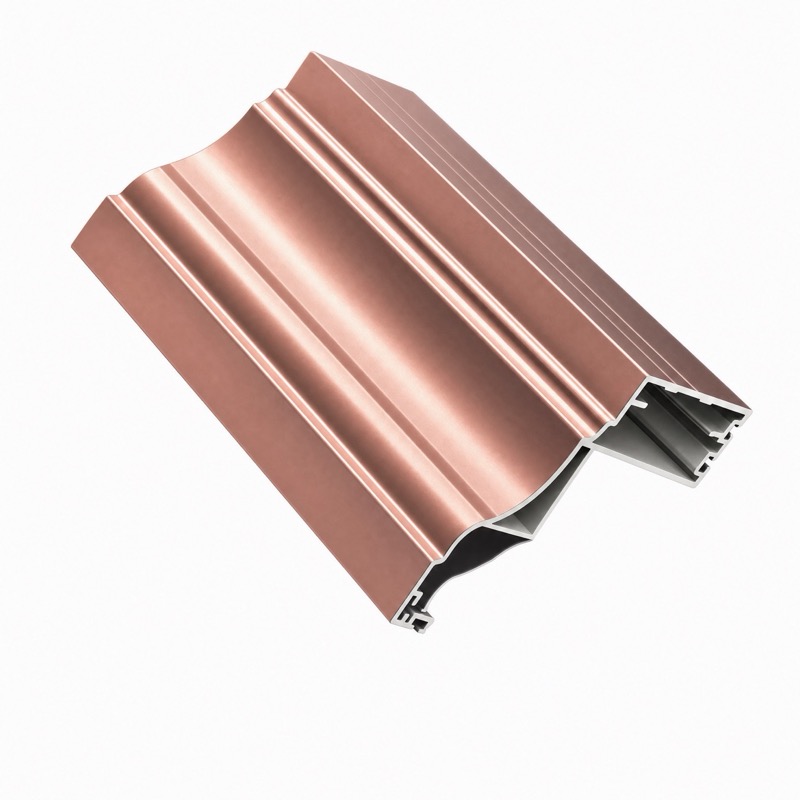
Coastal projects create a more demanding environment for aluminum finishes. Salt particles can settle on surfaces, combine with moisture, and accelerate coating deterioration if cleaning and protective systems are inadequate.
For aluminum used near the sea, buyers should evaluate more than the finish name. The project team should confirm:
- Aluminum alloy grade and temper
- Pretreatment process
- Chemical conversion coating quality
- Coating type and approved supplier
- Minimum dry-film thickness
- Edge coverage
- Salt-spray test requirements
- Adhesion performance
- Water drainage design
- Cleaning and maintenance plan
- Installation details that prevent moisture traps
PVDF coating is often preferred for premium coastal façades because of its weathering stability and long-term aesthetic performance. However, high-quality super-durable powder coating can also be a practical solution for windows, railings, industrial systems, equipment housings, and lower-risk architectural components when it is specified correctly.
A coastal project should never select a coating only from a color card. The technical data sheet, performance standard, pretreatment route, and warranty scope should all be reviewed before production begins.
For aluminum windows and doors, powder coating is often the preferred solution because it offers broad color options, attractive texture, solid durability, and cost efficiency.
- The project needs multiple colors or surface textures
- The building is in a moderate climate
- The budget is controlled
- The product is residential or mid-scale commercial
- The specification requires a super-durable polyester powder
- The customer wants black, white, gray, bronze, wood-effect, or custom RAL colors
- Production requires flexible batch quantities
- The window or door system is used in an exposed premium façade
- The building is located in a coastal, desert, tropical, or high-UV area
- Long-term color stability is a critical requirement
- The project includes large visible aluminum surfaces
- The architect requires a superior-performance coating specification
- The project has strict façade warranty obligations
For many projects, the ideal approach is not to use one finish everywhere. A developer may specify PVDF coating for highly exposed curtain-wall framing and powder coating for protected window frames, interior aluminum trims, or service-area components.
Industrial aluminum profiles face different risks from architectural profiles. Instead of constant UV exposure, they may experience assembly abrasion, impact, oils, cleaning agents, vibration, handling, and repeated contact.
Powder coating is often a strong choice for industrial aluminum because it offers robust physical protection and efficient repeat production.
Typical industrial uses include:
- Automation equipment frames
- Conveyor systems
- Workstations
- Machine enclosures
- Protective guards
- Electrical housings
- Solar equipment supports
- Storage and logistics structures
- Medical equipment components
- Consumer-electronics housings
PVDF is generally less common for indoor industrial frames unless the product is installed outdoors or exposed to aggressive environmental conditions.
For industrial projects, buyers should focus on:
- Adhesion
- Impact resistance
- Hardness
- Abrasion resistance
- Chemical resistance
- Film thickness
- Dimensional tolerance after finishing
- Color consistency across batches
- Masking requirements for critical assembly areas
A coating system is only as reliable as the surface beneath it. Aluminum naturally forms an oxide layer, but this natural layer alone is not enough to ensure durable coating adhesion in demanding environments.
Before PVDF or powder coating, aluminum profiles usually undergo cleaning and chemical pretreatment. This process removes oils, contaminants, and loose surface materials while creating a suitable surface for coating adhesion.
The coating process should control:
1. Profile cleaning to remove extrusion oils and handling contamination
2. Surface pretreatment to support adhesion and corrosion resistance
3. Drying conditions before coating application
4. Coating film thickness according to the specification
5. Curing temperature and curing time
6. Color matching and gloss control
7. Quality inspection before packing and shipment
In our experience with export-oriented aluminum projects, coating failures are often linked to incomplete technical specifications rather than a simple choice of the wrong finish. A buyer may request "black powder coating," but omit the intended environment, weathering grade, gloss level, film thickness, inspection standard, and packing conditions.
A complete specification prevents expensive misunderstandings.
Before choosing PVDF coating or powder coating for aluminum profiles, answer the following questions.
Consider whether the product will be used:
- Indoors
- Outdoors in a mild climate
- In a hot and humid climate
- Near the sea
- In a polluted city
- In a desert or high-UV region
- In a high-rise façade
- In an industrial facility
The more aggressive the environment, the more important high weathering performance becomes.
A temporary commercial installation and a 30-year curtain-wall project should not use the same decision framework.
Ask:
- What is the expected building life?
- Is visual consistency important after 5, 10, or 15 years?
- Will replacement be difficult or expensive?
- Is the aluminum surface highly visible from the street?
- Does the project include a long-term finish warranty?
Bright white and light silver may hide minor weathering changes better than dark charcoal, black, dark red, or strong blue. Deep colors often require more careful pigment and resin selection.
For exterior projects with dark colors, request performance documentation for the exact coating system—not only a generic statement about the coating category.
The lowest initial coating price may not deliver the lowest lifetime cost.
A useful decision formula is:
Total Finish Cost=Initial Coating Cost+Maintenance Cost+Replacement Risk+Appearance-Related Risk
PVDF coating usually has a higher initial cost. Yet, for a premium façade in a harsh climate, it may reduce long-term visual-performance risk. Powder coating may offer better economic value for large-volume, moderate-exposure, or industrial projects.
| Application | Recommended Finish Direction | Main Reason |
|---|---|---|
| Interior decorative aluminum | Standard or architectural powder coating | Attractive appearance and efficient cost |
| Residential aluminum windows | Powder coating, preferably suitable exterior grade | Broad color choice and good everyday durability |
| Commercial windows and doors | Super-durable powder coating or PVDF, depending on location | Balance between weathering performance and budget |
| Coastal curtain wall | PVDF coating or equivalent superior system | Strong long-term UV and weathering performance |
| High-rise façade | PVDF coating | Long-term color and gloss retention |
| Industrial machine frame | Powder coating | Mechanical protection and cost efficiency |
| Solar mounting or outdoor equipment | Super-durable powder or PVDF based on exposure | Outdoor durability and corrosion-management needs |
| Transportation exterior components | Application-specific powder or PVDF system | Depends on UV, abrasion, chemicals, and service conditions |
| Premium architectural louvers | PVDF coating | High visibility and long-term exterior appearance |
A color sample does not define coating quality. Two coatings can look identical on the first day but perform very differently after years of outdoor exposure.
Standard polyester powder, super-durable polyester powder, and premium fluoropolymer powder systems have different performance capabilities. Always request the coating grade.
A high-quality topcoat cannot compensate for poor cleaning or weak chemical pretreatment. Pretreatment quality is essential for adhesion and corrosion resistance.
A product described as "outdoor powder coated" may not be adequate for a seaside tower, desert resort, or tropical transportation terminal.
A professional purchase specification should include color tolerance, gloss range, film thickness, adhesion requirements, visual inspection criteria, and relevant testing expectations.
The coating decision should be made early—ideally before die development, extrusion scheduling, fabrication planning, and final packaging design.
At Guangdong Dapeng Aluminum Industry Co., Ltd., we support customers with aluminum alloy materials, industrial aluminum profiles, architectural aluminum profiles, and customized processing services. Our production capability includes casting, extrusion, rolling, oxidation, electrophoresis, spraying, and quality-control processes designed to help customers receive consistent aluminum solutions for global markets.
A productive supplier discussion should include the alloy, temper, profile drawing, end application, installation country, coating color, gloss level, required performance standard, annual volume, fabrication requirements, and packing method.
Contact our technical team with your profile drawing, project location, and finish requirement. We can help you evaluate whether PVDF coating, standard powder coating, or super-durable powder coating is the most practical option for your aluminum application.
PVDF coating is generally better for demanding exterior applications that require superior resistance to UV exposure, fading, chalking, and long-term weathering. Powder coating is often more economical and versatile for windows, doors, industrial profiles, interior products, and moderate exterior environments.
Yes. Powder coating is widely used outdoors. However, the powder type must match the environment. Standard polyester powder may suit moderate exposure, while super-durable powder is more suitable for higher UV and weathering demands.
Yes. PVDF coating can be used for aluminum windows, especially in premium commercial buildings, coastal areas, high-UV locations, and projects requiring superior long-term color retention. For many residential and standard commercial window systems, high-quality powder coating is often sufficient.
PVDF coating is frequently preferred for highly visible coastal façades because of its strong weathering stability. For other coastal aluminum products, a properly specified super-durable powder coating with high-quality pretreatment may also be appropriate.
No. Film thickness is important, but it is only one factor. Coating quality also depends on pretreatment, resin chemistry, pigment quality, curing conditions, adhesion, corrosion resistance, and the intended environment.
Include the coating type, approved color, gloss level, surface texture, film thickness, pretreatment requirement, performance standard, testing requirement, visual acceptance criteria, intended installation environment, and warranty expectations.
Yes. Similar colors can often be produced in both systems. However, the exact gloss, metallic effect, texture, and long-term color behavior may differ. For critical façade work, request physical samples and project-specific color approval before mass production.
1. [FONNOV Aluminium — PVDF Coating vs. Powder Coating for Architectural Cladding]
2. [FGIA Store — AAMA 2605-20: Performance Requirements for Superior Performing Organic Coatings]
3. [PPG — FGIA/AAMA 2605 Architectural Coating Performance]
4. [Linetec — AAMA 2603, AAMA 2604 and AAMA 2605 Paint Specifications]
5. [QUALICOAT — Official Quality Label for Coatings on Aluminum for Architectural Applications]
6. [Guangdong Dapeng Aluminum Co., Ltd. — Company Overview]
7. [Guangdong Dapeng Aluminum Industry Co., Ltd. — Aluminum Profile and Custom Aluminum Solutions]


