
English


Views: 238 Author: Dapeng Aluminum Publish Time: 2026-09-24 Origin: Site


Content Menu
● What Is Mill Finish Aluminum?
>> Typical Characteristics of Mill Finish Aluminum
>> Where Mill Finish Aluminum Works Best
>> How the Anodizing Process Works
● Mill Finish Aluminum vs. Anodized Aluminum: Core Differences
● Appearance: Raw Industrial Surface vs. Refined Decorative Finish
● Corrosion Resistance in Real Service Environments
>> When Mill Finish May Be Sufficient
>> When Anodizing Is the Better Choice
● Surface Hardness and Wear Resistance
● Cost Comparison: Purchase Price vs. Lifecycle Value
● A Practical Selection Method for Aluminum Buyers
>> Step 1: Identify Whether the Surface Is Visible
>> Step 2: Define the Exposure Environment
>> Step 3: Confirm the Fabrication Sequence
>> Step 4: Specify the Required Finish Clearly
>> Step 5: Consider Total Product Positioning
● Expert Insight: Alloy Choice Changes the Final Finish
● Industry Example: Architectural Window Profiles
● Mill Finish or Anodized Aluminum: Final Recommendation
>> 1. Is mill finish aluminum corrosion resistant?
>> 2. Is anodized aluminum better than mill finish aluminum?
>> 3. Can mill finish aluminum be anodized later?
>> 4. Does anodized aluminum peel or flake?
>> 5. Can anodized aluminum be used outdoors?
>> 6. Does anodizing hide extrusion lines or scratches?
>> 7. Which aluminum alloy is suitable for anodized extrusions?
When buyers compare mill finish aluminum vs. anodized aluminum, the most important question is not simply which option costs less. The right choice depends on where the aluminum profile will be used, how visible the surface will be, the expected service environment, and the project's maintenance expectations.
At Guangdong Dapeng Aluminum Industry Co., Ltd., we work with customers who use aluminum extrusions in architectural systems, industrial equipment, transportation components, solar-energy structures, machine frames, and custom-fabricated products. From this manufacturing perspective, mill finish and anodized aluminum are not interchangeable surface options. They create different outcomes in appearance, corrosion resistance, handling performance, processing flexibility, and long-term project value.
This guide explains the practical differences between mill finish aluminum and anodized aluminum, including how to select the appropriate finish for your aluminum extrusion project.
Mill finish aluminum is aluminum in its as-extruded, as-rolled, or as-fabricated condition without an added decorative or protective surface treatment such as anodizing, powder coating, painting, polishing, or brushing.
For aluminum extrusion buyers, mill finish is usually the standard surface condition when a profile leaves the extrusion press. The extrusion may have visible die lines, flow marks, minor handling marks, or color variation caused by alloy composition, cooling conditions, extrusion speed, and production batches.
Mill finish aluminum is not "unfinished" in terms of structural function. It can still be precisely extruded, cut, drilled, machined, welded, assembled, and used in demanding industrial applications. However, its appearance is generally more utilitarian than decorative.
Mill finish aluminum commonly has the following properties:
- Natural metallic appearance with a matte, semi-dull, or slightly reflective surface
- Visible extrusion lines or manufacturing marks, especially on wide exposed faces
- No deliberately controlled color consistency between different production lots
- Lower initial cost than anodized or coated aluminum
- Good formability and machinability for downstream fabrication
- High suitability for hidden, internal, or non-decorative components
- Natural oxide formation after exposure to air
Aluminum naturally forms a very thin oxide film when exposed to oxygen. This natural film provides some corrosion protection. However, it is much thinner and less controlled than the engineered oxide layer created during anodizing.
From our experience serving industrial and export customers, mill finish aluminum is often the most practical choice when the surface will not be highly visible or when the customer plans to apply another finish after fabrication.
Common applications include:
- Internal machine frames and automation equipment structures
- Industrial workbenches and conveyor systems
- Solar mounting components that will receive further treatment
- Hidden parts inside doors, windows, cabinets, and assemblies
- Heat sinks and electronic housings with non-decorative requirements
- Transportation components that will be painted or assembled internally
- Custom aluminum profiles requiring drilling, milling, welding, or bending
- Raw material for powder coating, electrophoresis, or anodizing after machining
For these applications, the buyer may prioritize dimensional accuracy, alloy selection, wall thickness, mechanical properties, and fabrication efficiency rather than surface appearance.
Anodized aluminum is aluminum that has undergone an electrochemical finishing process to create a controlled aluminum oxide layer on the metal surface.
During anodizing, the aluminum component acts as the anode in an electrolytic solution. Electrical current promotes the growth of an oxide layer that is integrated with the aluminum substrate rather than simply deposited on top of it.
This distinction matters. Unlike conventional paint, anodizing does not form a separate coating that can easily peel away from the substrate. The anodic layer becomes part of the aluminum surface.
The result is a finish that can improve corrosion resistance, surface hardness, wear performance, visual consistency, and decorative value.
Although anodizing lines can vary by production requirement, a typical process includes the following stages:
1. Cleaning and degreasing remove oils, extrusion residues, dust, and contaminants
2. Etching creates a more uniform matte or satin surface, depending on the specified appearance
3. Desmutting removes alloy-related residues after etching
4. Anodizing grows the aluminum oxide layer under controlled electrical conditions
5. Coloring, when required, creates silver, bronze, black, champagne, gold, or other tones
6. Sealing closes surface pores to improve stain resistance and corrosion performance
7. Inspection checks color, film thickness, sealing quality, surface defects, and packaging condition
The quality of the final anodized finish depends on much more than the anodizing bath itself. Alloy chemistry, extrusion quality, die condition, surface preparation, handling, racking, film-thickness control, sealing quality, and packaging all affect the final result.
The following table provides a practical comparison for buyers, engineers, architects, and procurement teams.
| Comparison Factor | Mill Finish Aluminum | Anodized Aluminum |
|---|---|---|
| Surface condition | Natural as-extruded or as-rolled surface | Electrochemically treated aluminum surface |
| Appearance | Matte, raw metallic, often with visible lines | More refined, consistent, and decorative |
| Surface oxide layer | Natural, thin, uncontrolled oxide film | Controlled and thicker anodic oxide layer |
| Corrosion resistance | Suitable for many indoor and protected uses | Better suited to exposed, humid, and demanding environments |
| Scratch and abrasion resistance | Moderate; surface marks can be visible | Improved surface hardness and wear resistance |
| Color choices | Natural aluminum tone only | Clear, bronze, black, champagne, gold, and other specified colors |
| Color consistency | Can vary between batches or profiles | Can be controlled, but must be specified and managed carefully |
| Fabrication flexibility | Excellent for machining and post-finishing | Requires protection during fabrication to avoid surface damage |
| Cost | Generally lower | Higher due to processing, quality control, and handling |
| Maintenance | May show stains, oxidation marks, and handling marks more easily | Easier to maintain when properly specified and sealed |
| Best use cases | Internal structures, industrial parts, components for further finishing | Visible architectural, transportation, consumer, and premium industrial applications |
The visual difference between mill finish aluminum and anodized aluminum is usually the first factor noticed by end users.
Mill finish aluminum has a natural industrial appearance. It may be completely acceptable for machine frames, factory equipment, internal brackets, and concealed structural parts. However, it is not normally recommended for premium storefronts, curtain walls, visible window frames, decorative furniture, display systems, or branded consumer products.
Anodized aluminum provides a cleaner and more intentional appearance. It can produce a satin, brushed, matte, or metallic look depending on the pretreatment and finishing process. Clear anodizing preserves the aluminum's metallic character, while colored anodizing allows designers to achieve bronze, black, champagne, or other architectural tones.
However, buyers should understand one important point: anodizing does not hide major surface defects. In many cases, anodizing makes extrusion lines, die marks, scratches, and material variations more visible.
For exposed aluminum extrusions, it is essential to define:
- The visible surface area
- Required surface appearance
- Acceptable die lines or flow lines
- Required color and gloss level
- Inspection distance and lighting conditions
- Acceptable variation between batches
- Protective film and packaging requirements
This is especially important for façade profiles, window and door systems, furniture components, consumer electronics, and decorative industrial equipment.
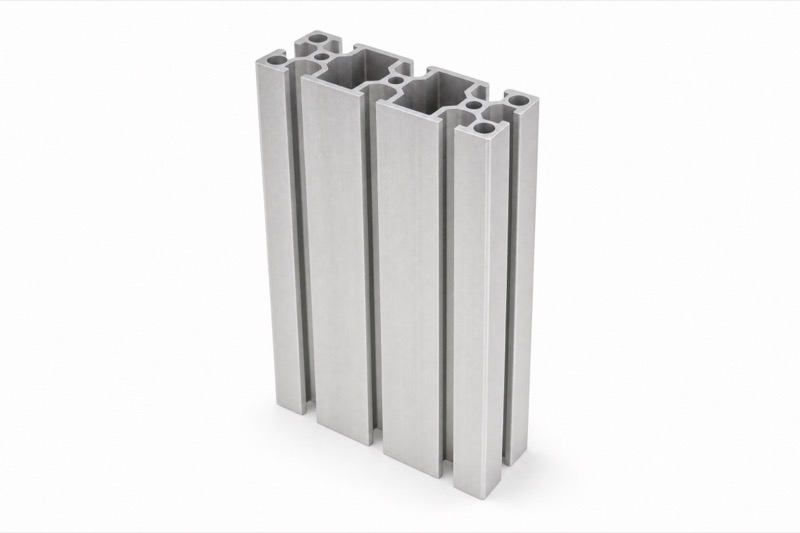
Aluminum has natural corrosion resistance because it forms an oxide film in air. However, natural oxidation alone may not provide sufficient protection in severe environments.
Anodized aluminum generally offers stronger and more stable protection because the oxide layer is intentionally developed and sealed. This can be valuable in outdoor, humid, coastal, industrial, and high-contact environments.
Mill finish aluminum can be a cost-effective option when the product is used:
- Indoors in dry, controlled environments
- Inside machinery or enclosed equipment
- In non-visible structural assemblies
- As a substrate for later painting or powder coating
- In temporary applications
- In low-corrosion-risk industrial conditions
- Where routine replacement is acceptable
For example, an internal T-slot aluminum profile used to build a factory automation frame may not need anodizing if it remains inside a clean production area and is not exposed to moisture, chemicals, salt, or frequent contact.
Anodized aluminum is more suitable when profiles will face:
- Outdoor weather exposure
- Frequent rain, condensation, or humidity
- Urban pollution
- Regular cleaning and handling
- Abrasion from moving parts or repeated use
- High-visibility architectural conditions
- Long-term decorative requirements
- Coastal or marine-influenced environments
For permanent exterior architecture, finish selection should be based on the location and environmental exposure rather than appearance alone. Industry guidance for architectural anodizing emphasizes coating thickness, sealing quality, color stability, visible surface quality, and suitability for the intended environment.
One major advantage of anodized aluminum is its improved surface hardness.
The anodic oxide layer is harder than untreated aluminum. This makes anodized profiles more resistant to light abrasion, handling marks, and everyday wear. For high-contact products such as handrails, appliance trim, display frames, luggage components, control panels, furniture parts, and transportation accessories, that added surface durability can improve the final product's perceived quality.
However, anodizing is not indestructible.
Abrasive particles, sharp tools, rough assembly practices, and metal-to-metal rubbing can still damage the anodized surface. Once deeply scratched, an anodized layer cannot be repaired as invisibly as a painted surface. This is why careful handling is essential during cutting, drilling, CNC machining, bending, assembly, storage, and international shipping.
At Dapeng Aluminum, we recommend discussing the full processing route before selecting an anodized finish. If the profile requires extensive machining after anodizing, it may be more efficient to fabricate first and anodize afterward.
Mill finish aluminum usually has a lower purchase price because it does not require the additional chemicals, electricity, labor, wastewater treatment, inspection, handling, and packaging involved in anodizing.
But the lowest initial price is not always the lowest project cost.
| Cost Consideration | Mill Finish Aluminum | Anodized Aluminum |
|---|---|---|
| Initial material cost | Lower | Higher |
| Surface-treatment cost | None at extrusion stage | Included as a separate finishing process |
| Protective packaging need | Moderate | Higher for exposed surfaces |
| Risk of visible handling marks | Higher | Lower in normal use, but damage must be prevented during production |
| Long-term appearance retention | Less predictable in exposed use | Better when correct thickness and sealing are specified |
| Value for premium products | Limited | Higher perceived quality and design value |
| Maintenance burden | Can be higher in decorative applications | Often lower for properly maintained exposed finishes |
A useful purchasing principle is this: use mill finish where the surface has no commercial value, and use anodizing where finish durability, appearance, or end-user confidence adds measurable value.
Choosing between mill finish aluminum and anodized aluminum becomes easier when buyers evaluate the project in a structured way.
Ask whether the end user will see the aluminum surface during normal use.
If the answer is no, mill finish may be sufficient. If the answer is yes, determine whether the product needs a decorative, consistent, and premium appearance.
Consider moisture, salt, UV exposure, chemical contact, cleaning frequency, industrial pollution, and temperature changes.
Indoor dry conditions may allow mill finish. Exterior or humid environments often justify anodizing or another protective finish.
Will the extrusion be cut, drilled, welded, bent, punched, or machined after delivery?
If extensive fabrication is required, mill finish may simplify processing. Alternatively, the part can be fabricated first and anodized after final machining.
Do not specify only "silver anodized" or "black anodized." A professional specification should identify the intended color, surface pretreatment, visible faces, coating class or thickness target, inspection requirements, and packaging method.
For a low-cost industrial frame, mill finish may provide the best balance. For a high-end architectural system, retail display, consumer product, or export-facing finished component, anodizing may strengthen product value and market acceptance.
One of the most overlooked issues in aluminum surface selection is alloy compatibility.
The same anodizing process can produce different visual results on different aluminum alloys. For extruded profiles, 6000-series alloys are widely used because they provide a practical balance of extrudability, mechanical properties, corrosion resistance, and anodizing suitability.
However, even within the 6000 series, alloy composition can affect color response, brightness, etching behavior, and consistency after anodizing. Magnesium and silicon content, trace elements, billet source, extrusion parameters, and heat treatment can all influence the final appearance.
For projects requiring visible anodized surfaces, buyers should not change alloys casually after approving a sample. A small alloy adjustment may affect the final color tone or surface texture.
The best practice is to confirm:
- Aluminum alloy and temper
- Profile cross-section and wall thickness
- Surface pretreatment requirement
- Anodized color and film-thickness expectation
- Approved visual sample or limit sample
- Batch-control and traceability requirements
- Post-treatment fabrication requirements
- Export packaging and interleaving protection
This approach reduces the risk of color variation, unexpected surface lines, transit abrasion, and disputes during final inspection.
Consider a commercial window and curtain-wall project in a humid coastal city.
A mill finish aluminum extrusion may offer an attractive initial material price. However, the visible raw surface can develop uneven staining or visual oxidation over time, particularly where rainwater, salt-containing air, dust, and cleaning residues accumulate.
For this type of project, anodized aluminum profiles can provide a more controlled appearance and more durable exterior surface. The purchaser should select an appropriate anodic coating level based on the environment, define the visible faces, and require proper sealing and protective packaging.
By contrast, the internal reinforcement profile hidden inside the same window assembly may not need anodizing. Using mill finish for concealed components and anodizing only exposed profiles can optimize both cost and long-term performance.
This is a more efficient strategy than applying the same finish to every aluminum component without considering its actual function.
There is no universally "better" option between mill finish aluminum and anodized aluminum.
Mill finish aluminum is the smart choice for economical, non-visible, indoor, industrial, or post-processed components. It offers excellent flexibility for machining, assembly, powder coating, and custom fabrication.
Anodized aluminum is the stronger choice for visible, decorative, high-contact, outdoor, and corrosion-sensitive applications. It improves surface durability and gives aluminum extrusions a more refined and commercially valuable appearance.
For global buyers, the best result comes from selecting the finish based on real project conditions rather than making a decision only on unit price.
Guangdong Dapeng Aluminum Industry Co., Ltd. provides industrial aluminum profiles, architectural aluminum extrusions, customized aluminum fabrication, and export-oriented aluminum solutions. Our technical team can help evaluate alloy selection, profile design, surface treatment, fabrication sequence, quality requirements, and packaging needs before production begins.
Contact our team today to discuss your mill finish or anodized aluminum extrusion project and receive a tailored solution based on your drawings, application environment, finish expectations, and order requirements.
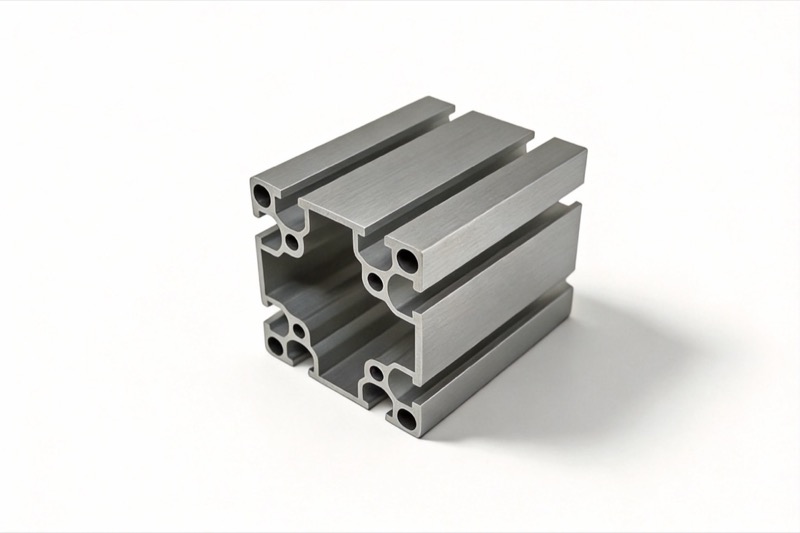
Yes. Aluminum naturally forms a thin oxide layer that offers basic corrosion resistance. However, mill finish aluminum generally provides less controlled surface protection than properly anodized aluminum, especially in humid, coastal, polluted, or highly visible outdoor applications.
Anodized aluminum is better for visible, decorative, abrasion-prone, and environmentally exposed applications. Mill finish aluminum is often better for low-cost industrial parts, concealed components, and profiles that will receive further fabrication or finishing.
Yes. Many aluminum profiles are extruded in mill finish, then cut, machined, fabricated, cleaned, and anodized later. This is often the preferred route when machining would otherwise damage the anodized surface.
Properly anodized aluminum does not peel or flake in the same way as paint because the anodic oxide layer is integrated with the aluminum surface. However, deep scratches, severe impact, poor sealing, improper pretreatment, and aggressive chemical exposure can still affect performance and appearance.
Yes. Anodized aluminum is widely used for exterior window frames, curtain walls, façade panels, railings, storefronts, transportation components, and architectural products. The finish thickness, sealing quality, and color specification should match the environmental exposure.
No. Anodizing does not reliably hide surface imperfections. It can make some extrusion lines, die marks, scratches, and alloy variations more noticeable. High-visibility anodized profiles require strong extrusion control and clear surface-quality standards.
6000-series aluminum alloys are commonly used for anodized extrusions because they offer good extrudability, corrosion resistance, and finishing performance. The exact alloy should be selected according to structural needs, profile complexity, finish expectations, and application environment.
1. [FONNOV Aluminium – Mill Finish Aluminum vs. Anodized Aluminum]
2. [QUALANOD – Architectural Applications of Anodized Aluminium]
3. [QUALANOD – Specifications for Sulfuric Acid-Based Anodizing of Aluminium]
4. [Aluminum Anodizers Council – Suggested Anodic Coating Specifications]


