


Views: 217 Author: Dapeng Aluminum Publish Time: 2026-09-05 Origin: Site


Content Menu
● What Is the Difference Between Metal Finishes and Surface Finishes?
>> A simple way to remember the difference
● Metal Finishes for Aluminum Extrusions
>> Anodizing: Integrated protection with a metallic appearance
>> Powder coating: broad color freedom and robust coverage
>> Liquid coating and specialty metallic coatings
● Surface Finishes for Aluminum Extrusions
>> Brushed aluminum: directional texture with an industrial look
>> Polished aluminum: high reflectivity and premium visual impact
>> Sandblasted and bead-blasted aluminum: uniform matte texture
>> Etched and patterned finishes: differentiation through detail
● Metal Finishes vs. Surface Finishes: Side-by-Side Comparison
● How to Choose the Right Aluminum Extrusion Finish
>> Step 1: Define the service environment
>> Step 2: Identify the expected visual standard
>> Step 3: Specify measurable requirements
>> Step 4: Plan fabrication before finishing
● Expert Insight: The Base Extrusion Still Determines the Final Result
>> Architectural window and curtain wall profiles
>> Industrial machine frames and automation systems
>> Electric vehicle and new-energy components
● Choose a Finish That Supports the Whole Product
● FAQ
>> 1. Is anodizing better than powder coating for aluminum extrusions?
>> 2. Can aluminum extrusions be brushed and anodized?
>> 3. Which aluminum finish is best for coastal environments?
>> 4. Does powder coating hide scratches on aluminum extrusions?
>> 5. Can finished aluminum extrusions be cut or machined?
>> 6. What information should I provide when requesting an aluminum extrusion finish quotation?
>> 7. Why do two anodized aluminum profiles sometimes look slightly different?
For aluminum extrusions, the finish is not simply a visual decision. It directly affects corrosion resistance, weatherability, cleanability, dimensional tolerance, product life, and the perceived value of the final assembly. The key distinction is straightforward: metal finishes generally create or apply a protective metallic or coating system, while surface finishes primarily modify the texture, reflectivity, or pattern of the aluminum itself.
For architects, fabricators, OEM buyers, and project engineers, the best aluminum extrusion finish depends on where the profile will be used, what it must withstand, and what appearance the end user expects. Guangdong Dapeng Aluminum Industry Co., Ltd. helps customers evaluate these variables early, combining extrusion expertise, finishing options, and custom fabrication support for industrial, architectural, transportation, and new-energy applications.
Although the two terms are often used together, they describe different approaches to finishing aluminum extrusions.
A metal finish typically improves protection and appearance through a conversion process or an applied coating. Anodizing and powder coating are the two most common examples for aluminum profiles. These options can improve resistance to moisture, ultraviolet exposure, abrasion, and everyday handling.
A surface finish changes the physical appearance or feel of the aluminum substrate. Brushing, polishing, sandblasting, bead blasting, and etching are common processes. They can create a satin, matte, textured, directional, or mirror-like visual effect.
In actual manufacturing, these two approaches are often combined. For example, an aluminum extrusion can be brushed first to create a directional grain, then clear anodized to preserve the metallic appearance while improving surface durability. It can also be blasted before powder coating to create a more uniform matte appearance.
- Metal finishes focus mainly on protection, color, coating performance, and long-term environmental resistance
- Surface finishes focus mainly on texture, reflectivity, tactility, and visual character
- Combined finishing systems are often the best choice when the product needs both a distinctive appearance and dependable protection
This distinction matters because a visually attractive profile may still fail prematurely if its finish is not suited to salt, heat, humidity, chemical exposure, abrasion, or outdoor ultraviolet radiation.
Anodizing is an electrochemical treatment that converts the aluminum's natural oxide layer into a thicker, more durable oxide layer. Unlike a paint film, the anodic layer becomes part of the aluminum surface rather than sitting on top of it.
This makes anodizing especially valuable when buyers want a clean metallic look without covering the natural character of aluminum.
Common anodized aluminum extrusion colors include:
- Clear or silver
- Champagne
- Light bronze
- Medium bronze
- Dark bronze
- Black
- Custom dyed colors, depending on process requirements
Key benefits of anodized aluminum extrusions include good corrosion resistance, strong ultraviolet stability, a hard surface, and reduced risk of peeling or flaking. Clear anodizing is frequently selected for window and door frames, solar mounting components, automation equipment, electronics housings, display systems, furniture frames, and precision industrial structures.
A properly specified anodized finish also supports a refined, consistent appearance across long-profile components. However, the base material and extrusion surface quality remain important. Anodizing does not hide every die line, scratch, dent, or variation in the aluminum substrate. In fact, because it preserves the metal's natural appearance, it can make surface defects more visible.
For architectural work, specifications should clearly state the required anodic coating class, color, sealing expectations, and applicable quality requirements. Qualanod notes that architectural anodizing specifications address coating thickness, coating quality, sealing quality, and light fastness—four factors that should not be left open to interpretation in international procurement documents.
Powder coating is an organic coating system. Dry powder is electrostatically applied to the aluminum extrusion and then cured under controlled heat, producing a continuous protective film.
For many projects, powder coating is the most flexible option because it offers an extensive color range, including:
- RAL colors
- Pantone-matched project colors
- Matte, satin, semi-gloss, and gloss levels
- Fine texture and coarse texture finishes
- Metallic and mica effects
- Wood-grain transfer finishes
- Special architectural colors
The primary advantage is design freedom. Powder coating can cover minor visual variation in the raw extrusion better than clear anodizing, while helping projects achieve a unified color identity across multiple aluminum components.
It is commonly used for curtain wall systems, casement windows, doors, railings, solar frames, machinery guards, equipment enclosures, retail displays, furniture, transportation components, and customized industrial assemblies.
However, not all powder coatings are equal. Indoor epoxy powders, standard outdoor polyester powders, super-durable polyester powders, and fluoropolymer powder systems can perform very differently. For demanding exterior architectural applications, buyers should evaluate the coating system against the required performance specification rather than selecting only by color card.
AAMA 2605 is widely regarded as the highest performance level for organic architectural coatings on aluminum extrusions and panels. The specification includes demanding long-term weathering criteria, including ten-year South Florida exposure requirements for color retention, chalk resistance, gloss retention, and erosion resistance. This makes high-performance coating specifications particularly relevant for high-rise façades, hot climates, coastal projects, and premium long-life exterior applications.
While anodizing and powder coating are the most common options for aluminum extrusions, some projects require liquid coatings, PVDF-based systems, electrophoretic coatings, or specialty metallic effects.
These systems can be appropriate when the project needs:
- Very specific gloss, texture, or metallic visual effects
- Complex geometry that is difficult to coat evenly with standard powder methods
- Premium architectural weatherability
- Special chemical or environmental resistance
- A coating system matched to existing façade panels or project standards
The right choice should always be based on the project's actual exposure conditions, expected service life, and acceptance criteria—not solely on initial appearance.
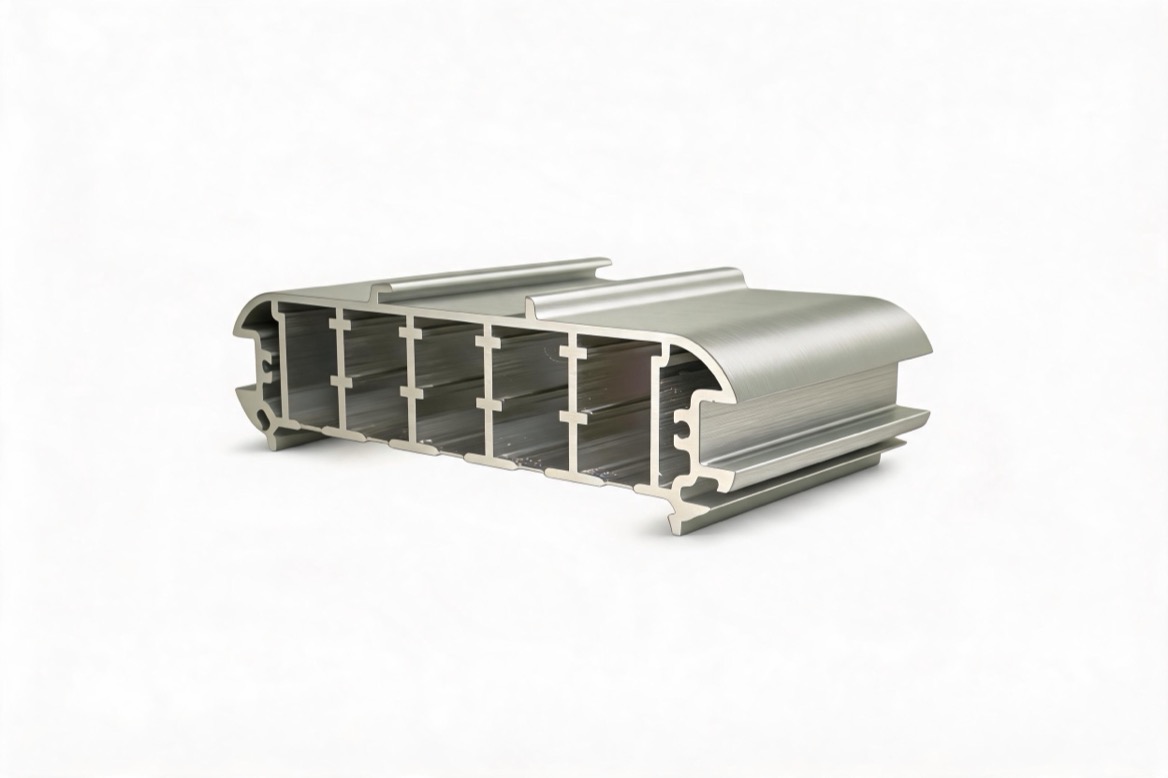
Brushing uses abrasive belts, wheels, or brushes to create fine, consistent lines on the aluminum surface. The result is usually a satin-like directional grain that feels modern, technical, and premium.
A brushed aluminum extrusion is popular for:
- Decorative trims
- Consumer electronics
- Appliance components
- Elevator interiors
- Retail fixtures
- Automotive decorative parts
- High-end furniture systems
- Architectural interior details
The finish can help reduce the visibility of light fingerprints and handling marks compared with mirror-polished aluminum. It can also create a more controlled visual identity than a standard mill finish.
However, brushing must be managed carefully on long extrusions. Grain direction, overlap areas, surface consistency, profile geometry, and handling methods should be controlled to avoid uneven patterns. For visible architectural or consumer-facing components, customers should approve a physical sample before mass production.
Polishing progressively smooths the aluminum surface to create a bright or mirror-like effect. It is often selected where visual impact is more important than concealment of handling marks.
A polished finish can be suitable for:
- Decorative profiles
- Lighting components
- Retail displays
- Luxury furniture
- Automotive trim
- Interior architectural accents
- Reflective functional components
The challenge is that polished aluminum reveals imperfections. Scratches, fingerprints, handling marks, and local surface variations can become highly visible. It also requires thoughtful packaging and protective film selection during fabrication, transport, and installation.
For this reason, polished extrusions are usually best for controlled indoor environments or products where maintenance expectations are understood.
Sandblasting or bead blasting creates a non-directional matte surface by impacting the aluminum with abrasive media. This can produce a smooth, modern, low-glare appearance and help make minor extrusion marks less noticeable.
Typical applications include:
- Equipment housings
- Electronics enclosures
- Medical-device components
- Industrial control systems
- Interior frames
- Premium consumer products
- Decorative architectural profiles
A blasted surface is often followed by anodizing. This combination creates a durable, uniform, premium-looking result that is especially useful when customers want a soft metallic appearance without the directional lines of brushing.
Etching, laser marking, mechanical engraving, and patterned surface treatments can add branding, anti-slip functionality, decorative graphics, or custom texture to aluminum extrusions.
These options are useful for products that need more than basic corrosion protection. Examples include branded equipment frames, decorative façade details, premium consumer products, access-control hardware, and transportation interiors.
The most effective designs consider the whole production route. A deep or intricate pattern may affect cleaning, coating coverage, anodizing appearance, cycle time, and final cost. Early technical review can prevent a visually appealing concept from becoming difficult to manufacture consistently.
| Selection Factor | Metal Finishes | Surface Finishes |
|---|---|---|
| Primary purpose | Protection, color, weatherability, durability | Texture, appearance, reflectivity, tactile quality |
| Typical processes | Anodizing, powder coating, liquid coating, electrophoretic coating | Brushing, polishing, blasting, etching, engraving |
| Effect on appearance | Can preserve metal, add color, or create a uniform coating | Alters the natural aluminum visual character |
| Corrosion protection | Usually strong when correctly specified | Limited alone; often paired with anodizing or coating |
| Outdoor suitability | Excellent when using a suitable architectural system | Depends on whether a protective finish is added |
| Color options | Very broad with powder and liquid coatings | Usually limited to natural aluminum tones unless combined with coating |
| Ability to hide minor substrate variation | Powder coating generally performs well | Polishing and clear anodizing may reveal more variation |
| Best for | Building envelopes, outdoor structures, machinery, colored products | Decorative trims, interiors, premium consumer goods, tactile designs |
| Maintenance needs | Vary by coating and environment | Polished and textured surfaces may require more appearance-focused care |
| Cost drivers | Coating type, film thickness, pretreatment, color, testing | Surface preparation time, profile shape, finish consistency, protection after processing |
The comparison shows why the question is rarely "Which finish is better?" The better question is: Which finish is appropriate for this extrusion, this environment, and this expected service life?
A reliable decision process starts with functional requirements and then moves to appearance. Choosing color first can lead to costly redesigns later.
Ask where the profile will operate.
- Is it indoors or outdoors?
- Will it face direct sunlight?
- Is it installed in a coastal, humid, industrial, or polluted environment?
- Will it contact cleaning chemicals, oils, salt spray, or process fluids?
- Does it need to withstand frequent handling or abrasion?
For example, a brushed aluminum trim used in an indoor showroom has very different requirements from an aluminum extrusion used in a coastal solar support system.
Be specific about what the buyer expects to see.
- Is the product viewed from a distance or at close range?
- Is color consistency critical across multiple production batches?
- Is a metallic appearance essential?
- Are visible die lines acceptable?
- Will the profile be touched frequently?
- Does the client need a matte, satin, glossy, textured, or mirror finish?
Physical approval samples are essential for visual finishes. Digital renderings and color charts are useful starting points, but they cannot fully show gloss, grain direction, metallic effect, or the way a finish changes under different lighting conditions.
A robust purchase specification should include measurable criteria rather than subjective phrases such as "high quality finish" or "durable coating."
Include:
- Aluminum alloy and temper
- Extrusion dimensional tolerances
- Surface preparation method
- Finish type and color code
- Coating thickness or anodic coating class
- Gloss level, where applicable
- Required performance standard
- Salt spray, adhesion, impact, or weathering requirements when relevant
- Permitted visual defects and inspection distance
- Protective film and packaging requirements
For exposed architectural anodized surfaces, industry guidance commonly calls for a continuous, fully sealed finish that is free of powdery surfaces, smut, and blemishes. This illustrates why surface inspection and sealing quality should be treated as part of the specification, not as an afterthought.
Many quality problems occur because finishing is selected without considering downstream fabrication.
Drilling, cutting, welding, bending, CNC machining, and assembly can damage a completed surface. In many cases, machining should occur before anodizing or powder coating. In other cases, protective films, masking, touch-up policies, and assembly methods must be defined in advance.
For custom aluminum extrusion projects, Guangdong Dapeng Aluminum Industry Co., Ltd. can support the process from profile design and alloy selection through extrusion, finishing, fabrication, packaging, and export delivery. This integrated approach helps reduce variation between prototype approval and production-scale supply.
One of the most important realities in aluminum finishing is that a finish cannot fully correct a poor substrate.
Anodizing, especially clear or light-color anodizing, can emphasize die lines, pickup, scratches, uneven grain, and alloy-related variations. Polishing can make those imperfections even more visible. Powder coating is more forgiving, but it still cannot completely hide dents, contamination, sharp edges, poor pretreatment, or inconsistent surface preparation.
This is why a high-quality result begins before the finishing line:
1. Select an appropriate alloy and temper for the product's strength, forming, corrosion, and appearance needs
2. Design the extrusion die for stable metal flow and practical surface quality
3. Control extrusion temperature, speed, quenching, stretching, and aging
4. Protect visible surfaces during handling and fabrication
5. Match the finishing method to the expected visual and functional outcome
6. Confirm approved samples, inspection standards, and packing methods before production
For buyers, this means comparing suppliers on more than color selection. Ask about their extrusion capability, die development process, pretreatment controls, quality inspection practices, sample approval process, and packaging experience for export shipments.
For visible outdoor building systems, anodizing and high-performance powder coating are both common options. Clear or bronze anodizing suits projects that want a natural metallic aesthetic. High-performance powder coating is often preferred when architects require exact colors, low-gloss finishes, textured surfaces, or coordinated façade palettes.
Coastal towers, high-ultraviolet areas, and premium commercial projects should use a finish specification that matches the real exposure environment. A coating selected only for its initial color may not deliver the long-term performance the building owner expects.
For industrial aluminum profiles, the preferred finish often depends on function. Clear anodizing works well for clean, corrosion-resistant modular frames, conveyor structures, workstations, guarding systems, and automation equipment. It preserves the metallic appearance and supports a professional industrial look.
Powder coating may be chosen when equipment must match a brand color, when visual contrast improves safety, or when a more opaque protective layer is required.
New-energy applications often require a balance between weight reduction, corrosion control, thermal performance, and traceability. Aluminum extrusion finishes may support battery enclosures, charging equipment, solar mounting systems, inverter housings, rail components, and lightweight structural assemblies.
The best choice depends on exposure, electrical requirements, contact points, heat, joining method, and visual expectations. For example, a part requiring electrical grounding may need specific masked areas or controlled contact surfaces rather than a fully insulating coating.
- Selecting a finish based only on a color card
- Treating anodizing and powder coating as interchangeable
- Specifying "outdoor grade" without defining the performance level
- Ignoring coastal, industrial, or high-UV exposure
- Approving samples without evaluating them in realistic lighting
- Performing aggressive machining after finishing
- Failing to define film protection and export packaging
- Assuming a premium finish can compensate for poor extrusion quality
- Comparing supplier quotations without comparing coating system, thickness, pretreatment, inspection criteria, and warranty scope
Metal finishes and surface finishes serve different but complementary roles in aluminum extrusion manufacturing. Anodizing and powder coating are usually selected for protection, environmental resistance, and controlled visual performance. Brushing, polishing, blasting, and etching are selected to shape texture, reflectivity, and product character.
The strongest result comes from evaluating the finish as part of the complete aluminum solution: alloy, extrusion design, surface condition, fabrication sequence, use environment, inspection requirements, and final packaging.
If you are developing a new aluminum profile or upgrading an existing product, send Guangdong Dapeng Aluminum Industry Co., Ltd. your drawings, application conditions, target finish, color requirements, and estimated order quantity. Our technical team can help you compare anodized, powder-coated, brushed, polished, and customized aluminum extrusion solutions before tooling and production begin.
Neither is universally better. Anodizing is often preferred when you want a hard, metallic-looking surface with excellent ultraviolet stability and no risk of peeling. Powder coating is usually better when you need a wide color range, opaque coverage, texture options, or a coating that helps conceal minor substrate variation.
Yes. Brushing followed by clear anodizing is a popular combination for premium decorative and industrial aluminum components. The brushed texture remains visible while the anodic layer improves corrosion and wear resistance. Sample approval is important because brushing direction and substrate quality affect the final appearance.
For coastal projects, select a finish based on the actual salt exposure, maintenance conditions, and project specification. High-quality architectural anodizing and high-performance organic coating systems can both be suitable when properly specified and controlled. The coating type, pretreatment, thickness, sealing, edge design, drainage, and maintenance plan all influence real-world performance.
Powder coating can hide minor surface variation better than clear anodizing or polishing, especially with textured or matte finishes. However, it cannot reliably hide dents, deep scratches, contamination, sharp edges, poor pretreatment, or significant extrusion defects. Good surface quality before coating remains essential.
They can, but post-finish cutting, drilling, or machining may expose bare aluminum, damage the coating edge, or reduce corrosion protection. Whenever possible, complete machining before anodizing or powder coating. If post-finish processing is unavoidable, define masking, edge treatment, touch-up expectations, and assembly methods during the design stage.
Provide the extrusion drawing, alloy and temper requirements, annual or project quantity, finish type, color code, gloss level, coating thickness or anodizing class, application environment, required testing standard, machining requirements, packaging needs, destination country, and target delivery schedule. The more complete the information, the more accurate the technical recommendation and quotation will be.
Appearance can vary because of alloy composition, extrusion conditions, surface texture, profile geometry, pretreatment, anodizing parameters, dyeing, sealing, and lighting. This is particularly noticeable with clear, champagne, bronze, and black anodized finishes. Consistent alloy control, approved samples, batch planning, and defined visual acceptance criteria help reduce variation.
- [Orange Aluminum — Metal vs. Surface Finishes for Aluminum Extrusions]
- [Qualanod — Architectural Applications]
- [Qualanod — Specifications for the QUALANOD Quality Label]
- [Aluminum Anodizers Council — Suggested Anodic Coating Specifications]
- [High Performance Coatings — Understanding AAMA 2605 Standards]
- [SAF — How to Decide Between Anodizing, Painting, and Powder Coating]
- [TIGER Drylac — AAMA Powder Coating Requirements in Architectural Design]


