


Views: 243 Author: Dapeng Aluminum Publish Time: 2026-08-26 Origin: Site


Content Menu
● Why Aluminum Extrusions Matter in Architectural Design
● Core Benefits of Custom Aluminum Profiles
>> Lightweight Without Sacrificing Capability
>> Complex Shapes Become Practical Components
>> Durable Performance in Demanding Environments
>> Broad Finish and Color Options
● How Architects Apply Custom Aluminum Extrusions
>> Façade, Curtain Wall, and Window Systems
>> Louvers, Sunshades, and Passive Solar Control
>> Interior Architectural Millwork
>> Transportation, New Energy, and Industrial Buildings
● From Design Intent to a Manufacturable Profile
>> A Better Custom Extrusion Workflow
● Design Details That Can Reduce Cost and Risk
>> Use Material Only Where It Creates Value
>> Design for Tolerances, Not Ideal Drawings
>> Consider Water and Dirt Paths
● Sustainability and Lifecycle Value
● Why Work With Guangdong Dapeng Aluminum Industry Co., Ltd.
● Request a Custom Aluminum Extrusion Proposal
● FAQ
>> What is the difference between stock and custom aluminum extrusions?
>> Can aluminum extrusions be used for exterior architectural projects?
>> Which surface finish is best for architectural aluminum?
>> What information is needed for a custom extrusion quotation?
>> Can custom aluminum profiles include machining and assembly?
>> How can architects reduce custom extrusion costs?
Architects increasingly use custom aluminum extrusions to turn complex visual concepts into buildable, durable, and efficient architectural components. From façade systems and window frames to decorative trims, solar mounting structures, interior partitions, and transportation hubs, custom aluminum profiles give design teams greater control over shape, strength, finish, assembly, and long-term performance.
For projects where standard sections cannot meet functional or aesthetic requirements, Guangdong Dapeng Aluminum Industry Co., Ltd. supplies industrial and architectural aluminum profiles with customized deep-processing services for global customers. Our manufacturing approach combines profile development, extrusion production, surface finishing, precision fabrication, and export-oriented quality control—helping architects, contractors, and system manufacturers move from drawings to reliable finished components.
An aluminum extrusion is created by forcing heated aluminum alloy through a precision die, producing a continuous profile with a consistent cross-section. This process allows designers to create profiles that combine several functions into one component.
Instead of assembling multiple steel, plastic, or aluminum parts, a well-designed extrusion may integrate:
- Fixing grooves and screw ports
- Glass-retention channels
- Drainage paths
- Thermal-break interfaces
- Snap-fit connections
- Concealed fastener cavities
- Reinforcing ribs
- Decorative edge details
- Cable-management channels
This design freedom is valuable in modern buildings, where every component must balance appearance, weather resistance, structural performance, installation efficiency, and maintenance needs.
Aluminum is also significantly lighter than steel while offering a strong strength-to-weight relationship. That makes it especially useful where teams need to reduce dead load, simplify handling, or create large-format framing systems. The Aluminum Design Manual remains a major technical reference for aluminum structural design, including extrusions, connections, corrosion considerations, and sustainability topics.
Weight affects transportation, installation, supporting structures, and on-site safety. Aluminum's relatively low density helps architects and engineers reduce the overall weight of façade elements, sunshade systems, interior frames, display structures, and modular assemblies.
For example, a large aluminum louver system can be easier to lift, position, and secure than a comparable steel system. The reduction in weight may also reduce demands on brackets, anchors, and supporting substructures—subject to project-specific engineering verification.
With custom extrusion, the profile itself can solve assembly and performance problems. A single section can include a cover cap, drainage geometry, stiffening ribs, gasket tracks, and mechanical fastening features.
This is particularly useful for:
- Curtain wall and window systems
- Architectural louvers and sunscreens
- Cleanroom partitions
- Retail fixtures and display framing
- Modular office systems
- Ceiling and wall-panel trims
- Handrails and balustrade components
- Solar-panel support structures
- EV charging enclosures and industrial housings
The main advantage is integration. Fewer separate parts can mean fewer assembly steps, a cleaner appearance, and less opportunity for installation errors.
Aluminum naturally forms a protective oxide layer. When the project requires enhanced surface performance or a specific appearance, manufacturers can apply treatments such as anodizing, powder coating, electrophoretic coating, or PVDF coating.
Anodizing is not simply a painted surface. It is an electrochemical treatment that grows a protective oxide layer from the aluminum substrate itself. This can improve resistance to corrosion, wear, and environmental exposure while maintaining a metallic appearance.
For exterior applications, material selection and finish specification should consider:
- Coastal or salt-spray exposure
- High humidity and rainfall
- Industrial pollution
- UV exposure
- Abrasion and frequent touch points
- Cleaning chemicals
- Color-consistency expectations
- Required maintenance intervals
A finish should never be selected based on appearance alone. The intended exposure conditions, coating standard, substrate preparation, and installation details all influence real-world durability.
Architectural aluminum can support minimalist, industrial, premium, or highly branded visual styles. Depending on the project, profiles can be supplied with:
| Finish Option | Typical Design Value | Common Applications |
|---|---|---|
| Mill finish | Economical base material | Further fabrication, concealed components |
| Anodized finish | Metallic appearance and enhanced surface protection | Window frames, trims, railings, façade details |
| Powder coating | Broad color range and visual flexibility | Doors, louvers, wall systems, outdoor structures |
| Electrophoretic coating | Smooth, uniform protective finish | Architectural profiles and decorative frames |
| Wood-grain transfer finish | Wood-like visual effect with aluminum performance | Windows, doors, pergolas, decorative systems |
| PVDF coating | High-performance exterior finish for demanding exposure | Façade and large-scale exterior systems |
Aluminum is widely used in building envelopes because it can be engineered into precise, repeatable framing systems. Custom profiles can accommodate glazing channels, pressure plates, cover caps, drainage paths, gaskets, insulation interfaces, and internal reinforcement zones.
A custom façade extrusion may be developed to address a specific challenge—for example, a narrow sightline, a curved elevation, a unique panel interface, or a concealed drainage requirement.
For these projects, architects should clearly define:
1. Glass or panel thickness.
2. Required opening direction and hardware.
3. Wind-load and deflection criteria.
4. Thermal and water-management requirements.
5. Visible surface and color expectations.
6. Installation tolerances.
7. Required test standards for the target market.
Custom aluminum louvers help manage daylight, solar heat gain, privacy, and visual identity. They can be fixed, adjustable, vertical, horizontal, perforated, or integrated into a larger façade system.
Profile geometry matters. Blade depth, angle, spacing, wall thickness, and mounting method will affect shading performance, wind resistance, water drainage, and visual rhythm.
A hotel façade, for instance, may use deep horizontal aluminum blades on west-facing elevations to reduce direct afternoon sun while maintaining views from guest rooms. A commercial building may use vertical fins to create a recognizable exterior identity and control lower-angle sunlight.
Custom profiles are not limited to exterior construction. Inside buildings, they are frequently used for refined transitions and durable details that would be difficult to achieve consistently with wood, plastic, or fabricated sheet metal.
Typical interior uses include:
- Cabinet and wardrobe edge trims
- LED lighting channels
- Partition frames
- Wall-panel joints
- Ceiling systems
- Door frames
- Retail displays
- Exhibition structures
- Laboratory and cleanroom systems
- Elevator and public-space details
Extruded aluminum is especially useful where designers require clean lines, repeated modules, concealed hardware, or fast disassembly.
Architectural-grade and industrial aluminum profiles increasingly overlap in projects involving mobility, energy, logistics, and advanced manufacturing. Custom extrusions can be used in charging-station housings, equipment guards, battery-production facilities, modular workstations, platform framing, rail components, and solar mounting systems.
For these applications, the profile is often required to do more than look good. It may need to support assembly, vibration management, cable routing, airflow, protective guarding, and repeatable manufacturing.
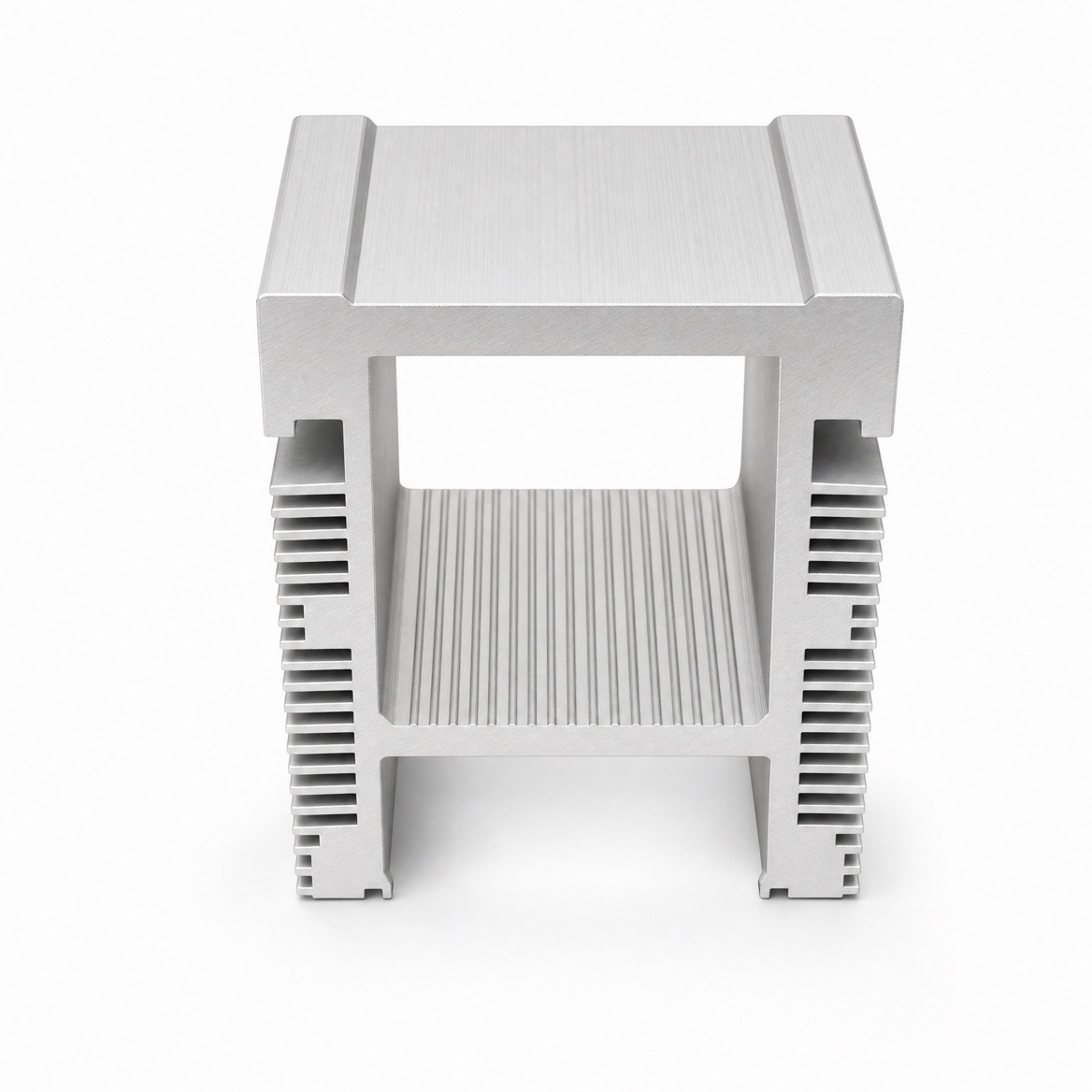
A visually appealing concept is only the starting point. The most successful custom extrusion projects involve early communication between the architect, system designer, fabricator, and aluminum manufacturer.
1. Define the application clearly
Start with the working environment, load conditions, interfaces, finish requirements, and expected service life. Avoid designing the shape first and considering performance later.
2. Provide a detailed drawing
A 2D cross-section drawing is essential. It should identify critical dimensions, wall thickness expectations, tolerances, functional grooves, visible faces, and mating parts.
3. Select the right alloy and temper
Alloy choice affects extrudability, strength, corrosion behavior, surface appearance, and suitability for secondary processes. For architectural profiles, alloy selection should be aligned with the intended use, finish, fabrication method, and project specification.
4. Simplify the profile where possible
Complexity can be necessary, but unnecessary thin walls, sharp internal corners, extreme asymmetry, and difficult hollow sections may increase tooling risk, cost, and production complexity. Sound extrusion design generally favors balanced wall thicknesses, practical tapers, symmetry where feasible, and purposeful use of ribs or webs.
5. Review fabrication before tooling
Consider cutting, drilling, punching, CNC machining, bending, welding, assembly, protective film, packing, and shipping before approving the die. A profile that extrudes successfully must also be practical to process and install.
6. Confirm samples and inspection criteria
Before volume production, verify the profile dimensions, straightness, surface quality, color, coating thickness, hole position, assembly fit, and packaging method against the approved sample and technical requirements.
More aluminum does not always mean better performance. Reinforcement should be placed where loads, fastening points, deflection control, or fabrication requirements demand it. Purposeful ribs and webs can increase stiffness without unnecessarily increasing weight.
Every production process has tolerances. If a profile will connect with glass, gaskets, fasteners, brackets, plastic components, or another metal part, the design must allow for realistic variation.
A useful question is: What happens if the profile is within tolerance but at the high or low end of the allowable range? If the system cannot still be assembled and perform correctly, the interface needs further refinement.
Exterior profiles should avoid trapping water where possible. Thoughtful drainage channels, sloped surfaces, weep paths, and access for cleaning can support long-term appearance and reduce avoidable corrosion risks.
Not every face of an extrusion needs the same visual standard. Define which surfaces are exposed, which are concealed, and which require protective film. This improves communication and helps avoid disputes about cosmetic acceptance.
Aluminum supports circular material strategies because it can be recycled repeatedly without losing its fundamental properties. European Aluminium reports that recycling rates in European automotive and building sectors exceed 90 percent.
However, responsible material decisions should go beyond a general recycling claim. For a project team, the more practical questions are:
- Can the system be disassembled at end of life?
- Are different materials easy to separate?
- Can profiles be reused instead of remelted?
- Is unnecessary material minimized through smart profile design?
- Is recycled-content documentation required?
- Does the selected finish support the expected maintenance and replacement cycle?
A durable, repairable, well-detailed profile can offer better lifecycle value than a lower-cost component that requires early replacement.
Guangdong Dapeng Aluminum Industry Co., Ltd. is a modern manufacturer focused on aluminum profile research, production, and export. We provide aluminum alloy solutions for customers across architectural construction, industrial manufacturing, transportation, and new-energy applications.
Our capabilities support customers who need more than a standard aluminum section:
- Industrial aluminum profiles
- Architectural aluminum profiles
- Custom extrusion development
- Precision cutting and deep processing
- Surface finishing options
- CNC machining, drilling, punching, and assembly support
- Export packaging and international order coordination
- Quality-focused production management
We understand that overseas projects require dependable communication as well as stable product quality. Our technical team works with customer drawings and functional requirements to help identify practical profile solutions before production begins.
Your design should not be limited by a catalog profile. Whether you need a façade frame, an aluminum trim, a solar-system component, a modular industrial structure, or a fully customized aluminum extrusion, our team can help turn the concept into a production-ready solution.
Send Guangdong Dapeng Aluminum Industry Co., Ltd. your profile drawing, material requirement, surface-finish preference, processing details, quantity forecast, and destination market. We will review the manufacturability of your design and provide a tailored aluminum profile solution for your project.
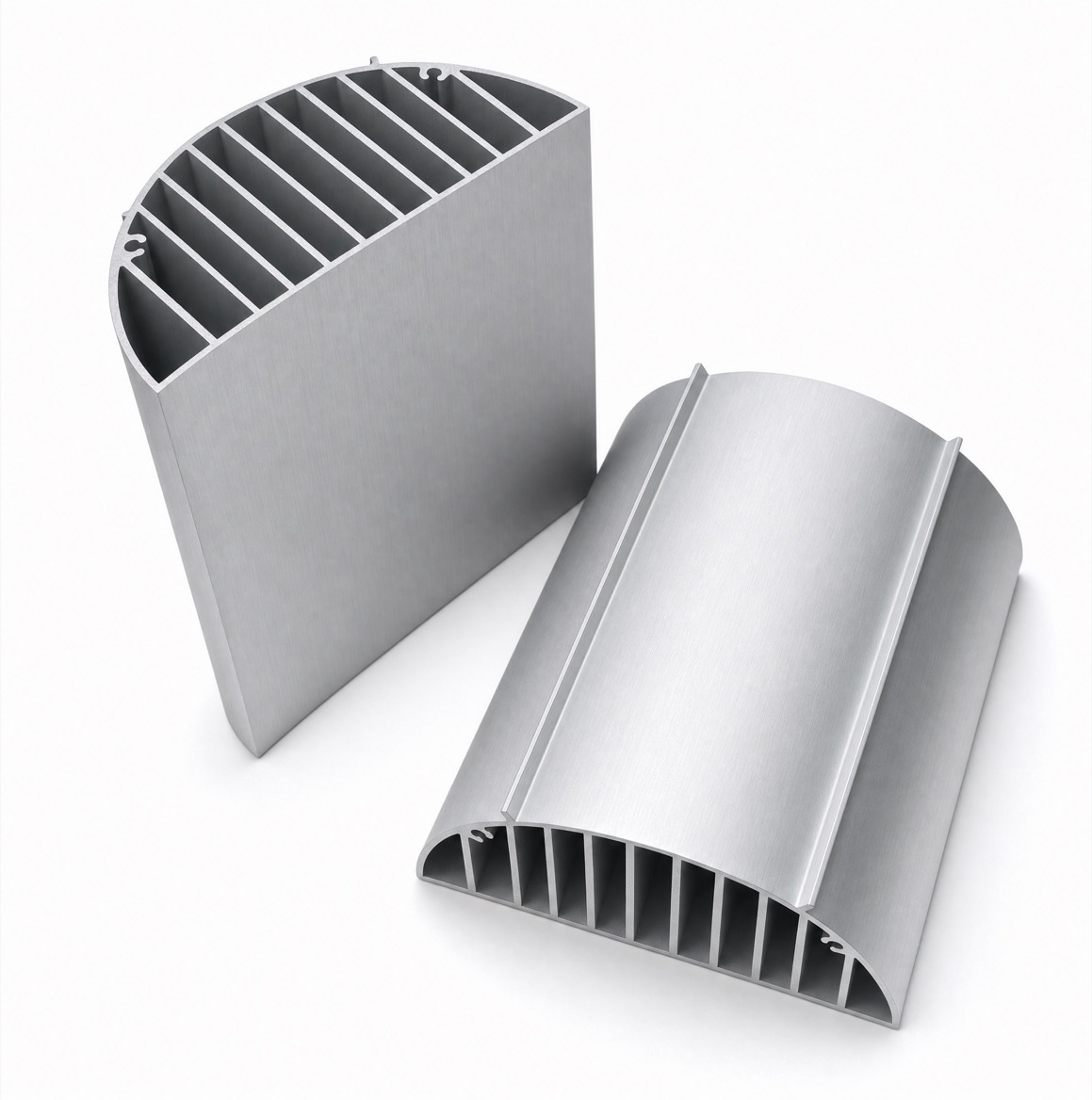
Stock extrusions use existing standard dies and are suitable for common shapes such as angles, channels, tubes, and bars. Custom aluminum extrusions use a dedicated die developed for a specific cross-section, allowing the profile to integrate project-specific functions and visual details.
Yes. Aluminum profiles are commonly used for windows, doors, curtain walls, louvers, trims, railings, canopies, and façade systems. The correct alloy, finish, drainage design, connection method, and project-specific engineering are important for exterior performance.
The best option depends on the project environment and visual target. Anodizing suits projects seeking a metallic appearance and enhanced surface protection, while powder coating supports a wider range of colors. High-exposure façade projects may require more specialized coating systems.
Provide a cross-section drawing, alloy or performance requirement, finish, length, fabrication requirements, estimated quantity, target tolerances, application, packaging needs, and destination country. Photos or assembly drawings can also help clarify the profile's purpose.
Yes. Depending on the project, profiles can be cut, drilled, punched, CNC-machined, bent, fitted with inserts or accessories, protected with film, and packed for export. Confirm all secondary-processing requirements during the quotation and sample-approval stages.
Reduce unnecessary complexity, use balanced wall thicknesses where feasible, avoid overly sharp corners, combine useful functions into one profile, clarify tolerances early, and review the complete fabrication and installation process before die production.
1. [Eagle Aluminum — How Architects Use Custom Aluminum Extrusions]
2. [Structure Magazine — The 2020 Aluminum Design Manual]
3. [Light Metal Age — Aluminum Association Releases the 2020 Aluminum Design Manual]
4. [Aluminum Extruders Council — Key Design Considerations for Aluminum Extrusions]
5. [European Aluminium — Enabling the Circular Economy with Aluminium]
6. [Sheffield Metals — What Is Anodized Aluminum?]
7. [Incertec — Anodized Aluminum vs. Stainless Steel Corrosion]


