


Views: 257 Author: Dapeng Aluminum Publish Time: 2026-11-18 Origin: Site


Content Menu
● Aluminum vs. Steel: Automotive Material Comparison at a Glance
● How Much Lighter Is Aluminum Than Steel in a Car?
>> Worked Example: Comparing a Steel Rail With an Aluminum Extrusion
● Strength, Stiffness, and Crash Safety: Which Metal Performs Better?
>> Crashworthiness Depends on the Load Path, Not Just the Metal
● Corrosion, Joining, and Repair in Mixed-Metal Vehicles
● Where Aluminum Extrusions Fit in Electric Vehicle Battery Enclosures
>> Battery Rail Design Review: Three Questions to Ask Early
● Automotive Manufacturing Cost: Compare the Finished Assembly
>> A Practical RFQ Checklist for Aluminum and Steel Alternatives
● Which Material Has the Lower Lifecycle Carbon Footprint?
● How to Choose the Right Material for Your Next Automotive Part
>> 1. Is aluminum stronger than steel for automotive parts?
>> 2. Can an aluminum extrusion directly replace a steel stamping?
>> 3. Is aluminum always better for EV battery enclosures?
>> 4. Can aluminum and steel be used together in the same vehicle?
>> 5. Is aluminum more expensive than steel for automotive manufacturing?
>> 6. Does a lighter aluminum part always lower vehicle emissions?
>> 7. What should buyers provide when requesting a custom automotive extrusion quote?
Aluminum is usually the better choice when reducing component weight or integrating several features into a single extrusion is the priority. Steel is often the better choice when a part needs high stiffness in a tight space, must fit an existing stamping and welding line, or has a demanding cost target. In automotive manufacturing, the strongest business case may be a combination: aluminum where it saves meaningful weight, and steel where its stiffness, grade options, or production economics justify keeping it.
From an aluminum extrusion supplier's perspective, I would start with the assembly drawing, not a price-per-kilogram comparison. A battery enclosure rail, a door intrusion beam, and a hood solve different problems. The fair comparison is between two finished designs that meet the same targets for mass, stiffness, crash performance, durability, and production volume.
| Decision factor | Aluminum | Steel |
|---|---|---|
| Typical density | Approximately 2.70 g/cm³ | Approximately 7.85 g/cm³ |
| Typical elastic modulus | Around 69 GPa | Around 200–210 GPa |
| Common automotive forms | Extruded profiles, rolled sheet, castings | Stamped sheet, roll-formed sections, tubes |
| Best reason to shortlist it | Low mass or a profile that combines several functions | High stiffness in a tight space or compatibility with existing production |
| Corrosion considerations | Protective oxide layer; check salt exposure, crevices, and dissimilar-metal joints | Coating selection, cut edges, seams, and drainage matter |
| Typical applications to evaluate | Hood skins, bumper beams, battery enclosure rails, and crossmembers | Pillars, reinforcements, body structures, frames, and mounting brackets |
| Best cost comparison | Cost per accepted assembly, including machining and joining | Cost per accepted assembly, including tooling and forming |
Density tells you what equal volumes weigh. Elastic modulus tells you how much a material deforms elastically under stress. Neither tells you whether a finished automotive component will pass its tests.
At equal volume, aluminum weighs about 66% less than steel. That is a material comparison, not a realistic prediction for every part. An aluminum replacement may need thicker walls, deeper sections, or extra reinforcement to meet the same requirements. Fasteners, inserts, and brackets can also change the final weight.
Consider a hypothetical steel assembly weighing 10.0 kg. A redesigned aluminum extrusion weighs 6.5 kg, and its inserts, brackets, and fasteners add 0.8 kg. The installed mass is 7.3 kg, so the saving is 2.7 kg, or 27%. These are illustrative figures, not a benchmark or a test result.
The example shows why buyers should ask for the mass of the finished assembly on both quotes. It also reveals another opportunity: if the extrusion can incorporate a mounting channel or replace a separate reinforcement, the business case may improve through fewer parts and assembly operations, not just lower weight.
At vehicle level, fuel or electricity savings depend on how the vehicle is designed and driven. An engineering study submitted to the U.S. National Highway Traffic Safety Administration used an example in which a 10% mass reduction corresponded to about 3.5% better fuel economy without powertrain resizing, versus 6.5% with resizing. These were study assumptions, not guaranteed outcomes or figures to apply directly to EV range.
At the same geometry, steel is generally the stiffer choice. If a reinforcement must fit inside a narrow pillar, or a bracket cannot grow in depth, that difference can be decisive. If more space is available, a deeper aluminum section or a hollow profile with internal ribs can improve bending stiffness without adding as much mass as a simple increase in wall thickness.
Strength is a separate question. Alloy and temper matter for aluminum; grade and condition matter for steel. Temper describes the material condition produced by processes such as heat treatment or cold working. Advanced high-strength steels, or AHSS, give engineers several ways to balance strength and formability, but a higher-strength grade does not by itself make an otherwise identical steel part materially stiffer in the elastic range.
A crash beam may need to deform predictably and absorb energy. A passenger-cell reinforcement may instead need to limit intrusion. A battery enclosure can face both demands in different locations. A tensile strength figure alone does not say how a beam will fold, how much load its joints can transfer, or whether a mounting point will tear out.
For a structural material change, compare joint performance as well as the parent metals. Review weld-affected areas, fastener pull-out, and fatigue around holes or transitions. Use simulation to narrow the options, then validate the relevant failure modes with representative assemblies. The winning material is the one that meets the defined requirements at the target mass and cost.
Aluminum forms a protective oxide layer, but it is not corrosion-proof. A bolted joint exposed to road salt can behave very differently from an unassembled sample. When aluminum and steel are electrically connected in the presence of a conductive liquid, such as salty water, galvanic corrosion can accelerate attack on the aluminum.
Evaluate isolation layers, compatible fasteners and coatings, sealing, and drainage as part of the joint design. Include damaged coatings or exposed edges in the validation plan where they are credible service conditions. For a steel alternative, compare the coating and seam protection actually specified, not bare steel against finished aluminum.
Production and repair also matter. Stamped steel assemblies can benefit from existing resistance spot-welding equipment. Aluminum assemblies may use rivets, adhesives, welding, or mechanical fasteners, depending on the design and manufacturing line. A mixed-metal joint that works in production can still be a poor choice if a common collision turns a damaged bracket into a full assembly replacement. Confirm the approved repair procedure before locking in the design.
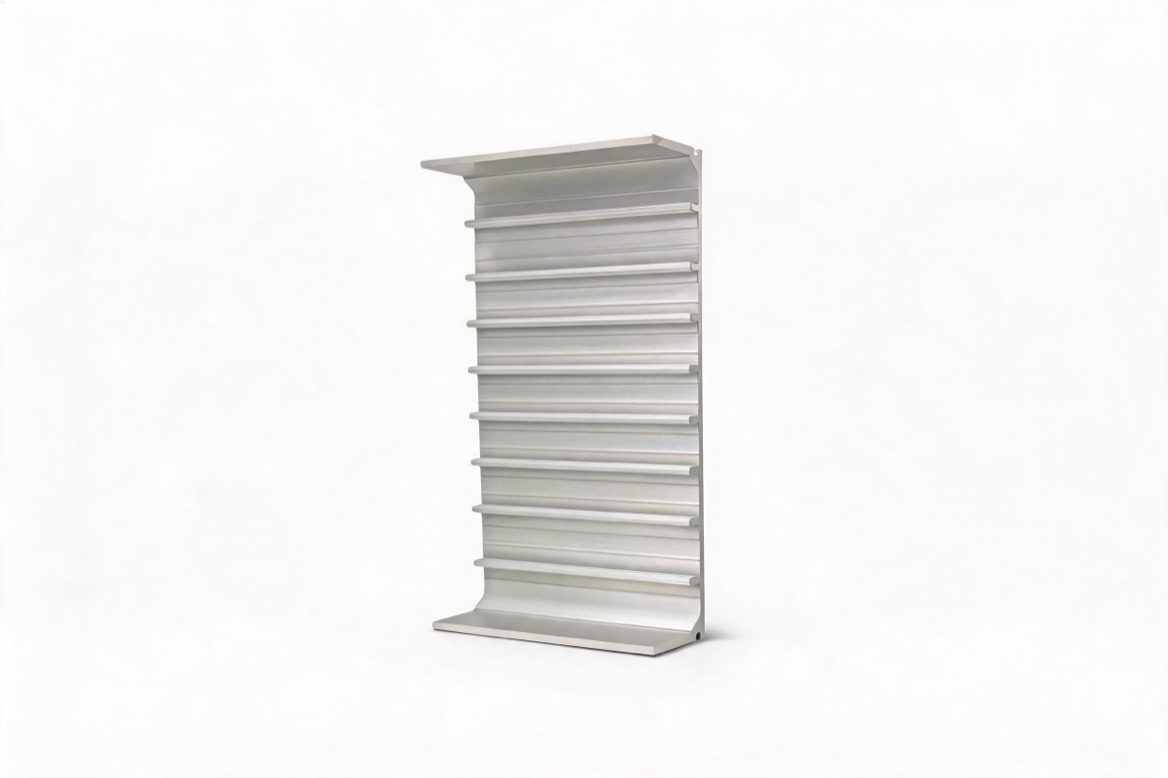
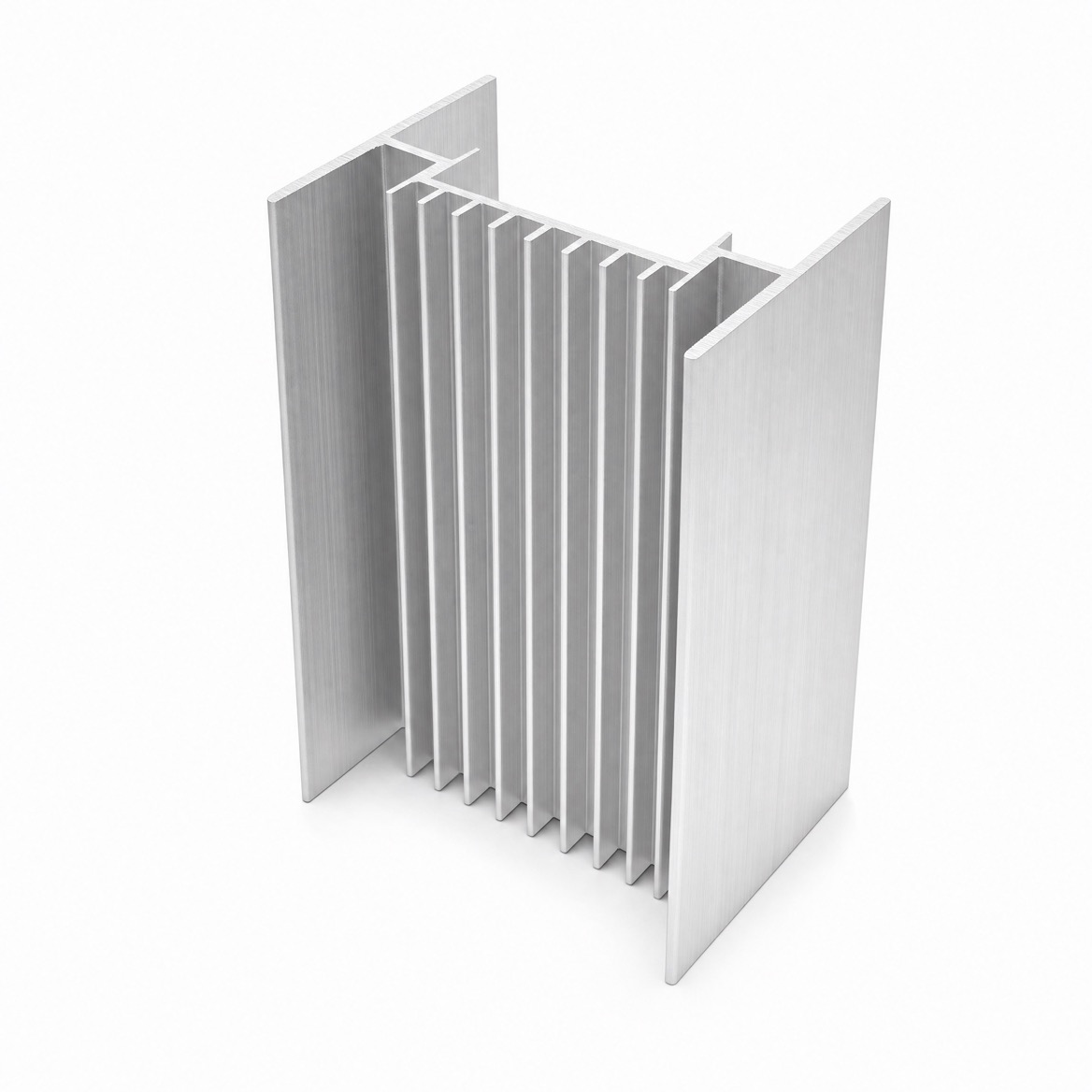
A battery enclosure side rail is a good extrusion candidate when the component has a largely constant cross-section. One profile can combine internal webs, mounting faces, and channels along its length. Local features such as holes, slots, or end details can then be machined where required. Steel remains a credible alternative for compact reinforcements or concentrated mounting loads, and a steel insert may be useful where a local connection would otherwise drive up the mass of the entire aluminum profile.
1. Which surfaces control the seal and assembly fit? Identify the datums, sealing faces, and critical flatness limits. Agree on how the supplier will measure them after cutting and machining.
2. Where do the loads enter the rail? Map fastener loads, crossmember connections, and side-impact load paths. Check the interfaces instead of asking for greater wall thickness everywhere.
3. What can the extrusion replace? Compare the baseline and proposed part counts. If the new profile eliminates brackets but adds long machining cycles or difficult joints, the apparent saving may disappear.
The rail is only one part of the enclosure. Confirm sealing, corrosion resistance, mounting durability, and impact performance at the assembly level. A profile supplier can help assess manufacturability and tolerances; the vehicle or battery-system owner still needs to validate the complete design.
Steel often has a cost advantage when an established plant can use its existing presses, dies, and joining equipment. Aluminum can make a stronger case when an extruded profile replaces several stamped parts, reduces assembly steps, or delivers a weight saving with measurable program value. Neither outcome follows from the raw material price alone.
Ask both bidders to quote the same functional scope and annual volume. A useful finished-part quote should separate:
- Tooling and fixtures, including one-time charges and the assumed production volume.
- Material, including the grade or alloy and temper, input weight, finished weight, and scrap treatment.
- Conversion, including forming or extrusion, cutting, machining, coating, and inspection.
- Assembly, including inserts, fasteners, adhesives, joining labor, and rework assumptions.
- Delivery, including packaging, freight terms, lead time, and any handling needed to protect critical surfaces.
Run the comparison at launch volume as well as expected steady-state volume. A design that needs a new automated joining cell may look attractive at full output and expensive during a slow ramp. Likewise, an extrusion with a low tooling quote may lose its advantage if every part requires extensive machining. Ask which cost assumptions would change if volume, tolerances, or the finish specification changed.
Neither aluminum nor steel wins on material name alone. Compare production, use, and end-of-life impacts for designs that deliver the same function. Production emissions depend on the actual supply route, electricity mix, and recycled input. Use-phase savings depend on the mass removed, powertrain, driving conditions, lifetime distance, and, for EVs, charging electricity. Recovery depends on what can be collected, separated, and recycled.
Ask suppliers for product-specific emissions data with a clear reporting boundary before using industry averages. Then test a low-mileage and a high-mileage scenario. If the preferred material changes between those scenarios, report that result rather than presenting one carbon figure as universal. A design that needs more emissions to produce can still come out ahead over its service life, but only under the conditions that make up that difference.
Shortlist aluminum when weight savings have clear value and the part can use a deeper section, a hollow profile, or integrated features. Shortlist steel when space limits the section depth, existing equipment favors stamping and welding, or the aluminum concept requires enough reinforcement to erase its advantage. Consider a hybrid design when only a few interfaces need extra local strength or stiffness.
For a custom aluminum extrusion feasibility review, send Guangdong Dapeng Aluminum Industry Co., Ltd. your 2D drawing or 3D model, target part mass, annual volume, critical tolerances, finish requirements, and joining method. If you are replacing a steel assembly, include its installed weight and part count. That gives our technical team a concrete baseline for discussing the profile geometry, machining scope, and quotation.
Not as a general rule. Compare the specified aluminum alloy and temper with the specified steel grade, then assess the finished geometry and joints. Strength, stiffness, and crash energy absorption are different properties.
Sometimes, but a direct swap can miss the benefits of extrusion or fall short on stiffness. Start with the available space, loads, and mounting points, then design the cross-section and validate the complete assembly.
No. Aluminum extrusions can reduce mass and integrate features in rails and crossmembers. Steel may be the better choice for compact reinforcements, concentrated loads, or programs that can reuse existing production equipment.
Yes. The interfaces need to be designed for load transfer, corrosion protection, assembly, and repair. Evaluate the fasteners, sealants, coatings, and drainage together rather than treating them as separate decisions.
It can cost more per kilogram while still being competitive per assembly. The answer depends on finished mass, tooling, machining time, joining, scrap, inspection, and whether the design removes separate parts or operations.
No. A lighter part can reduce energy use in service, but the lifecycle result also depends on production emissions, lifetime mileage, the energy source, and end-of-life recovery. Compare equivalent designs over the same service life.
Provide the drawing, expected annual volume, critical tolerances, alloy or performance requirements, finish, inspection needs, and intended joining method. For a steel replacement, include the existing assembly mass and the test criteria the replacement must meet.
- Conglin Aluminum, *Aluminum vs. Steel in Automotive Manufacturing: Which Material Is Better?* — starting point for the comparison topic and coverage; the worked rail example and procurement checklist are original to this article. [clinalu]
- Engineering study submitted to the U.S. National Highway Traffic Safety Administration, *Mass Reduction for Light-Duty Vehicles for Model Years 2017–2025* — the fuel-economy assumptions with and without powertrain resizing. [downloads.regulations]
- WorldAutoSteel, *Advanced High-Strength Steel Application Guidelines* — automotive steel grade selection, forming, joining, and validation considerations. [ahssinsights]
- International Energy Agency, *Steel and Aluminium* — production emissions, recycling, and the effect of different production routes. [iea]
- European Aluminium, *Updated Automotive Lifecycle Assessment Model Launched* — lifecycle boundaries and sensitivity to mileage, recycled content, and end-of-life assumptions. [european-aluminium]
- The Aluminum Association's Automotive Transportation Group, *Aluminum in Battery Electric Vehicles: A Life Cycle Assessment Report* — an industry-sponsored study of lightweighting and lifecycle emissions in two modeled EV classes. [drivealuminum]


