


Views: 220 Author: Dapeng Aluminum Publish Time: 2026-08-20 Origin: Site


Content Menu
● Aluminum vs. Aluminium at a Glance
● Are Aluminum and Aluminium the Same Metal?
● Which Countries Use Aluminum or Aluminium?
● Does the Spelling Change Product Quality?
● Aluminum Alloy Selection Matters More
● How to Write Clear International Specifications
● Industry Applications for Aluminum Profiles
>> Architectural Aluminum Profiles
>> Industrial Aluminum Extrusions
>> Transport and New-Energy Components
● Expert Advice for Global Buyers
● Choose the Right Term—and the Right Partner
>> Is aluminum or aluminium correct?
>> Are aluminum and aluminium different materials?
>> Should I use aluminum or aluminium on my website?
>> Does aluminium have different properties from aluminum?
>> What is the best alloy for architectural aluminum profiles?
>> What is the difference between 6061 and 6063 aluminum?
>> Can aluminum profiles be customized?
>> Is recycled aluminium suitable for industrial applications?
Aluminum vs. aluminium is one of the most common terminology questions in global metal sourcing. The simple answer is that they are the same chemical element: Al, atomic number 13. The difference is primarily one of regional spelling and pronunciation—not composition, alloy performance, extrusion quality, or application suitability.
For buyers of industrial aluminum profiles, architectural systems, transportation components, or renewable-energy structures, choosing the right word matters in quotations, product pages, specifications, and customer communication. At Guangdong Dapeng Aluminum Industry Co., Ltd., we work with international customers who use both terms every day. Our practical rule is straightforward: match the customer's market language, while ensuring the technical specification clearly identifies the alloy, temper, dimensions, tolerances, and surface treatment.
| Item | Aluminum | Aluminium |
|---|---|---|
| Chemical element | Al | Al |
| Atomic number | 13 | 13 |
| Chemical properties | Identical | Identical |
| Common spelling market | United States and Canada | United Kingdom, Australia, New Zealand, India, Europe, and many other markets |
| Typical pronunciation | "uh-LOO-muh-num" | "al-yuh-MIN-ee-um" |
| Common usage in sourcing | Aluminum extrusion, aluminum profile, aluminum fabrication | Aluminium extrusion, aluminium profile, aluminium fabrication |
| Correct for technical specifications? | Yes | Yes |
The most important point is no material difference exists. An aluminum 6063-T5 extrusion and an aluminium 6063-T5 extrusion refer to the same alloy, temper, and product when all other specifications are identical.
Yes. Aluminum and aluminium are two accepted English names for the same lightweight, silvery-white metal. The internationally recognized chemical symbol is Al, so there is no variation in the periodic-table identity, atomic structure, density, melting point, corrosion behavior, or recyclability.
This distinction becomes especially important when procurement teams compare quotations from suppliers in different countries. A buyer may receive one document describing "aluminium window profiles" and another listing "aluminum extrusions." If both documents specify the same grade, such as 6063, 6061, 6005, or 6082, the spelling itself does not change what is being supplied.
What does change product performance is the specification behind the name:
- Alloy designation, such as 6063 or 6061
- Temper, such as T5, T6, or T66
- Profile cross-section and wall thickness
- Dimensional tolerance
- Surface finish, including mill finish, anodizing, powder coating, electrophoresis, or PVDF coating
- Mechanical requirements, including tensile strength and hardness
- Inspection standards and packaging requirements
For international projects, a precise specification is far more valuable than debating which spelling is "more correct."
The difference developed through the history of chemical naming. In the early nineteenth century, British chemist Sir Humphry Davy used several names connected to alum, including "alumium" and "aluminum." Over time, "aluminium" gained support because its "-ium" ending aligned with other element names such as sodium and magnesium.
However, "aluminum" became established in North American English, appearing in Webster's dictionary and later being adopted by the American Chemical Society in 1925. Meanwhile, aluminium remained the preferred spelling in British English and many other international markets.
Both terms are widely understood in the metals industry. International chemical naming recognizes aluminium as the primary form while also accepting aluminum as a variant. For exporters, the commercial lesson is clear: language should be localized according to the customer's target market.
The preferred word usually follows the customer's national English convention.
| Market or region | Recommended term for sales content | Example phrase |
|---|---|---|
| United States | Aluminum | Custom aluminum extrusion manufacturer |
| Canada | Aluminum is commonly used | Aluminum profiles for industrial equipment |
| United Kingdom | Aluminium | Bespoke aluminium extrusion solutions |
| Australia and New Zealand | Aluminium | Aluminium framing systems |
| India | Aluminium | Aluminium sections for construction |
| Europe and Middle East | Aluminium is often preferred in English documents | Architectural aluminium profiles |
| Global technical documents | Use the buyer's preference; define "Al" consistently | Aluminium alloy 6063-T5 / Aluminum alloy 6063-T5 |
For an export manufacturer, this is not only a language issue. It is a market-positioning decision. A U.S.-facing website page should generally use "aluminum extrusion," while a UK-focused landing page should use "aluminium extrusion."
A practical example: an American solar mounting-system buyer is likely to search for "aluminum solar rail supplier." A project contractor in the United Kingdom may search for "aluminium solar mounting profile." The product need may be similar, but the search behavior and expected terminology differ.
No. The spelling does not determine quality, strength, corrosion resistance, machinability, or suitability for a specific application. Product quality depends on manufacturing control and technical execution.
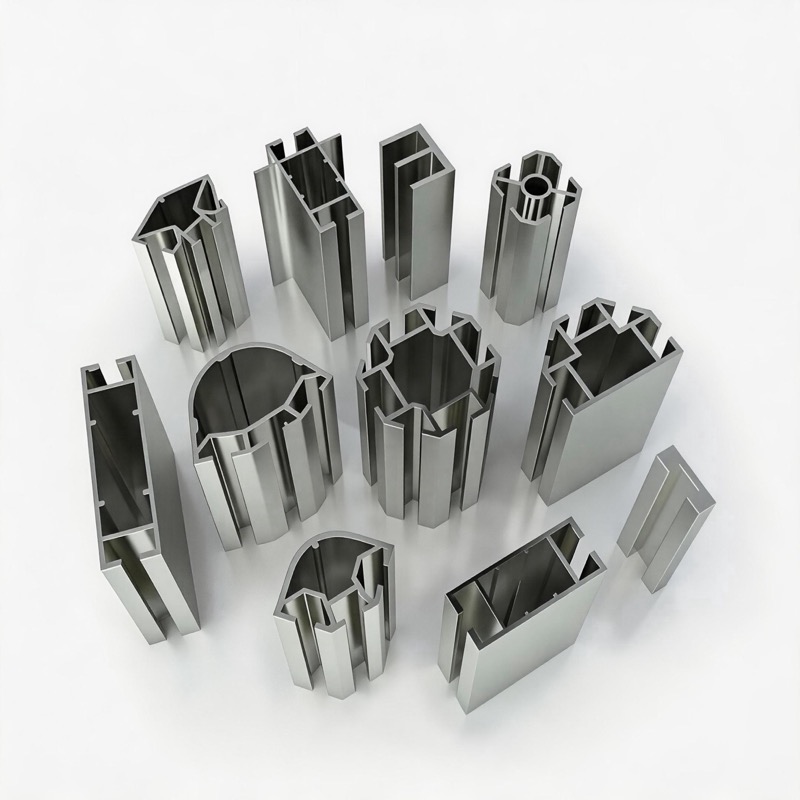
For extruded aluminum profiles, key quality factors include:
- Billet quality: Stable chemical composition supports consistent extrusion performance.
- Die design and maintenance: Well-designed dies help control geometry, straightness, surface quality, and dimensional consistency.
- Extrusion process control: Temperature, pressure, speed, and cooling affect profile integrity.
- Heat treatment: Correct aging conditions are essential for required mechanical properties.
- Surface treatment: Anodizing and powder coating need controlled pretreatment and coating thickness.
- Inspection discipline: Dimensional checks, visual inspection, hardness testing, and packaging controls reduce project risk.
At Guangdong Dapeng Aluminum Industry Co., Ltd., our approach centers on converting a customer's drawing or application need into a controlled production process. Whether the customer calls it aluminum or aluminium, the final result should meet the same defined requirements: stable dimensions, reliable finish, traceable materials, and packaging suited to international transportation.
When selecting an aluminum profile, the alloy and temper are much more important than the regional spelling. Different aluminum alloys offer different balances of extrudability, strength, corrosion resistance, weldability, and surface-finishing performance.
| Alloy | Typical characteristics | Common applications |
|---|---|---|
| 6063 | Excellent extrudability, smooth surface, good corrosion resistance | Architectural profiles, doors, windows, curtain walls, furniture frames |
| 6061 | Higher strength, good machinability, strong structural performance | Industrial frames, machinery components, transportation parts |
| 6005 / 6005A | Good strength and extrusion performance | Solar mounting rails, ladders, structural profiles |
| 6082 | Higher-strength structural alloy | Heavy-duty industrial and transport applications |
| 6060 | Good formability and surface appearance | Decorative and light architectural sections |
For example, a decorative window frame may prioritize the smooth anodized appearance of 6063-T5. A machine base or automation frame may require the higher structural strength associated with 6061-T6. A solar mounting component may need a profile designed for outdoor corrosion resistance, load capacity, and fast installation.
The correct purchasing question is not "aluminum or aluminium?" It is: Which alloy, temper, profile design, finish, and tolerance best support the application?
Terminology differences should never create avoidable sourcing errors. Buyers and suppliers can prevent confusion by writing material requirements in a standardized format.
Use this five-step checklist:
1. State the alloy and temper, such as "6063-T5" or "6061-T6."
2. Attach a fully dimensioned cross-section drawing with critical tolerances.
3. Specify the finish, including color, gloss level, coating type, anodizing thickness, or coating thickness.
4. Define inspection requirements, such as straightness, twist, surface acceptance criteria, and mechanical properties.
5. Confirm packaging, labeling, shipment method, and any applicable market standards before production.
A clear specification could read:
> Custom aluminium extrusion / aluminum extrusion, alloy 6063-T5, mill finish, length 6,000 mm, cut tolerance ±0.5 mm, critical wall thickness tolerance per approved drawing, protective film required, export carton and plywood pallet packaging.
This wording works across markets because it defines the product technically. It also includes both terms when the document will circulate among stakeholders in the United States, Europe, and Asia.
Aluminum profiles are widely used because the material combines low weight, corrosion resistance, formability, thermal conductivity, and recyclability. Its density is approximately 2.70 g/cm³, making it substantially lighter than steel for many design applications. It also naturally forms a thin oxide layer that helps protect the surface from further corrosion.
Architectural aluminum profiles are used in windows, doors, curtain walls, partitions, railings, louvers, shading systems, and façade structures. The profile design must balance appearance, structural stability, drainage, thermal considerations, and assembly efficiency.
Common finishing options include:
- Anodized aluminium profiles for a metallic, durable appearance
- Powder-coated aluminum profiles for broad color selection
- Wood-grain coated profiles for residential and commercial architectural systems
- Electrophoretic finishes for consistent decorative surface performance
Industrial aluminum profiles support automation equipment, assembly lines, safety guards, workbenches, conveyors, machine frames, and modular enclosures. T-slot aluminum profiles are particularly valued because they allow flexible assembly with connectors and accessories.
For these applications, customers often focus on:
- Load-bearing performance
- Straightness and profile accuracy
- Compatibility with connectors and fasteners
- Repeatability across multiple production batches
- Efficient cutting, machining, and assembly
Transportation and new-energy sectors use aluminum components to reduce weight, improve energy efficiency, and support corrosion resistance. Typical applications include vehicle structures, battery enclosures, charging equipment housings, solar mounting systems, and rail-related components.
Recycled aluminium also offers significant energy advantages over primary metal production. Industry data indicates that recycled aluminium can require roughly 5% of the energy used for primary production, although actual outcomes depend on scrap quality, collection systems, remelting processes, and alloy-management practices.
From a manufacturing perspective, the best supplier relationships start with technical alignment before price comparison. Low quoted pricing can become expensive if a profile has inconsistent dimensions, poor surface quality, unsuitable alloy selection, or inadequate packaging for overseas shipment.
Before placing a custom extrusion order, ask the supplier:
- Can you review the drawing for extrusion feasibility?
- Which alloy and temper do you recommend, and why?
- What dimensional tolerances can you reliably control?
- Can you provide surface-finish samples before mass production?
- What inspection records are available for the order?
- How will profiles be protected during container loading and sea transport?
- Can you provide deep processing, such as cutting, drilling, punching, CNC machining, bending, or assembly?
An experienced supplier should do more than produce a profile. They should identify manufacturing risks early, recommend practical improvements, and help make the finished part easier to assemble and more reliable in use.
Aluminum and aluminium are the same metal. Use aluminum for North American audiences and aluminium for British English and many international markets. But in technical sourcing, focus your attention on the details that affect the finished product: alloy, temper, profile geometry, surface treatment, tolerances, processing, and inspection.
Guangdong Dapeng Aluminum Industry Co., Ltd. provides industrial aluminum profiles, architectural aluminum profiles, and customized deep-processing services for global customers. Share your drawing, application requirements, target market, and finishing expectations with our team. We can help you develop a practical, export-ready aluminum extrusion solution that fits your project.
Both are correct. "Aluminum" is common in the United States and Canada, while "aluminium" is widely used in the United Kingdom and many other English-speaking markets.
No. They are different names for the same chemical element, with the symbol Al and atomic number 13.
Use the spelling preferred by your primary customer market. For a global export website, create market-specific pages or naturally include both terms where appropriate.
No. The material properties are identical. Performance depends on factors such as alloy grade, temper, profile design, heat treatment, and surface finish.
6063 is commonly selected for architectural profiles because of its excellent extrusion behavior, corrosion resistance, and ability to achieve an attractive surface finish. The final choice should still depend on the design and load requirements.
6061 generally provides higher strength and is widely used for structural and industrial components. 6063 is easier to extrude into complex shapes and is often preferred for architectural and decorative profiles.
Yes. Custom aluminum extrusion can include profile die development, cutting, drilling, punching, CNC machining, bending, welding, assembly, anodizing, powder coating, and export packaging.
It can be, provided the material chemistry, alloy control, processing route, and quality requirements are appropriately managed. The suitability depends on the final alloy specification and application.
- International Union of Pure and Applied Chemistry, [Periodic Table of the Elements]
- PubChem, [Aluminum Element Information]
- Royal Society of Chemistry, [Aluminium: Element Information, Properties and Uses]
- Los Alamos National Laboratory, [Aluminum Element Profile]
- American Chemical Society, [Aluminum]
- International Aluminium Institute, [Aluminium Recycling and Energy Savings]
- Orange Aluminum, [Aluminum vs. Aluminium: What's the Difference?]


