


Views: 298 Author: Dapeng Aluminum Publish Time: 2026-11-05 Origin: Site


Content Menu
● What Is Aluminum Profile Machine Guarding?
● 1. Configure Modular Machine Guarding Around Real Workflows
>> Map Tasks Before Drawing the Frame
>> Review the Layout With Operators
● 2. Reduce Maintenance Delays With Planned Access
>> Distinguish Fixed Panels From Access Doors
>> Keep Energy Isolation Separate From Convenience
● 3. Select Aluminum Profiles and Panels for the Actual Hazard
>> Evaluate the Complete Structural Assembly
>> Match Infill Panels to the Application
● 4. Simplify Layout Changes Without Losing Safety Integrity
>> Standardize Components Where Practical
>> Treat Reconfiguration as an Engineering Change
● 5. Use Digital Planning and Measured Results to Improve Value
>> Resolve Installation Details Before Manufacturing
>> Measure Benefits Instead of Promising Them
● A Practical Buying Checklist for Industrial Aluminum Guarding
● A Six-Step Implementation Plan
>> Step 1: Assess Hazards and Applicable Requirements
>> Step 2: Define Protective Functions
>> Step 3: Review Drawings Across Departments
>> Step 4: Verify Materials and Fabricated Parts
>> Step 5: Inspect and Validate the Installation
>> Step 6: Maintain and Reassess
● Evaluate Lifecycle Cost, Not Just Profile Price
● Conclusion: Build Guarding Around Safety and Production Needs
● FAQ
>> 1. Can Aluminum Profile Machine Guarding Replace Steel Guarding?
>> 2. What Profile Size Should I Use for a Machine Enclosure?
>> 3. Does Aluminum Guarding Automatically Meet Safety Requirements?
>> 4. Can Machine Guarding Be Modified After Installation?
>> 5. Should I Choose Mesh or Transparent Panels?
>> 6. What Should I Send With a Custom Profile Inquiry?
Aluminum profile machine guarding can help manufacturers protect employees, simplify maintenance, and adapt production layouts as equipment changes. However, these benefits depend on more than selecting a lightweight frame. Effective guarding requires a coordinated approach to structural design, access control, panel selection, and everyday operation.
At Guangdong Dapeng Aluminum Industry Co., Ltd., we focus on aluminum profile research, manufacturing, and export, including industrial profiles and customized processing. Our perspective starts with a practical principle: productivity improves when guarding supports safe work rather than creating obstacles around it.
This guide explains five ways modular aluminum guarding can support production, followed by a purchasing checklist and an implementation plan for industrial buyers.
Aluminum profile machine guarding uses extruded aluminum members, connectors, infill panels, and access components to create protective barriers around machinery.
Common applications include:
- Conveyor drives and transfer stations.
- Automated assembly equipment.
- Robotic production cells.
- Packaging and material-handling systems.
- Inspection stations and machine enclosures.
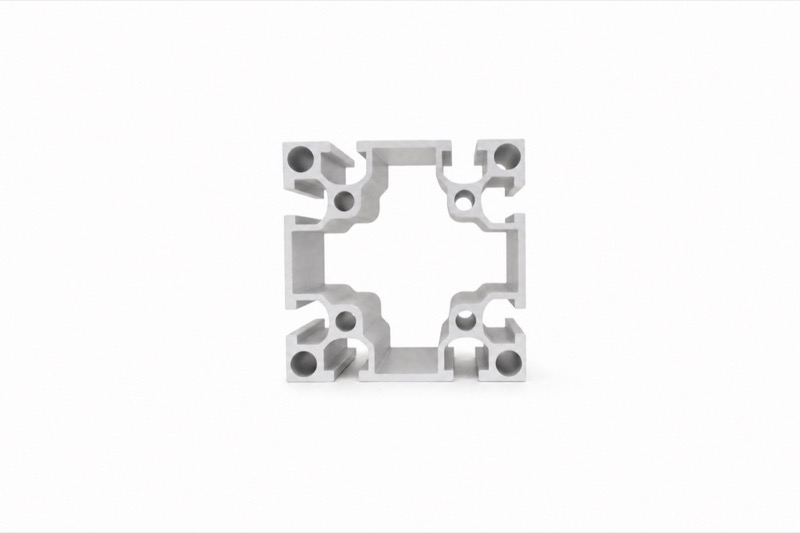
T-slot aluminum profiles provide mounting channels for compatible brackets, panels, hinges, and accessories. Many connections can be assembled mechanically instead of welded, making planned modifications more manageable.
However, a frame alone is not a complete safeguarding solution. The finished system must address the actual hazard, including access through openings, moving machinery, and potentially ejected material.
A protective enclosure should follow the production process, not simply surround the machine footprint.
An apparently efficient layout can become frustrating if operators cannot replenish materials, inspect products, or reach approved controls without unnecessary movement.
Begin by identifying what happens around the equipment during a normal shift.
Record:
1. Where materials enter and finished products leave.
2. Where operators stand and move.
3. Which tasks require routine access.
4. Where maintenance personnel need working clearance.
5. Which adjacent aisles must remain unobstructed.
Use this information to position fixed panels, access doors, and inspection areas.
For a conveyor installation, for example, guarding must address hazardous drive and transfer areas while accounting for product passage. An opening that accommodates a carton may also allow a person to reach toward moving components.
Ask operators and maintenance personnel to review drawings before fabrication.
Their observations can reveal blocked sightlines, awkward cleaning access, or door positions that interfere with carts. These are design inputs, not reasons to reduce protection.
A useful review question is: "Can the intended task be completed without removing, bypassing, or improvising around the guard?"
Modular aluminum guarding can make access arrangements easier to configure. The objective, however, is controlled access—not unrestricted access.
A poorly positioned panel can turn a simple maintenance task into unnecessary dismantling. Conversely, an easily opened door can create exposure if it is not integrated into an appropriate protective system.
Use fixed guards where routine entry is unnecessary. Consider movable guards where the task requires more frequent access, subject to the machine risk assessment.
For each access location, document:
- The task and expected frequency.
- The person authorized to perform it.
- The machine condition required before entry.
- The safeguards needed while access is possible.
- The method for restoring normal operation.
Where interlocking is required, its selection and integration need competent engineering. A latch or ordinary position sensor should not be assumed to provide a safety function.
An emergency-stop button, an open interlocked door, and an energy-isolating device serve different purposes.
For servicing involving hazardous energy, applicable lockout/tagout procedures remain essential. Opening a door does not necessarily isolate electrical, pneumatic, hydraulic, or stored mechanical energy.
The design should make isolation points accessible and provide adequate space for safe maintenance.
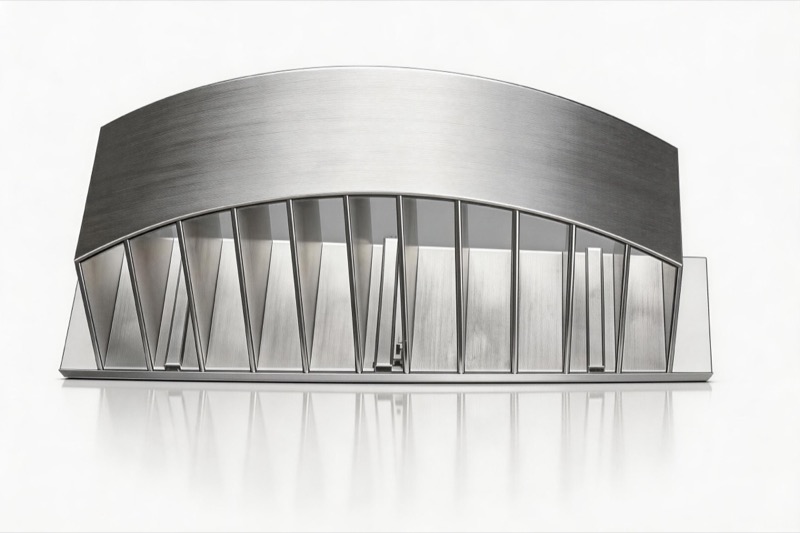
Choosing a familiar profile size is not enough. Guard performance depends on the complete assembly: frame members, joints, infill panels, fasteners, doors, and anchorage.
Long spans, heavy panels, and frequently operated doors can create different demands.
Ask the designer or supplier to review:
- Unsupported spans and frame height.
- Panel weight and attachment method.
- Door weight, hinge arrangement, and operating frequency.
- Expected loads, vibration, and potential impacts.
- Base connections and installation conditions.
- Required dimensional stability.
Do not assume two profiles with similar outside dimensions provide identical performance. Section geometry, wall thickness, material specification, and connection design all matter.
For purchasing, request drawings and relevant material documentation rather than relying only on photographs.
| Panel option | Potential advantage | Important design check |
|---|---|---|
| Wire mesh | Visibility and ventilation | Openings and distance from the hazard |
| Transparent plastic | Process observation | Impact suitability and environmental compatibility |
| Solid metal | Visual screening and separation | Weight, visibility, and any containment requirement |
| Combined panels | Different functions within one enclosure | Interfaces, gaps, and secure attachment |
Mesh does not automatically provide adequate protection against flying fragments. Likewise, a transparent panel is not proven suitable simply because it resists ordinary handling damage.
Where ejection is foreseeable, specify the required containment performance and verify the assembly accordingly.
Production lines evolve. Manufacturers add inspection equipment, change product formats, and reorganize material flow.
Mechanically connected aluminum framing can make some changes easier than modifying a welded enclosure. Existing members and compatible components may be reusable where their condition and specifications remain suitable.
A consistent profile and hardware system can simplify:
- Spare-parts management.
- Assembly instructions.
- Maintenance training.
- Drawing updates.
- Future expansion.
However, compatibility requires verification. Slot geometry, fastener dimensions, connection methods, and load ratings can vary between systems.
Confirm these details before combining components from different suppliers.
Moving a panel or adding a door can alter reach distances, access routes, structural stability, or protective functions.
After modification, reassess the affected hazards and verify the revised installation before returning equipment to service.
Keep the drawings, component list, and inspection records aligned with the actual configuration. Modularity is valuable because it supports controlled change—not because it removes the need for review.
Digital layouts help teams identify conflicts before profiles are cut and panels are ordered.
A useful model should include more than the enclosure outline. Show doors in their open position, service clearances, loading routes, control locations, and nearby equipment.
Review:
1. Available floor space and installation conditions.
2. Panel dimensions and attachment details.
3. Door swing and maintenance clearance.
4. Cable, hose, and accessory routing.
5. Assembly sequence and installation access.
A model cannot prove that a guarding system is safe. It can, however, expose dimensional conflicts early and support a more focused engineering review.
Avoid assuming that modular guarding will produce a fixed percentage improvement.
Establish a baseline and compare equivalent conditions after installation. Useful measures include maintenance access time, changeover duration, installation hours, and guard-related stoppages.
Separate guarding improvements from other changes, such as new machinery, staffing adjustments, or revised production schedules.
An incomplete inquiry often produces quotations that appear comparable but cover different scopes.
Provide prospective suppliers with a structured brief.
| Information to provide | Why it matters |
|---|---|
| Equipment layout and dimensions | Establishes enclosure geometry |
| Hazard assessment and intended use | Guides protective requirements |
| Access frequency and maintenance tasks | Informs panel and door arrangements |
| Operating environment | Supports material and finish selection |
| Panel requirements | Defines visibility and protective needs |
| Delivery destination and packing needs | Supports export and installation planning |
| Supply scope | Clarifies components versus integrated system |
For custom aluminum profiles, also discuss tolerances, machining features, surface finish, drawing approval, and inspection requirements.
Clarify who is responsible for structural verification, safety controls, installation, and final validation. An extrusion supplier does not automatically assume the responsibilities of a complete machine-safety integrator.
Identify hazards during production, cleaning, adjustment, and maintenance. Determine which local regulations and machinery standards apply.
For international projects, requirements may differ between the manufacturing location and the destination market.
Specify what each section must accomplish: prevent access, restrict reaching, support controlled entry, or contain a defined hazard.
Avoid using one generic panel specification for every risk.
Bring together production, maintenance, purchasing, and qualified safety personnel.
Resolve access, visibility, installation, and responsibility questions before releasing drawings.
Check profile dimensions, cut lengths, machining positions, panel fit, and identification against the approved documents.
Record deviations and resolve them before installation.
Check connections, anchorage, openings, door operation, and protective devices as applicable.
Use a documented process to verify that the completed system performs its intended functions.
Inspect for damaged panels, loose fasteners, misaligned doors, and unauthorized modifications.
Reassess the system when machinery, tooling, products, or access requirements change.
The lowest material quotation may not produce the lowest installed cost.
Compare fabrication, assembly, installation downtime, spare parts, maintenance, and likely future modifications. Include integration and validation costs where relevant.
For example, a clearly labeled, accurately machined component package may require less onsite fitting than loosely specified material. Whether that advantage offsets its purchase price depends on the project.
Request itemized quotations and a consistent scope. This makes commercial comparisons more meaningful and reduces disputes over missing hardware or unassigned work.
Aluminum profile machine guarding offers a flexible framework for protective enclosures, controlled access, and future equipment changes. Its value comes from matching the complete assembly to the hazard and the workflow.
Guangdong Dapeng Aluminum Industry Co., Ltd. supplies industrial aluminum profiles and customized processing for international customers, alongside architectural aluminum products.
For your next guarding project, send our team your layout, profile drawings, quantities, panel interfaces, operating environment, and delivery destination. Request a project-specific review of aluminum profile supply and machining requirements, with safety integration and validation responsibilities clearly defined.
It can suit some applications, but substitution requires engineering review. Compare structural demands, impact exposure, environmental conditions, connections, and anchorage. Neither material is automatically appropriate for every hazard.
There is no universal size. Selection depends on span, height, panel weight, door loads, and connection design. Use application-specific calculations or verified design information.
No. Compliance depends on the completed installation, applicable requirements, and intended use. Material choice alone does not establish adequate protection.
Often, yes. However, modifications require review because they can change access, reach distances, structural behavior, and protective functions. Update documentation and verify the revised system.
Choose according to the hazard and operating environment. Mesh offers visibility and ventilation but requires appropriate openings and positioning. Transparent panels need suitable impact and environmental performance.
Provide drawings, quantities, material requirements, tolerances, finishes, machining details, and destination. Explain the application and identify whether you need profiles only, processed components, or a broader assembly scope.
1. [80/20 — "5 Ways to Maximize Output with 80/20 Guarding."] Original article informing the themes of customization, component integration, modularity, scalability, and digital planning. Its brand-specific claims are not presented as Dapeng performance claims. [8020]
2. [Occupational Safety and Health Administration — 29 CFR 1910.212, "General Requirements for All Machines."] U.S. requirements addressing machinery hazards, guard attachment, and protection against access to danger zones. [osha]
3. [Occupational Safety and Health Administration — 29 CFR 1910.147, "The Control of Hazardous Energy."] Requirements concerning hazardous-energy control during covered servicing and maintenance activities. [osha]
4. [Occupational Safety and Health Administration — "Relationship of the Lockout/Tagout Standard to Machinery and Machine Guarding Standards."] Explains the distinction between normal-production safeguarding and hazardous-energy control during servicing. [osha]
5. [International Organization for Standardization — Machinery Safety Standards Catalogue.] Lists ISO 14120:2015 on guard design and construction, ISO 13857:2019 on safety distances, and ISO 14119:2024 on interlocking devices. Verify applicable editions and local adoption for each project. [iso]


