


Views: 253 Author: Dapeng Aluminum Publish Time: 2026-09-02 Origin: Site


Content Menu
● Why Aluminum Extrusion Profiles Matter
● What the Original Guide Misses
● Main Types of Aluminum Extrusion Profiles
>> Custom Aluminum Extrusion Profiles
● How Aluminum Extrusion Works
>> 3. Extrusion
>> 4. Cooling, Stretching, and Cutting
>> 5. Surface Treatment and Deep Processing
● Choosing the Right Aluminum Alloy
● A Better Method for Specifying Tolerances
>> Define Critical-to-Function Dimensions
>> Ask These Questions Before Finalizing a Drawing
● Design Guidelines for Custom Profiles
>> Maintain Reasonable Wall Thickness
>> Avoid Unnecessary Complexity
>> Combine Functions Where It Adds Value
>> Consider Finishing at the Design Stage
● Applications Across Key Industries
>> Architectural Aluminum Profiles
>> Industrial Aluminum Profiles
>> Transportation Aluminum Profiles
>> New-Energy Aluminum Profiles
● Quality Control for Export Aluminum Profiles
● A Practical Sourcing Checklist
● Partner With Guangdong Dapeng Aluminum Industry Co., Ltd.
>> What is an aluminum extrusion profile?
>> What is the difference between standard and custom aluminum profiles?
>> Which aluminum alloy is best for extrusion?
>> Can aluminum extrusion profiles be anodized or powder coated?
>> How can I reduce the cost of a custom aluminum extrusion?
>> What information is needed to request a quotation?
>> Are aluminum extrusion profiles suitable for solar and renewable-energy applications?
Aluminum extrusion profiles give engineers, architects, equipment builders, and renewable-energy manufacturers a practical way to combine light weight, structural strength, corrosion resistance, and design flexibility in one component. For projects that require repeatable geometry—from curtain-wall frames and machine guards to EV components and solar mounting systems—a well-designed aluminum extrusion can reduce assembly steps, material waste, and long-term maintenance needs.
At Guangdong Dapeng Aluminum Industry Co., Ltd., we develop, manufacture, and export industrial aluminum profiles, architectural aluminum profiles, and customized deep-processed aluminum components for global customers. Our experience shows that successful extrusion projects begin long before production: they depend on selecting the right alloy, designing a manufacturable cross-section, defining sensible tolerances, and establishing an inspection plan that matches the end use.
Aluminum extrusion is a manufacturing process in which heated aluminum billet is pushed through a precision die to produce a continuous profile with a fixed cross-section. The resulting shape can be cut to length and enhanced through machining, drilling, punching, bending, welding, anodizing, powder coating, or assembly.
The process makes it possible to create simple angles and channels, as well as highly engineered sections with internal chambers, screw ports, ribs, drainage paths, thermal-management fins, and concealed fastening features.
Unlike fabrication methods that join multiple separate pieces, extrusion allows designers to integrate several functional elements into one profile. This can improve consistency and simplify final assembly.
Common benefits of aluminum extrusion profiles include:
- Low weight compared with many steel-based alternatives.
- Good corrosion resistance for architectural, transport, outdoor, and industrial applications.
- High design freedom, including hollow sections and complex internal features.
- Efficient thermal conductivity for heat sinks, battery systems, LED housings, and electronic enclosures.
- Strong recycling potential, since aluminum can be recycled repeatedly without losing its fundamental material properties.
- Finish flexibility, including mill finish, anodizing, electrophoretic coating, powder coating, wood-grain transfer, and mechanical surface treatments.
Aluminum also supports the expanding clean-energy economy. It is used in solar systems, electrical transmission, wind projects, energy storage, electric vehicles, and lightweight transportation equipment. Its combination of low density, corrosion resistance, conductivity, and recyclability makes it particularly useful where performance and service life must work together.
Many general articles about aluminum extrusion profiles correctly describe common applications and profile types. However, they often stop at broad claims such as "lightweight," "durable," or "customizable." That information is useful for beginners, but it does not answer the questions that determine whether a project succeeds in production.
A stronger buying and engineering guide should address the issues below.
| Information gap | Why it matters to buyers | Practical improvement |
|---|---|---|
| Alloy selection | Different alloys perform differently in strength, corrosion resistance, finishing, and machining | Match alloy and temper to the real service environment |
| Tolerance strategy | Overly tight tolerances can increase tooling difficulty, scrap risk, machining needs, and cost | Identify critical dimensions instead of tightening every dimension |
| Profile manufacturability | A drawing may look correct but still be difficult or expensive to extrude consistently | Review wall thickness, corner radii, hollow chambers, and symmetry early |
| Finishing requirements | Surface treatment affects appearance, durability, dimensions, and lead time | Specify finish type, color, thickness, gloss, and surface-quality expectations |
| Quality verification | "High quality" is not a measurable requirement by itself | Define inspection items, sampling rules, documents, and acceptance criteria |
| Deep processing | Most finished parts require more than extrusion | Coordinate cutting, CNC machining, drilling, punching, assembly, and packaging in one plan |
The following sections close those gaps and provide a more useful framework for selecting aluminum extrusion profiles for industrial and architectural projects.
Aluminum profiles are usually divided into standard shapes and custom-designed sections. Both can be valuable, depending on the project's technical requirements, production volume, and target cost.
Standard profiles are widely used because they can support fast design cycles and simple fabrication.
Typical examples include:
- Aluminum flat bars
- Round bars and square bars
- Solid rods
- Round tubes and square tubes
- Rectangular hollow sections
- U-channels and C-channels
- L-angles
- T-bars
- I-beams
- Z-sections
- Aluminum pipes
- T-slot aluminum profiles
These shapes are often used for shelving, frames, partitions, furniture, display systems, transport equipment, fixtures, conveyors, machine enclosures, and general fabrication.
Custom aluminum extrusions are developed when a standard profile cannot provide the required mechanical performance, assembly method, appearance, or functional integration.
A custom die may incorporate:
- Internal ribs to improve stiffness.
- Hollow chambers to reduce weight.
- Screw ports for direct fastening.
- Snap-fit features for fast assembly.
- Grooves for seals, glass, panels, or gaskets.
- Drainage channels for windows and curtain walls.
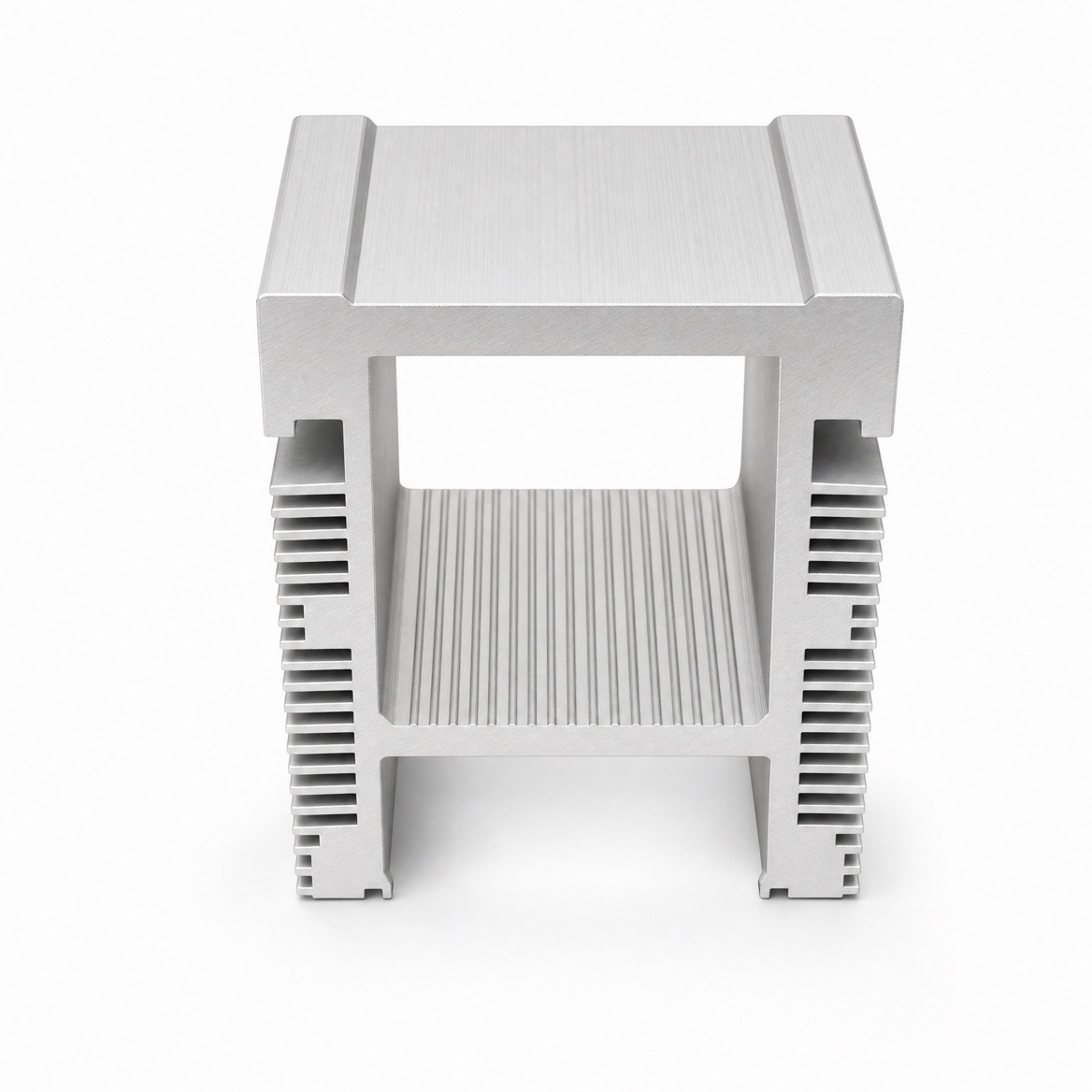
- Heat-dissipation fins for electronic products.
- Interlocking sections for modular structures.
- Wire-management paths for automation equipment.
- Decorative face surfaces for architectural systems.
A well-designed custom section can replace multiple fabricated parts. For example, a solar mounting rail can integrate a panel-support face, bolt channel, drainage feature, reinforcement ribs, and accessory connection point into a single extrusion profile.
Understanding the process helps buyers create more realistic drawings and communicate better with a manufacturer.
Production starts with aluminum billet. The selected alloy is heated to a controlled temperature so that it becomes sufficiently workable for extrusion while remaining solid.
A specialized die is designed according to the profile cross-section. Tooling quality matters because it affects metal flow, surface quality, dimensional consistency, production efficiency, and the ability to produce complex details.
For hollow profiles, the die design becomes more advanced because the aluminum flow must create enclosed chambers while maintaining uniform wall thickness.
The heated billet is forced through the die under high pressure. The emerging profile carries the die's cross-sectional shape along its full length.
After extrusion, the profile is cooled, stretched to improve straightness, and cut to required lengths. Depending on the alloy and application, additional heat treatment may be used to achieve the required mechanical properties.
The profile can then move to secondary operations, such as:
- Precision cutting
- CNC machining
- Drilling and tapping
- Punching
- Bending
- Welding
- Deburring
- Polishing
- Brushing
- Anodizing
- Powder coating
- Electrophoretic coating
- Assembly and protective packaging
For export projects, this integrated workflow can reduce handoffs between suppliers and help control damage, dimensional variation, and delivery risk.
Alloy selection should never be based on a generic rule such as "6063 is always best" or "higher strength is always better." The correct choice depends on structural load, corrosion exposure, machining requirements, appearance, finishing method, and cost.
| Alloy family | Typical characteristics | Common uses |
|---|---|---|
| 6063 | Excellent extrudability, good corrosion resistance, attractive surface finish | Windows, doors, curtain walls, decorative profiles, furniture, general architectural products |
| 6061 | Higher strength, good machinability, strong engineering performance | Industrial frames, transport components, machine parts, structural applications |
| 6005 / 6005A | Good structural strength and extrusion performance | Solar rails, transport structures, industrial framing, load-bearing profiles |
| 6082 | High strength within the 6xxx family, good corrosion resistance | Heavy-duty structures, transportation, engineering components |
| 7075 | Very high strength but less suitable for many standard extrusion and corrosion-sensitive applications | Specialized aerospace and high-performance components |
For many visible architectural profiles, 6063 is a common choice because it supports complex shapes and quality surface treatment. For industrial structures that carry higher loads, 6061, 6005A, or 6082 may be more appropriate depending on the design and manufacturing requirements.
The key is to specify the alloy and temper together. Alloy identifies the chemical system, while temper describes the material condition after processes such as heat treatment or strain hardening.
Tolerance is one of the most misunderstood parts of an aluminum extrusion inquiry. Buyers sometimes specify tight tolerances across every dimension because they want precision. In practice, this can increase cost without improving product performance.
Dimensional tolerances are influenced by profile size, wall thickness, shape complexity, die design, alloy, thermal behavior, straightness requirements, and secondary processing. Industry standards distinguish between standard and precision tolerances for different types of extruded products.
Instead of applying unnecessary precision throughout the profile, identify the features that directly affect product function.
Examples include:
- A groove that must accept a specific gasket.
- A slot that must fit a fastener or connector.
- A mounting surface that must remain flat.
- A bore that must align with a machined component.
- A profile width that interfaces with glass, a panel, or a mechanical assembly.
For non-critical features, standard tolerances are usually more economical and easier to maintain in volume production.
1. Which dimensions affect assembly, sealing, fit, or safety?
2. Which dimensions can use standard extrusion tolerance?
3. Does the part require additional machining after extrusion?
4. Are straightness, twist, flatness, or surface appearance critical?
5. How will the receiving team inspect the part?
6. Does the drawing define measurement points and inspection conditions?
This approach helps prevent a common sourcing problem: a profile passes the supplier's dimensional inspection but does not fit during final assembly because the truly critical interface was not defined clearly.
A custom aluminum extrusion profile should be engineered for both function and manufacturability. A visually complex section is not automatically a better section.
Large differences between thick and thin areas can create uneven metal flow and increase the risk of distortion. Try to keep wall thickness as consistent as the design allows.
Sharp internal and external corners are more difficult to extrude and may create stress concentrations. Practical radii improve metal flow and can enhance the durability of the finished part.
Every extra hollow chamber, thin fin, deep pocket, or extreme aspect ratio may add tooling complexity and production risk. If a feature does not improve function, consider removing it.
Integrating fastening channels, locating features, reinforcement ribs, and cable paths can reduce downstream assembly. However, do not combine features simply because extrusion makes it possible. The design should still be easy to inspect, finish, package, and use.
Anodized and powder-coated parts require attention to visible surfaces, hanging points, drainage, color expectations, and acceptable cosmetic variation. For architectural projects, define the appearance standard before mass production rather than after the first shipment arrives.
Architectural aluminum extrusion profiles are used in windows, doors, curtain walls, sunrooms, handrails, partitions, louvers, facades, roofing systems, and interior decorative structures.
Key requirements often include:
- Surface appearance
- Weather resistance
- Water drainage
- Thermal-break compatibility
- Glass and gasket fit
- Color consistency
- Corrosion resistance
- Long-term structural stability
Industrial aluminum profiles support machine frames, workstations, automation guards, conveyor systems, cleanroom partitions, robotics equipment, storage systems, and assembly-line structures.
T-slot aluminum profiles are especially useful because they enable modular assembly without welding. Engineers can adjust layouts, add accessories, or reconfigure equipment with less downtime.
Transportation applications may include rail vehicles, truck bodies, trailers, marine structures, luggage systems, interior fittings, and lightweight structural components.
Lower vehicle weight can support energy efficiency, while aluminum's corrosion resistance can benefit components exposed to outdoor environments. Aluminum is widely associated with lightweight design in automotive, aerospace, transport, and machinery applications.
New-energy projects require profiles for solar mounting systems, battery enclosures, charging equipment, inverter housings, heat sinks, wind-energy structures, and electrical transmission components.
Solar applications depend heavily on durable, corrosion-resistant framing and support systems. Aluminum is used broadly in solar frames, wiring-related components, and support structures, while it also plays important roles in wind, storage, and electricity infrastructure.
Quality control should be visible in the inquiry, production, and delivery process—not simply stated in a brochure.
At Guangdong Dapeng Aluminum Industry Co., Ltd., we recommend aligning product requirements with a clear quality-control plan before production begins.
A practical inspection plan may include:
- Incoming billet and raw-material verification.
- Alloy and temper confirmation.
- First-article inspection after die trial.
- Cross-section and dimensional checks.
- Straightness, twist, and length inspection.
- Surface-quality checks before finishing.
- Coating or anodizing verification where applicable.
- Machining and assembly inspection.
- Packing inspection before shipment.
- Traceability documentation linked to production batches.
For an export buyer, the most useful documents may include approved drawings, material certificates, inspection reports, finish samples, packing photographs, and pre-shipment inspection records.
Quality is not only about the profile itself. It also includes packaging that protects finished surfaces, consistent labeling, correct quantities, damage prevention during sea freight, and traceable production records.
Before requesting a quotation for aluminum extrusion profiles, prepare the following information.
1. Profile drawing: Include complete cross-section dimensions, wall thicknesses, tolerances, and critical features.
2. Alloy and temper: State the preferred specification or describe the performance requirement.
3. Surface finish: Specify mill finish, anodizing, powder coating, color code, gloss level, film thickness, or decorative treatment.
4. Processing requirements: List cutting lengths, machining, holes, slots, bending, welding, assembly, or accessories.
5. Application environment: Explain whether the profile will be used indoors, outdoors, in marine conditions, in high humidity, or in a high-load environment.
6. Order quantity: Provide prototype, trial, annual, or batch volumes.
7. Packaging standard: Clarify protective film, paper wrapping, carton packing, pallet requirements, labeling, and export markings.
8. Inspection requirements: Identify critical dimensions, sampling method, documents, and acceptance criteria.
9. Target delivery schedule: Include required sample date, production date, port, and shipping terms.
The clearer the technical package, the faster a manufacturer can evaluate die feasibility, recommend improvements, and provide a quotation that reflects the actual project requirements.
A successful aluminum extrusion project requires more than a drawing and a price. It requires engineering communication, stable process control, appropriate materials, reliable finishing, and a supplier that understands international delivery expectations.
Guangdong Dapeng Aluminum Industry Co., Ltd. provides aluminum alloy solutions for customers in construction, industrial manufacturing, transportation, and new-energy sectors. We support industrial aluminum profiles, architectural aluminum profiles, customized extrusion dies, surface finishing, and deep processing services tailored to project needs.
Send us your profile drawing, application requirements, alloy preference, surface-finish standard, and estimated quantity. Our technical team can help review manufacturability, identify potential cost-saving opportunities, and develop an aluminum extrusion solution that supports your product's performance and market goals.
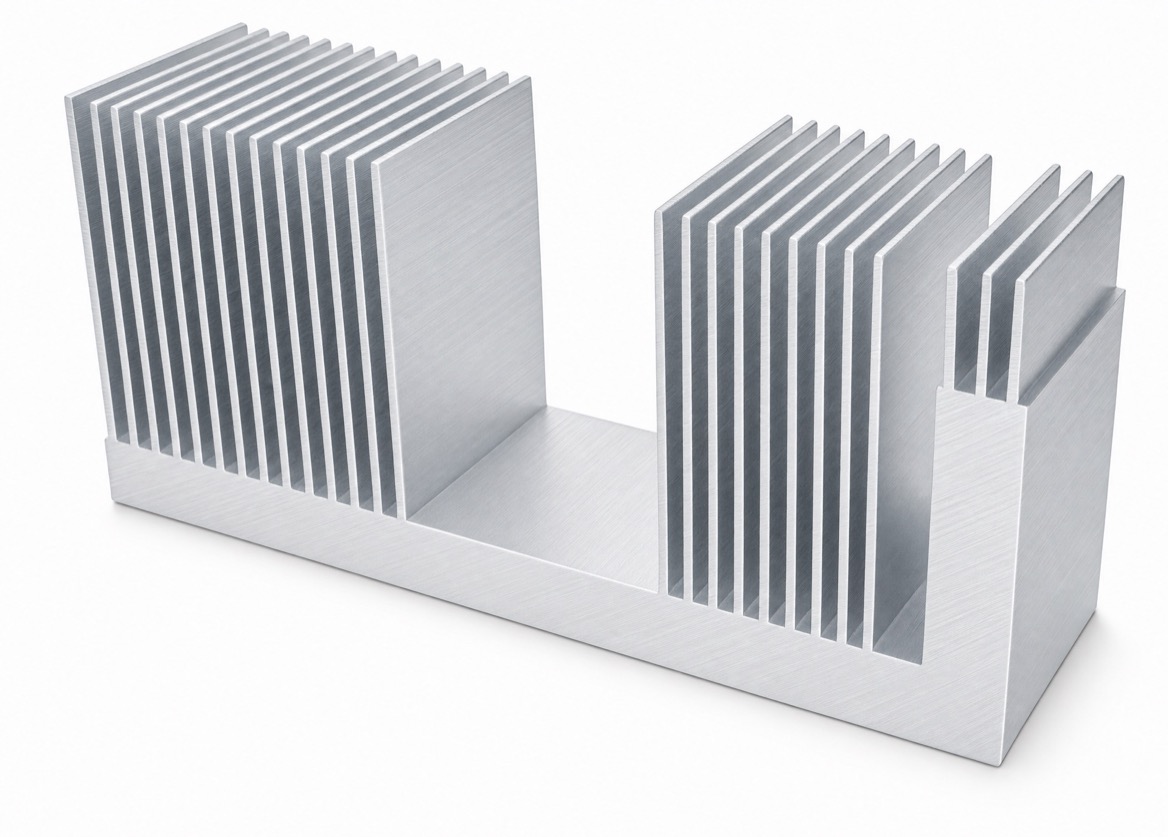
An aluminum extrusion profile is a continuous aluminum shape produced by forcing heated aluminum through a shaped die. The profile retains the same cross-section along its length and can be cut, machined, coated, assembled, or customized for different applications.
Standard profiles use common shapes such as angles, channels, bars, tubes, and T-slots. Custom profiles are designed specifically for a product or project and may include unique fastening features, hollow chambers, ribs, drainage channels, or heat-dissipation structures.
There is no single best alloy for every project. 6063 is commonly used for architectural and decorative profiles because of its extrusion and finishing performance. 6061, 6005A, and 6082 may be selected for applications that require greater structural strength.
Yes. Aluminum extrusion profiles can receive anodizing, powder coating, electrophoretic coating, wood-grain transfer, polishing, brushing, and other surface treatments. The appropriate finish depends on appearance, corrosion resistance, environmental exposure, and customer specifications.
You can often reduce cost by using reasonable tolerances, simplifying unnecessary geometric features, maintaining more uniform wall thickness, selecting the appropriate alloy, combining useful functions into one profile, and ordering volumes that match tooling investment.
A complete quotation request should include a profile drawing, alloy and temper, finish requirements, processing details, required lengths, estimated quantity, packaging requirements, quality criteria, and destination or shipping terms.
Yes. Aluminum profiles are widely used in solar mounting systems, panel frames, inverter housings, heat sinks, battery-related components, and electrical infrastructure because they offer low weight, corrosion resistance, and adaptable geometry.
1. [Bor USA — Navigating the World of Aluminum Extrusion Profiles]
2. [International Energy Agency — Aluminium]
3. [European Aluminium — Aluminium in Use]
4. [European Aluminium — Recycling]
5. [Aluminum Extruders Council — Aluminum Extrusion Tolerances]
6. [Encyclopédie de l'Environnement — Aluminium: A Lightweight, Recyclable and Metallic Material]
7. [Aluminium Can Group — Energy Transition]
8. [Profile Precision Extrusions — Designing with Aluminum Extrusions: Best Practices for Engineers]


