
English


Views: 218 Author: Dapeng Aluminum Publish Time: 2026-08-21 Origin: Site


Content Menu
● Why Aluminum Decking Is Used in Commercial Projects
>> Core benefits of aluminum deck boards
● Aluminum Decking vs. Other Materials
● How to Specify Commercial Aluminum Decking
>> 1. Define the application and loading conditions
>> 2. Select the right aluminum alloy and temper
>> 3. Design for drainage, traction, and thermal movement
>> 4. Choose a finish for the environment
● Common Applications for Aluminum Deck Boards
>> Rooftop terraces and commercial balconies
>> Stadiums, bleachers, and public walkways
>> Marine platforms and pontoon boat decking
>> Trailer, transport, and equipment platforms
● Practical Procurement Checklist for Buyers
● Expert Insight: The Profile Is Only Half the System
● Work With a Custom Aluminum Decking Manufacturer
● FAQ
>> Is aluminum decking slippery when wet?
>> Which aluminum alloy is commonly used for extruded decking?
>> Is anodized or powder-coated aluminum better for decking?
>> Does aluminum decking expand in hot weather?
>> Can aluminum decking be used near the sea?
>> Can aluminum deck boards be customized?
Commercial outdoor spaces place heavy demands on every surface. A rooftop terrace, stadium walkway, marine platform, trailer deck, or public viewing area must handle foot traffic, moisture, temperature changes, cleaning cycles, and long-term exposure without becoming a constant maintenance burden. Aluminum decking materials offer a strong, lightweight, and highly configurable solution when the profile design, alloy, finish, drainage, and installation details are specified together.
For project teams sourcing custom aluminum decking from an experienced manufacturer, the goal is not simply to buy aluminum planks. It is to create a decking system that fits the load requirement, site environment, visual standard, fabrication process, and expected service life.
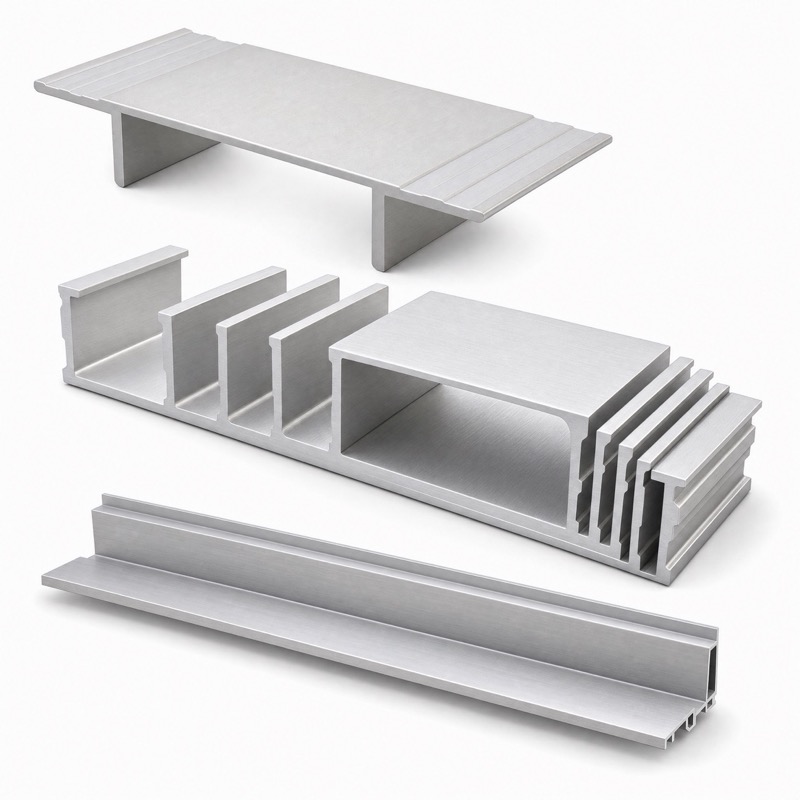
Aluminum decking is commonly produced through extrusion, a process that shapes heated aluminum billets into consistent profiles. This manufacturing method gives designers more freedom than many conventional decking materials: ribs, drainage channels, anti-slip surfaces, concealed fixing zones, interlocking edges, and custom cross-sections can be integrated directly into the profile.
For commercial applications, this design flexibility matters. A deck used on a pedestrian bridge has different needs from a pontoon boat platform or a rooftop hospitality terrace. Custom aluminum profiles help project teams align structural performance with real installation conditions.
- Low weight: Aluminum can reduce handling and installation effort compared with heavier structural alternatives.
- Corrosion resistance: Appropriate alloy and finish selection can support long-term performance in wet, coastal, industrial, or outdoor environments.
- Dimensional consistency: Extruded profiles can be manufactured to defined tolerances, supporting repeatable assembly.
- No rot or insect damage: Unlike timber-based materials, aluminum does not rot, split, or attract termites.
- Design flexibility: Profiles can include drainage paths, stiffening ribs, fastening channels, edge details, and traction patterns.
- Recyclability: Aluminum retains value at end of life. Recycled aluminum can require about 95% less energy than primary aluminum production, according to industry sources.
That said, aluminum is not an automatic solution for every project. A well-performing aluminum deck depends on selecting the right alloy, profile geometry, support spacing, connection method, surface treatment, and drainage strategy.
The right material depends on the project's load, weather exposure, maintenance capacity, installation access, and desired appearance. The following comparison helps procurement teams make an early-stage decision.
| Decision factor | Aluminum decking | Wood decking | Composite decking | Steel decking |
|---|---|---|---|---|
| Moisture resistance | Strong when alloy and finish are appropriate | Can require sealing and replacement | Generally moisture-resistant, but varies by product | Requires corrosion protection |
| Weight | Lightweight | Moderate | Moderate to heavy | Heavy |
| Custom profile design | Excellent through extrusion | Limited | Limited | Moderate |
| Rot and insect resistance | Yes | No | Yes | Yes |
| Thermal movement | Must be designed for | Present | Can be significant | Present |
| Surface appearance | Mill, anodized, powder-coated, textured | Natural grain | Wood-like finishes | Industrial appearance |
| Recycling potential | High | Varies | Often more complex | High |
| Maintenance profile | Usually low, but site-dependent | Often higher | Moderate | Moderate to high in corrosive areas |
The key lesson: material selection should be based on full-life performance, not only the initial purchase price. A lower-cost deck board can become expensive if it needs frequent refinishing, replacement, or labor-intensive cleaning.
A strong specification gives manufacturers, architects, contractors, and buyers a shared technical reference. It also reduces the risk of receiving profiles that look correct but do not match the actual use case.
Start with where and how the decking will be used. Be specific about people, equipment, weather, and access.
Consider:
- Pedestrian-only or vehicle-bearing use
- Expected foot traffic or point loads
- Span between supports
- Exposure to rain, snow, salt spray, chemicals, or UV
- Whether the deck is elevated, floating, rooftop-mounted, or ground-supported
- Slip-resistance requirements
- Cleaning method and maintenance access
- Local building, fire, safety, and structural requirements
For example, a high-traffic outdoor walkway may need a deeply ribbed anti-slip surface, controlled drainage, and a durable architectural coating. A utility trailer platform may prioritize profile stiffness, low weight, secure fastening, and resistance to road moisture.
For extruded decking profiles, 6xxx-series aluminum alloys are widely used because they provide a practical balance of strength, corrosion resistance, machinability, weldability, and extrudability. The Aluminum Extruders Council identifies the 6xxx series as the most popular extrusion alloy class, with good strength and corrosion resistance.
However, alloy selection should never be based on a generic statement alone. Your manufacturer should evaluate:
- Mechanical performance required by the profile
- Wall thickness and cross-section complexity
- Outdoor and marine exposure
- Welding, drilling, cutting, or machining needs
- Finish compatibility
- Target market requirements
A custom aluminum decking manufacturer can recommend a suitable alloy-temper combination after reviewing drawings, spans, loads, environment, and post-processing needs.
A flat deck surface is rarely enough for a commercial outdoor project. Water must have a defined path to leave the surface, especially in areas exposed to rain, washdown, or spray.
Useful profile features include:
- Longitudinal drainage channels
- Slight surface fall or water-shedding geometry
- Open-joint or interlocking configurations
- Serrated, ribbed, knurled, or patterned traction surfaces
- Concealed fastener channels
- Integrated stiffening ribs
- Edge profiles that reduce trip hazards
Thermal expansion should also be included in the design review. Aluminum expands and contracts as temperature changes. One industry guide estimates an average extrusion expansion rate of approximately 23×10−6 per °C,, which means a 6 m profile can change by roughly 6.9 mm across a 50°C temperature shift.
This does not make aluminum unsuitable for outdoor decks. It means installation details must allow controlled movement. Typical approaches include fixed-point and sliding-point connections, slotted holes, expansion gaps, and compatible joint details.
Finish selection affects appearance, cleanability, weathering behavior, and maintenance expectations. It should be considered alongside the alloy—not after profile production.
| Finish option | Best suited for | Key consideration |
|---|---|---|
| Mill finish | Hidden structures, further fabrication, cost-sensitive projects | Surface appearance and oxidation will vary over time |
| Anodized finish | Architectural, decorative, and wear-sensitive surfaces | Specify color, coating class, and applicable performance requirements |
| Powder-coated finish | Color-sensitive projects and public-facing commercial spaces | Confirm pretreatment, coating standard, color, gloss, and warranty requirements |
| Mechanical or textured finish | Anti-slip platforms, industrial access areas, visual texture | Confirm slip-performance and cleaning requirements |
For architectural spray coatings, AAMA 2605 is widely recognized as a demanding performance specification for high-performance organic coatings used on aluminum architectural applications. Project specifications should state the required coating system rather than simply saying "powder coated."
Rooftop environments benefit from aluminum's low weight, particularly where dead-load control is important. Custom profiles can support drainage, concealed fixing, edge trim, and coordinated railing interfaces. Designers should still verify waterproofing compatibility, pedestal or subframe design, wind uplift considerations, and fire-related requirements for the local project.
High-traffic facilities require surfaces that are durable, predictable, easy to inspect, and straightforward to clean. Aluminum decking profiles can be engineered for seating planks, access ways, platforms, VIP viewing zones, and temporary event infrastructure.
Here, surface traction and connection reliability are as important as the material itself. Avoid treating anti-slip texture as a cosmetic add-on; make it part of the functional profile design.
Marine projects demand careful corrosion planning. Saltwater exposure, trapped moisture, dissimilar-metal contact, and wet footwear all influence the final solution. Appropriate alloy selection, drainage design, finish selection, isolation of incompatible metals, and a practical cleaning plan are essential.
For these applications, request a review of:
- Saltwater or freshwater exposure
- Contact with stainless steel, carbon steel, or copper-containing components
- Water drainage and trapped-water zones
- Slip resistance when wet
- Fastening material and isolation method
Lightweight aluminum decking can help trailer and transport manufacturers balance payload capacity with platform durability. Extruded profiles can be designed with stiffening ribs, equipment tie-down interfaces, drainage channels, and service-friendly replacement details.
Manufacturers should review wheel loads, concentrated equipment loads, axle vibration, fastening strategy, and loading-ramp transitions before finalizing the profile.
Before asking for a quotation, prepare a clear technical brief. This reduces revision cycles and helps suppliers provide a more reliable recommendation.
1. Share the application, country of use, and operating environment.
2. Provide drawings, sketches, or target cross-section dimensions.
3. Define span, support layout, expected load, and safety expectations.
4. State the required alloy, or ask the supplier to recommend one based on use conditions.
5. Identify finish requirements, including color, gloss, texture, and coating standard if applicable.
6. Confirm length, cut tolerance, machining, drilling, welding, and assembly requirements.
7. Specify packaging needs for export, including protective film, pallets, carton protection, and labeling.
8. Request sample approval before mass production for visual or assembly-critical projects.
9. Confirm inspection points, material certification, and final quality documentation.
10. Discuss logistics early, especially for long-length extrusions and container loading plans.
From a manufacturing perspective, the most frequent issue is not that aluminum is weak or unsuitable. It is that the deck profile is selected without considering the entire system.
A high-quality aluminum decking solution should bring together:
- Profile geometry for stiffness, drainage, and traction
- Material selection for strength and corrosion performance
- Surface finishing for appearance and exposure conditions
- Connection design for safe load transfer and thermal movement
- Fabrication capability for cutting, machining, drilling, welding, and assembly
- Quality control for dimensional consistency and finish verification
- Export packaging that protects finished surfaces during long-distance transport
Guangdong Dapeng Aluminum Industry Co., Ltd. supports this system-based approach through aluminum profile development, extrusion production, architectural and industrial aluminum profiles, and customized deep processing services. For overseas buyers, a capable supplier should function as a manufacturing partner—reviewing designs early, identifying production risks, and helping transform a concept into a repeatable, export-ready product.
If you are sourcing aluminum decking materials for a commercial terrace, public facility, marine platform, trailer system, or industrial project, start with the operating conditions rather than a generic product list.
Send Guangdong Dapeng Aluminum Industry Co., Ltd. your drawing, application details, target quantity, finish requirement, and destination market. Our technical team can help evaluate the profile structure, alloy option, surface treatment, fabrication process, and export packaging solution before production begins.
A well-designed aluminum deck is not just a surface. It is a long-term performance system built for the way your project will actually be used.
It can be if a smooth surface is used. For wet or public-access applications, specify an anti-slip profile pattern, such as ribs, serrations, knurling, or a textured surface, and evaluate drainage at the same time.
6xxx-series alloys are commonly used for extrusions because they offer a useful balance of strength, corrosion resistance, machinability, and weldability. The final alloy and temper should be selected according to the profile, loads, finishing process, and exposure environment.
Neither is universally better. Anodizing can provide a durable architectural oxide finish, while powder coating offers broad color flexibility. The best choice depends on the desired appearance, wear exposure, environmental conditions, and project specification.
Yes. Aluminum expands when heated and contracts when cooled. Installation details should provide for movement through appropriate gaps, fixed and sliding points, or slotted connections rather than restraining every board rigidly.
Yes, but marine projects require careful planning. Select a suitable alloy and finish, avoid moisture traps, isolate dissimilar metals where needed, use compatible fasteners, and establish a cleaning routine for salt exposure.
Yes. Extrusion tooling allows customized cross-sections with features such as interlocking edges, drainage channels, traction ribs, concealed fastening zones, stiffening structures, and integrated trim details.
- [Aluminum Association — Recycling]
- [Aluminum Extruders Council — Aluminum Extrusion Alloys and Tempers]
- [SAF — How to Decide Between Anodizing, Painting, and Powder Coating]
- [SinoExtrud — Aluminum Extrusion Thermal Expansion Rate]
- [Aluminum Association — Standards]
- [Eagle Aluminum — Elevate Your Commercial Spaces with Aluminum Decking Materials]


