


Views: 257 Author: Dapeng Aluminum Publish Time: 2026-09-09 Origin: Site


Content Menu
● What Are the Main Types of Aluminum Alloys?
● Aluminum Alloy Series Comparison
● 1000 Series Aluminum: High Purity and High Conductivity
● 2000 Series Aluminum: High Strength for Demanding Components
● 3000 Series Aluminum: Practical Corrosion Resistance and Formability
● 4000 Series Aluminum: Silicon Alloys for Welding and Heat Applications
● 5000 Series Aluminum: Corrosion Resistance for Marine and Transport Use
● 6000 Series Aluminum: The Preferred Choice for Aluminum Extrusion Profiles
>> 6061 Aluminum: Higher Strength for Industrial Structures
>> 6063 Aluminum: Smooth Finish for Architectural Profiles
>> 6061 vs. 6063: Which Aluminum Extrusion Alloy Should You Choose?
● 7000 Series Aluminum: Maximum Strength for Specialized Projects
● How to Choose the Right Aluminum Alloy for Your Project
>> Step 1: Define the Required Mechanical Performance
>> Step 2: Assess the Service Environment
>> Step 3: Match the Alloy to the Manufacturing Route
>> Step 4: Specify the Temper, Not Only the Alloy
● Aluminum Extrusion Design Insights from Manufacturing Practice
>> Keep Wall Thickness as Balanced as Possible
>> Avoid Unnecessary Sharp Corners
>> Consider the Surface Finish at the Design Stage
>> Design for Assembly, Not Only Extrusion
● Custom Aluminum Profiles: From Drawing to Delivered Product
● Request a Custom Aluminum Profile Solution
>> What is the most common aluminum alloy for extrusion?
>> What is the difference between aluminum alloy and pure aluminum?
>> Is 6061 or 6063 better for aluminum window profiles?
>> Which aluminum alloy is best for marine environments?
>> Can aluminum extrusion profiles be customized?
>> Does aluminum need anodizing or powder coating?
>> What information should I provide when requesting a quotation?
Aluminum is not one material with one fixed performance level. It is a family of alloys engineered for different priorities, including strength, corrosion resistance, surface finish, weldability, machinability, electrical conductivity, and extrusion complexity. For buyers of aluminum extrusion profiles, the correct choice is not simply "the strongest grade"—it is the alloy and temper that fit the real loading conditions, manufacturing process, finishing method, and service environment.
At Guangdong Dapeng Aluminum Industry Co., Ltd., we develop, manufacture, and export industrial aluminum profiles, architectural aluminum profiles, and custom-fabricated aluminum solutions for global customers. From experience supporting building, industrial equipment, transportation, and new-energy projects, we know that alloy selection affects far more than material cost. It influences die design, extrusion yield, machining efficiency, anodizing appearance, installation performance, and long-term product reliability.
This guide explains the principal types of aluminum alloys, how the 1000–7000 series differ, and how to select the right aluminum extrusion profile for your application.
Wrought aluminum alloys are commonly identified through a four-digit system. The first digit indicates the principal alloy family, while the remaining digits identify a specific composition or modification within that family.
The main aluminum alloy series are:
- 1000 series: Commercially pure aluminum
- 2000 series: Aluminum-copper alloys
- 3000 series: Aluminum-manganese alloys
- 4000 series: Aluminum-silicon alloys
- 5000 series: Aluminum-magnesium alloys
- 6000 series: Aluminum-magnesium-silicon alloys
- 7000 series: Aluminum-zinc alloys
Each series responds differently to extrusion, forming, welding, machining, heat treatment, surface treatment, and exposure to moisture, salt, heat, or mechanical stress. The 1xxx, 3xxx, and 5xxx families are generally strengthened through strain hardening, while 2xxx, 6xxx, and 7xxx alloys can be strengthened through heat treatment.
For architectural and structural extrusion products, the 6xxx family is particularly important. It combines practical strength, corrosion resistance, extrusion capability, and finishing performance—qualities that make it a widely used choice for window systems, doors, curtain walls, frames, machine structures, rails, solar mounting systems, and transport-related components.
| Aluminum series | Main alloying element | Core advantages | Typical limitations | Common applications |
|---|---|---|---|---|
| 1000 series | None / high-purity aluminum | Excellent conductivity, corrosion resistance, formability | Low strength | Electrical conductors, reflectors, chemical equipment |
| 2000 series | Copper | High strength, heat-treatable | Lower corrosion resistance; welding may require special controls | Aerospace parts, high-load components |
| 3000 series | Manganese | Good corrosion resistance, formability, weldability | Moderate strength only | Roofing, heat exchangers, cookware, tanks |
| 4000 series | Silicon | Good fluidity and wear resistance; useful in filler materials | Less common for structural profiles | Welding wire, brazing, automotive components |
| 5000 series | Magnesium | Strong corrosion resistance, good weldability | Some grades require careful thermal-service evaluation | Marine structures, tanks, vehicle panels |
| 6000 series | Magnesium + silicon | Excellent extrusion performance, balanced strength, finishability | Not always the best choice for ultra-high-load designs | Windows, doors, frames, industrial profiles, solar systems |
| 7000 series | Zinc | Very high strength, heat-treatable | Can be less suitable for complex extrusion or certain corrosive conditions | Aerospace, sporting goods, defense, high-performance parts |
Important: The alloy series is only the first step. A final material specification should also define the exact alloy, temper, dimensions, tolerance, surface treatment, mechanical-property requirements, and inspection standard.
The 1000 series aluminum alloys contain at least 99.00% aluminum. They are valued for excellent corrosion resistance, electrical conductivity, thermal conductivity, and formability. Their lower mechanical strength, however, limits their use in load-bearing structures.
Common grades include 1050, 1060, 1070, and 1100. These materials are often selected when the product needs to transfer heat or electricity efficiently, resist mild corrosion, or undergo extensive forming.
Typical uses include:
- Electrical busbars and conductors
- Lighting reflectors
- Chemical processing equipment
- Decorative sheet products
- Heat-transfer components
- Food and pharmaceutical packaging applications
For an extrusion buyer, 1000 series material is generally not the first choice for demanding structural systems. It becomes more relevant when conductivity, purity, and formability matter more than strength.
The 2000 series uses copper as its primary alloying element. It is known for high mechanical strength and is widely associated with aerospace, defense, and performance-critical engineering applications.
Common examples include 2011, 2014, 2024, and 2219. Many 2000 series alloys can be heat treated to achieve higher strength, making them suitable for parts that experience significant loads.
However, high strength brings trade-offs. Compared with 5xxx or 6xxx alloys, many 2xxx grades offer lower natural corrosion resistance. They may require protective coatings, cladding, controlled finishing, or environmental protection when exposed to moisture, salt, or aggressive industrial conditions.
Consider 2000 series aluminum when your application requires:
- High strength-to-weight performance
- Aerospace-grade or aviation-related components
- Precision-machined parts
- High-load mechanical assemblies
- Components operating at elevated temperatures
For standard building profiles, window frames, modular structures, or decorative extrusions, 2000 series is usually less economical and less practical than 6xxx material.
The 3000 series aluminum alloys are primarily alloyed with manganese. They offer a useful balance of moderate strength, corrosion resistance, and workability.
Common grades such as 3003 and 3004 are frequently used in sheet and formed-product applications rather than complex structural extrusions. Their relatively good formability makes them useful for products that must be bent, stamped, rolled, or shaped after production.
Typical 3000 series applications include:
- Roofing and siding products
- Cooking utensils
- Heat exchangers
- Storage tanks
- Radiator components
- General construction sheet
- Beverage-can bodies
A practical advantage of 3000 series aluminum is its suitability for many general fabrication projects where severe structural loading is not required. It also performs well in many outdoor or humid environments.
The 4000 series is primarily alloyed with silicon. Silicon lowers the melting point and improves fluidity, which makes several 4xxx grades useful for welding filler metals, brazing products, and cast-related applications.
Alloys such as 4043 and 4047 are widely recognized in welding and joining applications. They are often selected as filler materials because they can help produce sound welds under appropriate conditions.
Common applications include:
- Aluminum welding wire
- Brazing sheet and components
- Automotive pistons
- Wear-resistant parts
- Heat-sensitive joining applications
For most architectural aluminum profiles, 4000 series alloys are not the standard material choice. Their greater value lies in joining, brazing, and specialized engineered components rather than visible architectural framing.
The 5000 series aluminum alloys are primarily alloyed with magnesium. This family is known for good corrosion resistance, especially in marine and moisture-rich environments, along with useful strength and weldability.
Popular grades include 5052, 5083, 5086, and 5754. These alloys are frequently specified for marine equipment, vehicle panels, tanks, pressure vessels, and transportation products.
The 5000 series is often a strong option where a product must withstand:
- Salt spray and marine exposure
- Humidity and industrial atmospheres
- Welded fabrication
- Moderate-to-high mechanical stress
- Repeated handling or vibration
For example, a marine equipment enclosure may require much more than a visually attractive finish. It needs corrosion performance at cut edges, welded seams, fastener interfaces, and drainage points. In that situation, material selection must be combined with proper structural design and surface-protection planning.
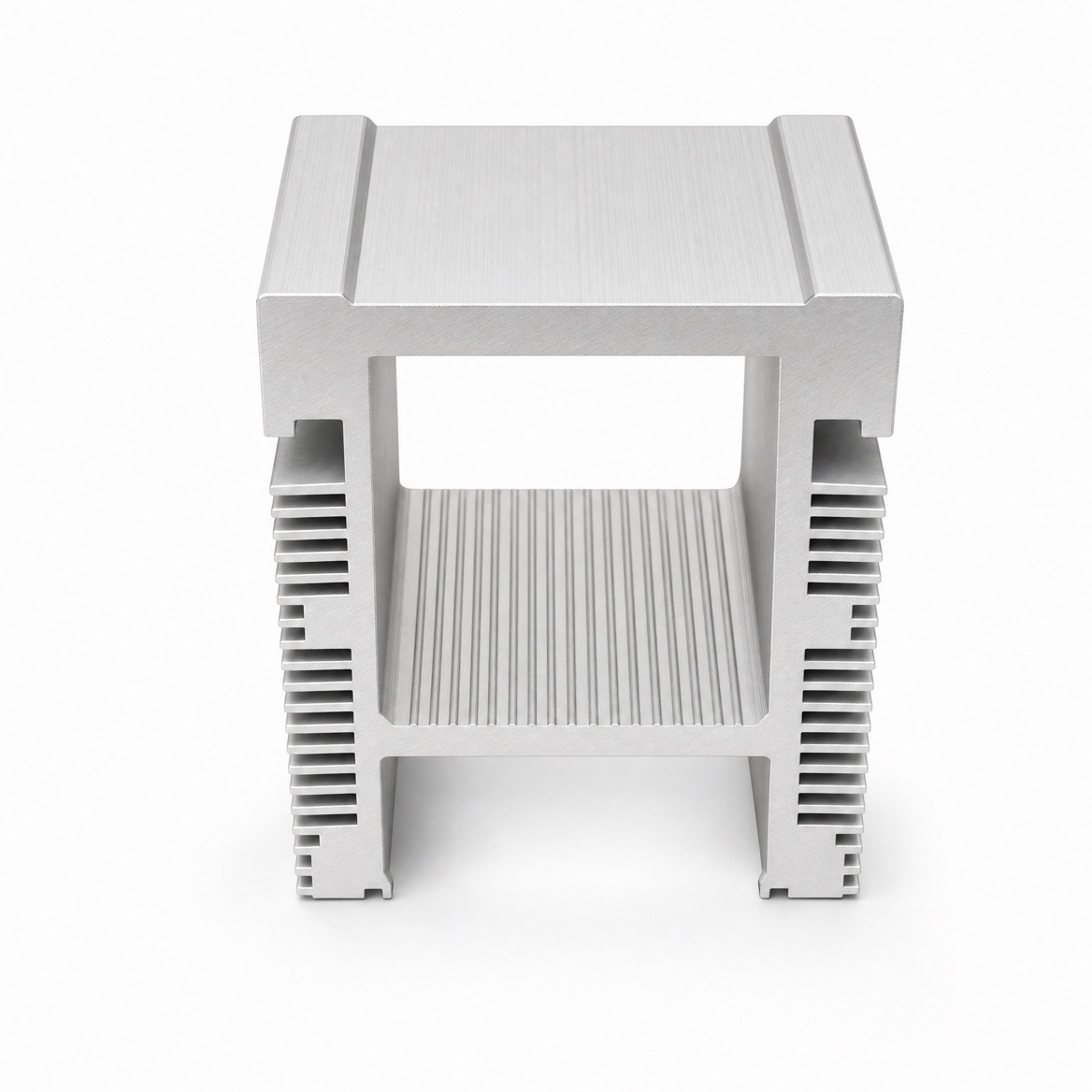
The 6000 series aluminum alloy family contains magnesium and silicon. It is among the most important material groups for aluminum extrusion manufacturers because it offers an effective balance of extrudability, strength, corrosion resistance, machinability, weldability, and surface-treatment performance.
In practical extrusion projects, 6061 and 6063 are two of the most frequently discussed grades.
6061 aluminum is widely used when strength is a key requirement. It is a practical choice for industrial frames, transportation components, machinery parts, brackets, platforms, rail systems, and structural assemblies.
Its advantages include:
- Good mechanical strength after heat treatment
- Good machinability
- Good corrosion resistance
- Good weldability with suitable procedures
- Suitability for industrial and structural components
6061 is often preferred where a profile will carry loads, support equipment, withstand vibration, or undergo further machining. However, highly complex thin-wall sections may require closer review because extrusion feasibility depends on the profile design, die structure, wall-thickness distribution, and dimensional tolerance.
6063 aluminum is especially popular for architectural aluminum extrusion profiles. It can be extruded into detailed shapes and is known for a smooth surface that responds well to anodizing, powder coating, electrophoretic coating, and other decorative finishes.
Typical 6063 applications include:
- Aluminum window and door profiles
- Curtain wall systems
- Decorative trims
- Handrails and railings
- Furniture profiles
- Display frames
- Sign frames
- Solar frame components
- General-purpose extrusion systems
Compared with 6061, 6063 generally prioritizes surface quality and extrusion versatility over maximum structural strength. This distinction matters for buyers: a profile that looks excellent after anodizing may not be the best choice for a heavily loaded machine base, while a high-strength structural alloy may require a different approach to visible surface requirements.
| Selection factor | 6061 aluminum | 6063 aluminum |
|---|---|---|
| Primary priority | Structural strength | Surface quality and extrusion complexity |
| Typical profile use | Machinery frames, brackets, transport structures | Windows, doors, trims, architectural systems |
| Machining | Generally good | Usually acceptable, but not the first choice for heavy machining |
| Surface appearance | Good with proper finishing | Excellent for anodized and decorative applications |
| Complex cross-sections | Possible, subject to design review | Highly suitable |
| Corrosion resistance | Good | Good |
| Common customer focus | Load capacity and durability | Appearance, precision, and profile detail |
The correct decision should come from your actual use case—not from a grade name alone. A professional aluminum profile supplier should review drawings, assembly method, loading, working environment, finish, annual volume, and export packaging requirements before confirming material.
The 7000 series aluminum alloys are primarily alloyed with zinc, often with additional magnesium and copper. These grades can provide very high strength and are used in aerospace, sporting equipment, defense applications, and specialized engineering products.
A well-known example is 7075 aluminum. It offers excellent strength but is not automatically the best option for every high-performance project. Factors such as corrosion exposure, welding requirements, profile complexity, cost, and supply availability must be evaluated.
Typical 7000 series applications include:
- Aerospace structures
- High-performance sporting goods
- Precision mechanical parts
- Defense equipment
- High-load fixtures
- Specialized transportation components
For many commercial extrusion applications, the added cost and manufacturing difficulty of 7000 series material may not create enough extra value. A properly designed 6061 or 6082 solution can often meet functional requirements more efficiently.
Selecting an aluminum alloy should be a structured engineering decision. Start with the end-use conditions, then work backward through the design and production process.
Ask whether the profile will support static loads, repeated movement, vibration, impact, or suspended equipment. A decorative trim profile and an industrial automation frame can look similar in a drawing but require very different mechanical performance.
Key questions include:
- What is the maximum load?
- Is the load continuous, temporary, or cyclic?
- Will the profile be drilled, tapped, welded, or machined?
- Does the design include long unsupported spans?
- Are there safety-critical requirements?
For industrial structures, 6061, 6082, or other suitable structural grades may be considered. For architectural or decorative profiles, 6063 is often a more efficient starting point.
Environmental exposure can be as important as strength. Outdoor buildings, coastal projects, chemical plants, transport equipment, and photovoltaic installations may face moisture, ultraviolet radiation, salt spray, pollutants, or temperature variation.
Specify the expected environment clearly:
- Indoor, dry, and temperature-controlled
- Outdoor urban environment
- Coastal or marine environment
- High-humidity industrial environment
- Chemical exposure
- High-temperature operating area
The profile design must also support drainage, ventilation, sealing, fastener compatibility, and coating coverage. Even an excellent alloy cannot compensate for a design that traps water or creates severe galvanic-corrosion risks.
A suitable aluminum alloy must work with the planned production process. This includes extrusion, cutting, CNC machining, drilling, punching, bending, welding, assembly, and surface treatment.
Before finalizing a custom aluminum profile, confirm:
- Minimum and maximum wall thickness
- Hollow or solid profile design
- Required dimensional tolerance
- Surface-class requirements
- Length and straightness requirements
- Fabrication operations
- Finish requirements
- Packaging and shipping conditions
Early communication between the buyer, designer, and extrusion manufacturer can prevent costly revisions after die development.
A material grade without a temper is incomplete. For example, 6063-T5 and 6063-T6 can have different mechanical properties because the material has received different thermal processing.
The temper influences:
- Tensile strength
- Yield strength
- Hardness
- Straightness
- Machining response
- Formability
- Final application performance
When requesting a quotation, include the full alloy-and-temper requirement wherever possible. If you are uncertain, provide the drawing and operating conditions so the supplier can recommend an appropriate option.
A well-designed aluminum profile should not only meet functional requirements; it should also be practical to extrude consistently. This is where manufacturing experience creates measurable value.
Large differences in wall thickness can increase extrusion difficulty and affect metal flow, cooling behavior, distortion risk, and dimensional consistency. Where design flexibility exists, aim for balanced wall sections rather than abrupt thick-to-thin transitions.
Sharp internal corners can complicate die design and concentrate stress. Adding reasonable radii can improve metal flow, reduce localized stress, and create a more durable finished profile.
A profile intended for clear anodizing or visible powder coating should be designed with surface appearance in mind. Decorative faces, exposed corners, weld zones, machining marks, and assembly interfaces should be considered before production begins.
A profile can be easy to extrude but difficult to install. Consider screw channels, fastener access, drainage paths, thermal breaks, gasket locations, anti-rotation features, and tolerance accumulation across the final assembly.
For example, an aluminum solar mounting profile should be evaluated not only for profile strength. It must also account for wind and snow loads, roof interface, rail spans, corrosion environment, installation speed, clamp compatibility, and long-term outdoor performance. Aluminum is increasingly relevant to lightweight vehicles and solar-energy equipment because these applications depend on materials that combine low weight with functional durability.
Custom aluminum extrusion is most effective when the material, profile geometry, fabrication plan, finish, and packaging are developed as one solution.
At Guangdong Dapeng Aluminum Industry Co., Ltd., a typical project can include:
1. Drawing and application review to clarify profile function, dimensions, tolerances, and assembly needs
2. Alloy and temper recommendation based on load, environment, fabrication, and finish requirements
3. Extrusion die development for solid, semi-hollow, or hollow aluminum profiles
4. Extrusion production with process control for dimensions, straightness, surface quality, and mechanical performance
5. Deep processing such as precision cutting, drilling, punching, tapping, CNC machining, bending, and assembly
6. Surface treatment including mill finish, anodizing, powder coating, electrophoretic coating, wood-grain finishing, or customized options
7. Quality inspection and export packaging tailored to protect profiles during international transport
This integrated approach helps buyers reduce coordination complexity and avoid gaps between raw material supply, extrusion, fabrication, finishing, and shipment.
The right aluminum alloy can improve product strength, appearance, manufacturability, and lifecycle value—but only when it is matched to the correct profile design and finishing process.
If you are sourcing industrial aluminum profiles, architectural aluminum extrusions, customized aluminum sections, or deep-processed aluminum components, Guangdong Dapeng Aluminum Industry Co., Ltd. can support your project from technical review through production and export delivery. Send us your drawing, application requirements, preferred finish, and estimated quantity to receive a practical material and manufacturing recommendation.
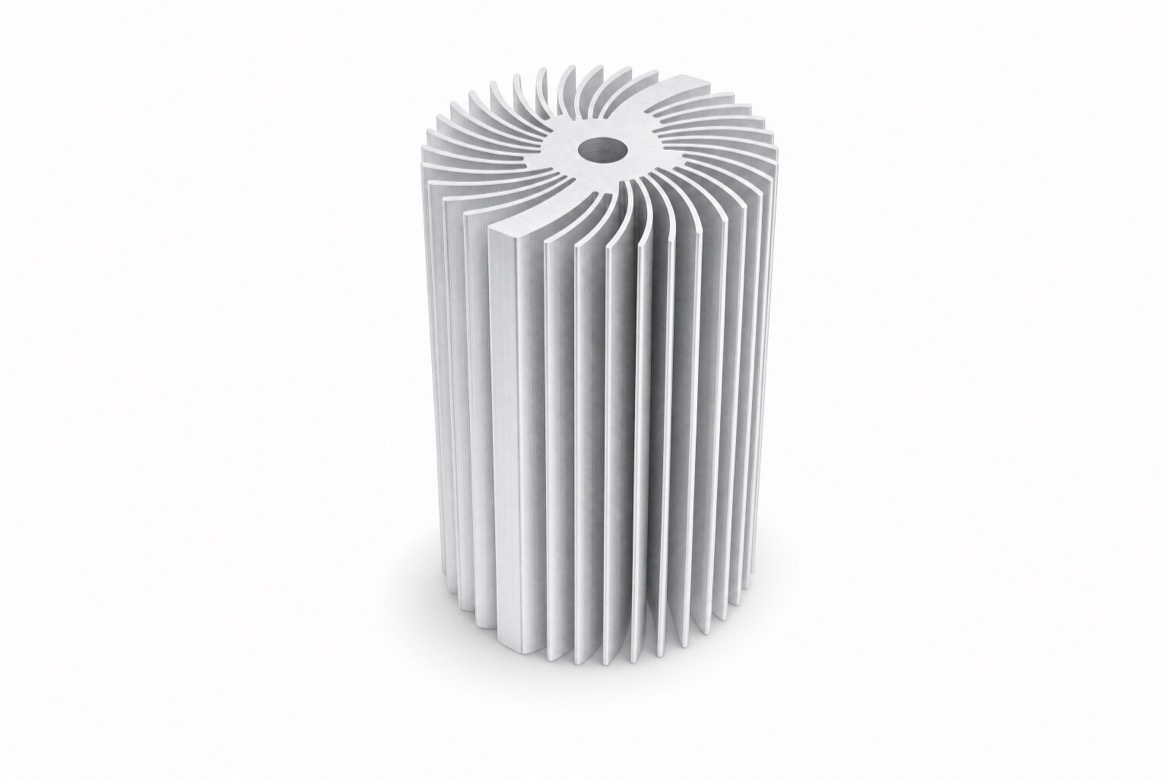
6063 aluminum is one of the most common alloys for architectural and decorative aluminum extrusion because it can form complex shapes and produce a smooth surface suitable for anodizing and other finishes. 6061 aluminum is also widely used when higher structural strength is required.
Pure aluminum, typically found in the 1000 series, offers high conductivity and excellent formability but relatively low mechanical strength. Aluminum alloys include elements such as magnesium, silicon, copper, manganese, or zinc to improve properties such as strength, corrosion resistance, wear resistance, or heat-treatment response.
For most aluminum windows, doors, curtain walls, and decorative architectural systems, 6063 is generally the more suitable option because of its extrusion performance and finish quality. 6061 may be used when the design requires more structural strength, but the final choice should be based on the system design and performance requirement.
Many 5000 series aluminum alloys, such as 5052, 5083, and 5086, are widely chosen for marine and high-humidity environments because of their corrosion resistance and weldability. The final decision should also consider profile design, coating, fasteners, and exposure conditions.
Yes. Custom aluminum extrusion profiles can be manufactured from customer drawings, samples, or functional requirements. Customization may include profile shape, alloy, temper, length, wall thickness, tolerance, machining, holes, slots, surface treatment, labeling, and export packaging.
Not always. Aluminum naturally forms an oxide layer, but anodizing or powder coating can improve appearance, increase surface durability, provide color options, and enhance performance in specific environments. The appropriate treatment depends on whether the profile is used indoors, outdoors, in coastal regions, or in industrial environments.
Provide a 2D or 3D drawing, alloy and temper if known, profile dimensions, wall thickness, required length, tolerance, surface finish, machining requirements, estimated order quantity, destination country, and application details. More complete information supports a faster and more accurate quotation.
- [Aluminum Association — Industry Standards and Alloy Designations]
- [ESAB — Understanding the Aluminum Alloy Designation System]
- [International Energy Agency — Aluminium]
- [Kloeckner Metals — Comparing 6061 vs. 6063 Aluminum]
- [Orange Aluminum — Aluminum 6061 vs. 6063: Understanding the Difference]


