


Views: 269 Author: Dapeng Aluminum Publish Time: 2026-09-11 Origin: Site


Content Menu
● Why Aluminum Alloy Selection Matters
● Understanding Aluminum Alloy Series
>> Common Aluminum Alloy Families
● Comparing 6063, 6061, 6005A, and 6082 Aluminum
>> 6063 Aluminum: The Architectural Extrusion Standard
>> 6061 Aluminum: A Versatile Choice for Industrial Structures
>> 6005A Aluminum: Efficient Strength for Structural Profiles
>> 6082 Aluminum: Higher Strength for Demanding Structures
● Choose an Alloy Based on Real Operating Conditions
>> 1. Define Structural Load Requirements
>> 2. Evaluate Corrosion Exposure
>> 3. Consider Surface Appearance and Finishing
>> 4. Review Fabrication and Assembly Requirements
● Practical Extrusion Design Rules That Reduce Cost
>> Maintain Balanced Wall Thickness
>> Add Function Into the Extrusion
>> Specify Tolerances Realistically
● Aluminum Profiles for New Energy Applications
>> Solar Mounting and Photovoltaic Structures
>> Battery and Energy Storage Equipment
● Sustainability and Material Circularity
● How We Support Custom Aluminum Profile Projects
● Start Your Aluminum Profile Project
● FAQ
>> 1. Which aluminum alloy is best for window and door profiles?
>> 2. What is the difference between 6061 and 6063 aluminum?
>> 3. Is 6082 aluminum suitable for custom extrusions?
>> 4. Which aluminum alloy is suitable for solar mounting systems?
>> 5. Can aluminum profiles be customized with machining and surface treatment?
>> 6. What information should I provide when requesting a quotation?
>> 7. Why are wall thickness and profile geometry important?
Selecting the right aluminum alloy is not simply a material-choice exercise. It affects structural performance, corrosion resistance, surface appearance, manufacturability, project cost, production speed, and long-term reliability. For aluminum profiles used in construction, machinery, transportation, and renewable-energy equipment, the most suitable alloy must be matched to the real operating environment—not chosen solely by strength or price.
At Guangdong Dapeng Aluminum Industry Co., Ltd., we develop, manufacture, process, and export aluminum alloy profiles for customers worldwide. From architectural window and door systems to industrial framing, transportation components, solar mounting structures, and customized deep-processing parts, our engineering team helps buyers select alloys and profile designs that support practical manufacturing goals.
This guide explains how to choose aluminum alloys for different industries, compares commonly specified extrusion alloys, and provides a structured process for turning application requirements into reliable aluminum profile specifications.
Aluminum is valued because it combines low density, corrosion resistance, thermal conductivity, recyclability, and design flexibility. However, "aluminum" is not one universal material. Different alloy series contain different alloying elements, heat-treatment conditions, and performance characteristics.
For example, a profile that performs well in a decorative curtain-wall system may not be the best option for a high-load machine frame. Likewise, a profile selected for a transport structure may require more strength and fatigue resistance than an indoor office partition.
A well-chosen aluminum alloy can help a project achieve the following goals:
- Improve load-bearing performance without adding unnecessary weight
- Increase corrosion resistance in outdoor, humid, coastal, or chemical-exposure environments
- Achieve better anodized or powder-coated surfaces for visible architectural products
- Reduce downstream machining and assembly work through optimized extrusion design
- Maintain stable dimensional tolerances during volume production
- Lower lifecycle cost by improving durability, maintenance performance, and material recovery
- Support export requirements with consistent composition, temper, documentation, and inspection controls
The best material choice is therefore a balance. Higher strength may be valuable, but it can also influence extrusion difficulty, surface appearance, production efficiency, machining behavior, and cost. An experienced aluminum profile supplier evaluates the complete requirement before recommending an alloy.
Wrought aluminum alloys are commonly identified through a four-digit designation system. The first digit generally indicates the main alloying element and provides an initial clue about the material's performance characteristics.
For extruded aluminum profiles, the 6xxx series is especially important. These aluminum-magnesium-silicon alloys offer an excellent balance of extrudability, mechanical strength, corrosion resistance, weldability, and finishing performance.
| Alloy Series | Primary Alloying Element | Typical Strength Level | Common Profile Applications |
|---|---|---|---|
| 1xxx | Aluminum with high purity | Low | Electrical conductors, chemical equipment, reflective products |
| 3xxx | Manganese | Low to medium | Roofing, cladding, heat-exchange components, general sheet products |
| 5xxx | Magnesium | Medium to high | Marine equipment, transport panels, tanks, corrosion-resistant structures |
| 6xxx | Magnesium and silicon | Medium to high | Extrusions, architectural systems, industrial frames, rail, solar, automotive parts |
| 7xxx | Zinc, often with magnesium | High to very high | Aerospace, high-performance structural components, specialized engineering parts |
For most aluminum extrusion projects, 6063, 6061, 6005A, and 6082 are among the most frequently considered materials. Each serves a different engineering and commercial purpose.
The following comparison provides a practical starting point for industrial buyers, project engineers, fabricators, and purchasing teams. Final specifications should always be confirmed according to drawing geometry, temper, applicable standards, finish requirements, and operating conditions.
| Alloy | Main Advantages | Typical Limitations | Recommended Applications |
|---|---|---|---|
| 6063 | Excellent extrudability, attractive surface quality, good corrosion resistance, suitable for anodizing | Lower structural strength than several other 6xxx alloys | Windows, doors, curtain walls, decorative trim, railings, furniture, lightweight frames |
| 6061 | Good strength, good corrosion resistance, good machinability, reliable weldability | More demanding to extrude than 6063; surface appearance may be less suitable for premium decorative finishes | Machinery structures, industrial equipment, transport components, marine fittings, fixtures |
| 6005A | Good balance of strength and extrudability, suitable for larger structural profiles | May require careful process control for complex thin-wall designs | Solar mounting systems, vehicle structures, industrial framing, ladders, platforms |
| 6082 | Higher strength, strong structural capability, good corrosion resistance | Lower extrudability and more demanding quench control than 6063 | Heavy-duty frames, transport structures, bridges, engineered load-bearing components |
6063 aluminum alloy is widely selected for architectural aluminum profiles because it offers smooth extrusion performance and high-quality finishing results. It is particularly suitable when appearance matters as much as functional performance.
Common 6063 aluminum profile applications include:
- Aluminum window and door frames
- Curtain wall mullions and transoms
- Interior partition systems
- Decorative trims and edge profiles
- Handrails and balustrades
- Furniture profiles
- Display systems and retail fixtures
- Light-duty industrial components
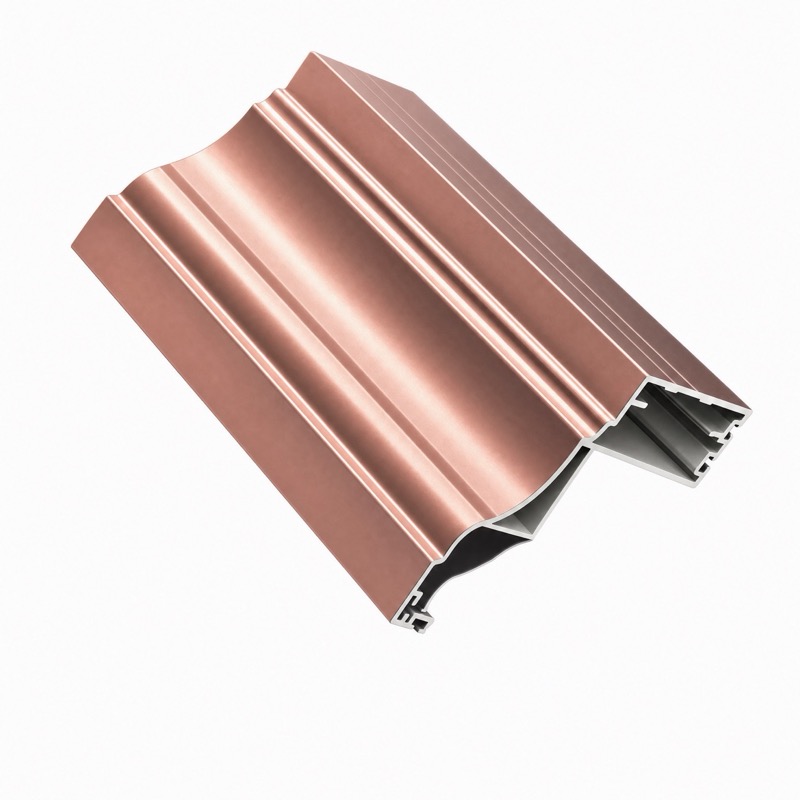
For visible products, surface quality is often a decisive factor. 6063 can be anodized, powder coated, electrophoretically coated, wood-grain finished, or mechanically polished depending on the project requirement.
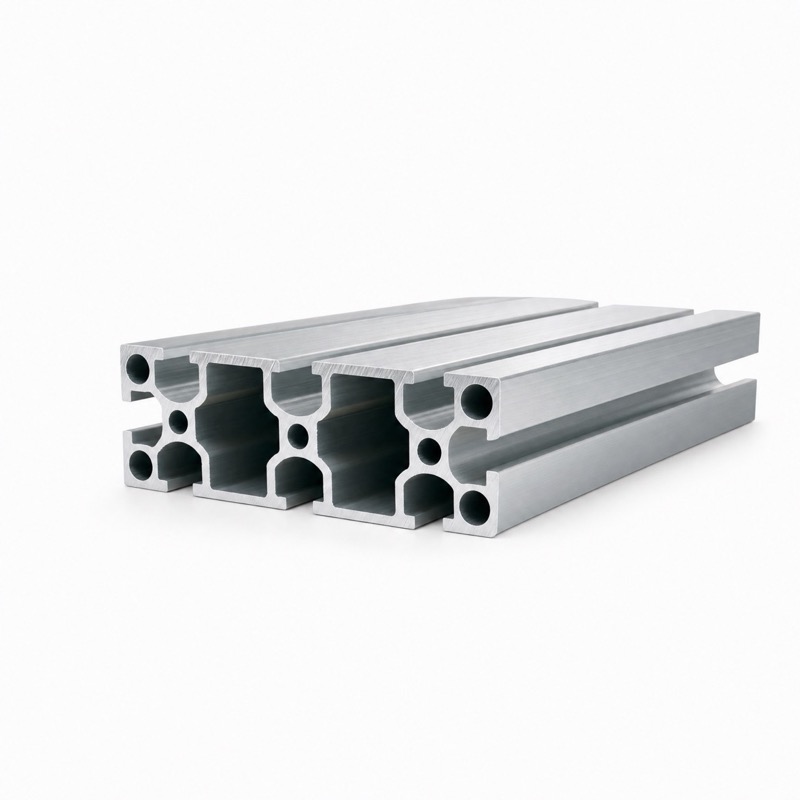
From a manufacturing perspective, 6063 is also highly suitable for profiles with complex cross-sections, cavities, channels, grooves, and decorative details. This helps designers integrate more functions into a single extrusion rather than relying on multiple assembled parts.
6061 aluminum is one of the most broadly used heat-treatable aluminum alloys. It offers a stronger mechanical profile than 6063 and is frequently chosen where the profile must carry load, resist deformation, or undergo machining after extrusion.
Typical 6061 aluminum extrusion applications include:
- Industrial machine frames
- Automation equipment structures
- Jigs, fixtures, and workstations
- Conveyor system parts
- Marine accessories and fittings
- Vehicle components
- Electronic equipment housings
- Structural brackets and mounting parts
For buyers, the important point is that 6061 is not automatically "better" than 6063. It is better when the design demands its additional structural capability. If a project is primarily decorative or relies on a premium anodized surface, 6063 may offer a more appropriate overall result.
6005A occupies an important position between highly decorative architectural alloys and heavy-duty structural materials. It can provide stronger performance than 6063 while retaining good suitability for many extrusion applications.
It is commonly used for:
- Solar photovoltaic mounting rails
- Battery-system housings
- Industrial safety barriers
- Ladder and scaffold components
- Railway and transport profiles
- Equipment frames
- Structural mounting systems
- Medium-load modular aluminum structures
For new energy and transport customers, 6005A can be a highly practical option because it supports lightweight design while offering useful structural strength. It is also suitable for profiles that must receive protective coatings or anodized finishes.
6082 aluminum alloy is often specified for engineered applications where structural strength is a central requirement. It is commonly used in transportation, heavy-duty industrial equipment, infrastructure-related components, and large load-bearing assemblies.
Typical 6082 applications include:
- Transportation frames
- Truck and trailer structures
- Railway components
- Heavy-duty platforms
- Industrial support systems
- Marine structures
- High-load brackets and frames
- Engineering components requiring machining
Because 6082 is more demanding during extrusion than 6063, the profile design, wall thickness, die design, press capability, quenching process, straightening method, and aging cycle require closer control. This is why material selection should be discussed together with profile geometry—not as a separate purchasing decision.
The fastest way to make an unsuitable choice is to select an alloy by looking only at tensile-strength data. Mechanical values matter, but they do not represent the whole application.
A reliable aluminum profile selection process begins with the operating environment.
Ask whether the profile will experience static load, repeated load, vibration, impact, bending, torsion, or thermal expansion. A machine frame that supports moving automation equipment has different requirements from a window profile or decorative trim.
For moderate structural needs, 6063 may be sufficient. For industrial framing and mechanical assemblies, 6061 or 6005A may provide a better balance. For higher-load engineering structures, 6082 may be considered.
The design team should evaluate:
- Maximum working load
- Safety factor
- Span length
- Connection design
- Deflection limits
- Fatigue exposure
- Installation orientation
- Risk of impact or vibration
Aluminum naturally develops an oxide layer that helps protect the surface. However, corrosion performance depends on alloy composition, surface treatment, surrounding materials, moisture, chemicals, salt exposure, and maintenance conditions.
For exterior and coastal applications, buyers should consider:
- Humidity and rainfall
- Salt spray and marine exposure
- Industrial pollution
- Cleaning chemicals
- Contact with steel, copper, or other dissimilar metals
- Drainage design
- Coating thickness and surface-preparation quality
Architectural profiles may use anodizing or powder coating to improve appearance and environmental protection. Industrial components may require coating systems selected for chemical resistance, abrasion resistance, UV durability, or electrical insulation.
If the aluminum profile will remain visible after installation, material and surface treatment must be considered together. A premium building façade, retail display system, or furniture profile may require more than basic corrosion resistance. It may need consistent gloss, uniform color, clean edges, and a defect-free visible surface.
Common aluminum profile finishing options include:
- Mill finish
- Clear anodizing
- Colored anodizing
- Powder coating
- PVDF coating
- Electrophoretic coating
- Wood-grain transfer finish
- Brushed or polished finish
- Customized color matching
6063 remains a preferred alloy for many visible architectural aluminum products because of its strong finishing potential and smooth extruded surface.
A profile that is easy to extrude may not necessarily be the easiest to machine, weld, bend, or assemble. Before confirming an alloy, consider the full downstream process.
Key questions include:
- Will the profile require CNC machining?
- Are holes, slots, threads, or cut-outs required?
- Will the product be welded?
- Does it need bending or forming after extrusion?
- Will it use mechanical fastening, adhesive bonding, or snap-fit assembly?
- Are tight assembly tolerances required?
- Does the part require heat dissipation or electrical conductivity?
At Guangdong Dapeng Aluminum Industry Co., Ltd., we support customers through both extrusion and deep processing. This integrated approach can reduce handling steps, improve consistency, and help ensure that the selected alloy supports the final product—not just the raw profile.
Alloy selection and profile design must work together. Even an excellent alloy cannot compensate for a profile geometry that is difficult to extrude, difficult to cool, or difficult to inspect.
Whenever possible, avoid extreme wall-thickness variation within one profile. Large differences can create uneven metal flow during extrusion and may increase the risk of distortion, surface defects, dimensional inconsistency, or slower production rates.
A more balanced wall design often improves:
- Profile straightness
- Dimensional stability
- Tool life
- Surface consistency
- Manufacturing efficiency
- Material utilization
One of the most valuable advantages of aluminum extrusion is the ability to create functional geometry directly in the profile.
Instead of machining or assembling multiple separate components, engineers can often integrate:
- Screw ports
- T-slots
- Cable channels
- Snap-fit features
- Drainage paths
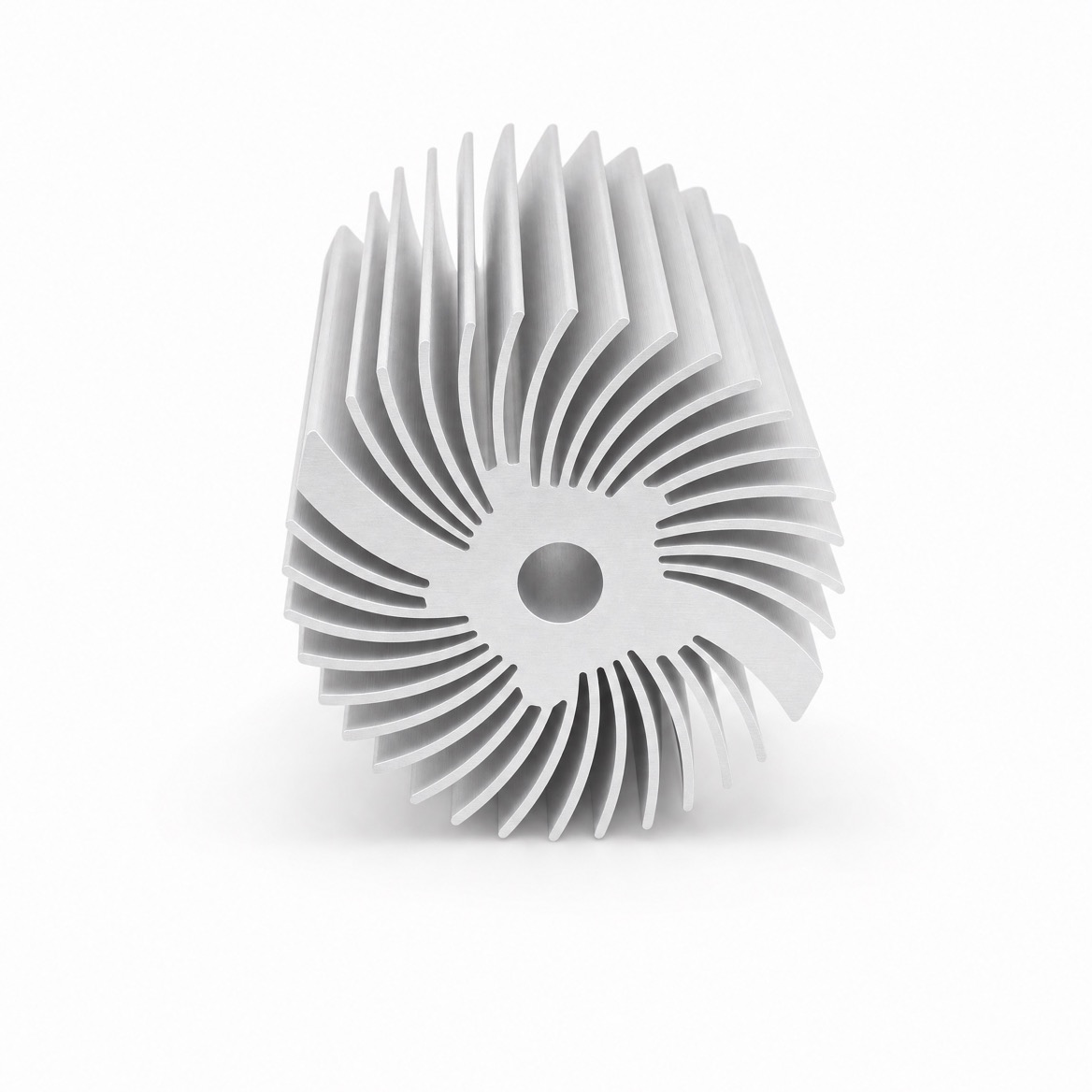
- Heat-dissipation fins
- Reinforcing ribs
- Sealing grooves
- Interlocking connections
This can reduce secondary operations, simplify assembly, and improve repeatability. For OEM and project-based buyers, a custom aluminum profile may provide greater overall value than a standard shape that requires extensive post-processing.
Very tight tolerances can increase tooling complexity, inspection requirements, production difficulty, and rejection risk. They should be applied only where assembly function truly requires them.
A good drawing distinguishes between:
- Critical functional dimensions
- Assembly-related dimensions
- Cosmetic surfaces
- Non-critical areas
- Flatness and straightness requirements
- Twist and angularity requirements
- Machined versus as-extruded dimensions
Extruded profile dimensions are commonly controlled according to recognized standards such as EN 755 and EN 12020, while final acceptance requirements should be agreed clearly between buyer and supplier before mass production.
New energy equipment requires lightweight, corrosion-resistant, durable, and scalable materials. Aluminum extrusion is increasingly used across solar, energy storage, charging infrastructure, and thermal-management systems because it allows complex structures to be produced efficiently.
Aluminum profiles are commonly used in solar mounting rails, roof clamps, ground-mount structures, component frames, and support brackets. These systems may remain outdoors for years, making corrosion resistance, coating performance, connection design, and dimensional consistency essential.
For solar structures, buyers should evaluate:
- Wind and snow loads
- Site climate and salt exposure
- Roof type or ground condition
- Module compatibility
- Fastener material compatibility
- Drainage and water-trapping risk
- Anodizing or protective coating requirements
6005A and 6063 are frequently considered for solar-related profiles, while higher-load requirements may require alternative structural solutions based on engineering calculations.
Battery enclosures and energy-storage systems often require aluminum components for housings, frames, heat-management structures, cable-routing parts, and protective assemblies.
Aluminum can help engineers balance several needs at once:
- Lightweight construction
- Heat dissipation
- Corrosion protection
- Precision machining
- Modular assembly
- Recyclability
For these applications, profile design should consider electrical isolation, sealing interfaces, thermal expansion, fire-safety system integration, and transport-related vibration.
Aluminum supports long-term circular manufacturing because it can be recycled repeatedly. Recycled aluminum requires substantially less energy than primary aluminum production, which makes scrap recovery, material segregation, and efficient processing meaningful considerations for responsible supply chains.
However, sustainability is not achieved by material selection alone. It also depends on the way the product is designed and manufactured. A more sustainable aluminum profile program should focus on:
- Reducing unnecessary profile weight
- Designing durable products with long service life
- Minimizing machining scrap
- Reusing process scrap where practical
- Selecting finishes appropriate for product lifespan
- Improving packaging efficiency for export
- Designing components for disassembly and recycling
For global buyers, these considerations can also support internal procurement targets, product declarations, supplier-assessment programs, and lifecycle planning.
Guangdong Dapeng Aluminum Industry Co., Ltd. is a modern aluminum profile manufacturer focused on research, production, deep processing, and export. We provide aluminum alloy solutions for global customers in construction, industrial manufacturing, transportation, and new energy markets.
Our capabilities include:
- Industrial aluminum profiles
- Architectural aluminum profiles
- Customized extruded aluminum sections
- Aluminum profile deep processing
- Cutting, drilling, punching, CNC machining, and assembly support
- Surface-treatment coordination
- Export packaging and international order support
- Technical communication for drawings, samples, and production specifications
We understand that B2B aluminum sourcing is not only about receiving a quotation. Buyers need stable alloy quality, reliable dimensions, responsive technical communication, consistent production control, and a supplier that understands export requirements.
Our production system is supported by complete manufacturing equipment and strict quality management processes. By working closely with customers from drawing review through sample confirmation and batch production, we help reduce preventable problems before the profile enters mass manufacturing.
The right aluminum alloy can improve product performance, simplify production, and protect long-term project value. Whether you need architectural 6063 aluminum profiles, industrial 6061 extrusions, structural 6005A components, or customized 6082 profiles, the best result begins with a clear discussion of function, environment, finish, tolerances, and fabrication needs.
Send Guangdong Dapeng Aluminum Industry Co., Ltd. your drawing, alloy requirement, surface-finish preference, target quantity, and application details. Our technical team can help assess profile feasibility and recommend a practical aluminum alloy solution for your project.
6063 is commonly used for aluminum windows, doors, curtain walls, railings, and decorative architectural profiles. It offers excellent extrudability, good corrosion resistance, and strong anodizing or powder-coating performance.
6061 generally provides higher strength and is often selected for industrial frames, machinery, transport parts, and machined components. 6063 is usually preferred for architectural and appearance-focused profiles because it extrudes smoothly and produces a high-quality finished surface.
Yes. 6082 can be used for custom aluminum extrusions requiring higher structural strength. Because it is more demanding to extrude than 6063, the profile geometry, wall thickness, production method, and tolerance requirements should be reviewed carefully before tooling is finalized.
6063 and 6005A are commonly considered for solar mounting rails, brackets, clamps, and structural components. The appropriate selection depends on profile design, load requirements, local weather conditions, coating specification, and installation environment.
Yes. Custom aluminum profiles can be cut, drilled, punched, milled, threaded, bent, assembled, anodized, powder coated, and finished according to project requirements. Integrating extrusion and deep processing can improve production efficiency and part consistency.
Provide a technical drawing or sample, alloy and temper preference, surface-treatment requirement, profile length, quantity, application environment, tolerance requirements, machining needs, packaging specifications, and destination country. More complete information allows for a more accurate quotation and feasibility review.
Wall thickness and geometry affect metal flow during extrusion, profile straightness, surface quality, tooling complexity, production speed, and cost. Balanced wall thickness and functional profile design can improve consistency and reduce unnecessary secondary processing.
1. [The Aluminum Association — Aluminum Recycling and Energy Savings]
3. [European Aluminium — Extruded Products and Aluminum Extrusion Information]
4. [The Aluminum Association — International Alloy Designations and Chemical Composition Limits]
5. [ESAB — Understanding the Aluminum Alloy Designation System]


