


Views: 210 Author: Dapeng Aluminum Publish Time: 2026-10-06 Origin: Site


Content Menu
● 7075-T6 vs 6061-T6: Quick Comparison
● Understanding Alloy Chemistry and the T6 Temper
>> 6061-T6: Magnesium-Silicon Alloying for Versatility
>> 7075-T6: Zinc-Based Alloying for Higher Strength
● Strength, Stiffness, and Weight: Three Different Questions
>> How Much Stronger Is 7075-T6?
● Corrosion Resistance and Outdoor Performance
>> Why 6061-T6 Is Usually the More Forgiving Choice
>> When 7075-T73 Deserves Consideration
● Welding, Machining, and Forming
>> 6061-T6 Welding: Account for the Heat-Affected Zone
>> Why Conventional Welding Is a Poor Default for 7075-T6
>> Machining and Forming Considerations
● 6061-T6 vs 7075-T6 Aluminum Extrusion
>> Match the Alloy to the Profile Geometry
>> Specify the Full Temper and Product Standard
● Thermal Performance and Surface Finishing
>> Which Alloy Is Better for Heat Dissipation?
>> Can Both Alloys Be Anodized?
● Expert Decision Framework: Three Practical Scenarios
>> Scenario 1: A Welded Automation Frame
>> Scenario 2: A Compact, Highly Loaded Bracket
>> Scenario 3: A Thermal Management Housing
● Procurement Checklist: Compare Finished-Part Value
● Discuss Your Aluminum Profile Requirements with Dapeng
>> Is 7075-T6 Always Better Than 6061-T6?
>> Can I Replace 6061-T6 with 7075-T6 Without Redesigning?
>> Which Alloy Is Better for CNC-Machined Parts?
>> Which Alloy Is Better for Outdoor Applications?
>> Does Anodizing Make 7075-T6 Corrosion-Proof?
>> Should Buyers Specify T6 or T6511 for Extruded Profiles?
Choosing between 7075-T6 vs 6061-T6 aluminum is not simply a question of which alloy is stronger. It is a decision about how a component will perform, how it will be manufactured, and what it will cost throughout its service life. For most general-purpose profiles and welded structures, 6061-T6 offers the more balanced solution. For highly loaded, mechanically assembled components, 7075-T6 can justify its higher material and processing costs.
At Guangdong Dapeng Aluminum Industry Co., Ltd., our focus on aluminum profile development, manufacturing, export, and custom processing shapes the way we approach material selection. Our recommendation is to start with the application—not the highest number on a strength chart.
This guide compares both alloys and explains the practical details that buyers, designers, and manufacturers should evaluate before ordering.
The central distinction is strength: 7075-T6 resists permanent deformation at substantially higher stress, while 6061-T6 provides a more versatile combination of corrosion resistance, weldability, and manufacturing flexibility.
| Selection factor | 6061-T6 aluminum | 7075-T6 aluminum |
|---|---|---|
| Main alloying elements | Magnesium and silicon | Zinc, magnesium, and copper |
| Typical tensile strength | 310 MPa | 572 MPa |
| Typical yield strength | 276 MPa | 503 MPa |
| Typical elastic modulus | 68.3 GPa | 71.0 GPa |
| Nominal density | 2.70 g/cm³ | 2.80 g/cm³ |
| Typical Brinell hardness | 95 HB | 150 HB |
| General corrosion resistance | Better | More protection-dependent |
| Conventional fusion welding | Generally suitable with qualified procedures | Generally not recommended |
| Typical purchasing priority | Balanced performance and fabrication | High strength in constrained dimensions |
These are representative published values, not guaranteed acceptance limits. Product form, thickness, orientation, and specification affect the properties available in an actual order. The mechanical figures above reflect published rod-and-bar data; they should not automatically become design allowables for every custom extrusion.
6061 belongs to the 6000-series aluminum family. Its principal alloying elements are magnesium and silicon, which enable precipitation hardening.
Published composition limits include approximately 0.8–1.2% magnesium and 0.4–0.8% silicon. Smaller additions, including copper and chromium, also contribute to its properties.
This chemistry supports a useful combination of moderate-to-high strength, corrosion resistance, and weldability. It makes 6061 a practical starting point for industrial frames, structural profiles, transport components, and machined assemblies.
7075 belongs to the 7000-series family. Its composition includes approximately 5.1–6.1% zinc, 2.1–2.9% magnesium, and 1.2–2.0% copper.
These additions support much higher strength after appropriate heat treatment. However, the alloy requires more careful consideration of corrosion, joining, and production conditions.
7075 is therefore attractive when a component must carry substantial loads within a restricted space—not simply whenever aluminum is required.
T6 indicates solution heat treatment followed by artificial aging.
Solution treatment and quenching establish the conditions needed for subsequent strengthening. Artificial aging then develops strengthening precipitates within the material.
T6 is a processing designation, not a universal strength rating. A 6061-T6 profile and a 7075-T6 bar share a temper description but have very different mechanical properties.
Using the representative values above, 7075-T6 has approximately 82% higher yield strength than 6061-T6.
Yield strength identifies the stress associated with the onset of specified permanent deformation. Tensile strength describes the maximum engineering stress reached during a tensile test.
The higher yield strength of 7075-T6 can benefit compact brackets, highly loaded fixtures, and mechanically fastened structural components. Nevertheless, the finished part must also satisfy fatigue, buckling, connection, and environmental requirements.
Not dramatically when both parts have identical geometry.
Their elastic moduli are close: approximately 68.3 GPa for 6061-T6 and 71.0 GPa for 7075-T6. Under an equivalent elastic bending load, the difference in deflection is therefore much smaller than the difference in yield strength.
This distinction matters for machine frames and long profiles. If excessive deflection is the problem, increasing section depth or improving the profile geometry may be more effective than changing alloys.
No—not at equal volume.
7075 is approximately 4% denser than 6061. Its weight-saving potential comes from reducing material where higher strength permits a smaller cross-section.
That reduction is not always possible. Minimum wall thickness, stiffness, buckling resistance, fastener spacing, and manufacturing constraints can limit how much material a designer removes.
6061 generally provides better corrosion resistance than 7075. It is often the more straightforward option for exposed industrial equipment and outdoor assemblies.
However, no aluminum alloy is immune to environmental damage. Chloride exposure, trapped moisture, aggressive cleaning chemicals, and contact with dissimilar metals still require attention.
Practical protective measures include:
- Selecting an appropriate anodized or coated finish.
- Preventing water accumulation inside profiles.
- Electrically isolating dissimilar metals where necessary.
- Protecting exposed edges and damaged coating areas.
- Establishing inspection requirements for demanding environments.
7075-T6 requires particular care where sustained tensile stress and corrosive exposure occur together.
An alternative is 7075-T73, an overaged temper that improves stress-corrosion resistance while sacrificing some strength. Published rod-and-bar data illustrate this trade-off: typical yield strength decreases from approximately 503 MPa in T6 to 434 MPa in T73.
The decision should therefore consider alloy and temper together. A protected, corrosion-conscious design can be more valuable than selecting the highest available strength.
6061 is generally suitable for conventional aluminum welding. However, welding heat changes the strengthened condition near the joint.
This heat-affected zone can be substantially weaker than the original T6 base material. Consequently, a welded structure cannot be designed by applying unwelded strength values throughout the assembly.
Buyers and engineers should specify qualified welding procedures, suitable filler selection, and applicable welded-design requirements. Natural aging after welding should not be assumed to restore the original T6 properties.
Conventional fusion welding is generally not recommended for 7075 because of cracking risks and unfavorable joint properties.
For many components, mechanical fastening or a monolithic machined design is more appropriate. Specialized joining methods exist, but they require process-specific qualification.
Changing a welded 6061 assembly to 7075 is therefore not a simple material substitution. It can require redesigning the entire connection strategy.
Both alloys can be machined, but dimensional stability depends on more than machinability.
Heavy or uneven material removal can release residual stresses and distort a finished part. Stress-relieved stock, balanced machining sequences, and appropriate fixturing help manage this risk.
Neither alloy should be treated as highly formable in its T6 condition. For substantial bending or shaping, a softer temper and a planned heat-treatment route may be necessary.
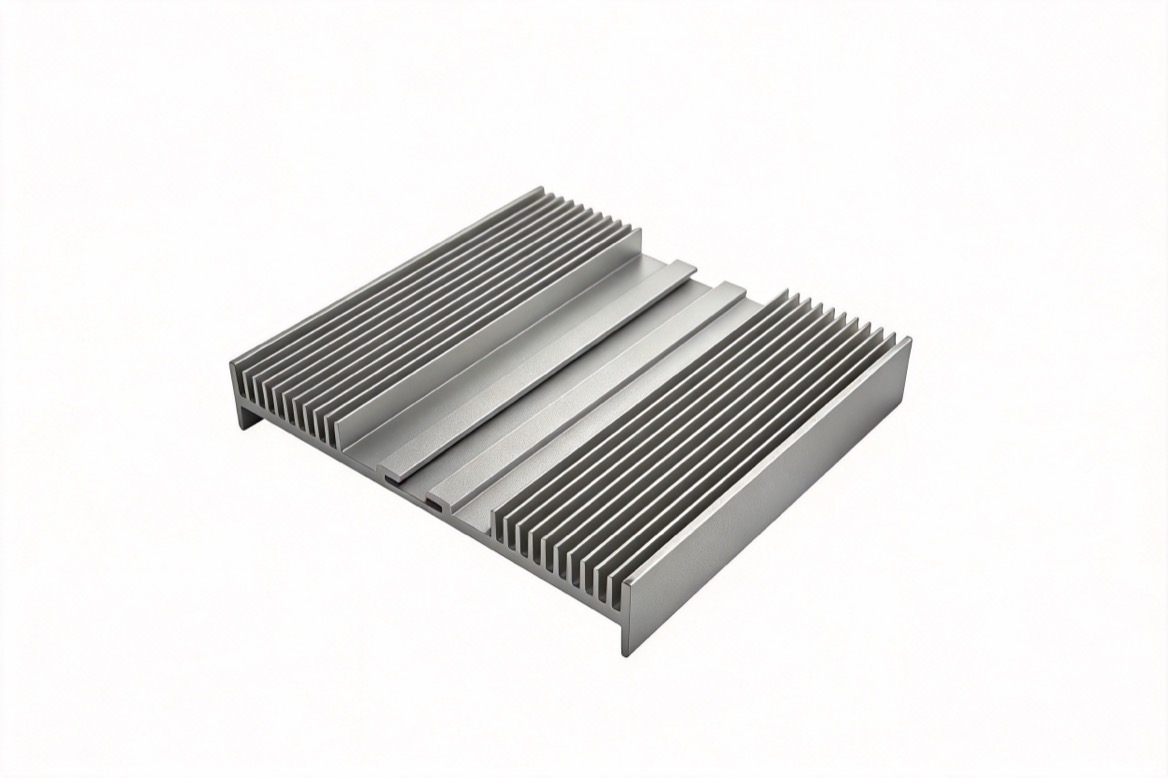
For custom aluminum profiles, alloy selection and cross-section design should happen together.
Both 6061 and 7075 can be extruded. However, choosing 7075 requires a specific review of profile feasibility, available manufacturing capability, and achievable properties.
Ask the manufacturer to assess:
- Thin walls and abrupt thickness changes.
- Hollow sections and internal features.
- Unsupported fins and deep channels.
- Straightness and twist requirements.
- Quenching and aging requirements.
- Secondary machining and finishing operations.
A drawing that works well in one alloy is not automatically transferable to the other without changes.
T6, T651, and T6511 are not interchangeable purchasing descriptions.
Stress-relief designations matter when dimensional stability and subsequent machining are important. The appropriate designation depends on product form and processing route.
For extrusion procurement, identify the applicable standard, such as ASTM B221 or the relevant EN 755 requirements, together with the exact alloy, temper, dimensions, and acceptance criteria.
Avoid purchase orders that specify only "high-strength aluminum."
Published sheet-and-plate data give typical thermal conductivity values of approximately 167 W/m·K for 6061-T6 and 130 W/m·K for 7075-T6.
This makes 6061 the stronger starting candidate when thermal conductivity is a major selection criterion.
However, heat-sink performance also depends on fin geometry, airflow, surface area, interface resistance, and the surrounding assembly. Alloy conductivity alone does not determine operating temperature.
For elevated-temperature structural service, request relevant property data rather than relying on room-temperature strength values.
Yes, but equivalent processing does not guarantee identical appearance or performance.
Alloy chemistry and surface condition influence anodizing results. Where color consistency, cosmetic quality, or coating thickness matters, approve representative samples before production.
For dimensionally critical parts, also identify whether coating growth affects fits, threads, or mating surfaces.
The following scenarios illustrate selection logic. They are not claims about completed customer projects.
A machine builder needs long profiles, welded joints, and reliable outdoor performance.
6061-T6 is the more practical starting point. The engineering review should prioritize welded-zone strength, joint geometry, and frame deflection.
Selecting 7075 solely for higher base-metal strength would overlook its joining limitations and similar elastic modulus.
A designer needs a small bracket with bolted connections and limited installation space.
7075-T6 may justify its premium because higher yield strength can support greater loads within a constrained envelope.
The review should still include fastener-bearing stresses, fatigue loading, corrosion protection, and material certification.
A manufacturer needs an extruded housing with cooling features and subsequent machining.
6061-T6 is a sensible candidate because it combines useful conductivity with structural capability.
The next step is to evaluate thermal performance, extrusion feasibility, and finishing requirements together—not to select material from strength values alone.
The cheaper alloy per kilogram does not necessarily produce the cheaper finished component.
Compare quotations using the same drawing, specification, quantity, finish, and inspection requirements. Include:
1. Material and billet availability.
2. Tooling and manufacturing feasibility.
3. Heat treatment and stress relief.
4. Machining time and material removal.
5. Joining and assembly costs.
6. Finishing and corrosion protection.
7. Testing, certification, packaging, and delivery.
Do not rely on a fixed price premium between 7075-T6 and 6061-T6. Actual differences depend on product form, order size, supply conditions, and processing scope.
For export orders, request traceable inspection documentation and agree on sampling, packaging protection, and acceptance requirements before production.
Guangdong Dapeng Aluminum Industry Co., Ltd. develops, manufactures, and exports industrial and architectural aluminum profiles, with customized deep-processing services.
Send our team your drawing, application, target alloy and temper, annual quantity, finishing requirements, and inspection criteria. Request a manufacturability review and a quotation based on the complete component specification.
For projects considering 7075, confirm the proposed profile, production route, and documentation requirements before finalizing the order.
No. It provides higher strength, but 6061-T6 usually offers a more balanced solution for welded structures, corrosion-conscious applications, and general-purpose profiles.
Not safely as a blanket rule. Review joining methods, corrosion exposure, stiffness, fatigue, dimensional requirements, and manufacturing feasibility before substitution.
Both can be suitable. Choose 7075 when high strength is essential and 6061 when balanced performance is sufficient. For tight tolerances, evaluate residual stress and stock condition.
6061 is generally the more forgiving starting choice. Actual suitability still depends on exposure, loading, finish, drainage, and contact with other metals.
No. Anodizing can improve protection, but it does not eliminate coating damage, galvanic corrosion, or stress-corrosion concerns.
Specify the temper required by the drawing and applicable product standard. Where stress relief and machining stability matter, discuss the appropriate extrusion temper with the supplier.
- [Kaiser Aluminum — Rod & Bar Alloy 6061: Technical Data]. Basis for representative mechanical properties, density, chemistry, forming, and corrosion characteristics. [online.kaiseraluminum]
- [Kaiser Aluminum — Rod & Bar Alloy 7075: Technical Data]. Basis for representative T6 and T73 properties, composition, density, and temper trade-offs. [online.kaiseraluminum]
- [Kaiser Aluminum — Sheet, Coil & Plate Alloy 6061]. Source for typical 6061-T6 thermal conductivity. [online.kaiseraluminum]
- [Kaiser Aluminum — Sheet, Coil & Plate Alloy 7075]. Source for typical 7075 thermal-property information. [online.kaiseraluminum]
- [ESAB — Tensile Strength Too Low in Procedure Test for 6061-T6]. Basis for the explanation of welding-related strength loss and heat-affected-zone behavior. [esab]
- [Hydro — 7075 Aluminum]. Background on extruded 7075, joining limitations, and available temper families. [hydro]
- [FONNOV Aluminium — 7075 vs 6061 for Extruded Aluminum Profiles]. Supplied comparison-page reference for topic scope and extrusion-related purchasing considerations; numerical comparisons above prioritize Kaiser technical data. [fonnovaluminium]


