
English


Views: 220 Author: Dapeng Aluminum Publish Time: 2026-09-15 Origin: Site


Content Menu
● 6061 vs 6082 Aluminum: Quick Comparison
● Chemical Composition: Why 6061 and 6082 Behave Differently
>> What manganese changes in 6082
● 6061 vs 6082 Mechanical Properties
>> Strength versus stiffness: a common design mistake
● 6061 Aluminum: Main Advantages and Best Uses
>> Why manufacturers choose 6061
>> Common 6061 aluminum applications
● 6082 Aluminum: Main Advantages and Best Uses
>> Common 6082 aluminum applications
● 6061 vs 6082 for Aluminum Extrusion
>> When 6061 is a better extrusion choice
>> When 6082 is a better extrusion choice
● Machinability: Is 6061 Easier to Machine Than 6082?
>> Machining selection checklist
● Welding: What Happens After 6061 or 6082 Is Welded?
>> Welding guidance for practical projects
● Corrosion Resistance and Surface Treatment
>> Surface options for 6061 and 6082
● A Practical Selection Process for Buyers
>> Step 1: Define the functional load
>> Step 2: Define the manufacturing route
>> Step 3: Define the service environment
>> Step 4: Specify the acceptance criteria
>> Step 5: Request test documentation
● Real-World Selection Examples
>> Example 1: Automated equipment frame
>> Example 2: Heavy-duty transport platform
>> Example 3: New-energy equipment housing
● 6061 vs 6082: Which Alloy Is Better?
● Request a Custom 6061 or 6082 Aluminum Solution
● FAQ
>> Is 6082 aluminum stronger than 6061 aluminum?
>> Is 6061 or 6082 better for CNC machining?
>> Can 6061 and 6082 aluminum be welded?
>> Which alloy is better for aluminum extrusion?
>> Is 6082 more corrosion-resistant than 6061?
>> Is 6061 aluminum cheaper than 6082 aluminum?
>> Can 6082 replace 6061 in every application?
>> What information should I provide for a 6061 or 6082 quotation?
When customers ask us to compare 6061 vs 6082 aluminum, the most useful answer is not simply "6082 is stronger" or "6061 is easier to machine." The right choice depends on the full engineering picture: loading conditions, profile geometry, machining volume, welding plan, corrosion exposure, regional material availability, certification needs, and the final cost of the completed part.
Both alloys belong to the heat-treatable 6xxx aluminum series and are widely used for structural aluminum extrusions, machined components, transport equipment, frames, platforms, energy systems, and customized industrial assemblies. However, their alloy chemistry and typical performance characteristics lead them toward different strengths.
At Guangdong Dapeng Aluminum Industry Co., Ltd., we work with customers who need aluminum profiles and fabricated components for industrial, architectural, transportation, and new-energy applications. From a manufacturing perspective, alloy selection should begin with the actual operating conditions of the finished product—not with a material name alone.
This guide provides a detailed 6061 aluminum vs 6082 aluminum comparison to help engineers, procurement teams, project managers, and product designers make a more confident decision.
Both 6061 and 6082 are aluminum-magnesium-silicon alloys. They can be strengthened through solution heat treatment and artificial aging, which is why tempers such as T4, T5, and T6 are commonly specified.
In broad terms:
- 6061 aluminum is highly versatile, widely recognized, and often preferred for CNC-machined parts, general structural components, and applications requiring balanced performance.
- 6082 aluminum generally offers higher strength in common structural tempers and is frequently selected for heavily loaded sections, transport structures, platforms, trusses, and large fabricated components.
- Temper matters as much as alloy grade. Comparing 6061-T6 with 6082-T6 is more meaningful than comparing "6061" and "6082" without a temper.
- Profile design matters. A well-designed 6061 extrusion may outperform a poorly designed 6082 extrusion in real service.
- Welded structures require separate evaluation. Heat from welding can reduce strength in the heat-affected zone for both alloys.
| Property | 6061 Aluminum | 6082 Aluminum |
|---|---|---|
| Alloy family | Al-Mg-Si | Al-Mg-Si-Mn |
| Typical structural strength | Medium to high | High |
| Common temper | T4, T5, T6 | T4, T5, T6 |
| Machinability | Very good | Good |
| Formability in annealed condition | Good | Good |
| Weldability | Good | Good |
| Corrosion resistance | Good | Good to very good |
| Typical extrusion use | Frames, machined parts, general structures | High-load structures, transport, larger sections |
| Common market recognition | Particularly common in North America | Particularly common in Europe and structural applications |
Key takeaway: Choose 6061 when balanced versatility and machining efficiency are priorities. Choose 6082 when the design needs a higher-strength structural alloy and the profile, fabrication method, and supply specification support it.
The difference between 6061 vs 6082 aluminum alloy begins with composition. Both use magnesium and silicon as primary alloying elements, which form magnesium silicide during heat treatment and contribute to strength.
6082 also contains a more significant manganese addition than 6061. Manganese can contribute to strength and influence the alloy's response in structural applications.
| Element | 6061 Typical Range, % | 6082 Typical Range, % |
|---|---|---|
| Silicon, Si | 0.40–0.80 | 0.70–1.30 |
| Iron, Fe | Up to 0.70 | Up to 0.50 |
| Copper, Cu | 0.15–0.40 | Up to 0.10 |
| Manganese, Mn | Up to 0.15 | 0.40–1.00 |
| Magnesium, Mg | 0.80–1.20 | 0.60–1.20 |
| Chromium, Cr | 0.04–0.35 | Up to 0.25 |
| Zinc, Zn | Up to 0.25 | Up to 0.20 |
| Titanium, Ti | Up to 0.15 | Up to 0.10 |
| Aluminum | Balance | Balance |
These limits vary depending on the governing material standard and product form. Buyers should always identify the required standard in their purchase specification, such as ASTM, EN, GB/T, or a project-specific material requirement.
The higher manganese content is one reason 6082 is often treated as a stronger structural alternative within the 6xxx family. In practical terms, it can make 6082 a suitable candidate for:
- Heavy-duty frames and bases.
- Transport chassis components.
- Access platforms and work structures.
- Bridge-related components.
- Crane and lifting-support structures.
- Large equipment housings.
- High-load aluminum profiles.
However, higher strength does not automatically make 6082 the best material for every project. If a component requires extensive drilling, precision CNC machining, complex secondary finishing, or frequent design changes, 6061 may deliver better total manufacturing value.
Mechanical properties vary by product type, thickness, extrusion geometry, temper, test direction, and manufacturing standard. The values below should therefore be used as a selection guide rather than a substitute for a project-specific mill test certificate.
For many extruded or fabricated structural applications, the most frequently compared tempers are 6061-T6 and 6082-T6.
| Property | 6061-T6 Typical Performance | 6082-T6 Typical Performance |
|---|---|---|
| Tensile strength | Approx. 260–310 MPa | Approx. 290–340 MPa |
| Yield strength | Approx. 240–280 MPa | Approx. 250–310 MPa |
| Elastic modulus | Approx. 69 GPa | Approx. 69 GPa |
| Density | Approx. 2.70 g/cm³ | Approx. 2.70 g/cm³ |
| Elongation | Often higher, depending on form | Often slightly lower, depending on form |
| Hardness | Moderate to high | Moderate to high |
| Structural strength potential | Strong | Generally stronger |
Because both alloys have a similar elastic modulus, 6082 is not dramatically stiffer in the engineering sense. Its advantage is primarily higher yield and tensile strength in many comparable tempers.
This distinction is important. If a beam or profile is deflecting too much, simply changing from 6061 to 6082 may not fully solve the problem. Engineers may need to increase section depth, wall thickness, moment of inertia, support points, or cross-sectional efficiency.
A frequent procurement mistake is to use the word "stronger" when the actual problem is deflection.
For example:
- A machine frame may not fail under load.
- But it may bend enough to affect alignment.
- Changing from 6061-T6 to 6082-T6 increases yield strength.
- Yet the elastic modulus remains broadly similar.
- A redesigned extrusion section may provide a much greater improvement in rigidity.
Practical lesson: If the concern is permanent deformation, consider higher yield strength. If the concern is unwanted flexing, optimize profile geometry first.
6061 is one of the most widely specified aluminum alloys in the world. It is valued because it offers a strong overall balance of mechanical performance, corrosion resistance, weldability, workability, and machinability.
6061 is a practical choice when a project requires several fabrication processes in one supply chain. A component may need to be extruded, cut, drilled, milled, tapped, welded, anodized, and assembled. In many cases, 6061 handles this combination efficiently.
Its main benefits include:
- Good machinability for drilling, milling, turning, tapping, and CNC finishing.
- Good weldability when correct filler metal and procedure controls are used.
- Balanced strength for many industrial and transport applications.
- Strong availability in common bars, plates, tubes, and structural forms.
- Good corrosion resistance in normal atmospheric and industrial environments.
- Wide engineering familiarity across international markets.
6061 is frequently used in:
- Automation equipment frames.
- CNC-machined mechanical parts.
- Fixture plates and tooling components.
- Truck and trailer parts.
- Bicycle frames and sporting equipment.
- Marine fittings and general boat hardware.
- Electronic enclosures and heat-management assemblies.
- Solar mounting components.
- Industrial platforms and brackets.
- Aerospace-related non-critical structural components, subject to design approval.
For a manufacturer producing custom aluminum profiles, 6061 may be especially attractive when a customer requires tight machining tolerances, threaded holes, milled surfaces, precision assembly interfaces, or a high level of secondary processing.
6082 is often selected for structural applications where higher strength is important. It is sometimes called a structural alloy because it is commonly used in load-bearing components and engineered aluminum fabrications.
In a comparable temper, 6082 often provides higher yield strength than 6061. This can help designers reduce material thickness, improve load capacity, or increase the safety margin in a structural part—provided that deformation, weld effects, connection design, and fatigue requirements are also evaluated.
Its main benefits include:
- Higher strength potential for many structural designs.
- Good corrosion resistance for outdoor and industrial service.
- Good weldability with an appropriate welding procedure.
- Good suitability for heavy-duty structures.
- Useful performance in transport and load-bearing profiles.
- Strong relevance in European structural material specifications.
6082 is frequently used in:
- Truck bodies and trailer frames.
- Railway and transport structures.
- Crane components.
- Work platforms and access systems.
- Bridges and structural assemblies.
- Offshore support equipment.
- Industrial machine bases.
- Heavy-duty frames.
- Large aluminum extrusions.
- Renewable-energy support structures.
For a high-load product, 6082 may reduce the need for oversized section thickness. However, material savings should be checked against extrusion complexity, die feasibility, machining cost, welding requirements, and local supply availability.
For custom aluminum extrusion projects, alloy selection must be evaluated alongside die design and profile geometry. Not every alloy behaves identically during extrusion, and not every cross-section is equally easy to manufacture.
At Dapeng Aluminum, the alloy grade is only one part of the production review. A practical technical discussion should also cover:
- Profile wall thickness.
- Hollow or solid section design.
- Tongue ratio and die complexity.
- Dimensional tolerance requirements.
- Surface finish requirements.
- Straightness and twist limits.
- Heat-treatment condition.
- Required cut lengths.
- Secondary machining features.
- Packaging and transport conditions.
6061 can be a good choice for extruded components that will undergo substantial secondary fabrication. It is often suitable for custom industrial profiles where the final part needs accurate drilling, milling, tapping, and assembly.
Choose 6061 when the project prioritizes:
- Precision machined features.
- Balanced strength and fabrication.
- General-purpose industrial structures.
- Common international material recognition.
- Versatile downstream processing.
- Medium-load mechanical components.
6082 can be a better choice when a structural profile faces higher loading and the design benefits from additional yield strength. It is particularly relevant where a customer wants to optimize structural performance without switching to a more difficult or more expensive high-strength alloy family.
Choose 6082 when the project prioritizes:
- High-load structural performance.
- Larger transport or construction profiles.
- Structural safety margins.
- Heavy-duty platforms and frames.
- Stronger T6-condition components.
- Weight optimization through stronger section design.
Important: Very thin walls, difficult hollow profiles, sharp transitions, and extreme tolerance requirements may affect extrusion feasibility. A detailed drawing review should occur before alloy selection is finalized.
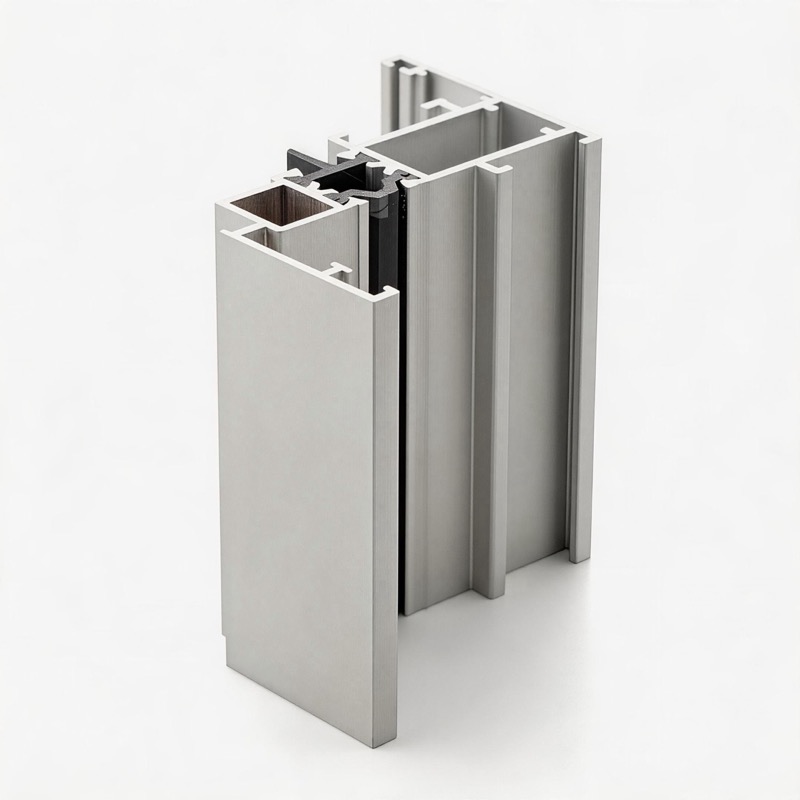
For many fabrication shops, the answer is yes: 6061 is generally considered easier to machine than 6082.
6061 has a long history in CNC machining and is widely used for parts requiring milled pockets, drilled holes, tapped threads, close-tolerance faces, and accurate assembly features. Its behavior is familiar to many machine shops, and tooling parameters are well understood.
6082 is also machinable, but its greater strength can require more careful tool selection and cutting parameter control. This does not make 6082 unsuitable for machining. It simply means the project should account for possible differences in cycle time, tool wear, cutting forces, and fixture stability.
Choose 6061 if your component has:
- Extensive CNC milling.
- Multiple threaded holes.
- Tight flatness requirements.
- Precision bores or slots.
- Complex post-extrusion machining.
- High-volume repeat machining.
Choose 6082 if your component has:
- Moderate machining requirements.
- High structural loading.
- A large cross-section.
- Weight-sensitive structural targets.
- Limited but important finished features.
- A design that gains value from higher yield strength.
For both alloys, the best results depend on material condition, tool geometry, coolant strategy, clamping method, and the quality of the incoming profile.
Both 6061 and 6082 can be welded using suitable processes such as TIG or MIG welding. However, designers must account for strength reduction near the weld.
The heat-affected zone experiences a thermal cycle that can locally reduce the properties obtained through T6 heat treatment. This issue is especially important in high-load structures.
A welded 6061-T6 or 6082-T6 assembly should not automatically be designed using the base-material T6 strength at the weld zone. The final calculation must consider applicable design standards, filler metal, joint design, weld quality, post-weld heat treatment where applicable, and expected service loads.
1. Define whether the weld is structural, cosmetic, or sealing-related.
2. Identify the applied loading near the weld zone.
3. Select a compatible filler metal through a qualified welding procedure.
4. Review distortion risk before finalizing profile geometry.
5. Consider adding reinforcement away from highly stressed weld locations.
6. Validate the finished assembly through inspection and, where needed, mechanical testing.
Expert perspective: If a structure is highly loaded, moving a welded connection away from the highest-stress region can be more valuable than selecting a stronger base alloy alone.
Both 6061 and 6082 offer good resistance to normal atmospheric corrosion. In demanding environments—coastal, marine, chemical, humid, or polluted industrial locations—the complete system matters more than the alloy name alone.
The corrosion performance of a finished aluminum part can be influenced by:
- Surface contamination.
- Contact with dissimilar metals.
- Water-trapping geometry.
- Coating or anodizing quality.
- Crevices and poorly drained connections.
- Salt exposure.
- Maintenance conditions.
- Mechanical damage during installation.
Depending on the component and application, common finishing options include:
- Mill finish for internal or protected industrial applications.
- Anodizing for enhanced appearance and surface protection.
- Powder coating for architectural and outdoor applications.
- PVDF coating for demanding exterior architectural surfaces.
- Mechanical polishing or brushing for decorative components.
- Electrophoretic coating for controlled finish and corrosion protection.
For outdoor profiles, specify the coating type, color, gloss level, thickness, adhesion requirements, salt-spray test expectations where appropriate, and visible-surface standards. A high-quality alloy cannot compensate for an inadequate coating process or poor installation design.
The most reliable way to choose between 6061 vs 6082 aluminum is to convert the application into a clear technical specification. Avoid asking for a quotation based only on "aluminum profile" or "high-strength aluminum."
Use the following process.
Identify whether the component carries static load, vibration, impact, repeated fatigue loading, torsion, or accidental overload.
Questions to ask:
- What is the maximum load?
- Is the load continuous or occasional?
- Could the part be exposed to shock?
- Is failure safety-critical?
- Is deflection limited by performance or appearance?
A profile that is easy to extrude may be difficult to machine, weld, coat, or assemble. Map the complete route from billet to finished component.
Include:
- Extrusion.
- Straightening.
- Aging.
- Cutting.
- CNC machining.
- Welding.
- Surface finishing.
- Assembly.
- Inspection.
- Packaging.
An indoor automation frame and an offshore access platform should not use the same decision logic.
Consider:
- Indoor or outdoor use.
- Humidity and salt exposure.
- Temperature range.
- UV exposure.
- Chemical contact.
- Cleaning methods.
- Electrical isolation needs.
A robust aluminum purchase order should state:
- Alloy and temper.
- Applicable standard.
- Cross-section drawing and revision number.
- Critical dimensional tolerances.
- Straightness, twist, and flatness requirements.
- Surface treatment specification.
- Mechanical property requirements.
- Length tolerance.
- Packaging method.
- Lot traceability requirements.
- Inspection and approval process.
For qualified projects, request documentation that supports the material and production decision.
Typical records may include:
- Material test certificate.
- Chemical composition report.
- Mechanical property report.
- Dimensional inspection report.
- Surface-treatment inspection result.
- Coating thickness record.
- Anodizing film thickness record.
- First-article inspection report.
- Batch traceability information.
A manufacturer needs a modular frame for factory automation equipment. The frame includes T-slots, drilled mounting holes, tapped ends, sensor brackets, cable routing, and frequent design modifications.
Recommended direction: 6061 may be the more practical choice if machining flexibility, assembly convenience, and balanced structural performance are more important than maximum strength.
A transport equipment producer needs long aluminum profiles for a platform exposed to repeated loading and outdoor conditions. Weight reduction is important, but the profile must carry high loads.
Recommended direction: 6082 may be more suitable if structural calculations show a clear advantage from its higher yield strength. The supplier should evaluate extrusion feasibility, straightness, weld locations, and surface protection.
A manufacturer needs a housing and support assembly for energy equipment. The design requires corrosion resistance, thermal performance, moderate structural strength, custom cut lengths, and CNC-finished mounting surfaces.
Recommended direction: Either alloy may work. The final decision should compare the loading requirement, machining volume, wall thickness, finishing method, and target cost. A combined design may even use different alloys or product forms for different parts of the assembly.
Neither alloy is universally better. The better material is the one that meets the engineering requirement with the lowest overall risk and the best total value.
Choose 6061 aluminum when you need:
- Excellent all-round performance.
- Good machinability.
- General industrial versatility.
- Commonly recognized material specifications.
- Moderate-to-high strength.
- Precision-fabricated or CNC-machined components.
Choose 6082 aluminum when you need:
- Higher structural strength.
- Better performance for heavily loaded components.
- Stronger T6-condition profiles.
- Transport, platform, or structural applications.
- Material efficiency in load-bearing designs.
- A robust option for larger structural sections.
The material decision should never be based only on unit price per kilogram. A lower-cost alloy can become expensive if it requires more material, more machining, extra reinforcement, or a redesign after testing. Conversely, a higher-strength alloy may not create value if the actual issue is profile stiffness, weld placement, or poor corrosion protection.
Choosing between 6061 and 6082 is easier when the material decision is connected to extrusion design, fabrication planning, quality requirements, and the final application.
Guangdong Dapeng Aluminum Industry Co., Ltd. provides aluminum profile development, production, customized processing, surface treatment coordination, and export-oriented support for global industrial customers. Whether you need industrial aluminum profiles, architectural aluminum profiles, precision-machined parts, transport components, or customized new-energy aluminum solutions, our team can review your drawings and help identify a practical alloy and manufacturing route.
Send us your drawing, target application, alloy preference, temper requirement, annual quantity, surface finish, and tolerance needs to receive a tailored technical evaluation and quotation.
In many comparable tempers, especially T6, 6082 aluminum is generally stronger than 6061 aluminum in yield strength and tensile strength. Exact values depend on product form, thickness, temper, and the governing material standard.
6061 is commonly preferred for CNC machining because it offers very good machinability and is widely used for milled, drilled, tapped, and precision-finished components. 6082 can also be machined successfully, but its higher strength may require more careful tool and process control.
Yes. Both alloys have good weldability when the correct welding process, filler metal, joint design, and procedure controls are used. However, welding may reduce strength near the weld because of heat exposure, especially in T6 material.
The answer depends on the profile design and use case. 6061 is often selected for versatile industrial profiles with machining requirements. 6082 is often selected for stronger structural profiles and heavy-duty applications. A die feasibility review is recommended before final alloy selection.
Both alloys provide good corrosion resistance in many environments. Actual service performance depends heavily on profile design, drainage, coating or anodizing quality, contact with other metals, installation conditions, and maintenance practices.
Pricing changes with regional supply, billet availability, order volume, temper, profile complexity, machining requirements, and finishing. Instead of comparing only material price, evaluate the finished-part cost, including extrusion yield, secondary processing, structural efficiency, and quality-control requirements.
No. Although 6082 can offer higher strength, it may not be the most efficient option for parts that require extensive machining, particular certification requirements, highly complex extrusion geometry, or established specifications that call for 6061.
Provide a cross-section drawing or 3D file, alloy and temper, annual quantity, cut length, tolerance requirements, machining details, surface treatment, application environment, required test documents, packaging requirements, and destination market.
1. [FONNOV Aluminium – Aluminum Extrusions Alloy 6061 and 6082]
2. [Aluminum Association – Aluminum Alloy Designations and Chemical Composition Limits]
4. [European Aluminium – Aluminium Alloys and Technical Information]
5. [Hydro Extrusions – Aluminum Alloy and Extrusion Information]
6. [The Aluminum Association – Aluminum Design Manual Resources]
7. [Guangdong Dapeng Aluminum Industry Co., Ltd. – Custom Aluminum Profiles and Manufacturing Solutions]


