


Views: 243 Author: Dapeng Aluminum Publish Time: 2026-10-18 Origin: Site


Content Menu
● 5083 vs. 6061 Aluminum: Marine Comparison at a Glance
● Why 5083 and 6061 Behave Differently
>> 5083 Aluminum: Magnesium-Based Strength for Welded Structures
>> 6061 Aluminum: Heat-Treated Strength and Profile Versatility
● Saltwater Corrosion Resistance: Why 5083 Usually Leads
>> Frequent Immersion and Splash-Zone Exposure
>> H116 and H321 Do Not Eliminate Every Corrosion Risk
● Welded Strength: The Comparison That Changes Material Selection
>> Compare the Finished Joint, Not Only the Parent Metal
>> Post-Weld Heat Treatment Is Not a Simple Reset
>> Choose Filler Metal for the Actual Joint
● Extrusion, Machining, and Forming: Where 6061 Adds Value
>> Custom Marine Aluminum Extrusions
● Three Overlooked Marine Design Checks
>> 1. Isolate Dissimilar Metals
>> 2. Review Sustained Temperature Exposure
>> 3. Do Not Confuse Strength With Stiffness
● Practical Selection Examples for Marine Buyers
● How to Specify Marine Aluminum Before Requesting a Quote
● Cost Comparison: Buy the Fabrication Route, Not Just the Metal
● Discuss Your Marine Fabrication Requirements With Dapeng
>> Is 5083 Better Than 6061 for Saltwater?
>> Can 6061 Aluminum Be Used on Boats?
>> Which Alloy Is Stronger After Welding?
>> Can 5083 Be Welded to 6061?
>> Does Anodizing Make 6061 Equivalent to 5083?
>> Is H321 Always Better Than H116?
Choosing between 5083 vs. 6061 aluminum for saltwater marine fabrication starts with the finished component—not simply the strongest number on a material datasheet. For welded hull plating and structures facing frequent seawater contact, 5083-H116 or H321 is generally the stronger starting choice. For custom extrusions, machined fittings, and above-water frameworks, 6061-T6 often offers greater manufacturing flexibility.
My recommendation is to prioritize serviceability: how the alloy performs after welding, installation, corrosion protection, and years of maintenance. An excellent base material can still disappoint when its joints trap seawater or its welded strength is misunderstood.
For international buyers working with Guangdong Dapeng Aluminum Industry Co., Ltd., this distinction helps turn an alloy inquiry into a clearer fabrication specification.
The table below compares common marine-relevant conditions. Values describe unwelded material unless stated otherwise.
| Selection factor | 5083-H116 / H321 | 6061-T6 |
|---|---|---|
| Alloy family | Aluminum-magnesium | Aluminum-magnesium-silicon |
| Main strengthening method | Solid-solution strengthening and strain hardening | Heat treatment and artificial aging |
| Saltwater suitability | Preferred for demanding welded seawater structures | Suitable for selected marine components with appropriate design and protection |
| Common product forms | Sheet and plate; specialized extrusions also available | Extrusions, tube, bar, and plate |
| Tensile strength | 305 MPa minimum for specified plate ranges | Approximately 310 MPa typical |
| Yield strength | 215 MPa minimum for specified plate ranges | Approximately 276 MPa typical |
| Density | Approximately 2.66 g/cm³ | Approximately 2.70 g/cm³ |
| Welding consideration | Loses strain-hardening contribution locally | Significant heat-affected-zone softening |
| Manufacturing advantage | Welded plate construction | Complex profiles and machined components |
The 5083 figures are specification minima summarized for particular plate thicknesses. The 6061 figures are typical reference values, not guaranteed purchasing minima. They should not be treated as a like-for-like strength ranking.
Always confirm the governing standard, thickness, product form, and certified properties.
5083 contains approximately 4.0–4.9% magnesium, with manganese and chromium additions. It is not precipitation-hardened by heat treatment.
Its strength comes substantially from alloying, with additional strength introduced through cold working. Welding removes some cold-work strengthening near the joint, but it does not remove the underlying solid-solution strengthening mechanism.
That combination helps explain its established role in shipbuilding plate, welded marine structures, and other demanding fabrications.
For seawater-contact plate, H116 and H321 deserve specific attention because their marine specifications include corrosion-performance requirements.
6061 contains magnesium and silicon, plus smaller additions of other elements. In the T6 condition, it is solution heat-treated and artificially aged.
This produces useful unwelded strength and supports economical manufacture of extruded profiles. Designers can incorporate mounting channels, ribs, and other features into the section rather than assembling everything from separate pieces.
However, welding changes the heat-treated structure near the joint. The finished assembly therefore cannot automatically use the original T6 strength throughout.
5083 is generally preferred for welded hull plating and similar structures exposed repeatedly or continuously to seawater. Its marine track record and availability in corrosion-tested tempers make it a practical starting point.
6061 also has good general corrosion resistance and legitimate marine applications. It is not automatically unsuitable near saltwater.
The distinction is exposure severity. A drained, accessible above-water frame presents a different challenge from an immersed structural panel containing welds and inaccessible crevices.
Neither alloy is corrosion-proof. Salt deposits, stagnant water, dissimilar metals, coating damage, and poor drainage can undermine either selection.
Intergranular corrosion attacks susceptible grain boundaries. Exfoliation is a related form of attack that can lift layers of material.
Marine purchasing requirements address these risks through alloy-temper controls and specified testing. For relevant 5083 products, ASTM G66 and G67 are important references within the applicable specification.
Do not assume that H321 is universally better than H116, or accept unsupported percentage improvements in corrosion resistance. Specify the required product standard and verify the relevant test evidence.
A higher unwelded yield strength does not guarantee a stronger welded marine assembly.
Published welding guidance illustrates this distinction clearly. Its comparison table gives typical unwelded and welded tensile strengths of approximately:
- 6061-T6: 45 ksi before welding and 27 ksi after welding.
- 5083-H116/H321: 46 ksi before welding and 43 ksi after welding.
These are illustrative reference values under the guide's assumptions—not design allowables or guaranteed production results.
Nevertheless, they reveal why 5083 often makes more sense for weld-intensive structures. The heat-affected zone, rather than the untouched parent material, may govern performance.
6061 strength can be improved through suitable post-weld thermal processing, but recovering properties depends on the starting temper, filler, and treatment sequence.
Full solution treatment, quenching, and aging can be difficult for large assemblies. Distortion and dimensional control also require consideration.
My practical recommendation is to design around the intended as-welded condition unless a qualified post-weld treatment route is already established.
5183 is a common filler for welding 5083 in shipbuilding applications. Other fillers may be appropriate when the required properties and procedure support them.
For 6061, options such as 4043 and 5356 serve different combinations of welding behavior, mechanical performance, and finishing requirements.
Do not transfer a 6061 filler recommendation automatically to a 5083 joint. Silicon-rich 4043 is not a general-purpose choice for high-magnesium 5083. Mixed-alloy joints require their own qualified selection.
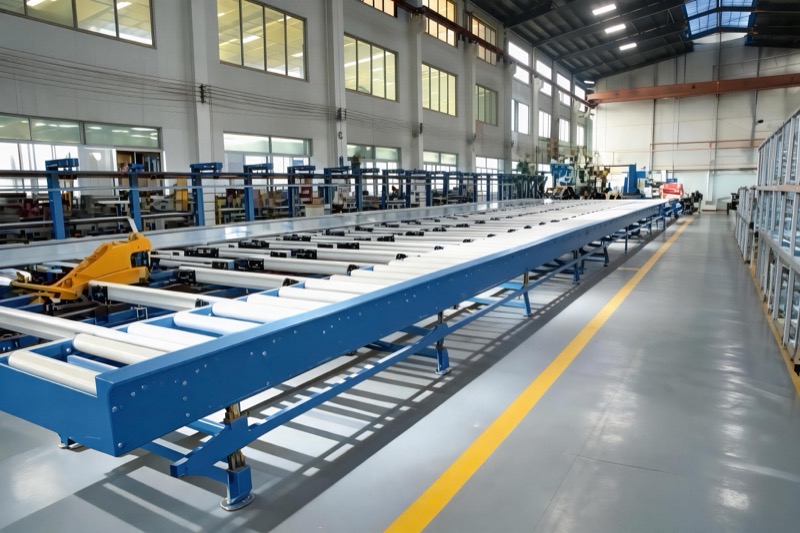
6061 offers a compelling manufacturing route for rail sections, equipment supports, channels, and modular frameworks.
A well-designed extrusion can consolidate features, reduce separate components, and simplify assembly. For a profile-focused manufacturer such as Guangdong Dapeng Aluminum Industry Co., Ltd., this is an important part of the material discussion.
5083 extrusions exist, but availability, section complexity, and production economics differ. Do not assume a profile designed around 6061 can simply be ordered in 5083 without review.
6061 is generally a more convenient choice for machined fittings and mounting components. 5083 can be machined, but tooling, chip control, and surface requirements need attention.
Bending depends heavily on temper, thickness, rolling direction, and tooling. Neither alloy should receive a universal minimum bend radius.
For a critical formed component, approve a representative trial before releasing the production batch.
Stainless steel hardware does not automatically make an aluminum connection corrosion-safe. When electrically connected metals share seawater, the aluminum can corrode preferentially.
Consider:
- Insulating washers, sleeves, and gaskets.
- Sealing around fastener penetrations.
- Drainage that prevents persistent saltwater pockets.
- Inspection access at hidden interfaces.
- Separation from copper-alloy and conductive carbon-composite components.
Isolation must interrupt the relevant electrical path. A washer alone may not isolate a bolt shank touching the hole.
5083's high magnesium content introduces another selection constraint: prolonged elevated-temperature exposure can increase susceptibility to damaging grain-boundary changes.
Published supplier guidance flags approximately 65°C as an important service-temperature consideration.
This is not an instantaneous failure threshold. Time, temperature, material condition, and environment interact. Components near exhaust systems or other sustained heat sources need a separate suitability review.
Both alloys have similar elastic moduli. Changing from 5083 to 6061 will not, by itself, produce a dramatic reduction in elastic deflection.
If a rail or support feels too flexible, section depth, wall arrangement, span, and connection design may matter more than alloy choice.
Likewise, wave-loaded structures require fatigue-sensitive detailing. Avoid treating a higher static tensile value as proof of superior cyclic performance.
These examples illustrate engineering decisions; they are not reported customer projects.
| Component | Sensible starting choice | Main reason | Essential verification |
|---|---|---|---|
| Welded hull plating | 5083-H116/H321 | Seawater suitability and favorable welded properties | Plate specification, corrosion testing, weld procedure |
| Custom above-water equipment frame | 6061-T6 extrusion | Profile integration and manufacturing efficiency | Welded strength, drainage, surface protection |
| Machined mounting bracket | 6061-T6 | Machinability and stock availability | Fastener isolation and local loading |
| Welded seawater-contact plate assembly | 5083 marine temper | Exposure and fabrication requirements | Joint design, inspection, operating temperature |
A vessel does not need one alloy everywhere. A mixed-material strategy can be more effective when each component has its own documented requirements.
The critical task is controlling the interfaces and joining procedures.
A useful request for quotation should describe the service condition as clearly as the geometry.
1. Define exposure: continuous immersion, splash zone, coastal atmosphere, or sheltered installation.
2. Identify loads: static loading, vibration, impact, fatigue, and allowable deflection.
3. Specify alloy, temper, product form, dimensions, and governing material standard.
4. State whether acceptance properties apply before or after welding.
5. Identify welding, inspection, and classification requirements where applicable.
6. Include finish, isolation, drainage, and maintenance requirements.
For 5083 marine plate, request the applicable material certificate and required corrosion-test documentation. For 6061 extrusions, confirm dimensional tolerances, temper, and properties under the relevant product standard.
Classification approval should be requested when the project requires it—not assumed from the phrase "marine grade."
There is no universal price winner between 5083 and 6061.
Compare the finished component's cost, including:
- Material yield and cutting waste.
- Extrusion tooling and order quantity.
- Machining and assembly time.
- Welding, distortion control, and inspection.
- Finishing, documentation, and maintenance access.
6061 may reduce manufacturing effort through an integrated profile. 5083 may offer a more suitable route for welded seawater-contact plate construction.
Ask suppliers to quote against the same drawings, acceptance criteria, and documentation package. Otherwise, the apparent saving may simply reflect a different scope.
Guangdong Dapeng Aluminum Industry Co., Ltd. focuses on aluminum profile research, production, export, and customized processing.
Send your drawings, required alloy and temper, exposure conditions, quantities, finishing requirements, and destination-market specifications. Request a manufacturability review and an itemized quotation covering the proposed production route, tolerances, and available documentation.
For safety-critical marine structures, have the final material selection and joint design approved by the responsible engineer or classification body.
Generally, 5083-H116 or H321 is the preferred starting point for demanding welded seawater-contact structures. 6061 remains useful for selected profiles, fittings, and frameworks.
Yes. Its suitability depends on the component, exposure, joining method, corrosion-control measures, and inspection access—not simply whether the boat operates in saltwater.
5083 generally retains a greater proportion of its original strength. Actual joint performance depends on temper, thickness, filler, procedure, and acceptance requirements.
Yes, with suitable filler selection and a qualified procedure. Evaluate both sides of the joint, including softening in the 6061 heat-affected zone.
No. Anodizing changes the surface, not the underlying alloy or welded properties. Protection also depends on coverage, damage, crevices, and maintenance.
No. Select against the applicable specification and project requirements. The temper designation alone does not establish a universal corrosion-performance ranking.
1. [Atlas Steels — Aluminium Alloy Data Sheet: 5083]. Composition, specified plate strengths, density, marine tempers, welding, and temperature considerations. [atlassteels.com]
2. [Gabrian International — 6061 Aluminum Alloy: Properties]. Typical T6 mechanical properties, density, composition, and elastic modulus. [gabrian]
3. [Hobart Brothers — Guide for Aluminum Welding]. Pages 6–10 and 12–13 cover welded-property comparisons, filler selection, cleaning, and thermal processing. [hobartbrothers]
4. [Hobart Brothers — MaxalMig 5183]. Application guidance for welding 5083 in shipbuilding. [hobartbrothers]
5. [ASTM B928/B928M-15(2023)e1 — Standard Specification for High Magnesium Aluminum-Alloy Products for Marine Service and Similar Environments]. Standard scope and referenced corrosion-testing methods; confirm the project-required edition. [standards.iteh]
6. [PW Marine OEM — Galvanic Corrosion: Stainless and Aluminum in Marine Hardware]. Dissimilar-metal corrosion mechanisms and isolation practices. [pwmarineoem]


