


Views: 243 Author: Dapeng Aluminum Publish Time: 2026-10-25 Origin: Site


Content Menu
● 5052-H32 vs. 5052-H34 Aluminum Sheet: Quick Comparison
● Understanding H32 and H34: Same Alloy, Different Cold-Work Condition
● Strength vs. Stiffness: The Most Important Vibration Distinction
>> Where H34's Higher Strength Helps
>> Why Geometry Often Matters More
● Fatigue Resistance: Why Tensile Strength Is Not Enough
● Bending 5052-H32 vs. 5052-H34 Aluminum Sheet
>> Published Bend-Radius Examples
>> A Practical Bend-Qualification Procedure
● Welding, Corrosion, and Surface Finishing
>> Welding Can Reduce the Temper Advantage
>> Corrosion Performance Is Broadly Similar
● Engineering Scenario: A Vehicle-Mounted Electronics Enclosure
● How to Validate a Vibration-Resistant Aluminum Enclosure
>> Define the Actual Service Conditions
>> Match the Test Method to the Environment
>> Inspect More Than Visible Cracks
● Procurement Checklist: Specify More Than "5052 Aluminum"
● Which Temper Should You Choose?
● Discuss Your Enclosure Project with Guangdong Dapeng Aluminum Industry Co., Ltd.
>> Is 5052-H34 Better Than H32 for Vibration Resistance?
>> Is 5052-H32 Easier to Bend Than H34?
>> Can H34 Replace H32 Without Changing the Drawing?
>> Does H34 Allow a Thinner Enclosure Wall?
>> Can Both Tempers Be Welded?
>> Which Temper Is Better for Outdoor Enclosures?
Choosing between 5052-H32 vs. 5052-H34 aluminum sheet for vibration-resistant enclosures comes down to one practical distinction: H32 offers more forming flexibility, while H34 provides higher strength. Neither temper automatically delivers better vibration performance. Panel geometry, mounting arrangements, welds, and fasteners can matter more than the difference in material strength.
For enclosure projects, my starting recommendation is straightforward: consider H32 for complex folded housings and H34 for simpler panels where resistance to permanent deformation takes priority. Then validate the complete assembly against its actual operating environment.
This guide compares their properties, fabrication requirements, and purchasing considerations to help engineers and buyers make a defensible selection.
Both materials belong to the same aluminum-magnesium alloy family. Their principal difference is temper—the condition created through cold working and stabilization.
| Selection factor | 5052-H32 aluminum sheet | 5052-H34 aluminum sheet |
|---|---|---|
| Temper description | Quarter-hard, strain-hardened and stabilized | Half-hard, strain-hardened and stabilized |
| Tensile strength, published reference range | 215–265 MPa | 235–285 MPa |
| Minimum yield strength, published reference | 160 MPa | 180 MPa |
| Minimum elongation at 1.21–6.30 mm thickness | 7% | 6% |
| Forming flexibility | Generally more forgiving | Generally requires larger bend radii |
| Elastic stiffness at equal geometry | Essentially comparable | Essentially comparable |
| Welding consideration | Heat-affected areas lose cold-work strength | Same concern; original strength advantage may diminish locally |
| Practical starting point | Multi-bend enclosure bodies | Simpler covers, panels, and strength-sensitive components |
The mechanical figures above follow one published supplier reference based on ASTM B209M. They are not universal acceptance values for every thickness, standard edition, or supply condition. Confirm contractual requirements against the applicable specification and material certificate.
5052 contains approximately 2.2–2.8% magnesium and 0.15–0.35% chromium. It is widely used where corrosion resistance, weldability, and sheet-metal fabrication must work together.
Unlike precipitation-hardened alloys, 5052 does not gain its principal strength through solution treatment and aging. Cold working increases its strength, while stabilization helps establish a more stable material condition.
H32 identifies a strain-hardened and stabilized, quarter-hard condition.
For enclosure fabrication, its main advantage is forming margin. Compared with H34, H32 generally tolerates more deformation before cracking becomes a concern.
That makes it a useful starting point for:
- Folded electrical housings.
- Deep return flanges.
- Multi-bend instrument cases.
- Enclosures with closely spaced bends.
H34 identifies a strain-hardened and stabilized, half-hard condition.
Its higher strength can improve resistance to permanent deformation when loads become sufficiently high. However, that advantage comes with reduced ductility and less forgiving bending behavior.
"Half-hard" does not mean twice the strength of "quarter-hard." These descriptions identify temper conditions, not direct strength multipliers.
The critical distinction is stiffness: higher yield strength does not automatically make a panel less flexible.
Both tempers have essentially the same elastic modulus. A representative published value for 5052 is approximately 70 GPa.
Consequently, two panels with the same thickness, dimensions, and supports should have broadly similar elastic deflection, regardless of whether they use H32 or H34.
H34 can be useful when the limiting problem is permanent deformation from:
- Handling impacts.
- Concentrated mounting loads.
- Excessive assembly force.
- Occasional overloads.
These are strength-related concerns. They are different from controlling resonant vibration or preventing a large cover from flexing.
For a flat plate, bending rigidity depends strongly on thickness. Under otherwise comparable conditions, it scales approximately with thickness cubed:
D=Et3/[12(1−ν2)]
Here, E is elastic modulus, t is thickness, and ν is Poisson's ratio.
Return flanges, ribs, shorter unsupported spans, and better mounting locations can therefore be more effective than changing temper alone. Their benefits must still be evaluated against added mass, manufacturing complexity, and shifted resonant frequencies.
A vibration-resistant aluminum enclosure must survive repeated loading, not merely one strong pull.
Static tensile properties do not establish fatigue life. A higher-strength temper should not be assigned a longer service life without fatigue evidence relevant to the actual component.
An engineering review should examine:
- Stress concentrations around holes and cutouts.
- Bend transitions and edge quality.
- Weld toes and heat-affected zones.
- Fastener movement and joint slip.
- Internal equipment mass.
- Corrosive exposure during cyclic loading.
For fatigue-critical applications, material data should match the relevant stress ratio, surface condition, manufacturing process, and required cycle count.
The practical question is not simply, "Which temper is stronger?" It is, "Where does cyclic stress concentrate in this enclosure, and how will the assembly withstand it?"
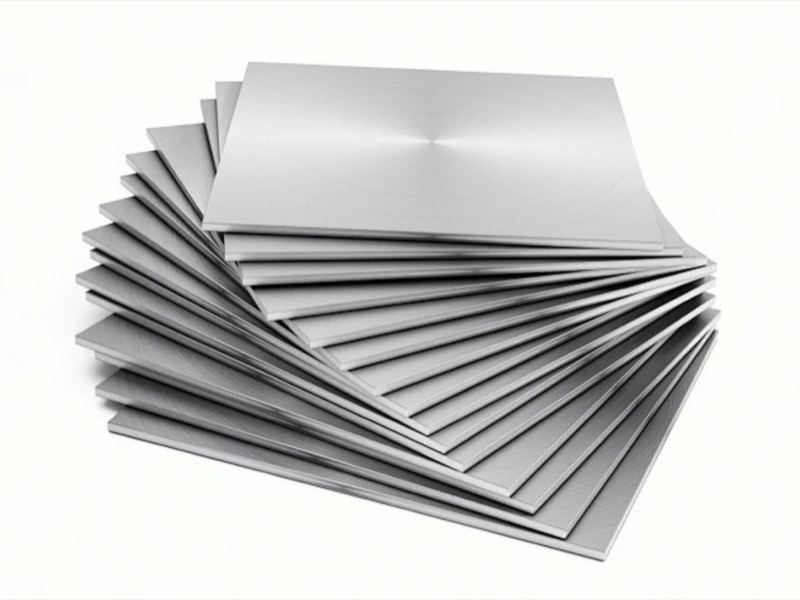
H32 generally provides more flexibility when designing tight bends. H34 usually requires larger inside radii.
However, a single bend-radius rule cannot cover every thickness, tool, and rolling orientation.
The following examples are recommended starting points from a published 5052 fabrication reference. Here, t means sheet thickness.
| Sheet thickness | H32 recommended inside radius | H34 recommended inside radius |
|---|---|---|
| 1.6 mm | 1t, approximately 1.6 mm | 1.5t, approximately 2.4 mm |
| 3.2 mm | 1.5t, approximately 4.8 mm | 2t, approximately 6.4 mm |
| 6.0 mm | 1.5t, approximately 9.0 mm | 2.5t, approximately 15.0 mm |
These recommendations apply to the reference's stated rolling-direction condition and are not guaranteed production limits.
Before releasing production:
1. Obtain samples from the intended material supply.
2. Record thickness, temper, and rolling direction.
3. Bend using the proposed tooling and process.
4. Inspect the outside bend surface and cut edges.
5. Check springback, flange dimensions, and assembly fit.
For enclosure buyers, this trial is often more informative than an unsupported promise that a temper "bends well."
Both H32 and H34 are weldable. However, welding heat reduces the strength contributed by cold working around the joint.
An H34 enclosure therefore cannot be evaluated as though every welded region retains the original parent-sheet properties.
For welded housings, review joint geometry, distortion, local stresses, and the appropriate welded-condition design basis. Keep fatigue-sensitive details away from unnecessarily severe weld transitions where practical.
Both tempers share the same alloy chemistry and generally offer good atmospheric corrosion resistance, including suitability for many marine environments.
Temper selection alone should not be treated as a corrosion-control strategy.
Outdoor enclosure design should also address:
- Water drainage and trapped moisture.
- Contact with dissimilar metals.
- Coating preparation and coverage.
- Crevices around joints and fasteners.
- Maintenance and inspection access.
Surface finishing should be selected for the exposure and electrical requirements. Coatings do not replace structural validation or joint design.
Consider a hypothetical enclosure with a folded body, removable lid, internal electronics, and four mounting points. This is an illustrative design exercise, not a reported customer test.
Suppose the lid vibrates excessively during prototype testing.
Changing the lid from H32 to H34 without changing thickness or supports may provide little improvement in elastic vibration response.
A more useful investigation would:
1. Identify the troublesome frequency range.
2. Measure motion near the lid center and mounting points.
3. Check fastener preload and joint movement.
4. Evaluate return flanges, reinforcement, or shorter spans.
5. Repeat testing with representative internal equipment installed.
H34 may still be appropriate if permanent deformation is also present. However, the diagnosis should separate yielding, resonance, and joint movement rather than treating all three as a material-strength problem.
A credible validation plan tests the assembled product, not just an empty sheet-metal shell.
Record:
- Operating and transportation environments.
- Mounting orientation and support conditions.
- Installed equipment mass and location.
- Expected frequency content.
- Exposure duration.
- Required functional and structural acceptance criteria.
Avoid selecting test severity simply because another product used it.
IEC 60068-2-6 addresses sinusoidal vibration testing. IEC 60068-2-64 addresses broadband random vibration.
These methods provide testing frameworks. They do not establish one universal severity or guarantee suitability for every enclosure.
The test plan must specify the relevant profile, axes, duration, fixture arrangement, and acceptance requirements.
Post-test checks should cover fastener security, mounting deformation, connector integrity, seal condition, electrical function, and internal clearances.
Where necessary, include inspections or measurements during testing. A product can experience unacceptable functional interruption without obvious external damage.
A useful purchase specification should include:
- Alloy and temper.
- Applicable sheet standard and edition.
- Nominal thickness and tolerances.
- Required dimensions and flatness.
- Material certification and traceability.
- Surface condition and finish.
- Bend-critical features.
- Inspection and sample-approval requirements.
- Rules governing substitutions.
Do not mix typical values from one supplier with guaranteed minimums from another standard.
Also distinguish sheet from extruded profiles. They are different product forms, and an extrusion capability does not by itself confirm the availability of certified 5052 sheet or fabricated enclosures.
For export projects, confirm documentation language, protective packaging, delivery terms, and acceptance procedures before production begins.
| Project priority | Recommended starting point |
|---|---|
| Complex folds and tighter bends | H32 |
| Simpler geometry with higher parent-sheet strength requirements | H34 |
| Large flexible cover panel | Review thickness, span, and reinforcement first |
| Welded, fatigue-sensitive assembly | Assess welded details and validate the assembly |
| Severe or uncertain vibration exposure | Establish the service profile and qualification plan first |
My selection principle is to choose the most manufacturable temper that satisfies the verified structural requirements. Extra parent-sheet strength has limited value if it introduces bend cracking, rework, or an unaddressed fatigue hotspot.
Guangdong Dapeng Aluminum Industry Co., Ltd. focuses on aluminum research, manufacturing, export, and customized processing solutions.
Send your enclosure drawings, target thickness, installation conditions, annual quantity, and documentation requirements for a project-specific discussion. Request confirmation of sheet sourcing, temper certification, forming feasibility, finishing, and inspection scope before placing an order.
That information creates a stronger quotation basis than requesting a price for "vibration-resistant aluminum" alone.
Not automatically. H34 offers higher parent-sheet strength, but vibration performance also depends on geometry, resonance, joints, and fatigue-sensitive details.
Generally, yes. H32 offers more forming margin. The acceptable radius still depends on thickness, rolling direction, edge quality, tooling, and process conditions.
Not without review. Confirm bend feasibility, specification compliance, dimensions, and qualification requirements before approving substitution.
Possibly for a strength-controlled design, but not automatically for a stiffness-controlled panel. Thinning the sheet can significantly reduce bending rigidity.
Yes. Welding can reduce local strength in both, so welded regions require an appropriate design basis rather than unchanged parent-sheet properties.
Both have broadly similar alloy-based corrosion resistance. Select temper for fabrication and structural needs, then address drainage, coatings, dissimilar-metal contact, and sealing separately.
1. [Atlas Steels — Aluminium Alloy 5052 Data Sheet, revised June 24, 2021]. Primary technical basis for chemistry, temper descriptions, mechanical-property comparisons, elastic modulus, welding effects, and thickness-dependent bend recommendations. Its figures are reference data, not a substitute for the applicable purchase specification. [atlassteels.com]
2. [ASTM B209/B209M-21a — Standard Specification for Aluminum and Aluminum-Alloy Sheet and Plate, catalog entry]. Supports the distinction between specified flat-rolled sheet products and other aluminum product forms. Confirm the contractually applicable edition. [store.accuristech]
3. [Dalsteel — Aluminium Alloy 5052-H32 Sheet and Treadplate]. Additional reference for physical properties, fabrication characteristics, corrosion resistance, and specification-dependent mechanical values. [dalsteel.com]
4. [SIST EN 60068-2-6:2008 — Sinusoidal Vibration Test Fc, standards catalog]. Supports the discussion of sinusoidal vibration procedures and evaluation of mechanical robustness. [standards.iteh]
5. [IEC 60068-2-64, Edition 2.1:2019 — Environmental Testing, standards catalog]. Supports the discussion of broadband random vibration and assessment of accumulated stress effects. [store.accuristech]


