
English


Views: 277 Author: Dapeng Aluminum Publish Time: 2026-09-30 Origin: Site


Content Menu
● What Is an Aluminum Angle Profile?
● 1. Architectural Edges and Building Details
● 2. Furniture, Cabinets, and Interior Systems
● 3. Equipment Frames and Industrial Manufacturing
● 4. Electronics, Lighting, and Thermal Support
● 5. Retail Displays and Modular Fixtures
● Design Insight: Match the Angle to Its Actual Job
● Procurement Insight: A Better Aluminum Angle RFQ
● Reliability Insight: Design the Joint for Its Environment
● Work With a Manufacturer That Can Build the Complete Part
>> What are aluminum angle profiles used for?
>> Is 6061 or 6063 better for an aluminum angle?
>> Are aluminum angles suitable for structural support?
>> Can aluminum angle profiles be anodized or powder coated?
>> What information should I send for a custom angle quotation?
>> How do I reduce corrosion risk at outdoor fasteners?
Aluminum angle profiles do more than protect corners. Used correctly, these L-shaped extrusions can support architectural details, organize industrial equipment, frame displays, and simplify custom assemblies. Yet an aluminum angle that looks right in a catalog may fail in service if its alloy, leg dimensions, fastening method, or exposure conditions are overlooked. This guide explores five applications of aluminum angle profiles and shows how to specify them with fewer surprises.
An aluminum angle profile is an extruded section with two legs meeting at approximately 90 degrees. Equal-leg angles have matching leg widths; unequal-leg angles provide different mounting areas on each side. Both can serve as brackets, edge guards, stiffeners, or positioning features, depending on the load path and connection design.
The most useful distinction is not simply "decorative versus structural." Architectural angles typically prioritize straight, visually crisp edges and a finish-ready surface. Structural angles prioritize mechanical performance and may have a more prominent inside radius. Neither label replaces an actual alloy-and-temper specification or an engineering check.
If you are comparing aluminum angle extrusion with a bent sheet-metal bracket, consider production volume, required cross-section, corner geometry, finish quality, and secondary machining. Extrusion is especially attractive when the same section must be produced repeatedly in long lengths and then cut into many parts.
Aluminum angle profiles can finish exposed corners, frame wall panels, edge ceiling features, and provide mounting interfaces for facade components. In each case, the angle has a defined job: protecting an edge, concealing a transition, or supporting another component. The required section changes with that job.
For a visible interior trim, appearance and fit often dominate. A 6063 architectural angle may be appropriate when a smooth, anodizable surface is important. For an exterior support or bracket, the designer must instead verify loads, connections, local building requirements, and the properties of the selected temper. A visually neat angle should never be assumed to be a certified structural member.
Practical checks for building applications:
- Identify whether the angle is decorative, load-bearing, or both.
- Confirm panel thickness, leg clearance, corner radius, and fastener access.
- Specify the visible surfaces and the acceptable finish variation.
- Detail drainage, expansion allowance, and separation from incompatible metals where exposure demands it.
- Have a qualified engineer review safety-critical attachments and code-governed assemblies.
A common mistake is choosing a sharp-corner trim for an assembly that needs a larger inside radius or a substantial fastening area. Another is allowing cementitious residue to dry on finished aluminum during installation. Protect the visible face during fabrication and construction, then clean it using methods compatible with the selected finish.
In furniture and interiors, aluminum angles can reinforce shelf edges, finish cabinet corners, frame mirrors, and create neat transitions between panels. Their value lies in combining edge protection, alignment, and appearance in one part. An unequal-leg profile, for example, can offer a wider hidden fixing surface while keeping the exposed edge narrow.
For a cabinet or commercial fixture, begin with the substrate. Fasteners that work in plywood may not suit a thin composite panel. Pilot holes, inserts, adhesive selection, and edge distances matter more than the angle's appearance alone. Where customers will touch the part, deburr cut ends and specify an appropriate edge treatment.
Color consistency also deserves attention. Anodized components placed side by side may reveal differences if alloy, surface preparation, and finishing batches vary. If a project requires matching long visible runs, request finish samples and define what an acceptable color range looks like before mass production.
A useful design example is a modular display cabinet: a single angle can protect a vertical corner, conceal the panel edge, and provide a repeatable mounting line. But if the unit must be dismantled often, consider replaceable threaded inserts rather than repeatedly driving screws into the same holes.
Industrial users often turn to aluminum angle profiles for light-duty guards, machine enclosures, sensor mounts, conveyor accessories, and equipment-panel supports. Angles are particularly useful where two perpendicular faces are needed for mounting, and where the assembly benefits from straightforward cutting and drilling.
However, an L-shaped section is not automatically the best choice for every frame. For a long, highly loaded span, deflection, twisting, and vibration may dictate a different extrusion, added bracing, or a redesigned joint. The limiting factor is often the connection, not the length of metal between connections.
Before releasing a production drawing, answer four questions:
1. What loads act on the part, and in which directions?
2. Where will bolts, rivets, or welds transfer those loads?
3. Will holes, slots, or cutouts weaken a critical area?
4. Does the assembly require repeatable alignment after shipping or maintenance?
If welding is planned, specify the actual alloy and temper and assess the as-welded condition rather than assuming the original heat-treated properties remain unchanged at the joint. For bolted connections, check hole position, bearing area, fastener access, and the possibility of loosening under vibration. A prototype fit check is often cheaper than correcting hundreds of drilled parts.
Aluminum angles can locate LED strips, support electronic enclosures, stiffen control-panel edges, or provide a mounting path from a heat-generating component to a larger metal surface. Aluminum transfers heat effectively, but an angle is not automatically a heat sink. Thermal performance depends on contact pressure, interface material, section geometry, exposed surface area, and airflow.
For an LED fixture, the angle may perform two distinct functions: positioning the light source and helping move heat away from it. Evaluate both. A beautifully finished angle with poor contact to the LED board may do less thermal work than a simpler profile designed around the heat path.
There is also a trade-off in building-related lighting. A conductive metal profile can help cool electronics while creating an unwanted thermal bridge through an insulated assembly. In applications where heat transfer across a boundary is undesirable, review the complete system and consider thermal separation rather than judging the angle in isolation.
Where the aluminum forms part of an electrical enclosure, do not assume an anodized or painted surface provides a dependable protective electrical connection. Specify the intended grounding and bonding method separately and verify the assembled product against applicable electrical requirements.
Retail signs, exhibit walls, product stands, and temporary displays need components that are easy to assemble, transport, and replace. Aluminum angle profiles can serve as edge frames, shelving supports, sign retainers, and alignment stops. The material's appearance is valuable here, but repeatable assembly is usually the bigger purchasing advantage.
Imagine a display program deployed across many locations. If each store cuts and drills stock on site, hole positions and finishes can vary. A pre-cut, pre-drilled angle with clearly identified orientation can reduce installation errors and make replacement parts interchangeable. This is an application where a modest amount of deep processing can improve the entire rollout.
Ask these questions before finalizing a retail profile:
- Will the fixture be assembled once or reused at several events?
- What is the heaviest product it must hold?
- Are visible faces protected during shipment?
- Can one part number work across several display sizes?
- Are exposed corners safe for customers and staff?
For high-touch environments, specify smooth edges and a finish that can withstand the intended cleaning routine. Avoid describing a shelf-support angle as "heavy duty" without a defined span, load, and connection design.
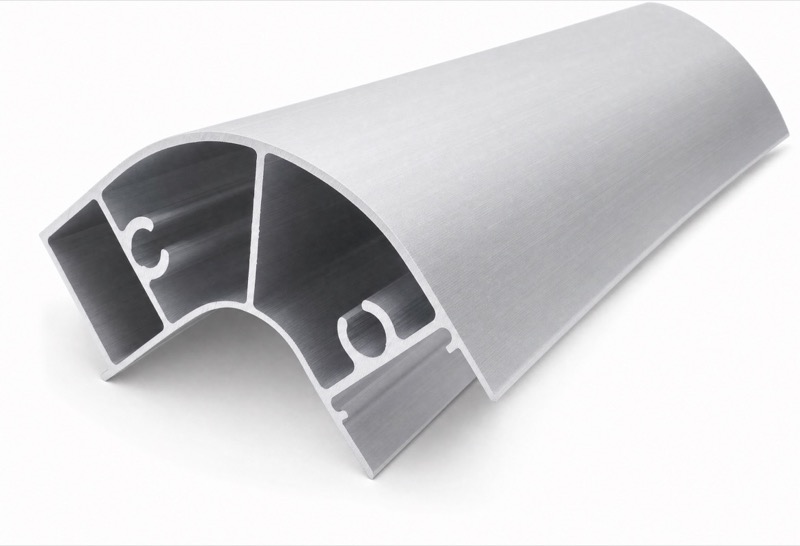
The same nominal dimensions can describe very different products. Two angles may share leg lengths but differ in inside radius, wall thickness, straightness, temper, or surface finish. A purchasing decision should therefore begin with function, not a catalog photograph.
| Design priority | Typical application | Specification to clarify first |
|---|---|---|
| Visual finish | Interior trim and display edges | Visible faces, finish, color sample |
| Connection strength | Brackets and equipment mounts | Alloy, temper, thickness, hole layout |
| Dimensional fit | Panel frames and repeated assemblies | Leg widths, angle, straightness, tolerances |
| Outdoor durability | Exposed architectural fittings | Coating, drainage, dissimilar-metal isolation |
| Thermal behavior | LED and electronic mounts | Heat path, contact area, airflow |
For instance, a decorative 6063 angle and a 6061 angle may both suit a drawing's outline. That does not make them interchangeable. Anodized appearance, required strength, machining, and joining may lead to different selections. The selected temper matters as well: "6063" or "6061" alone does not fully define the product.
A clear request for quotation does more than obtain a price. It helps manufacturers identify tooling needs, fabrication risks, and inspection points before a batch is produced. For custom aluminum angle profiles, send the following information together:
1. Application and drawing: State the part's function and provide a dimensioned drawing or CAD file.
2. Section geometry: Specify equal or unequal legs, thickness, inside radius, cut length, and critical surfaces.
3. Material: Identify the required alloy and temper, or state the performance targets if the supplier should recommend them.
4. Finish: Define anodizing, powder coating, or mill finish; include color and appearance requirements where relevant.
5. Fabrication: Mark every hole, slot, thread, countersink, and cut-edge requirement.
6. Acceptance criteria: State critical tolerances, inspection method, packaging needs, and any project-specific documentation.
7. Commercial details: Provide estimated order quantity, delivery destination, and whether the profile is a one-off or recurring program.
For dimensional acceptance, discuss the appropriate extrusion standard with the supplier rather than demanding the tightest tolerance on every feature. General extrusion and precision-profile standards cover different needs; unnecessary tightness can raise cost and complicate production. Reserve close tolerances for surfaces and dimensions that actually control assembly.
An aluminum angle can perform well in a workshop yet deteriorate at an exposed connection if the joint traps water. When aluminum is connected to a dissimilar metal, moisture and electrical contact can create a galvanic-corrosion risk. This does not mean every stainless-steel fastener is unsuitable; exposure, surface areas, and joint detailing all matter.
For outdoor assemblies, evaluate nonconductive washers or sleeves, suitable gaskets, sealants, and drainage. Do not rely on a painted surface alone as electrical isolation at a loaded fastener: installation can damage the coating. Review cut edges and drilled holes because secondary processing may expose fresh metal after finishing.
For export projects, packaging is part of reliability too. Identify cosmetic faces, separate finished parts where necessary, and agree on inspection criteria before shipment. A profile that meets its dimensions but arrives scratched can still fail the buyer's acceptance process.
The best aluminum angle is not simply a length of extrusion. It is a profile whose material, finish, machining, and delivery condition match the assembly. Guangdong Dapeng Aluminum Industry Co., Ltd. develops, manufactures, and exports aluminum profiles for architectural and industrial uses and offers deep-processing customization for project requirements.
Send us your drawing, intended application, annual volume, required finish, and delivery destination. Our team can review the profile geometry and fabrication requirements with you, then prepare a project-specific quotation. For load-bearing or regulated applications, include your engineering acceptance criteria so the final specification can be reviewed against the actual design.
They are used as trims, edge guards, brackets, panel supports, mounting rails, and alignment features. Common settings include buildings, furniture, industrial equipment, electronics, and retail fixtures. The same shape can serve very different purposes, so specify the required performance rather than purchasing by dimensions alone.
Neither is universally better. 6063 is often selected for finish-sensitive architectural shapes; 6061 is frequently considered for more mechanically demanding parts. The appropriate temper, cross-section, fastening method, and required finish determine the final choice. Ask for the properties of the specific supplied condition.
They can be, but suitability depends on loads, geometry, alloy, temper, connections, and governing design requirements. A decorative architectural angle should not be substituted for an engineered support without verification. Have a qualified professional assess safety-critical applications.
Yes, depending on the alloy, product condition, and finish requirements. For visible components, agree on surface preparation, color samples, acceptable variation, and whether machining occurs before or after finishing. Protect finished faces during transport and installation.
Provide a drawing or CAD file, leg dimensions, thickness, inside radius, length, alloy and temper, finishing requirements, machining details, critical tolerances, order quantity, and delivery location. If any specification is uncertain, explain the end use so the manufacturer can flag the relevant trade-offs.
Consider water drainage, compatible finishes, sealants, and electrical isolation where dissimilar metals meet. Details such as washers, sleeves, and hole-edge protection matter. The right solution depends on the exposure conditions and the complete fastener assembly, not just the aluminum alloy.
- [Orange Aluminum, "5 Unique Applications of Aluminum Angle Profiles"] — Original article and its five application categories; this article replaces its dated forecast and brand-specific sales claims.
- [Hydro, "Architectural Aluminum Angle"] — Architectural versus structural angle geometry, typical 6063 use, surface finishing, and care.
- [The Aluminum Association, "Industry Standards"] — Alloy designations, 6xxx-series applications, and the importance of alloy and temper.
- [Aluminum Extruders Council, "Aluminum Extrusion Manual"] — Extrusion design, fabrication, alloys, finishes, and tolerance topics.
- [Hydro Aluminium Design Manual, "Profile Tolerances"] — Relationship between design, alloy, tolerances, productivity, and price.
- [Shapes by Hydro, "Design Standards in Relation to Aluminium Alloys"] — Applications and selection context for EN 755-9 and EN 12020-2.
- [Aluminum Extruders Council, "Thermal Management"] — Heat transfer in extruded aluminum and the trade-off between heat dissipation and thermal insulation.
- [Australian Stainless Steel Development Association, "FAQ 1: Galvanic/Dissimilar Metal Corrosion"] — Conditions for galvanic corrosion and practical isolation considerations.
- [Aluminum Extruders Council, "Battery Box Success Stories"] — Industry examples of extrusions in electric-vehicle battery structures; background context for industrial applications, not a claim that ordinary angles are certified battery components.


