


Views: 264 Author: Dapeng Aluminum Publish Time: 2026-11-21 Origin: Site


Content Menu
● Why Source Aluminum Window Extrusions from China?
>> Guangdong's Architectural Aluminum Manufacturing Cluster
>> Shandong's Aluminum and Window-System Ecosystem
● How We Selected These Aluminum Window Extrusion Manufacturers
● Comparison Table: Capacity, MOQ, and Certification Evidence
● The Top 10 Aluminum Window Extrusions Manufacturers in China
>> 1. Guangdong Dapeng Aluminum Industry Co., Ltd.
>> 2. Guangdong Yonglijian Aluminium Co., Ltd.
>> 3. Guangdong Xingfa Aluminium Co., Ltd.
>> 4. Guangdong JMA Aluminium Profile Factory (Group) Co., Ltd.
>> 5. Guangdong Fenglu Aluminium Co., Ltd.
>> 6. Guangdong Weiye Group Co., Ltd.
>> 7. Guangdong Huachang Group Co., Ltd.
>> 8. Guangdong Haomei New Materials Co., Ltd.
>> 9. Shandong Huajian Aluminium Group Co., Ltd.
>> 10. Guangdong AsiaAlum Senyuan Aluminum Co., Ltd. — AAG Asia Aluminum
● Technical Buying Guide: What to Specify Before Requesting Prices
>> Define the Alloy, Temper, and Acceptance Standard
>> Select the Correct Dimensional Tolerance Framework
>> Treat Thermal-Break Profiles as an Assembled Product
>> Distinguish Factory Certification from Window Compliance
● Common Sourcing Problems and How to Avoid Them
>> Problem 1: Material Substitution Without a Clear Acceptance Trail
>> Problem 2: A Good Sample Followed by Uncontrolled Production
>> Problem 3: Attractive Finishes with Incomplete Specifications
>> Problem 4: A Competitive Unit Price with an Expensive Purchasing Structure
● An Often-Missed Shop-Floor Risk: Individually Acceptable Profiles That Do Not Fit Together
● How to Qualify a Factory and Manage the First Order
>> Step 1: Establish Who Performs Each Process
>> Step 2: Use a Complete Technical RFQ
>> Step 3: Approve Samples in Stages
>> Step 4: Agree on Logistics Before Production
● Conclusion: Choose for Repeatable Performance, Not Just Production Scale
>> 1. How can I verify whether a supplier's ISO certificate has expired or been suspended?
>> 2. Does a "CE certificate" for aluminum profiles make my finished windows compliant in Europe?
>> 3. What should I do if a thermal-break sample passes but production batches fail?
>> 4. How should I compare manufacturers when their advertised capacities differ?
Choosing a manufacturer of aluminum window extrusions is not simply a matter of comparing price per kilogram. For professional buyers, the more important questions concern alloy consistency, dimensional accuracy, surface-treatment durability, production repeatability, and whether the supplier can support the compliance requirements of the destination market.
China offers a broad supplier base, from large architectural aluminum groups to more specialized manufacturers supporting custom dies and OEM production. This guide compares ten manufacturers with relevant architectural extrusion capabilities, explains the technical differences buyers should evaluate, and provides a practical framework for qualifying a long-term manufacturing partner.
China's aluminum supply chain combines substantial upstream metal production with established extrusion, finishing, tooling, and fabrication capabilities.
European Aluminium's June 2026 industry priorities report places China's share of global primary aluminum production at approximately 61%. That figure describes primary metal production—not window extrusion output—but helps explain the scale of the upstream supply ecosystem available to Chinese processors.
For window-profile buyers, the more relevant advantage is the concentration of downstream manufacturers.
Foshan, Nanhai, Sihui, Qingyuan, and Zhaoqing host manufacturers covering architectural profiles, industrial extrusions, surface finishing, and downstream processing. Companies in this guide illustrate that concentration: Dapeng operates in Sihui, Yonglijian and Xingfa are based in Foshan, Haomei operates in Qingyuan, and AAG operates in Zhaoqing.
This concentration gives buyers opportunities to compare different production models within the same regional supply base. It does not, however, guarantee that every process is performed in-house.
Linqu, Shandong, provides another important sourcing option. Huajian identifies the area as a hub for aluminum and door-and-window manufacturing and reports substantial architectural and industrial profile capacity.
For procurement teams, the practical approach is to compare factories by process capability and product fit rather than selecting Guangdong or Shandong on reputation alone.
The shortlist emphasizes manufacturers with publicly documented architectural aluminum activities and a plausible fit for international window-profile procurement.
It includes both large-volume producers and a medium-sized customization-focused supplier. Because their production models differ, inclusion should not be interpreted as equal suitability for every order.
Use the following framework when developing your own approved-supplier list:
| Evaluation area | Evidence to request | Why it matters |
|---|---|---|
| Manufacturing identity | Business license, factory address, contracting entity, process map | Establishes who manufactures the goods and who carries contractual responsibility |
| Window-profile capability | Relevant drawings, profile samples, matching component sets | Confirms experience with window interfaces rather than only general industrial sections |
| Engineering and development | Drawing review, die-development procedure, revision history | Shows whether the supplier can resolve manufacturability and assembly issues |
| Quality control | Inspection plan, calibration records, batch traceability, mechanical test reports | Connects stated specifications with production evidence |
| Finishing capability | Approved finish specification, process location, batch records | Helps control appearance and durability across repeat orders |
| Delivery reliability | Order milestones, production allocation, subcontractor disclosure | Tests whether promised lead times are supported by a realistic production plan |
| Compliance | Current certificates and product-specific reports | Distinguishes management-system credentials from actual product performance |
| Commercial suitability | MOQ by section and finish, tooling terms, claims procedure | Reveals whether the supplier fits the buyer's purchasing model |
Certificate verification should include the legal entity, manufacturing location, certification scope, and current status—not merely the logo shown in a brochure. IAF CertSearch provides fields covering these details for accredited management-system certificates.
The following figures are company-published statements, not independently verified available capacity. Unless otherwise stated, capacity covers the supplier's overall aluminum profile operations, not a dedicated allocation for window extrusions.
No confirmed, like-for-like MOQ was established from the cited pages. "RFQ required" therefore means buyers should obtain written minimums per profile, alloy, temper, finish, and color.
| Manufacturer | Established | Published scale indicator | MOQ | Public certification information and verification position |
|---|---|---|---|---|
| Guangdong Dapeng Aluminum Industry Co., Ltd. | 2001 | 42,000 m² facility; 3,150-ton extrusion press; annual tonnage not stated | RFQ required | Website mentions ISO 9001 in its development history and broader ISO, OHSAS, and GRS claims; obtain current certificates and scope. |
| Guangdong Yonglijian Aluminium Co., Ltd. | 1986 | More than 100,000 tonnes/year stated | RFQ required | Current certificate details were not established from the reviewed homepage. |
| Guangdong Xingfa Aluminium Co., Ltd. | 1984 | More than 100 production lines; comparable annual tonnage not established from reviewed page | RFQ required | Obtain current site-specific management and finishing certificates. Reviewed page emphasizes laboratory and standards-development capabilities. |
| Guangdong JMA Aluminium Profile Factory (Group) Co., Ltd. | 1993 | 300,000 tonnes/year described as annual output | RFQ required | Reviewed homepage describes QC resources; current certificate details require confirmation. |
| Guangdong Fenglu Aluminium Co., Ltd. | 1990 | More than 600,000 tonnes/year capacity | RFQ required | Company lists QUALICOAT, QUALANOD, and other credentials; verify current license and process scope. |
| Guangdong Weiye Group Co., Ltd. | 1992 | Homepage shows 700,000+ capacity; company text states 500,000 tonnes annual output | RFQ required | Request current certificates and reconcile the capacity/output figures before comparison. |
| Guangdong Huachang Group Co., Ltd. | 1992 | Reviewed product site states approximately 70,000 tonnes/year powder-coating line capacity, not total extrusion capacity | RFQ required | Website claims ISO 9001 and ISO 14001 and references older OHSAS credentials; verify current status. |
| Guangdong Haomei New Materials Co., Ltd. | 1991 | Marketing site states 600,000 tonnes/year extrusion capacity | RFQ required | ASI directory lists Performance Standard certification from July 17, 2025, to July 16, 2028, with defined manufacturing scope. |
| Shandong Huajian Aluminium Group Co., Ltd. | 2000 | 800,000 tonnes/year stated capacity | RFQ required | Company lists ISO 9001, ISO 14001, ISO 45001, ISO 50001, and IATF 16949; verify certificates for supplying site. |
| Guangdong AsiaAlum Senyuan Aluminum Co., Ltd. — AAG Asia Aluminum | Brand history dates to 1990 | More than 600,000 tonnes/year stated capacity | RFQ required | Company lists management-system, finishing, and environmental credentials; verify individual documents and scope. |
Procurement note: Founding dates may refer to a brand, predecessor business, or operating group. The company named on the purchase contract, invoice, certificates, and bank account should be reconciled before payment.
Guangdong Dapeng Aluminum Industry Co., Ltd. states that it was established in 2001 and operates a 42,000 m² facility in Sihui, Guangdong. Its published offering includes aluminum profiles, surface finishing, technical support, mold development, and deep-processing services.
The company is worth considering for buyers seeking a medium-sized development partner rather than selecting exclusively on group-level tonnage. Its website describes support from prototyping through mass production, including process optimization and customized alloy composition and profile sections.
- Core strengths: Custom profile development, manufacturing support, and integration of extrusion with downstream processing.
- OEM/ODM scope: Mold development, section customization, prototyping support, anodizing, electrophoretic coating, powder spraying, and process optimization.
- Market coverage: The company describes international business activity, but the reviewed profile does not establish its largest export destinations or regional sales split.
- Potential buyer fit: Small and medium-sized window brands, distributors, and fabricators seeking close engineering coordination.
- Qualification priority: Confirm order flexibility, engineering response times, finishing responsibility, and recent window-profile references.
Dapeng's customization-oriented service model makes it a candidate for value-conscious buyers who need drawing-level support. However, lower total cost, faster communication, and smaller-order flexibility should be demonstrated through an actual RFQ and pilot order—not assumed from company size.
Its published equipment information includes a 3,150-ton extrusion press and German spectrometers. These are useful qualification starting points, but buyers should request the inspection plan and production records applicable to their own profiles.
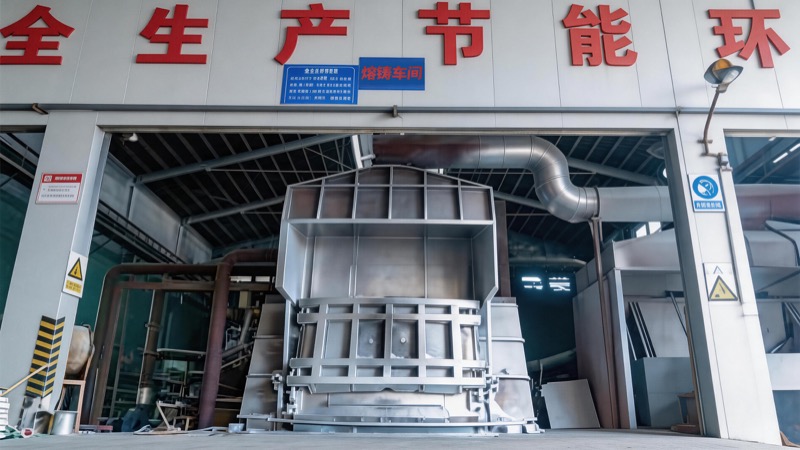
Guangdong Yonglijian Aluminium Co., Ltd., trading as YLJ Aluminium, states that it was founded in 1986 in Foshan. The company describes an integrated operation covering melting and casting, extrusion, surface treatment, and CNC fabrication, with annual capacity exceeding 100,000 tonnes.
- Core strengths: Integrated manufacturing and architectural profile experience.
- OEM/ODM scope: Custom die design, CAD/3D drawing review, extrusion, powder coating, anodizing, PVDF finishing, wood-grain finishes, and machining.
- Market coverage: More than 50 countries stated; principal export regions are not quantified on the reviewed homepage.
- Potential buyer fit: Buyers sourcing window and curtain-wall profiles together with fabricated components.
- Qualification priority: Verify which processes are performed at the quoted manufacturing site.
The homepage contains inconsistent extrusion-line counts: one section shows 20, while company text states 22. Buyers should clarify the current equipment list rather than copying either number into supplier approval records.
Guangdong Xingfa Aluminium Co., Ltd. was established in 1984 and listed in Hong Kong in 2008. Its product range includes architectural aluminum profiles, thermal-break window profiles, and window-and-door systems.
- Core strengths: Architectural system breadth, multiple manufacturing bases, and published involvement in standards development.
- OEM/ODM scope: Custom architectural sections, multiple alloy and temper options, surface finishes, and window-system solutions.
- Market coverage: China and international architectural projects; the company also describes manufacturing facilities in Vietnam and Australia.
- Potential buyer fit: Established fabricators and project buyers evaluating repeat supply across multiple profile families.
- Qualification priority: Identify the exact production base, contracting entity, tooling ownership, and permissible system modifications.
A multi-base supplier may offer sourcing options, but buyers should approve production-site changes contractually rather than assuming that qualification of one facility automatically covers every facility.
JMA reports aluminum profile manufacturing activity since 1993. Its published range includes residential window-and-door products, commercial curtain-wall systems, custom architectural extrusions, and fabricated aluminum components.
- Core strengths: Architectural extrusion and fabrication breadth, supported by dedicated design and quality teams.
- OEM/ODM scope: Custom sections, window-and-door systems, curtain-wall systems, and downstream fabrication.
- Market coverage: Domestic and international business; the reviewed homepage does not quantify its principal destination markets.
- Potential buyer fit: Buyers needing extrusion supply coordinated with fabricated parts or architectural system requirements.
- Qualification priority: Establish whether the quotation covers loose profiles, machined components, a complete profile set, or finished windows.
JMA's homepage describes annual output of 300,000 tonnes. Treat that as the company's published output statement, not a guarantee of free capacity for a new program.
Guangdong Fenglu Aluminium Co., Ltd. was founded in 1990. It reports more than 100 extrusion production lines and annual production capacity exceeding 600,000 tonnes, serving both architectural and industrial applications.
- Core strengths: Broad extrusion equipment coverage, surface-treatment capabilities, and a substantial product portfolio.
- OEM/ODM scope: Architectural and industrial profile development with different section sizes and finishing requirements.
- Market coverage: Europe, the Americas, and more than 100 countries and regions overall, according to the company.
- Potential buyer fit: Established importers and architectural buyers seeking a large-scale producer.
- Qualification priority: Match the selected coating line, finish class, and manufacturing site to the relevant current license.
Fenglu lists QUALICOAT and QUALANOD among its credentials. These should be checked for the actual supplying operation rather than treated as unrestricted approval for every finish offered by the group.
Guangdong Weiye Group Co., Ltd. states that it was established in 1992 in Nanhai, Guangdong. Its published portfolio includes architectural and industrial aluminum products, with a substantial extrusion-line network.
- Core strengths: Broad manufacturing scale and architectural profile coverage.
- OEM/ODM scope to discuss: Custom architectural sections, window-and-door profile programs, surface finishes, and associated processing.
- Market coverage: Domestic and overseas business; request destination-specific references because the reviewed homepage does not provide a dependable regional breakdown.
- Potential buyer fit: Distributors and fabricators evaluating ongoing, multi-profile purchasing programs.
- Qualification priority: Obtain a current process list, certificate package, and allocated production schedule.
The website displays different figures for capacity and annual output. Those figures may describe different measures or reporting periods; buyers should request a dated explanation rather than treating them as interchangeable.
Guangdong Huachang Group Co., Ltd., associated with the WACANG brand, traces its establishment to 1992. Its published offering covers aluminum profiles and fabricated parts, with architectural extrusion and finishing capabilities.
- Core strengths: Architectural profiles, finishing options, and an established export footprint.
- OEM/ODM scope: Profile development, finished aluminum sections, and fabricated components; confirm the precise machining and assembly scope.
- Market coverage: More than 90 countries and regions stated.
- Potential buyer fit: Importers prioritizing decorative finish consistency alongside profile supply.
- Qualification priority: Confirm the legal manufacturing entity, current management certificates, and coating specifications.
Huachang's published finishing information includes powder-coating capability for profiles up to 12 meters long. Buyers should separately confirm feasible shipping lengths, handling methods, and dimensional inspection arrangements.
Guangdong Haomei New Materials Co., Ltd. reports an operating history beginning in 1991. Its business covers architectural and industrial aluminum profiles, while its corporate website identifies it as a listed manufacturer based in Qingyuan.
- Core strengths: Profile development and manufacturing, with a publicly verifiable responsible-production credential.
- OEM/ODM scope: Architectural and industrial extrusion programs; window-system development and fabrication scope should be established in the quotation.
- Market coverage: Its marketing website states exports to more than 100 countries.
- Potential buyer fit: Buyers requiring a combination of architectural supply capability and documented sustainability-related qualification.
- Qualification priority: Check whether the supplied products and manufacturing location fall within the relevant certificate scope.
The Aluminium Stewardship Initiative directory lists an ASI Performance Standard certificate covering the manufacture of aluminum alloy building and industrial profiles, valid from July 17, 2025, through July 16, 2028. That is not automatically a product-specific carbon footprint, recycled-content guarantee, or Chain of Custody claim.
Shandong Huajian Aluminium Group Co., Ltd. states that it was founded in 2000 in Linqu, Shandong. Its published capabilities include architectural and industrial aluminum profiles, with stated annual capacity of 800,000 tonnes.
- Core strengths: Large-scale manufacturing and proximity to a concentrated window-and-door industry ecosystem.
- OEM/ODM scope: Architectural and industrial profile development; request a specific statement covering thermal-break processing, machining, and system engineering.
- Market coverage: More than 100 countries and regions stated.
- Potential buyer fit: Buyers considering larger architectural extrusion programs or an alternative regional supply base.
- Qualification priority: Reconcile extrusion capacity with finishing capacity and the production allocation available for the order.
Huajian lists several management-system certifications. Buyers should verify the relevant supplying site and scope rather than relying on a group-level certificate list.
AAG Asia Aluminum traces its brand history to 1990 and operates in Zhaoqing's Asia Aluminum Industrial City. Its website identifies Guangdong AsiaAlum Senyuan Aluminum Co., Ltd. as the operating company and describes annual production capacity exceeding 600,000 tonnes.
- Core strengths: Architectural extrusion, automated finishing, and a broad published credential portfolio.
- OEM/ODM scope: Die development, extrusion, powder coating, painting, and anodizing; confirm machining and thermal-break assembly requirements separately.
- Market coverage: Domestic architectural projects and an international project portfolio; request references for the intended destination market.
- Potential buyer fit: Architectural purchasers evaluating substantial extrusion and finishing capability.
- Qualification priority: Distinguish brand history from the current contracting entity and verify each certificate or environmental declaration individually.
The website lists EPD-related documentation and finishing credentials. Request the underlying documents, covered product families, declared production sites, and validity periods before using them in project submissions.
A quotation stating only "6063 aluminum window profile" leaves important questions unresolved.
Xingfa, for example, lists multiple alloys and T4, T5, and T6 temper options across its architectural products. These alternatives should not be treated as automatically interchangeable.
Your RFQ should identify:
- Alloy designation and applicable material standard.
- Required temper.
- Mechanical-property acceptance requirements.
- Nominal wall thickness and permissible variation.
- Critical mating dimensions.
- Straightness, twist, and cut-length tolerances.
- Required inspection documents and batch identification.
Specify properties from the window design and applicable product requirements rather than selecting a temper because it sounds stronger.
EN 755-9 covers dimensional and form tolerances for general extruded profiles, while EN 12020-2 addresses precision profiles in EN AW-6060 and EN AW-6063 within its scope. Neither standard reduces every dimension to a single universal tolerance.
For window assemblies, supplement the selected standard with drawing-specific limits for:
- Gasket grooves.
- Hardware channels.
- Corner-cleat interfaces.
- Snap-fit features.
- Thermal-break strip grooves.
- Drainage-related geometry.
- Frame-to-sash mating dimensions.
Hydro's technical guidance identifies window frames and snap-on profiles among applications where precision tolerances are relevant, while noting that achievable tolerances depend on section geometry and complexity.
Do not approve thermal-break window extrusions solely from a photograph of the insulating strip.
Technoform's specification calls for structural performance of assembled aluminum profiles with insulating profiles in accordance with EN 14024. It also emphasizes conformity testing for batch production, not only sample production.
A qualification package should therefore address:
1. Insulating-strip material and supplier identification.
2. Groove geometry and preparation.
3. Knurling and rolling settings.
4. Applicable transverse tensile and shear testing.
5. Batch traceability.
6. Test frequency and acceptance criteria.
7. Responsibilities if the strip supplier or assembly location changes.
An ISO 9001 certificate concerns a quality management system. It does not, by itself, establish the air leakage, watertightness, wind resistance, or thermal performance of a finished window.
For European projects, EN 14351-1 addresses windows and external pedestrian doorsets within its scope. European Aluminium's guidance connects CE marking with declared product performance and a Declaration of Performance. A loose extrusion supplier's documentation does not automatically complete the finished-window manufacturer's obligations.
Likewise, do not accept "CE/RoHS approved" as a complete procurement specification. Ask which product, regulation, test method, material, and intended use the claim covers. Chemical-compliance documentation cannot replace dimensional inspection or finished-window performance evidence.
A low price is difficult to evaluate if the alloy, temper, and traceability requirements remain vague.
Recommended controls:
- Link incoming material identification to the finished-profile batch.
- Require chemical-composition evidence.
- Include mechanical-property verification where specified.
- Prohibit unapproved alloy or temper substitutions.
- Define when independent testing may be required.
Avoid reducing the question to "primary versus recycled aluminum." The purchasing requirement should be conformity to the agreed composition, properties, finish, and any separately contracted environmental claims.
A sample approval is useful only when its defining conditions are recorded.
Require the approved sample record to include the drawing revision, die identification, alloy, temper, finish, inspection results, and production location. For thermal-break products, request production-batch conformity records rather than relying exclusively on prototype results, consistent with Technoform's published approach.
"Black powder coating" is not a complete finish specification.
Define the approved color reference, gloss, visible surfaces, permitted appearance variation, coating system, inspection method, and relevant durability requirements. Where a supplier claims a licensed finishing process, verify the actual license and its scope.
Ask suppliers to separate:
- Metal-pricing basis and adjustment mechanism.
- Extrusion and finishing charges.
- Tooling and trial costs.
- Packing charges.
- Machining charges.
- Minimum quantities by section and color.
- Chargeable weight basis.
- Freight and delivery terms.
This allows procurement teams to compare equivalent offers rather than headline prices.
One important sourcing risk is tolerance accumulation across a complete window set.
A frame section, sash section, glazing bead, corner cleat, and gasket interface may each satisfy an individually agreed dimension yet fail to assemble satisfactorily when their variations combine. Precision extrusion guidance specifically highlights window frames and snap-fit applications, where interacting geometry matters.
A practical qualification method is to approve the assembly, not only isolated cross-sections:
1. Identify the mating dimensions across the complete profile set.
2. Establish which dimensions control gasket compression, glazing-bead engagement, and corner assembly.
3. Inspect functional dimensions in the condition in which the buyer receives the product, including finishing and thermal-break assembly where applicable.
4. Require a representative trial corner or complete sample window.
5. Agree on go/no-go gauges or a documented assembly test.
6. Retain approved mating samples at both the factory and the buyer's facility.
This is a recommended risk-control method, not a substitute for the applicable drawing or product standard. Its purpose is to expose assembly problems before a container of individually inspected profiles reaches the fabrication line.
Request a manufacturing responsibility map covering billet sourcing, extrusion, heat treatment, finishing, thermal-break assembly, machining, inspection, and packing.
Subcontracting should be disclosed and controlled rather than automatically rejected. The contract should identify who remains accountable for conformity and claims.
Send:
- Dimensioned drawings and revision numbers.
- Expected order quantities by section.
- Forecast purchasing frequency.
- Alloy and temper requirements.
- Finish specifications.
- Functional interfaces.
- Destination market.
- Inspection and documentation requirements.
- Packing and shipment constraints.
Ask the supplier to return a deviation list instead of responding only with "we can produce."
A practical sequence is:
1. Drawing and manufacturability review.
2. Die-trial extrusion.
3. Dimensional review.
4. Finish approval.
5. Mating-component or sample-window assembly.
6. Pilot production.
7. Production-release approval.
Use the pilot order to evaluate communication efficiency, corrective-action quality, and delivery discipline—not merely sample appearance.
For long extrusions, require a packing drawing or photographs of a comparable shipment.
Specify bundle dimensions, protective separation, permitted stacking, handling points, labeling, and damage-inspection requirements. Have the freight forwarder confirm container loading feasibility before approving cut lengths.
Separately, have the importer or customs adviser confirm the tariff classification, applicable trade measures, origin requirements, and destination documentation for the exact product being purchased.
The most suitable aluminum window extrusion manufacturer is the one that can repeatedly deliver the agreed material, geometry, finish, documentation, and assembly performance within a commercially workable supply arrangement.
Large groups may suit substantial repeat programs, while a customization-focused manufacturer may be worth evaluating when engineering access and development coordination are central to the project. Neither model should be accepted without sample validation and production evidence.
Guangdong Dapeng Aluminum Industry Co., Ltd. is a relevant candidate for buyers seeking custom profiles, mold development, surface-treatment options, and support from prototyping through production. Its published service scope provides a basis for a technical discussion—not a substitute for order-specific qualification.
To begin a project discussion with Dapeng, submit your profile drawings, alloy and temper requirements, finish specification, quantities by section, destination market, and required delivery schedule. Request a written manufacturability review, tooling proposal, sample plan, inspection checklist, and itemized quotation before authorizing production.
Obtain the full certificate and search by certificate number or company name in IAF CertSearch. Compare the legal entity, address, standard, scope, issuing certification body, and current status.
The database distinguishes active, suspended, withdrawn, and expired certificates. If a certificate cannot be found, contact the issuing certification body directly; absence from a search result alone should not be treated as conclusive proof of fraud.
Not automatically.
For windows within EN 14351-1's scope, the relevant obligations concern the finished construction product and its declared performance. Profile documentation may support the technical file, but it does not independently demonstrate the performance of every assembled window configuration.
Ask who is responsible for testing, production control, the Declaration of Performance, and the final marking documentation.
First, ensure the contract defines the applicable assembled-profile tests, sampling frequency, acceptance limits, and batch traceability.
Then investigate changes in strip material, aluminum groove geometry, knurling, rolling conditions, and production location. Quarantine the affected batch until the agreed corrective-action and retesting process is completed. Technoform's specification explicitly calls for conformity evidence covering batch production rather than samples alone.
Separate installed capacity, actual output, available capacity, and capacity allocated to your order.
Then examine the production stages relevant to your specification. A supplier's total extrusion tonnage is not the same as its available capacity for a particular finish, profile family, or thermal-break process.
The comparison table illustrates why this matters: Weiye's site reports capacity and output differently, while Huachang's reviewed page provides a coating-line figure that should not be mistaken for total extrusion capacity.
Do not assume so.
Start by reading the exact document and its scope. Haomei's ASI directory entry, for example, identifies a Performance Standard certification for specified manufacturing activities; it is not presented there as a shipment-specific recycled-content guarantee.
If recycled content or a carbon-footprint threshold is commercially important, define the claim, calculation boundary, supporting evidence, and verification requirements separately in the purchase agreement.
- International Aluminium Institute — Primary Aluminium Production: Industry statistics and definitions explaining what primary production includes and excludes. These figures should not be presented as window-extrusion production or export volumes. [international-aluminium]
- European Aluminium — Aluminium Industry Priorities, June 2026: Current industry-association context on China's position in primary aluminum and downstream products. [european-aluminium]


