


Views: 262 Author: Dapeng Aluminum Publish Time: 2026-08-12 Origin: Site


Content Menu
● What Does Satin Anodized Aluminum Mean?
● How the Satin Anodizing Process Works
>> 1. Alloy and extrusion preparation
>> 2. Cleaning and deoxidizing
>> 3. Creating the satin texture
>> 4. Anodizing the aluminum surface
● Satin, Brushed, Matte, and Polished Aluminum Compared
● Where Satin Anodized Aluminum Performs Best
>> Architectural aluminum systems
>> Commercial interiors and retail fixtures
>> Industrial equipment and automation
>> Transport and new-energy components
● How to Specify Satin Anodized Aluminum Correctly
● Quality Control: What Experienced Buyers Should Verify
>> Appearance and color consistency
>> Protection during fabrication and installation
● Common Problems and How to Avoid Them
>> "The finish looks different from our sample."
>> "There are marks near the profile ends."
>> "The clear anodized surface appears darker after installation."
>> "The surface has been damaged during site work."
● Care and Maintenance for Satin Anodized Aluminum
● Partner With Guangdong Dapeng Aluminum Industry Co., Ltd.
● FAQ
>> Is satin anodized aluminum the same as brushed aluminum?
>> Can satin anodized aluminum be used outdoors?
>> Does anodizing prevent all scratches?
>> Can satin anodized aluminum be colored?
>> Why do anodized aluminum batches sometimes vary in color?
>> Should profiles be machined before or after anodizing?
>> How should satin anodized aluminum be cleaned?
Satin aluminum anodizing is a refined surface treatment that gives aluminum extrusions, sheets, and fabricated parts a soft, low-gloss metallic appearance while improving resistance to corrosion, handling marks, and everyday wear. It is widely selected for architectural systems, industrial equipment, transport components, retail displays, cleanroom profiles, and premium consumer products.
For buyers, designers, and project teams, satin anodized aluminum is not simply "silver aluminum with a dull shine." The final appearance depends on the aluminum alloy, extrusion surface, pretreatment route, anodic film thickness, coloring method, sealing quality, lighting conditions, and viewing distance. A successful specification therefore needs to define both the visual target and the performance target.
At Guangdong Dapeng Aluminum Industry Co., Ltd., we approach satin anodized aluminum as a complete manufacturing solution: profile design, alloy selection, extrusion control, machining, surface preparation, anodizing coordination, inspection, packing, and export delivery. This helps global customers reduce interface risk and receive aluminum profiles that are designed for both appearance and assembly performance.
Satin anodized aluminum is aluminum that has first been prepared to create a smooth, non-mirror texture and then electrochemically converted at the surface into aluminum oxide. The result is a controlled metallic finish with gentle light reflection rather than the strong glare of polished aluminum.
The oxide layer is created from the aluminum substrate itself. It is not a separate paint film laid on top of the metal. This is an important distinction because the finish does not behave like liquid paint or powder coating. Its appearance, wear performance, and repair options are different.
A satin finish can be achieved through more than one preparation method:
- Fine mechanical brushing for a subtle directional grain.
- Chemical etching for an even, low-reflectivity surface.
- Combined mechanical and chemical preparation for a more controlled visual effect.
- Clear anodizing to preserve a natural aluminum tone.
- Electrolytic coloring or dyeing when bronze, champagne, black, or other tones are required.
In practical specification language, "satin" describes the desired visual character. It does not independently define the alloy, pretreatment, film thickness, color tolerance, sealing quality, or inspection criteria. Those items must be stated separately.
A stable satin anodized finish is built through a sequence of controlled operations. Every stage matters, especially for large architectural profiles or visible assemblies where parts from different lots meet in the same elevation.
The process starts before anodizing. Alloy chemistry, billet quality, die condition, extrusion temperature, cooling, stretching, and surface handling all influence the final result.
For example, some alloys may show more visible grain, color variation, or surface streaking after anodizing than others. A profile that looks acceptable in mill finish can reveal defects once it receives a clear satin anodized aluminum treatment.
For critical visible projects, samples should be made from the intended alloy, extrusion route, and finishing process—not from an unrelated aluminum coupon.
The aluminum is cleaned to remove lubricants, fingerprints, oxides, and shop contamination. It is then deoxidized to prepare a more uniform surface for the next step.
This stage is easy to overlook, yet it has a direct impact on appearance. Inconsistent cleaning can lead to uneven color, water marks, smut, or visible surface variation after anodizing.
The satin character is created before the oxide film is formed. Depending on the required look, the surface may be chemically etched, brushed, or processed through a combined route.
A chemical satin finish often gives a more even appearance across broad surfaces. A mechanically brushed satin finish can deliver a linear grain that suits control panels, trim, electronics housings, furniture systems, and decorative industrial components.
The key is to define the target clearly. "Satin" can range from softly matte to lightly textured with visible directional lines.
The prepared aluminum enters an electrolyte bath and acts as the anode in an electrical circuit. The controlled reaction develops a porous aluminum oxide layer on the surface.
This layer improves surface durability and provides the base for clear or colored finishes. Film thickness should be selected according to the environment, application, handling level, and project specification.
Clear satin anodizing retains a natural metallic tone. If color is needed, the anodized pores can receive dye or electrolytically deposited color before sealing.
Sealing is essential. It closes or stabilizes the pores in the anodic film and supports long-term stain and corrosion resistance. A finish may look good immediately after production but underperform later if sealing is poorly controlled.
These terms are frequently used as if they mean the same thing. They do not.
| Finish | Surface Character | Light Reflection | Typical Use | Main Consideration |
|---|---|---|---|---|
| Satin anodized aluminum | Smooth, soft, refined metallic finish | Low to medium | Window systems, trim, displays, equipment housings | Must define color and film requirements |
| Brushed anodized aluminum | Visible directional grain | Low to medium | Decorative panels, electronics, furniture, signage | Grain direction must be controlled |
| Matte anodized aluminum | Diffused, low-gloss appearance | Low | Architectural profiles, industrial covers, low-glare parts | May show process variation under angled light |
| Polished anodized aluminum | Bright, reflective surface | High | Decorative trims and specialty components | Scratches and handling marks are more visible |
| Powder-coated aluminum | Applied colored coating | Varies | Colored facades, furniture, industrial frames | Coating thickness, adhesion, and edge coverage matter |
A brushed finish may have a satin-level sheen, but the terms describe different things: brushed refers mainly to texture and grain; satin refers mainly to the overall visual sheen and softness.
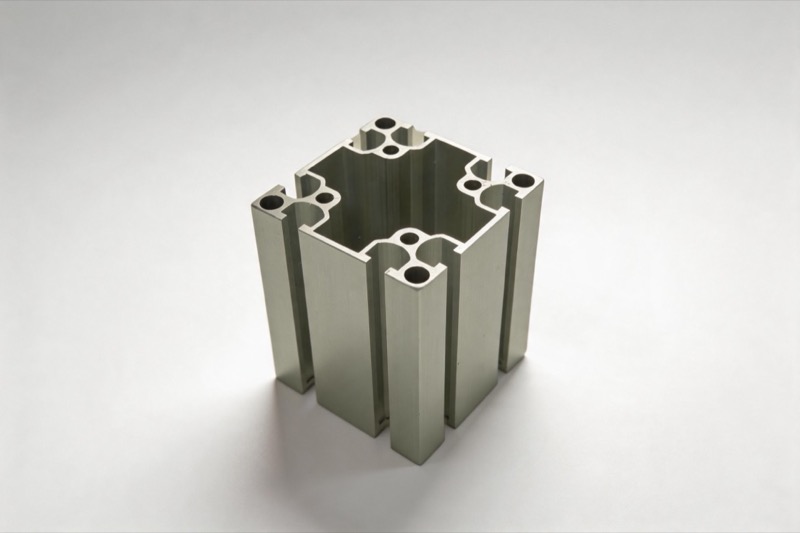
Satin anodized aluminum is especially effective where projects need a clean metal appearance without the high glare and fingerprint sensitivity of polished surfaces.
For curtain walls, windows, doors, storefronts, louvers, railings, sunshades, ceiling trims, and façade details, satin anodizing creates a contemporary metallic appearance that works with glass, stone, wood, stainless steel, and painted surfaces.
A soft satin finish can make joints, reveals, and profile geometry look more precise while reducing distracting reflections under daylight and interior lighting.
Satin anodized profiles are common in shelving, display cases, changing rooms, reception desks, partition systems, cabinet edging, signage frames, and wall transition trims.
In high-touch spaces, the finish provides a professional appearance and is generally easier to live with visually than mirror-polished aluminum. However, it still requires appropriate cleaning methods and careful installation protection.
Machine guards, workstations, conveyor frames, instrument enclosures, cleanroom systems, inspection stations, and modular assembly structures benefit from aluminum's light weight and profile flexibility.
Satin anodizing adds a more finished appearance for customer-facing equipment while retaining the practical advantages of aluminum extrusion. For functional interfaces, designers should confirm whether conductivity, grounding, bonding, thread engagement, or tight tolerances require masking or post-finishing control.
Aluminum profiles are increasingly used in battery enclosures, charging infrastructure, vehicle interiors, lightweight framing, thermal-management structures, and equipment housings.
Satin anodized aluminum may be a suitable option where a durable, low-glare visible surface is needed. The final selection should account for galvanic contact, service environment, abrasion, salt exposure, flame requirements, thermal loads, and applicable industry standards.
The phrase "clear satin anodized finish" is a starting point, not a complete requirement. A stronger purchasing specification reduces misunderstandings between designer, fabricator, anodizer, and supplier.
Use the following checklist when requesting a quotation or approving samples:
1. Product form: State whether the item is an extrusion, sheet, fabricated assembly, machined part, or welded structure.
2. Alloy and temper: Identify the selected alloy and temper, especially when visual consistency is important.
3. Visible surfaces: Mark which faces are exposed after installation and which faces may contain normal process-contact marks.
4. Surface appearance: Define satin, matte, brushed, or another target appearance. For brushed finishes, specify grain direction.
5. Color: State clear, champagne, bronze, black, or another target. Approve a physical limit sample where color matching is critical.
6. Film class or thickness: Define the required anodic coating class or minimum thickness according to the project environment and governing standard.
7. Quality tests: Request film-thickness measurement, sealing verification, visual inspection, and any project-specific corrosion testing.
8. Fabrication sequence: Confirm whether cutting, drilling, CNC machining, bending, welding, or assembly takes place before or after finishing.
9. Packaging standard: Specify protective film, interleaf paper, foam, corner protection, carton or crate type, and moisture protection for sea shipment.
10. Acceptance method: Agree on sample approval, lot identification, inspection level, allowable variation, and dispute-handling procedure before mass production.
A useful technical designation can combine mechanical preparation, chemical treatment, and anodic coating information. This gives the manufacturing team a more precise instruction than an appearance-only description.
Visual inspection remains important, but it should not be the only control point. The most reliable projects combine appearance approval with measurable quality checks.
Inspect samples under agreed lighting conditions and from an agreed viewing distance. Color and sheen can appear different under warm indoor lighting, cool white lighting, daylight, and low-angle sunlight.
For large façade or interior projects, keep profiles from the same production lot together where possible. Mixing different lots, alloys, die runs, or finishing batches can create perceptible variation even when all parts meet general requirements.
Film thickness should be checked at representative locations. Complex profile geometry may receive different current density across surfaces, so testing only a flat, easy-to-reach point can be misleading.
The thickness requirement should match the exposure conditions. Interior decorative trim, sheltered exterior applications, and demanding coastal environments should not automatically receive the same specification.
A properly sealed anodic film is fundamental to finish performance. Sealing quality can be evaluated through recognized test methods, including dye-spot and mass-loss approaches under applicable specifications.
When reviewing supplier documents, ask not only whether a test was performed, but also which method was used, how samples were selected, and whether the records are traceable to the finished lot.
Many finish complaints begin after anodizing. Dragging profiles across benches, cutting without protection, using contaminated gloves, exposing aluminum to cement residue, or leaving incompatible tapes on the surface can permanently affect appearance.
Good practice includes:
- Keep protective film intact until the latest practical installation stage.
- Use clean, non-abrasive handling supports.
- Separate aluminum from carbon-steel debris and aggressive chemicals.
- Remove construction residues promptly using approved methods.
- Inspect finished work before handover, not only before shipment.
This often results from differences in alloy, surface preparation, extrusion batch, lighting, or viewing angle. Prevent it by approving production-representative samples and defining acceptable variation in advance.
Racking and electrical-contact areas can be part of the anodizing process. Identify non-visible contact zones during profile design and define the permissible location before production.
Adjacent materials, reflected surroundings, shadow lines, sealants, glass tint, and light direction can change perceived color. Review a full-size mock-up for highly visible architectural applications.
Anodized aluminum is durable, but it is not indestructible. Avoid abrasive pads, strong alkaline cleaners, acid splashes, mortar residue, and uncontrolled contact with other metals.
Routine care is straightforward. Remove loose dust with clean water or a soft cloth, then wash with a mild, suitable detergent when necessary. Rinse thoroughly and dry with a soft, non-abrasive material.
Avoid steel wool, aggressive alkaline chemicals, strong acids, and abrasive polishing compounds unless a qualified finishing professional has approved the method. Test any unfamiliar cleaner on a concealed area first.
For exterior projects, establish a cleaning schedule based on local contamination, rainfall, salt exposure, and building geometry. Areas protected from rain wash—such as soffits, recessed joints, and lower façade zones—often need more attention than open surfaces.
The right satin anodized aluminum solution starts with a detailed conversation, not a generic finish label. Guangdong Dapeng Aluminum Industry Co., Ltd. supports customers with industrial aluminum profiles, architectural aluminum profiles, customized deep processing, and export-oriented project coordination.
Send us your drawing, alloy requirement, surface sample, application environment, estimated quantity, and destination market. Our technical team can help you develop a practical profile-and-finish specification, confirm manufacturing feasibility, and deliver a packaging solution suited to your project.
No. Satin describes a soft, low-gloss visual effect, while brushed usually describes a directional surface grain. A brushed surface can have a satin appearance, but satin anodizing can also be achieved without visible brushing lines.
Yes, provided that the alloy, film thickness, sealing quality, design details, maintenance plan, and project specification are appropriate for the environment. Coastal, industrial, and heavily polluted locations require more careful evaluation.
No surface finish can prevent all damage. Anodizing improves surface durability, but deep scratches, abrasion, impact, contaminated tools, and harsh chemicals can still damage the appearance or expose underlying aluminum.
Yes. Clear, champagne, bronze, black, and other tones may be possible through suitable coloring routes. Color approval should be based on physical samples because alloy, process settings, and lighting affect appearance.
Variation can result from alloy chemistry, extrusion conditions, surface preparation, film thickness, coloring parameters, sealing, and lighting. Consistent sourcing, batch control, approved samples, and clear inspection criteria help reduce visible differences.
It depends on the part. Machining before anodizing can provide a continuous finish over cut surfaces, while machining afterward may be needed for tight dimensions or assembly features. The sequence should be decided during engineering review.
Use clean water, a soft cloth, and a mild suitable detergent when required. Avoid abrasive pads, steel wool, highly alkaline products, strong acids, and untested cleaners.
1. [Satin Anodized Aluminum Finishes — Eagle Aluminum]
2. [Specifying Aluminum Finishes — Aluminum Anodizers Council]
3. [Anodizing Reference Guide — Aluminum Anodizers Council]
4. [Specifications for the QUALANOD Quality Label for Sulfuric Acid-Based Anodizing]
5. [What Is Anodizing and How Does It Work? — Protolabs Network]
6. [Anodized Aluminum Applications — SAF]
7. [AAMA 611-24 Architectural Anodized Aluminum Specification Update — Building Design + Construction]


