


Views: 212 Author: Dapeng Aluminum Publish Time: 2026-08-08 Origin: Site


Content Menu
● What Are the Two Manufacturing Methods?
>> Press Brake Bending for Aluminum Enclosures
>> Extruded Corner Profiles for Aluminum Enclosures
● Press Brake Bending vs. Extruded Corner Profiles: Quick Comparison
● When Press Brake Bending Is the Better Choice
>> 1. Prototype and Low-Volume Enclosure Programs
>> 2. Large Panels and Simple Box Geometry
>> 3. Projects Requiring Many Cutouts
>> 4. Lower Initial Tooling Commitment
● Press Brake Bending Limitations to Plan For
>> Alloy Temper and Bend Radius Matter
>> Seams May Affect Sealing and Appearance
● When Extruded Corner Profiles Are the Better Choice
>> 1. Modular Aluminum Enclosure Systems
>> 2. Integrated Functional Features
>> 3. Long, Straight, and Stiff Enclosure Frames
>> 4. Thermal Management Requirements
● Extruded Corner Profile Limitations to Plan For
>> Upfront Die Development Requires a Stable Design
>> Complex Profiles Need Balanced Design
● Cost Analysis: Look Beyond Piece Price
● Practical Selection Checklist
● Expert Recommendation for Aluminum Enclosure Design
● Build the Right Enclosure Platform
● FAQ
>> 1. Are extruded corner profiles stronger than press brake bent corners?
>> 2. Which option is better for low-volume aluminum enclosures?
>> 3. Can extruded corner profiles be used for waterproof enclosures?
>> 4. What aluminum alloy is suitable for press brake bending?
>> 5. Can press brake bent aluminum enclosures have a premium appearance?
>> 6. Is a hybrid enclosure design worth considering?
Selecting the right forming method can determine whether an aluminum enclosure is economical, durable, easy to assemble, and visually consistent. In the comparison of press brake bending vs. extruded corner profiles for aluminum enclosures, neither route is universally better—the correct choice depends on enclosure geometry, production volume, environmental demands, assembly method, and future product variation.
At Guangdong Dapeng Aluminum Industry Co., Ltd., we support enclosure projects that range from low-volume industrial cabinets to repeat-order transportation, energy-storage, and electronic equipment housings. From an engineering and manufacturing perspective, the key is to evaluate the whole enclosure system rather than comparing only the initial cost of a bent sheet or an aluminum extrusion die.
Press brake bending shapes a flat aluminum sheet by pressing it between a punch and die. The process creates bends, flanges, channels, trays, covers, and box-like sections from laser-cut, punched, or CNC-machined sheet blanks.
A typical press brake bent aluminum enclosure may include:
- A single folded U-shaped body.
- Separate front, rear, or top panels.
- Bent mounting flanges.
- Welded or fastened corners.
- Laser-cut holes for connectors, vents, displays, and cable entries.
Press brake bending is highly adaptable. It is especially useful when an enclosure needs frequent design revisions, custom cutouts, short lead times, or mixed production quantities.
However, the process must account for bend allowance, springback, grain direction, bend radius, material thickness, and alloy temper. These factors directly affect dimensional accuracy and surface appearance.
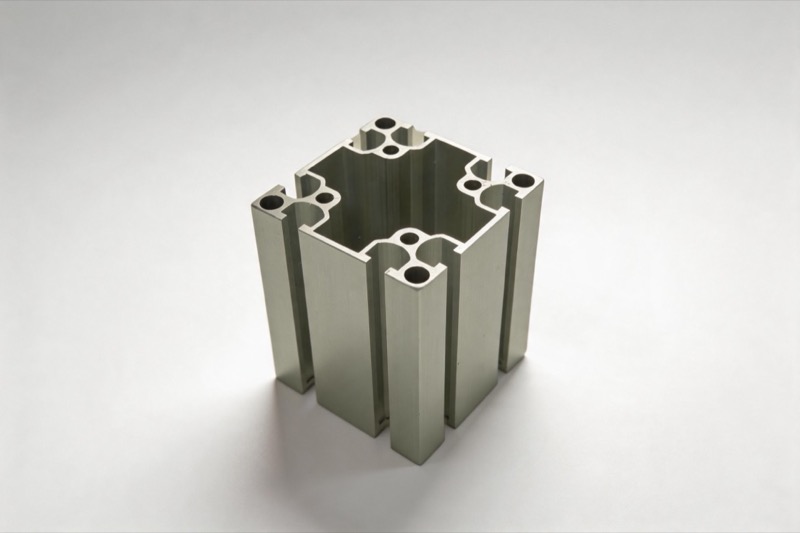
Extruded corner profiles are aluminum sections produced by forcing heated aluminum billet through a shaped die. Rather than forming a corner from a flat sheet, the extrusion already contains the required cross-sectional geometry.
For aluminum enclosures, an extruded corner profile may include:
- Structural corner channels.
- Internal screw bosses.
- Panel-retention grooves.
- Tongue-and-groove interfaces.
- Gasket channels.
- Heat-dissipation fins.
- Cable-routing paths.
- Mounting slots or T-slots.
The profile is then cut to length and combined with flat panels, sheet-metal covers, die-cast end caps, or additional extrusion components.
Extruded aluminum corner profiles create more functionality in one component. This makes them particularly attractive for modular enclosures, reusable product platforms, outdoor cabinets, electrical equipment, automation housings, battery systems, and premium electronic enclosures.
| Comparison Factor | Press Brake Bending | Extruded Corner Profiles |
|---|---|---|
| Starting material | Flat aluminum sheet | Custom aluminum extrusion |
| Initial tooling investment | Low to moderate | Higher because of extrusion die development |
| Design changes | Fast and flexible | May require a new or revised die |
| Complex cross-sections | Limited by bending geometry | Excellent for multi-feature shapes |
| Internal mounting features | Usually added by hardware or welding | Can be integrated into the profile |
| Best production volume | Prototypes, low volume, variable orders | Repeat production and scalable programs |
| Length flexibility | Limited by sheet size and bending capacity | Excellent for long, continuous enclosure frames |
| Corner appearance | Depends on seams, welds, or fasteners | Cleaner and more consistent structural corners |
| Heat management | Requires separate fins or panels | Fins and thermal features can be designed into the profile |
| Assembly speed | May require multiple fabrication steps | Can support fast modular assembly |
| Material utilization | Efficient for simple flat-pattern parts | May involve billet-end and cut-off losses |
| Typical ideal use | Custom cabinets, brackets, covers, small runs | Modular housings, industrial systems, high-value enclosure platforms |
Press brake bending is often the most practical path when flexibility matters more than integrated geometry. It can reduce the cost and risk of early-stage product development because the enclosure can be revised without committing to a dedicated extrusion die.
For new equipment, enclosure requirements often change after thermal tests, connector selection, field installation feedback, or certification review. A press brake process allows engineers to change hole patterns, flange widths, bend locations, and panel dimensions relatively quickly.
This approach is valuable for:
- Industrial control boxes.
- Test equipment housings.
- Custom machinery guards.
- Medical-device covers.
- Small-batch electrical cabinets.
- Replacement panels for existing equipment.
The main advantage is design freedom after production begins. When the product is still evolving, a bendable sheet-metal enclosure can reduce the cost of iteration.
Flat panels with a limited number of bends are well suited to press brake fabrication. A large enclosure body can be produced from one sheet blank, reducing part count and limiting the number of joints.
For example, a U-shaped aluminum enclosure can be made with two long bends, then paired with removable end panels. This may be simpler than creating multiple extruded frame sections for a low-volume project.
Laser cutting and CNC punching work efficiently with flat aluminum sheet before bending. When an enclosure requires numerous irregular openings, louver patterns, display windows, cable holes, or connector cutouts, press brake fabrication can provide a direct workflow.
A practical sequence is:
1. Cut the flat pattern.
2. Machine or punch all features.
3. Deburr critical edges.
4. Form bends with controlled tooling.
5. Install hardware, seals, and panels.
6. Inspect critical dimensions and assembly fit.
This workflow is particularly efficient when every enclosure has different cutout locations.
A standard press brake uses interchangeable punches and dies. Although custom tooling can improve repeatability, many enclosure shapes can be produced with existing tooling.
For buyers launching a product with uncertain demand, lower initial investment can outweigh a higher per-unit fabrication cost. This is often the right commercial decision when annual volume is not yet proven.
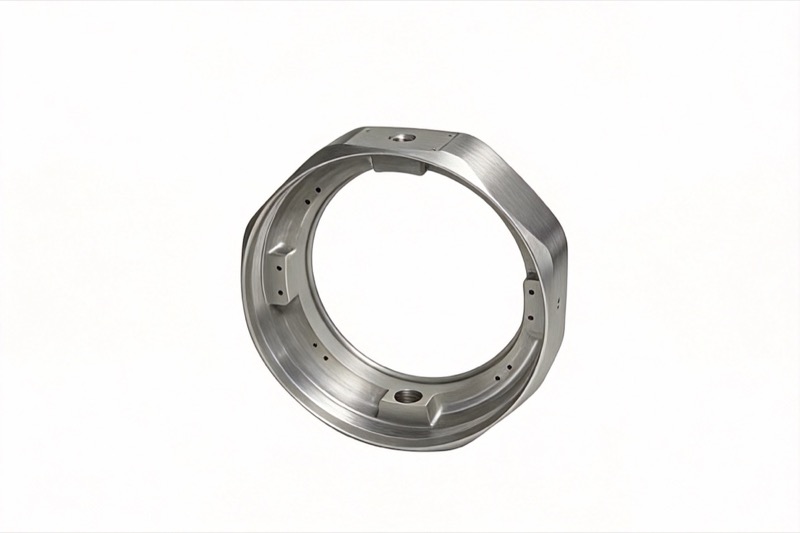
The flexibility of press brake bending comes with engineering trade-offs. A well-designed enclosure must avoid treating aluminum sheet as though it behaves identically to mild steel.
Aluminum alloy selection strongly affects bending performance. Softer and more formable sheet alloys are generally easier to bend, while high-strength tempers may need a larger inside bend radius to reduce cracking risk.
For enclosure design, engineers should confirm:
- Alloy and temper before approving a bend schedule.
- Minimum inside bend radius for the selected sheet.
- Grain direction relative to the bend line.
- Required cosmetic surface quality.
- Springback compensation method.
- Whether a heat treatment or post-forming process will affect geometry.
A sharp bend is not automatically a better bend. Tight radii can increase cracking risk, affect coating appearance, and reduce repeatability.
A press brake enclosure often needs corner welding, rivets, screws, clinching, or brackets. These joints may create visible seams and increase the number of potential water, dust, or vibration paths.
For demanding outdoor or electrical enclosures, the design may require:
- Welded and ground corners.
- Conductive or weather-resistant gaskets.
- Sealant application.
- Internal reinforcement brackets.
- Additional leak testing.
- Surface treatment after fabrication.
These secondary operations can add cost and lead time. They should be considered during the first cost comparison, not after the enclosure design is frozen.
Extruded corner profiles are most valuable when the enclosure requires repeated structural features, a refined modular appearance, or integrated functions that would otherwise require several fabricated parts.
An extrusion-based enclosure can use the same corner profile across multiple width, height, and length combinations. Panels can be inserted into dedicated grooves, while fasteners can be hidden inside channels.
This design approach supports a family of products rather than a single enclosure. A manufacturer may use one profile platform for:
- Compact control enclosures.
- Floor-standing electrical cabinets.
- Automation modules.
- Battery energy-storage housings.
- Telecom and communication equipment.
- Transportation electronics cabinets.
The major advantage is platform reuse. One well-designed extrusion can serve many enclosure sizes while preserving a consistent brand appearance.
A custom aluminum extrusion profile can combine structural, assembly, and functional details in one cross-section. This removes the need for separate brackets, internal rails, corner reinforcements, and some fasteners.
Useful integrated features include:
- Screw ports for assembly.
- Tracks for removable side panels.
- Grooves for EPDM or silicone gaskets.
- Slots for PCB rails or mounting plates.
- Channels for LED strips, wiring, or cable covers.
- Ribs that improve stiffness.
- External cooling fins.
- Interfaces for hinges, locks, and handles.
For high-value equipment, this consolidation can improve both assembly efficiency and product appearance.
Extrusion is naturally suited to long, continuous aluminum profiles. For tall cabinets or long equipment housings, extruded corners can provide a clean structural frame with fewer joints than a multi-piece sheet-metal alternative.
This is useful where enclosure stiffness and straightness affect assembly quality. It also helps create repeatable interfaces for doors, panels, glass windows, or internal modules.
Thermal performance is increasingly important in power electronics, EV charging equipment, energy storage systems, LED systems, and industrial automation products. Extruded corner profiles can integrate ribs or fins that increase the available surface area for heat transfer.
A press brake enclosure can also manage heat, but it typically requires separate heat sinks, vent panels, thermal pads, or additional fabricated features. When thermal performance is central to the product, an extrusion-based design can reduce component count.
Extruded corner profiles are powerful design tools, but they require earlier engineering discipline. The cross-section must be sufficiently mature before die production begins.
A custom extrusion die creates the profile geometry. If the design changes after the die is approved, modifications may be limited or a new die may be needed.
Before releasing an extrusion profile, confirm:
- Panel thickness and retention method.
- Wall thickness distribution.
- Corner stiffness requirements.
- Screw size and assembly access.
- Tolerance-critical dimensions.
- Surface finish requirements.
- Drainage, ventilation, and gasket details.
- Cutting, machining, and packaging requirements.
The most costly mistake is designing the profile before defining the complete assembly. A section may look efficient in CAD but create machining access problems, weak screw engagement, or panel-installation difficulties on the production line.
A profile with too many thin walls, deep narrow cavities, sharp transitions, or uneven mass distribution may be harder to extrude consistently. Advanced geometry is possible, but it must be evaluated for manufacturability, dimensional stability, die life, and finishing quality.
The best extrusion design is not necessarily the profile with the most features. It is the one that combines useful functions with stable production performance.
A reliable aluminum enclosure cost comparison should include every operation needed to deliver an assembled, finished part. Comparing only raw material weight or profile price can produce misleading results.
| Cost Element | Press Brake Bending | Extruded Corner Profiles |
|---|---|---|
| Tooling | Usually lower | Higher initial die cost |
| Cutting and machining | Flat-pattern cutting is often significant | Saw cutting and end machining are common |
| Forming | Multiple bends may be required | Cross-section is formed during extrusion |
| Assembly hardware | Often higher | Can be reduced with integrated channels |
| Welding and finishing | May be required | Often reduced, depending on frame design |
| Design modification cost | Usually lower | Can be higher after die release |
| Cost at repeat volume | Can rise with labor content | Can improve through standardized assembly |
A useful decision rule is simple: choose press brake bending when product variation and low-volume flexibility dominate; choose extruded corner profiles when the enclosure is becoming a repeatable platform with integrated functions and predictable demand.
Before selecting a manufacturing route, answer these questions with your aluminum supplier and engineering team:
1. What is the expected annual volume for the enclosure?
2. Will the enclosure dimensions or cutout pattern change frequently?
3. Does the design need integrated mounting, sealing, or thermal features?
4. Are visible corner seams acceptable?
5. What IP, vibration, corrosion, and load requirements apply?
6. Will the enclosure become a family of multiple product sizes?
7. Is low initial investment more important than long-term assembly efficiency?
8. What alloy, temper, thickness, and surface finish are appropriate?
9. Can the design be assembled without difficult access for tools or fasteners?
10. Which dimensions require functional tolerances rather than only cosmetic consistency?
In our experience with export-oriented aluminum projects, the strongest enclosure solutions often use a hybrid approach. Extruded corner profiles provide the structural frame, panel grooves, and assembly interfaces, while press brake bent aluminum panels provide flexible doors, covers, internal trays, or customized front faces.
This combined strategy is effective because it balances modularity with customization. The extrusion platform stays stable across product generations, while sheet-metal components can change to accommodate different connectors, branding, ventilation patterns, and customer-specific configurations.
For example, a battery control cabinet may use four extruded corner profiles with gasket channels and mounting rails. Its removable front door, rear cable plate, and internal equipment tray can be press brake formed. The result is a rigid enclosure with adaptable interfaces and a more manageable development budget.
Press brake bending and extruded corner profiles serve different manufacturing priorities. Press brake bending delivers flexibility, rapid changes, and a lower tooling threshold. Extruded corner profiles deliver integrated functionality, structural consistency, modularity, and stronger long-term value for repeat enclosure programs.
Guangdong Dapeng Aluminum Industry Co., Ltd. can help evaluate your enclosure concept from alloy selection and profile design through extrusion, precision cutting, machining, surface finishing, and custom fabrication. Share your drawing, target application, annual volume, and performance requirements to receive a practical manufacturing recommendation.
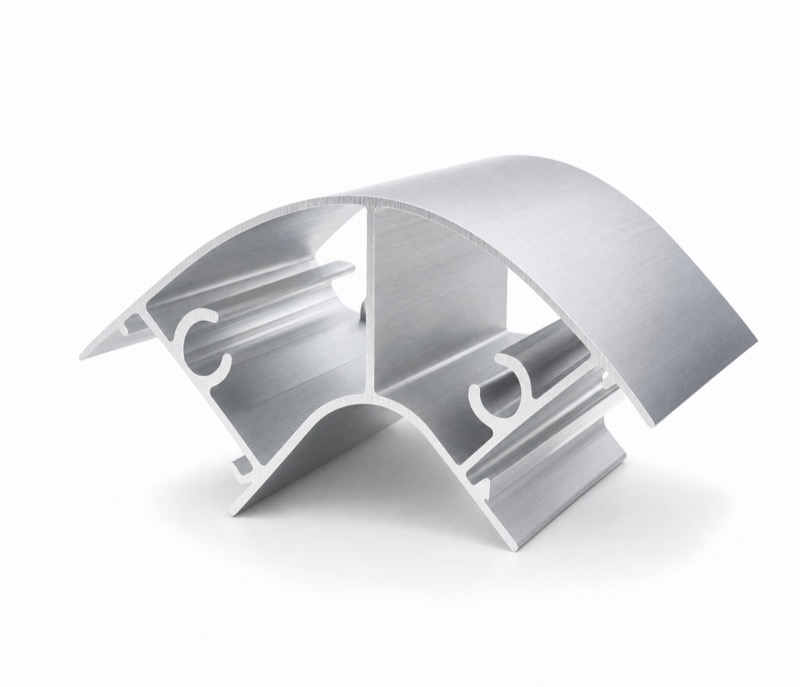
Not automatically. Strength depends on alloy, temper, wall thickness, profile geometry, corner radius, joining method, and load direction. However, a properly designed extrusion can include ribs and enclosed sections that improve stiffness without adding multiple separate reinforcement parts.
Press brake bending is usually more suitable for low-volume or frequently changing projects because it requires less dedicated tooling investment. It is also easier to revise cutouts, dimensions, and flange geometry during development.
Yes. Extruded profiles can include gasket grooves, panel-retention channels, drainage paths, and protected fastener locations. Actual protection performance depends on the full enclosure design, gasket compression, joints, doors, cable entries, and validation testing.
The suitable alloy depends on strength, corrosion resistance, finish, thickness, and required bend radius. More formable sheet alloys are generally easier to bend, while high-strength heat-treated alloys require careful radius and tooling selection.
Yes. A premium result is possible when bend radii, seam placement, weld finishing, surface treatment, and assembly tolerances are controlled. For seamless-looking long corners, however, extruded profiles often offer a more uniform visual result.
Yes. A hybrid structure can combine extruded frames or corner profiles with bent panels, doors, covers, and brackets. This approach is often ideal for industrial, electrical, transportation, and energy-related equipment that needs both structural consistency and customized interfaces.
1. [The Fabricator — Bending Aluminum 101: How to Bend 6061-T6 Aluminum] [thefabricator]
2. [The Fabricator — Press Brake Strategies for T6 Aluminum] [thefabricator]
3. [The Aluminum Association — Bookstore and Aluminum Extrusion Tolerance Resources] [aluminum]
4. [MISUMI — An Introduction to Aluminum Extrusion and Profiles] [us.misumi-ec]
5. [The Fabricator — Demystifying Aluminum Extrusion Bending] [thefabricator]
6. [Zetwerk — Roll Forming vs. Extruded Aluminum: Key Differences] [zetwerk]


