


Views: 248 Author: Dapeng Aluminum Publish Time: 2026-08-13 Origin: Site


Content Menu
● Core Benefits of Aluminum Extrusions
>> Lightweight Without Sacrificing Structural Performance
>> High Strength-to-Weight Ratio
>> Natural Corrosion Resistance
>> Complex Shapes in a Single Profile
>> Thermal and Electrical Conductivity
>> Efficient Secondary Processing
● Aluminum Extrusions Across Key Industries
>> Architectural Aluminum Profiles
>> Industrial Aluminum Profiles
>> Transportation and Mobility
● How to Choose the Right Aluminum Alloy and Temper
● Practical Design Tips for Custom Aluminum Extrusions
>> 1. Keep Wall Thickness as Uniform as Possible
>> 2. Use Ribs Instead of Excessive Solid Material
>> 3. Design Connections Into the Profile
>> 4. Allow Space for Finishing and Tolerances
>> 5. Confirm Fabrication Requirements Early
● Quality Control That Supports Reliable Delivery
● Why Work With Guangdong Dapeng Aluminum Industry Co., Ltd.
● Request a Custom Aluminum Extrusion Quote
>> What are the main benefits of aluminum extrusions?
>> Are custom aluminum extrusions more expensive than standard profiles?
>> Which aluminum alloy is best for extrusions?
>> Can aluminum extrusions be powder coated or anodized?
>> Can aluminum extrusions be machined and assembled?
>> Are aluminum extrusions suitable for solar mounting systems?
>> What information is needed for an aluminum extrusion quotation?
Aluminum extrusions give engineers, architects, and purchasing teams a practical way to turn complex ideas into durable, repeatable components. From curtain walls and industrial equipment frames to solar mounting systems and transport structures, custom aluminum extrusions combine low weight, design flexibility, corrosion resistance, and efficient processing in one material solution.
At Guangdong Dapeng Aluminum Industry Co., Ltd., we work with customers who need more than standard aluminum sections. They need profiles that fit a specific load requirement, installation method, finish standard, and production schedule. That is where a well-designed aluminum extrusion can create measurable value: fewer parts, simpler assembly, less machining, and consistent performance from prototype through volume production.
Aluminum extrusion is a manufacturing process that forms heated aluminum alloy billets into long profiles with a continuous cross-section. The softened billet is pushed through a precision die, producing a shape that can be simple, such as an angle or tube, or highly complex, such as a multi-cavity frame with channels, ribs, and mounting features.
Unlike fabrication methods that require multiple individual pieces to be cut, welded, or fastened together, extrusion can integrate many functions into one profile. A single custom section may include screw ports, cable channels, heat-dissipation fins, sealing grooves, and reinforcement ribs.
This design freedom is why aluminum extrusion is widely used in architectural systems, machine automation, transportation, electrical equipment, clean-energy installations, consumer products, and specialized industrial assemblies.
Aluminum is approximately one-third the weight of steel, copper, brass, and iron. This makes aluminum profiles easier to transport, handle, lift, and install. In products that move, such as vehicles, rail systems, trailers, and equipment enclosures, reduced weight can also support lower energy use and improved operating efficiency.
Low density does not mean that aluminum is weak. The correct alloy, temper, wall thickness, and cross-sectional geometry can produce profiles with strong load-bearing capability. Internal webs, hollow chambers, and localized reinforcement allow material to be placed where it contributes most to structural performance.
For a design team, this creates a valuable opportunity: instead of simply replacing steel with aluminum, the component can be redesigned around aluminum's strengths.
A good aluminum profile is not defined by material thickness alone. Its shape matters. Extrusion allows designers to create stiff sections that distribute loads efficiently while limiting unnecessary material.
For example, a hollow rectangular profile with internal ribs can offer stronger resistance to bending and twisting than a simple solid bar of similar weight. This approach is particularly useful for:
- Industrial workstations and machine frames
- Conveyor systems and automation equipment
- Solar rails and mounting structures
- Truck bodies, trailer components, and rail interiors
- Architectural mullions, frames, and sunshade systems
The most effective profile design considers the actual load path, connection points, span length, deflection limits, and service environment before tooling begins.
Aluminum naturally develops a thin oxide layer when exposed to air. This surface layer helps protect the base metal from further corrosion, making aluminum extrusion a reliable option for many indoor and outdoor applications.
For demanding environments, the profile can receive additional surface treatment. Common options include anodizing, powder coating, electrophoretic coating, polishing, and painting. The right finish depends on exposure conditions, appearance requirements, cleaning practices, and the desired service life.
Anodized aluminum is often selected for architectural and decorative uses because it creates a durable metallic appearance. Powder-coated profiles provide broad color options and are widely used for windows, doors, outdoor frames, equipment housings, and display structures.
One of the greatest benefits of aluminum extrusion is the ability to combine several features into one continuous component. This can reduce the need for welding, brackets, fasteners, and secondary assembly operations.
A custom profile can incorporate:
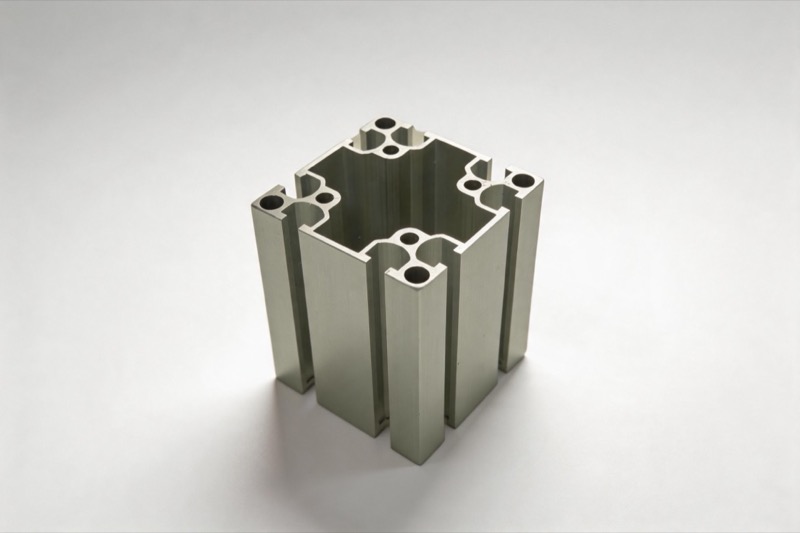
- T-slots for modular assembly
- Channels for glass, panels, or gaskets
- Screw ports and concealed fastening locations
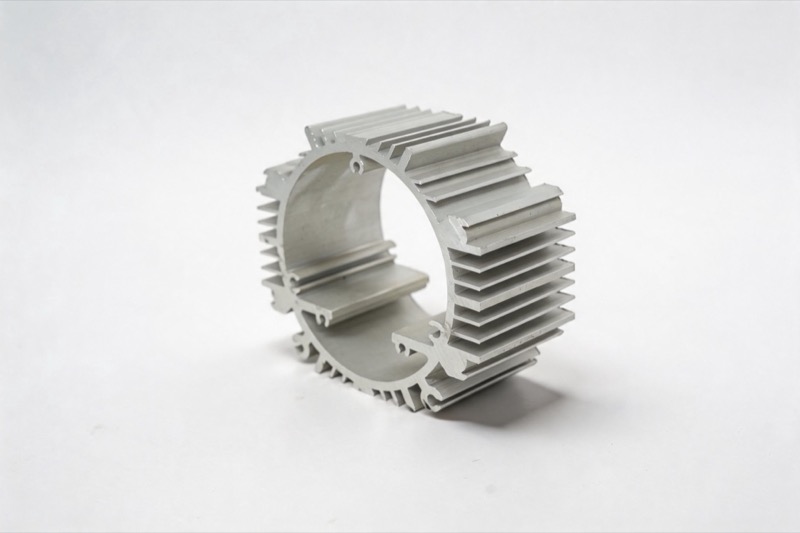
- Heat-sink fins for thermal management
- Drainage paths for windows and façade systems
- Cable-management tracks
- Interlocking edges for covers and housings
- Grooves for seals, brushes, or insulation strips
Reducing component count can improve assembly speed, lower inventory complexity, and create a cleaner finished product. It can also reduce potential leak paths, loosening points, and alignment problems.
Aluminum transfers heat efficiently, making extruded profiles particularly useful in heat-management applications. Heat sinks, LED housings, battery enclosures, inverter cases, power electronics, and cooling systems often rely on extruded fins or channels to increase surface area and release heat.
The material also has strong electrical conductivity relative to its weight. This can make aluminum suitable for busbars, electrical enclosures, conductor components, and power-distribution applications where low weight and non-magnetic performance are important.
However, conductivity requirements should always be confirmed with the selected alloy. Structural alloys, electrical-grade alloys, and decorative alloys can perform differently. Material selection should follow the end-use specification rather than appearance alone.
Extruded profiles can be supplied as mill finish or further processed into semi-finished and ready-to-assemble parts. This gives buyers the flexibility to source a basic profile or a more complete component from one manufacturing partner.
Typical value-added services include:
- Precision cutting to required lengths
- CNC drilling, milling, punching, and tapping
- Bending and forming
- Welding and assembly
- Surface finishing and protective film application
- Packaging customized for export transport
- Labeling, kitting, and inspection support
When extrusion and fabrication are coordinated at an early stage, the profile can be designed to simplify downstream operations. For example, adding a fastening channel during extrusion may eliminate a separate bracket; adding a machining allowance in the right area can improve processing stability.
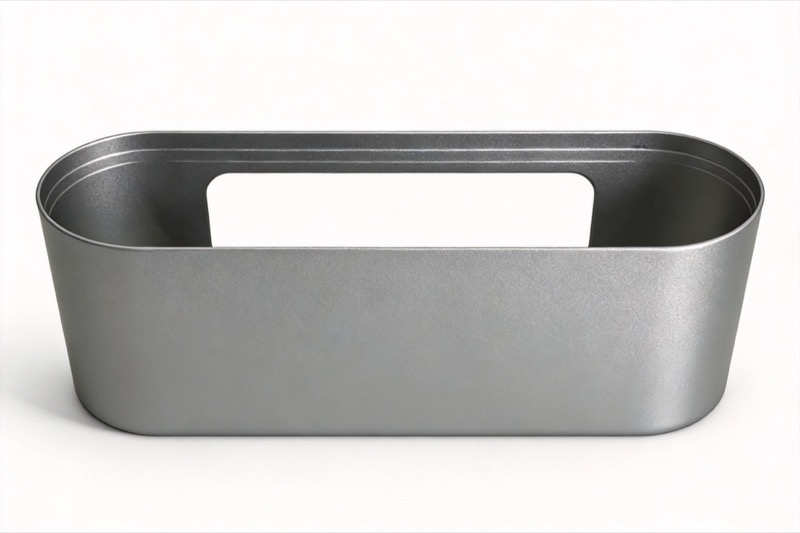
Architectural aluminum extrusion is a common choice for windows, doors, curtain walls, louvers, railings, partitions, skylights, and decorative façade components. These applications require a balance of dimensional consistency, appearance, weather resistance, and ease of installation.
In building systems, profile geometry affects more than appearance. It influences drainage, air and water sealing, thermal-break integration, glazing retention, hardware installation, and structural performance under wind loads. A profile that looks simple may require carefully controlled details to work reliably over years of daily use.
Industrial aluminum profiles are widely used for machine guards, assembly lines, workbenches, robotics, conveyor supports, clean-room structures, and automated production equipment. T-slot systems are popular because they allow frames to be assembled, adjusted, expanded, or reconfigured without welding.
For industrial projects, the focus is often on repeatability and installation efficiency. Profile dimensions, slot compatibility, straightness, cut accuracy, and connection design all affect how smoothly the final structure can be assembled.
Transportation manufacturers use aluminum extrusion for vehicle frames, roof rails, side panels, battery housings, interior structures, marine components, and rail systems. The combination of reduced weight, corrosion resistance, and flexible design supports both performance and durability.
In electric vehicles and related infrastructure, extruded aluminum can contribute to battery protection, thermal management, lightweight structural modules, charging equipment, and enclosure systems. Profiles can be engineered with crush zones, mounting points, cooling paths, and protective covers in one section.
Solar and other renewable-energy installations need materials that can remain stable outdoors while remaining efficient to transport and install. Aluminum extrusions are commonly used for solar panel frames, mounting rails, clamps, brackets, walkways, cable trays, and support structures.
For these applications, corrosion resistance is important, but it is not the only consideration. Designers should also evaluate wind load, snow load, galvanic compatibility with other metals, fastening strategy, thermal expansion, and site-specific installation conditions.
Selecting the correct alloy and temper is one of the most important decisions in an aluminum extrusion project. There is no single "best" aluminum grade for every application.
The choice should consider mechanical strength, surface-finish quality, corrosion exposure, weldability, machinability, conductivity, and forming requirements. Common extrusion alloy families are often selected for different priorities.
| Project requirement | Selection consideration | Typical design focus |
|---|---|---|
| Architectural finish | Surface quality, anodizing response, coating adhesion | Windows, doors, façades |
| Structural strength | Yield strength, wall geometry, temper | Frames, supports, transport parts |
| Marine or outdoor use | Corrosion behavior, finish system, fastener compatibility | Boats, solar systems, exterior structures |
| Precision machining | Dimensional control, machinability, stable material condition | Equipment parts, housings, fixtures |
| Heat management | Thermal conductivity, fin geometry, contact surfaces | Heat sinks, LED systems, electronics |
A professional extrusion supplier should review the profile drawing and ask practical questions before confirming the material. What load will the part carry? Will it be exposed to salt spray, chemicals, or high humidity? Does it need to be bent, welded, anodized, or machined? Will the profile be visible to the end user?
These details help avoid selecting a material that looks suitable on paper but creates avoidable issues during fabrication or installation.
A well-designed die can improve manufacturability, but it cannot fully compensate for an unrealistic profile design. Early collaboration between the customer's engineering team and the extrusion manufacturer can reduce cost and shorten development time.
Large variations in wall thickness can make metal flow more difficult during extrusion. Where possible, maintain balanced walls and make transitions gradual. This supports more stable production and can improve dimensional consistency.
If a profile needs greater stiffness, adding ribs or redesigning the cross-section may be more efficient than increasing wall thickness everywhere. This can reduce weight and material consumption while preserving performance.
Consider how the component will be assembled before finalizing the drawing. Integrating screw ports, snap-fit features, slots, and locating surfaces can reduce secondary parts and speed up production.
Anodizing and powder coating add surface thickness. Mating parts, sliding mechanisms, and gasket channels should allow for this. Tolerances should also reflect the function of the part rather than applying unnecessarily tight limits to every dimension.
Drilled holes, cut-outs, bending, welding, threading, and assembly requirements should be shared during quotation. This allows the supplier to recommend practical profile changes and plan a more efficient manufacturing route.
For export projects, consistent quality involves more than inspecting the finished profile. It begins with raw-material control and continues through extrusion, stretching, cutting, aging, finishing, fabrication, packing, and shipment.
A structured quality process may include dimensional inspection, surface review, straightness checks, hardness or mechanical-property verification where required, coating assessment, and packaging inspection. The scope should match the customer's drawing, applicable standard, and agreed acceptance criteria.
Clear documentation also matters. Buyers benefit when drawings, tolerances, alloy and temper requirements, finish codes, packing details, and inspection expectations are confirmed before production. This reduces ambiguity and helps both sides resolve issues quickly if adjustments are required.
Guangdong Dapeng Aluminum Industry Co., Ltd. provides aluminum alloy solutions for customers seeking industrial aluminum profiles, architectural aluminum profiles, and customized deep-processing services. Our role is to help global customers convert functional requirements into practical, manufacturable aluminum components.
We support projects that require custom profile development, stable production, secondary fabrication, surface finishing, and export-oriented packing. Our team works closely with customers to clarify drawings, application conditions, material requirements, and post-processing needs before production moves forward.
Whether you are developing an architectural system, industrial frame, transport component, or renewable-energy structure, the right extrusion partner should help you reduce unnecessary complexity while protecting the performance requirements that matter most.
A successful extrusion project starts with the right technical information. Send us your drawing, 3D file, sample, or application concept, together with the alloy, temper, finish, dimensions, estimated quantity, and fabrication requirements.
Our technical team can review your project and help identify a suitable custom aluminum extrusion solution for your application. Contact Guangdong Dapeng Aluminum Industry Co., Ltd. to discuss your profile design, processing needs, and export requirements.
The main benefits include low weight, strong structural performance, corrosion resistance, flexible profile design, good thermal conductivity, recyclable material value, and efficient secondary fabrication. Extrusion also enables multiple functional features to be integrated into one continuous profile.
Custom profiles require die development, so they may have a higher initial project cost. However, they can reduce total cost by eliminating separate brackets, welding, machining, and assembly steps. The best comparison is total installed component cost, not only the price per kilogram.
The best alloy depends on the application. Architectural profiles may prioritize finish quality and corrosion resistance, while industrial or transport components may prioritize strength and machinability. A supplier should recommend an alloy after reviewing the drawing, environmental conditions, finish, and fabrication requirements.
Yes. Aluminum extrusions can receive anodizing, powder coating, electrophoretic coating, painting, polishing, and other finishes. The selected finish should match the required appearance, service environment, wear resistance, and dimensional fit.
Yes. Extrusions can be cut, drilled, milled, punched, tapped, bent, welded, and assembled. Designing these requirements into the profile at the start can reduce processing time and improve the final part's consistency.
Yes. Aluminum extrusions are widely used for solar frames, rails, brackets, clamps, and support components because they are lightweight, corrosion resistant, and adaptable to site-specific structural requirements. The final design should account for local wind, snow, roof, fastening, and grounding conditions.
Provide a 2D drawing or 3D model, profile dimensions, alloy and temper if known, surface-finish requirement, length, quantity, machining or assembly needs, quality requirements, packing details, and destination market. A sample or application photo can also help clarify functional expectations.
1. Aluminum Extruders Council. "[Advantages of the Extrusion Process]." Covers material behavior, profile design flexibility, corrosion resistance, conductivity, recyclability, fabrication, and market applications. [aec]
2. Hydro. "[Uses of Aluminum Extrusions]." Provides an overview of the extrusion process, industrial applications, transportation uses, heat transfer, construction, and secondary fabrication. [hydro]
3. Bonnell Aluminum. "[A Complete Guide to the Aluminum Extrusion Process and Its Advantages]." Details extrusion production stages, material and process advantages, finishing options, alloy considerations, and sustainable manufacturing practices. [bonnellaluminum]
4. Eagle Aluminum. "[Benefits of Aluminum Extrusions]." Original reference article reviewed for its discussion of aluminum properties, applications, finishing, recyclability, and custom extrusion services. [eagle-aluminum]
5. Aluminum Extruders Council. "[Transportation]." Discusses the role of aluminum extrusion in lightweight vehicle structures, corrosion resistance, component integration, and crash-energy management. [aec]


