


Views: 241 Author: Dapeng Aluminum Publish Time: 2026-09-20 Origin: Site


Content Menu
● What Is the Aluminum Extrusion Process?
● Why Aluminum Extrusion Matters in Modern Manufacturing
● Step-by-Step Aluminum Extrusion Process
>> 1. Selecting the Aluminum Alloy
>> 2. Billet Preparation and Controlled Heating
>> 3. Die Design for Custom Aluminum Profiles
>> 4. Extruding the Heated Aluminum Through the Die
>> 5. Cooling and Quenching the Extrusion
>> 6. Stretching, Cutting, and Aging
● Surface Finishing and Deep Processing Options
>> Custom Fabrication Services
● Applications of Extruded Aluminum Profiles
>> Architectural Aluminum Systems
>> Industrial Aluminum Extrusions
>> Transportation and Mobility
● How to Specify a Custom Aluminum Extrusion
● Quality Control That Supports Export Projects
● Choosing the Right Aluminum Extrusion Partner
● Build Better Products With Custom Aluminum Extrusions
>> What is aluminum extrusion used for?
>> What is the difference between 6061 and 6063 aluminum extrusion?
>> Can aluminum extrusions be customized?
>> What is the minimum order quantity for custom aluminum extrusion?
>> How long does it take to produce a custom aluminum extrusion die?
>> Can aluminum extrusions be used outdoors?
>> Why do aluminum extrusion tolerances vary?
Aluminum extrusion is the process of transforming a heated aluminum billet into a continuous, precisely engineered profile by forcing the metal through a specially designed die. For architects, OEM buyers, fabricators, and industrial engineers, it is one of the most practical ways to obtain lightweight, corrosion-resistant, and application-specific aluminum components at scale.
At Guangdong Dapeng Aluminum Industry Co., Ltd., we develop, manufacture, and export aluminum alloy profiles for global construction, industrial manufacturing, transportation, and new-energy applications. With integrated production equipment, rigorous quality controls, technical support, and custom fabrication capabilities, we help customers move from a profile concept to reliable, export-ready aluminum solutions.
The aluminum extrusion process shapes aluminum alloy into a long product with a consistent cross-section. Think of pressing soft clay through a shaped opening: the material exits with the geometry of that opening. In industrial aluminum extrusion, however, the process depends on controlled temperature, alloy chemistry, press force, die engineering, cooling, straightening, aging, and inspection.
A single custom aluminum extrusion die can create features that would otherwise require multiple machining, welding, or assembly steps. These features may include:
- Hollow chambers
- Screw ports
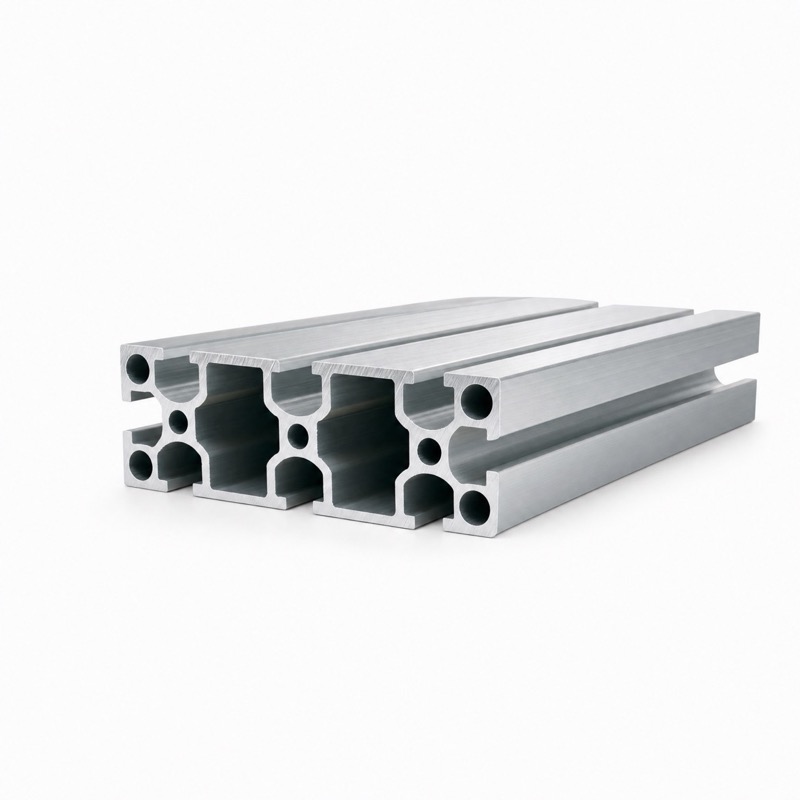
- T-slots
- Internal ribs
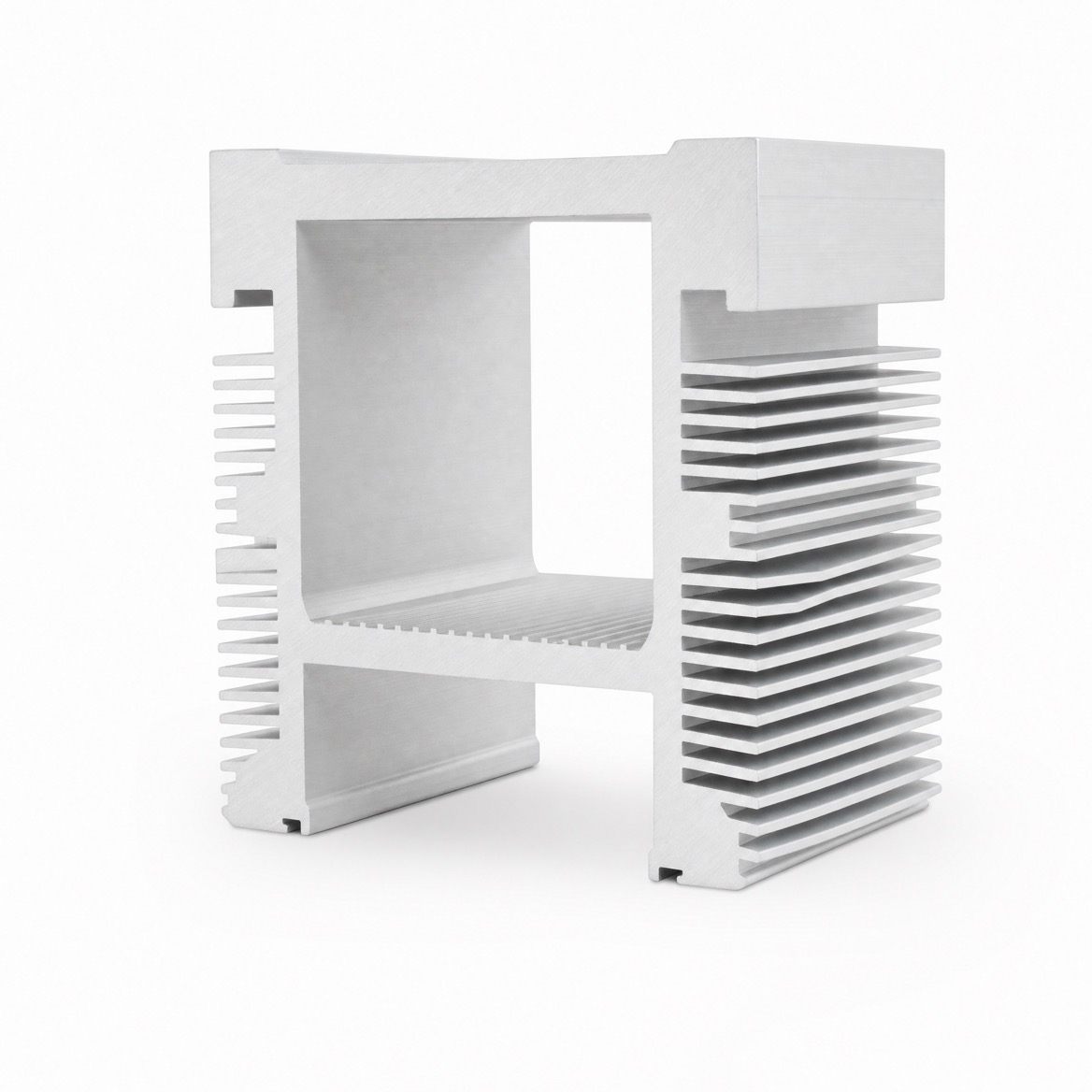
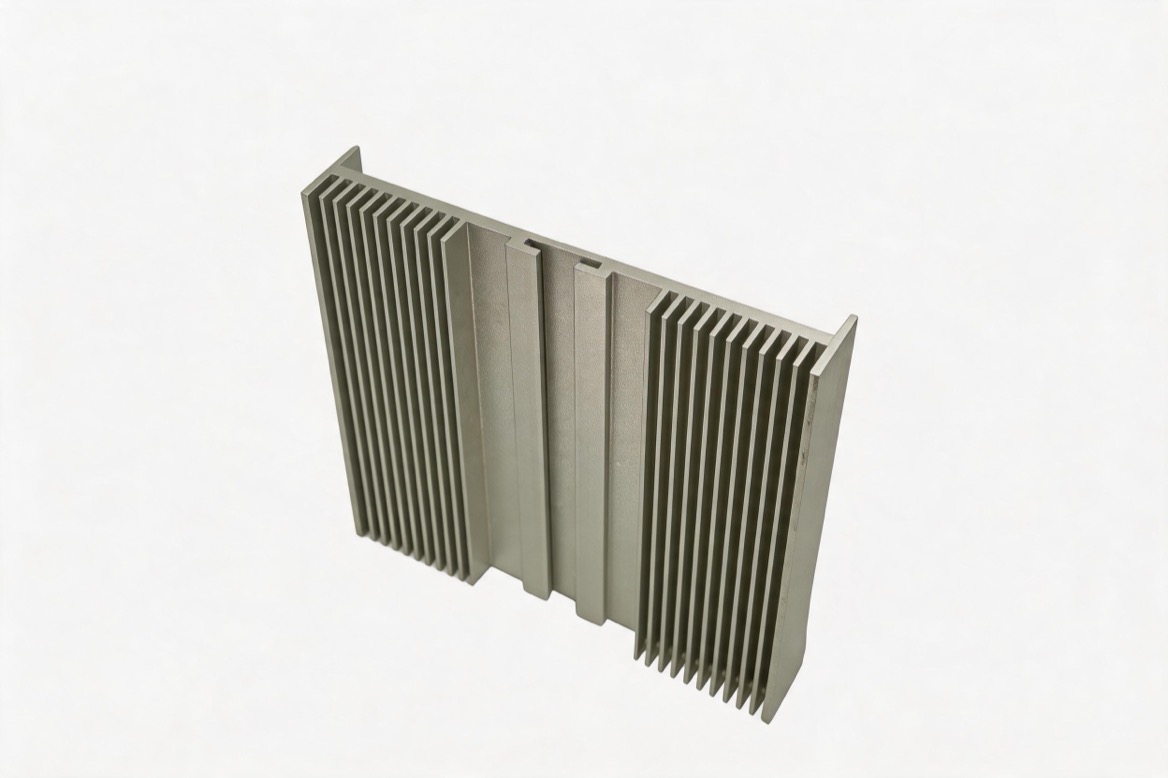
- Heat-dissipation fins
- Interlocking edges
- Mounting channels
- Decorative surfaces
- Drainage paths
- Structural reinforcement zones
This ability to integrate functions into one profile is why extruded aluminum is widely used in windows, curtain walls, doors, solar frames, industrial workstations, transportation structures, electronics enclosures, and machinery components.
The value is not simply in producing aluminum shapes. It is in producing shapes that reduce weight, simplify assembly, improve appearance, and perform consistently in real operating conditions.
Aluminum offers an unusual combination of properties. It is much lighter than steel, naturally corrosion resistant, highly recyclable, and compatible with numerous finishing and fabrication processes. Extrusion expands those benefits by giving designers greater freedom over the profile's shape.
For manufacturers, this can mean fewer components, lower handling requirements, and more efficient production.
| Benefit | Why It Matters to Buyers |
|---|---|
| Lightweight construction | Helps reduce transport weight, simplify installation, and support energy-efficient product designs |
| Design flexibility | Allows complex cross-sections, cavities, channels, and functional features in one profile |
| Corrosion resistance | Supports long-term use in outdoor, humid, coastal, and industrial environments |
| Surface finishing options | Enables anodizing, powder coating, electrophoresis, polishing, brushing, and other finishes |
| Repeatable production | A well-designed die supports consistent profile geometry across volume production |
| Recyclability | Aluminum can re-enter the material cycle, helping customers develop more resource-efficient products |
| Secondary processing compatibility | Supports cutting, CNC machining, drilling, punching, bending, welding, assembly, and packaging |
Recycled aluminum can require roughly 95% less energy than primary aluminum production, which makes responsible scrap recovery and recycled-content planning increasingly important for manufacturers serving sustainability-focused markets.
A reliable extrusion is not created by press force alone. It results from coordination between alloy selection, billet preparation, die design, extrusion parameters, cooling, aging, finishing, and quality inspection.
The process begins with choosing an alloy suitable for the application. The selection should be based on the product's mechanical load, corrosion exposure, desired surface appearance, fabrication needs, and finishing requirements.
For many architectural and industrial aluminum profiles, 6000-series alloys are widely used because they balance extrudability, strength, corrosion resistance, and finishing performance.
Two common options include:
- 6063 aluminum alloy: Often selected for architectural aluminum profiles, window and door systems, decorative trim, railings, solar frames, and profiles requiring a clean anodized or powder-coated appearance.
- 6061 aluminum alloy: Often selected when higher structural strength is required, such as industrial frames, transportation components, machinery structures, and load-bearing applications.
Alloy choice should never be based on strength alone. A profile that appears suitable on paper may still create challenges in extrusion speed, dimensional control, surface quality, machining, welding, or finishing. The best solution balances the full manufacturing and end-use requirement.
Aluminum billets are cylindrical logs of aluminum alloy prepared for extrusion. Before entering the press, billets are cut to length and heated until the metal becomes plastic enough to flow under pressure without melting.
Typical billet-heating conditions vary by alloy, profile complexity, press capability, and target properties. Industry guidance commonly places billet heating in a range around 750°F to 925°F, or approximately 400°C to 495°C.
Temperature control is one of the most important parts of the process. If the billet is too cool, aluminum may not flow smoothly through the die. If it is too hot, the profile can suffer from surface defects, poor dimensional stability, or undesirable metallurgical changes.
An experienced manufacturer monitors more than the billet temperature. The team must also consider:
- Container temperature
- Die temperature
- Extrusion speed
- Exit temperature
- Alloy composition
- Profile wall thickness
- Cooling method
- Required temper
The extrusion die determines the cross-sectional shape of the finished aluminum profile. It is a precision-engineered tool, generally made from hardened tool steel, with an opening that guides the heated aluminum into the required geometry.
For standard shapes such as angles, channels, tubes, flat bars, and U-profiles, the die design is relatively straightforward. For custom industrial aluminum extrusions, the engineering work becomes more complex.
A well-designed die must account for metal flow. Aluminum naturally seeks the easiest route through the die, so profiles with uneven wall thicknesses, large hollow chambers, deep narrow fins, or asymmetric sections require careful balancing.
Poor die design can cause uneven flow, twisting, dimensional variation, inconsistent wall thickness, or surface defects.
Before production, an experienced technical team should review:
1. The application load and assembly method
2. Alloy and temper requirements
3. Cross-section geometry
4. Minimum and maximum wall thickness
5. Hollow versus solid profile structure
6. Tolerance requirements
7. Surface-finish expectations
8. Length, packaging, and shipping requirements
9. Secondary fabrication needs
10. Expected order volume and repeat demand
Wall thickness is particularly important because it affects profile strength, weight, material consumption, extrudability, tolerance capability, and cost.
Once heated, the billet enters the extrusion press. A hydraulic ram applies significant force and pushes the billet through the die opening. The emerging aluminum takes on the exact shape of the die.
The result is a continuous aluminum extrusion with the same cross-sectional geometry throughout its length.
During this stage, production teams monitor several factors:
- Press pressure
- Ram speed
- Metal-flow balance
- Die condition
- Profile exit temperature
- Surface quality
- Straightness
- Cooling response
Complex profiles may require slower production speeds to protect dimensional accuracy and surface quality. Simple solid profiles can often be produced more efficiently. This is why two profiles with similar weight may have very different production difficulty and pricing.
As the aluminum profile leaves the die, it must cool in a controlled manner. Cooling may use air, water, mist, or a combination of methods, depending on the alloy, profile geometry, and required mechanical properties.
This stage is called quenching when cooling is used to help lock alloying elements into solution before later aging. The cooling rate affects strength, distortion risk, residual stress, and final performance.
For example, 6061 aluminum profiles often require more controlled quenching than profiles made from alloys selected mainly for architectural surface quality. The aim is not simply to cool the aluminum quickly. It is to achieve the desired balance between mechanical properties and dimensional stability.
The Aluminum Extrusion Council notes that heating, cooling, quenching, die design, extrusion speed, and aging all influence the final grain structure and mechanical behavior of an extrusion.
After cooling, the long extrusion is transferred to a stretching operation. Stretching helps improve straightness and reduce internal stress. The profile is then cut to required lengths.
For many alloys and tempers, the material also undergoes artificial aging in temperature-controlled ovens. Aging develops the final mechanical properties needed for the specified temper.
The typical post-extrusion sequence may include:
- Cooling or quenching
- Stretch straightening
- Rough cutting
- Artificial aging
- Final precision cutting
- Surface finishing
- Fabrication or machining
- Final inspection
- Protective packaging
This sequence matters because even a well-extruded profile can lose value if it is poorly handled, improperly aged, inaccurately cut, or inadequately protected during transport.
Extrusion creates the profile shape, but many customers require a finished component rather than a raw mill-finish length. Integrated processing can reduce supply-chain complexity and improve consistency between the profile, its finish, and its fabricated features.
| Surface Treatment | Typical Benefits | Common Applications |
|---|---|---|
| Mill finish | Economical natural aluminum surface | Industrial parts, internal structures, further fabrication |
| Anodizing | Improved corrosion resistance and metallic appearance | Windows, doors, curtain walls, furniture, electronics |
| Powder coating | Broad color selection and durable protective layer | Architectural systems, outdoor structures, equipment frames |
| Electrophoresis | Uniform decorative coating and corrosion protection | High-end architectural and decorative products |
| Brushing or polishing | Enhanced visual appearance | Interior trim, consumer products, decorative profiles |
| Wood-grain finishing | Decorative wood-like appearance | Window and door systems, exterior architectural applications |
A complete aluminum profile solution may also include:
- Precision cutting
- CNC machining
- Drilling
- Punching
- Tapping
- Milling
- Bending
- Welding
- Assembly
- Protective film application
- Custom labeling
- Export packaging
For an overseas buyer, obtaining extrusion, finishing, machining, and packaging from one coordinated manufacturer can reduce the risk of mismatch between separate suppliers.
The versatility of aluminum extrusion makes it relevant across both traditional and rapidly expanding industries.
Architectural aluminum profiles are used in:
- Windows and doors
- Curtain walls
- Sliding systems
- Facades
- Railings
- Louvers
- Sunshade systems
- Partition walls
- Ceiling systems
- Decorative trim
- Pergolas and outdoor structures
Architectural projects often require excellent surface quality, color consistency, corrosion resistance, and precise assembly compatibility. For these applications, alloy selection, finishing control, wall thickness, and profile design should be evaluated as a complete system.
Industrial aluminum profiles are widely used in:
- Machine frames
- Automation equipment
- Conveyor systems
- Workbenches
- Safety guards
- Cleanroom structures
- Modular assembly lines
- Storage systems
- Robotics enclosures
- Equipment housings
T-slot aluminum profiles are especially valued because they allow modular assembly without welding. Components can be repositioned, expanded, or replaced as operational needs change.
Transportation manufacturers use aluminum extrusions in:
- Vehicle body structures
- Trailer components
- Rail transit systems
- Marine hardware
- Cargo systems
- Battery enclosures
- Lightweight support frames
- Interior structural parts
Reducing vehicle mass can contribute to improved energy efficiency, increased payload potential, and easier handling. However, transportation applications often impose demanding requirements for strength, fatigue performance, joining methods, corrosion resistance, and dimensional stability.
Aluminum's thermal conductivity and corrosion resistance make it valuable in new-energy and electronics applications, including:
- Solar panel frames
- Solar mounting structures
- Battery pack housings
- Energy-storage enclosures
- EV charging equipment
- LED housings
- Heat sinks
- Electrical cabinets
- Inverter frames
For thermal-management components, profile design can increase surface area through fins and channels. For solar applications, manufacturers must balance profile strength, weight, corrosion protection, drainage design, and installation efficiency.
A clear request for quotation helps manufacturers assess feasibility, tooling needs, lead time, and price more accurately. Buyers should avoid sending only a general phrase such as "need aluminum profile quotation."
Instead, provide the following information:
1. Cross-section drawing: Include dimensions, critical tolerances, wall thickness, and functional features.
2. Alloy and temper: Specify the required alloy, such as 6063-T5, 6063-T6, or 6061-T6, if known.
3. Surface treatment: State mill finish, anodized finish, powder-coat color, wood-grain finish, or another requirement.
4. Length and cutting tolerance: Confirm standard bar length or customized cut lengths.
5. Fabrication needs: Identify holes, slots, machining, drilling, bending, tapping, assembly, or other processing.
6. Application environment: Mention indoor, outdoor, coastal, high-humidity, structural, thermal, or electrical conditions.
7. Annual or project quantity: Quantity affects die investment, production planning, and packaging strategy.
8. Packaging requirements: Specify protective film, paper interleaving, shrink wrap, pallet type, carton labels, and shipping marks.
9. Quality documents: Clarify whether you need material certification, inspection reports, coating records, or other project documents.
The earlier a manufacturer reviews the drawing, the easier it is to identify improvements that reduce cost or improve manufacturability before tooling begins.
For global projects, consistent quality means more than checking a profile after production. It requires controls throughout the entire manufacturing flow.
At Guangdong Dapeng Aluminum Industry Co., Ltd., the goal is to support customers with stable aluminum profile quality, technical coordination, and customized processing for export-oriented orders.
A robust quality-control process should cover:
- Raw material and alloy verification
- Billet and process-temperature control
- Die inspection and maintenance
- In-process dimensional checks
- Wall-thickness measurement
- Straightness inspection
- Surface-defect review
- Mechanical-property verification when required
- Coating or anodizing inspection
- Fabrication accuracy checks
- Packaging inspection before shipment
Tighter tolerances often increase production difficulty, reduce output efficiency, and raise cost. Industry design guidance emphasizes that profile geometry, alloy choice, and wall thickness directly influence the tolerance that can be achieved in production.
This does not mean buyers should avoid precise requirements. It means critical tolerances should be identified clearly, while non-critical dimensions should remain commercially realistic.
The right extrusion supplier should not be selected based on price alone. A low initial quotation can become expensive if it leads to unsuitable alloy selection, tooling revisions, coating inconsistency, poor packaging, missed delivery windows, or assembly problems at the customer's facility.
When evaluating an aluminum extrusion manufacturer, ask:
- Can the supplier support both standard and custom aluminum profiles?
- Does the team review drawings for manufacturability before die production?
- Can the supplier provide the required alloy, temper, finish, and fabrication in one coordinated workflow?
- How are dimensions, straightness, surface quality, and packing inspected?
- Can the supplier provide technical communication in English for international projects?
- Is the production capacity suitable for both samples and repeat orders?
- Does the supplier understand export packaging, container loading, and shipment protection?
- Can the supplier support construction, industrial, transportation, or new-energy requirements?
A capable partner contributes practical feedback before production begins. That feedback may involve improving wall thickness distribution, simplifying a difficult feature, modifying tolerances, selecting a better alloy, or choosing a finish suitable for the environment.
Aluminum extrusion is more than a shaping method. It is an engineering platform for creating durable, lightweight, functional, and scalable products across architecture, industrial equipment, transportation, and clean-energy applications.
Whether you need architectural aluminum profiles, industrial T-slot extrusions, solar frames, transportation components, or deeply fabricated custom aluminum parts, Guangdong Dapeng Aluminum Industry Co., Ltd. can support your project from drawing review and die development to extrusion, finishing, fabrication, inspection, and export packaging.
Send us your drawing, required alloy, surface treatment, dimensions, and estimated quantity to receive a practical manufacturing evaluation and customized aluminum extrusion solution.
Aluminum extrusion is used to produce consistent aluminum profiles for windows, doors, curtain walls, solar frames, industrial equipment, transportation parts, heat sinks, machinery frames, railings, furniture, and many other products. It is especially useful when a component requires a long, consistent cross-section with integrated functional features.
6061 generally provides higher strength and is commonly used for structural, industrial, and transportation components. 6063 is widely used for architectural applications because it offers excellent extrudability, corrosion resistance, and surface-finishing quality. The best alloy depends on load, environment, appearance, machining, and finishing requirements.
Yes. Custom aluminum extrusions can be designed with unique cross-sections, holes, channels, ribs, mounting features, hollow chambers, and interlocking structures. After extrusion, profiles can also be cut, drilled, machined, bent, finished, assembled, and packed according to customer requirements.
The minimum order quantity depends on profile size, alloy, die complexity, surface treatment, fabrication requirements, and the manufacturer's production arrangement. New custom profiles also require tooling investment. Sharing expected annual demand helps the manufacturer recommend the most practical production plan.
Die-development time depends on profile complexity, die type, technical review requirements, and trial-extrusion results. Simple profiles may move faster, while hollow, thin-wall, highly precise, or complex custom profiles usually require more engineering and validation time.
Yes. Aluminum is naturally corrosion resistant, and outdoor performance can be enhanced through anodizing, powder coating, electrophoresis, and appropriate profile design. For coastal, high-humidity, or heavily polluted environments, customers should clearly state the service conditions so the alloy and finish can be selected accordingly.
Extrusion tolerances are affected by profile geometry, wall thickness, alloy, die design, press capability, cooling behavior, straightening, and finishing processes. Tight tolerances are achievable in many cases, but they should focus on dimensions that are functionally critical to avoid unnecessary production cost.
2. [Bonnell Aluminum — Aluminum Extrusion Process]
3. [Aluminum Extruders Council — Aluminum Extrusion Manual]
4. [Hydro — Extrusion Quick Guide for Designing With Aluminium]
5. [Hydro — Digital Design Manual for Aluminum Extruded Profiles]


