


Views: 238 Author: Dapeng Aluminum Publish Time: 2026-09-10 Origin: Site


Content Menu
● Quick Answer: 5052 vs 6061 Aluminum
● Aluminum 5052 vs 6061: Core Differences
>> Important Note About Temper
● 5052 vs 6061 Aluminum Properties Comparison
● Strength and Structural Performance
>> Where 6061 Has an Advantage
● Corrosion Resistance: Why 5052 Performs Better
>> Corrosion Is a System Issue
● Formability and Bending Performance
>> Why 6061-T6 Can Crack During Bending
● Weldability and Heat-Affected Zones
● Machinability and Precision Manufacturing
● Product Form Matters: Sheet, Plate, Extrusion, or Custom Fabrication?
>> Choose 5052 for Sheet-Metal Fabrication
>> Choose 6061 for Extrusions and Engineered Components
● How to Choose Between 5052 and 6061
>> Ask These Questions Before Ordering
● Cost Comparison: Look Beyond Material Price
● Why Custom Manufacturing Support Matters
● FAQ
>> Is 5052 aluminum stronger than 6061 aluminum?
>> Is 5052 or 6061 better for bending?
>> Is 5052 aluminum good for marine applications?
>> Can 6061 aluminum be welded?
>> Which aluminum alloy is better for CNC machining?
>> Can 6061 replace 5052 in outdoor applications?
>> Does 5052 or 6061 weigh less?
When comparing aluminum 5052 vs 6061, the correct choice depends less on which alloy is "better" and more on what your part must withstand. In our experience supporting industrial, architectural, transportation, and new-energy projects, 5052 aluminum is usually selected for corrosion resistance, bending, and welded sheet-metal fabrication, while 6061 aluminum is preferred for higher-strength structures, precision-machined components, and extruded profiles.
For buyers, engineers, and project managers, the most important question is not simply "5052 vs 6061 aluminum." It is: Will the part face saltwater, frequent forming, welding heat, heavy loads, tight machining tolerances, or outdoor exposure? The answer determines the alloy, temper, fabrication route, surface treatment, and total project cost.
At Guangdong Dapeng Aluminum Industry Co., Ltd., we help global customers evaluate alloy selection from both a material-performance and manufacturing perspective. A technically suitable alloy can reduce cracking during fabrication, improve service life, lower rework rates, and make downstream processing more predictable.
Choose 5052 aluminum when your priority is:
- Excellent corrosion resistance, especially in humid, coastal, marine, or chemical environments
- Strong formability for bending, stamping, rolling, and deep drawing
- Reliable weldability for tanks, enclosures, panels, and fabricated assemblies
- Medium-strength sheet-metal components
- A smoother route for formed parts with tight bend radii
Choose 6061 aluminum when your priority is:
- Higher strength and rigidity
- Structural load-bearing performance
- CNC machining and dimensional precision
- Extruded sections, frames, brackets, rails, and mechanical components
- Components that can benefit from heat treatment, particularly the T6 temper
In simple terms: 5052 is the fabrication-oriented choice; 6061 is the structure-and-machining-oriented choice.
Although both alloys are widely used aluminum grades, they belong to different alloy families and respond differently during forming, welding, machining, and long-term exposure.
5052 aluminum belongs to the 5xxx series. Magnesium is its principal alloying element. This chemistry gives 5052 very good resistance to corrosion and makes it particularly suitable for sheet and plate applications that require bending or welding.
6061 aluminum belongs to the 6xxx series. Its major alloying elements are magnesium and silicon, which allow the material to be heat treated. This makes 6061-T6 one of the most commonly specified grades for extrusions, structural members, machine components, and engineered assemblies. The Aluminum Association identifies 6xxx alloys as heat-treatable, weldable, formable alloys with moderately high strength and good corrosion resistance.
A meaningful aluminum 5052 vs 6061 comparison must include temper.
The most common comparison is:
- 5052-H32
- 6061-T6
5052-H32 is strain hardened and stabilized, giving it a practical balance of strength and formability. In contrast, 6061-T6 is solution heat treated and artificially aged to achieve much higher strength.
This is why 6061-T6 often looks much stronger on a datasheet, while 5052-H32 is generally easier to bend and more forgiving during fabricated sheet-metal production.
The table below provides typical values for 5052-H32 and 6061-T6. Actual values can vary by product form, thickness, temper, applicable specification, and testing method. Material certificates should always be reviewed before final engineering approval.
| Property | 5052-H32 Aluminum | 6061-T6 Aluminum | Practical Meaning |
|---|---|---|---|
| Main alloying elements | Magnesium | Magnesium and silicon | Different chemistry drives different processing behavior |
| Density | Approximately 2.68 g/cm³ | Approximately 2.70 g/cm³ | Weight difference is minimal |
| Tensile strength | Approximately 210–265 MPa | Approximately 290–310 MPa | 6061-T6 is substantially stronger |
| Yield strength | Approximately 160–195 MPa | Approximately 240–276 MPa | 6061-T6 better resists permanent deformation |
| Corrosion resistance | Excellent | Good | 5052 is generally preferred in marine or wet environments |
| Formability | Excellent | Fair in T6 temper | 5052 is better for bending and drawing |
| Weldability | Excellent | Good, with strength loss around weld zones | 5052 is usually easier for welded fabrications |
| Machinability | Fair | Excellent | 6061 is more suitable for CNC parts |
| Heat treatability | No | Yes | 6061 can be strengthened by heat treatment |
| Typical product forms | Sheet, plate, coil | Extrusion, bar, plate, tube, machined parts | Product geometry often drives the decision |
Typical published values show 5052-H32 at roughly 33,000 psi ultimate tensile strength and 28,000 psi yield strength, while 6061-T6 commonly reaches about 45,000 psi tensile strength and 40,000 psi yield strength. These differences are significant when a component carries a concentrated load, spans a distance, supports equipment, or must maintain dimensional stability under service stress.
For components where stiffness and load capacity are primary concerns, 6061-T6 is generally the stronger option.
Its higher yield strength means it can resist permanent deformation more effectively than 5052-H32. This matters for structural frames, support brackets, machinery bases, transport components, work platforms, rails, jigs, fixtures, and engineered aluminum profiles.
6061 aluminum is often the stronger choice for:
- Industrial equipment frames
- Solar mounting structures
- Automation-system components
- Vehicle brackets and structural rails
- CNC-machined housings
- High-strength aluminum extrusions
- Precision mechanical components
- Modular assembly systems
For example, a machine-frame member made from aluminum extrusion must retain its straightness and support assembled loads. In that situation, a 6061-based structural section can offer the stiffness and strength margin needed for stable operation.
However, higher strength does not automatically mean that 6061 is the best alloy for every structural part. If a component is made from thin sheet, requires multiple bends, and will be welded into a cabinet or enclosure, 5052 may create fewer fabrication risks and deliver a more durable finished product.
5052 aluminum is widely valued for corrosion resistance, particularly when parts are exposed to salt spray, humidity, rainwater, condensation, seawater, road salt, or mildly aggressive environments.
The magnesium-rich 5xxx-series chemistry gives 5052 an advantage in marine and wet-service applications. That is why it is frequently used for boat-related components, fuel tanks, tank covers, chemical containers, marine panels, truck bodies, and outdoor enclosures.
6061 also has good corrosion resistance in many normal atmospheric and indoor environments. But in aggressive marine exposure, especially where coatings are damaged or drainage is poor, 5052 is often the safer material choice.
From an industry perspective, alloy selection is only one part of corrosion control. The finished part's service life also depends on:
- Surface treatment or coating selection
- Drainage and water-trap prevention
- Contact with dissimilar metals
- Fastener choice
- Salt and contaminant exposure
- Weld design and post-weld treatment
- Cleaning and maintenance practices
A 6061 component with an appropriate anodized or coated finish may perform very well outdoors. Conversely, even 5052 can corrode prematurely if it is installed in a design that traps contaminated water or creates galvanic contact with more noble metals.
Material choice should therefore be reviewed together with part geometry, joining methods, surface finish, and installation conditions.
If your design includes sharp bends, drawn shapes, rolled panels, folded edges, or complex sheet-metal geometry, 5052-H32 is usually easier to manufacture.
5052 is more ductile than 6061-T6. It handles cold forming well and is less likely to crack when formed to practical bend radii. This gives fabricators more flexibility when producing cabinets, covers, body panels, chassis panels, tanks, signage, and formed architectural parts.
6061-T6 achieves high strength through heat treatment. The same condition that improves strength also reduces its ability to tolerate tight bends.
A common manufacturing mistake is specifying 6061-T6 for a part with a very small inside bend radius. The material may crack at the outside bend surface, especially when the bend direction, grain orientation, tool condition, and material thickness are not properly controlled.
When 6061 is required for strength but bending is unavoidable, practical options include:
1. Use a larger bend radius.
2. Review bend direction relative to rolling grain.
3. Consider forming in a softer temper.
4. Apply heat treatment after forming when technically appropriate.
5. Redesign the part as a welded or assembled structure.
6. Evaluate whether 5052 can meet the actual load requirement.
This is one of the most useful early-stage decisions a buyer can make. Choosing the correct alloy before tooling begins can prevent costly cracking, rejected batches, and schedule delays.
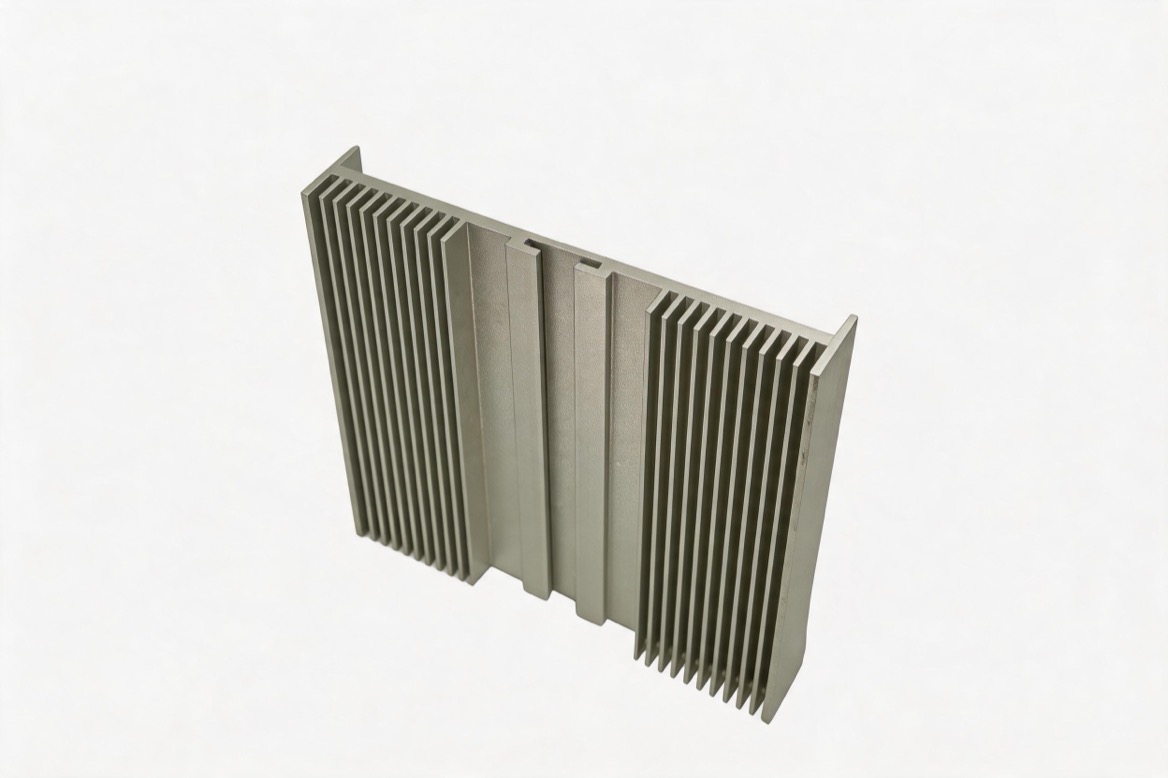
Both 5052 and 6061 can be welded using common processes such as TIG and MIG welding. However, their behavior after welding differs.
5052 offers excellent weldability. It is widely used for welded tanks, marine structures, enclosures, vehicle bodies, and fabricated sheet-metal assemblies. Its post-weld properties remain relatively consistent for many practical applications.
6061 is weldable, but the area next to the weld can lose a substantial portion of its T6 strength. The heat from welding alters the heat-treated condition in the heat-affected zone. This must be considered when a design relies on the full strength of 6061-T6 near the joint.
For critical 6061 welded structures, engineers may need to:
- Increase local section thickness
- Move peak loads away from welded zones
- Add gussets or reinforcement
- Use mechanical fastening instead of welding
- Specify post-weld heat treatment when feasible
- Recalculate allowable load based on post-weld properties
In our production discussions with customers, this issue often separates a successful design from an over-engineered or underperforming one. A strong base alloy does not guarantee a strong welded assembly unless the joint design is evaluated correctly.
For CNC milling, drilling, tapping, turning, and precision fixture work, 6061 is normally the preferred choice.
6061-T6 has a firmer cutting response, better chip control, and more predictable behavior during machining. It is commonly selected for parts requiring accurate holes, threads, flatness, dimensional repeatability, and clean machined surfaces.
Typical 6061 machining applications include:
- Precision brackets
- Robotic components
- Instrument housings
- Automated equipment parts
- Tooling plates
- Electronic heat-management parts
- Mounting rails
- Custom-machined aluminum profiles
5052 can also be machined, but its softer and more ductile character can create longer chips, tool buildup, or less efficient machining behavior. Therefore, 5052 is usually more suitable when sheet forming and corrosion resistance matter more than complex CNC features.
The best alloy is also influenced by the form of material you need.
5052 is commonly used in:
- Aluminum sheet and coil
- Formed panels
- Fuel and liquid tanks
- Marine panels
- Truck and trailer components
- Electrical enclosures
- Kitchen equipment
- Signage and cladding parts
- Chemical-processing covers
6061 is often used in:
- Industrial aluminum profiles
- Structural extrusions
- Bars and rods
- Tubes and channels
- CNC-machined components
- Transportation structures
- Equipment frames
- Mechanical assemblies
- Renewable-energy support systems
For a company sourcing custom aluminum products, it is important to share the intended fabrication route early. A supplier needs to know whether the part will be extruded, cut, bent, welded, drilled, anodized, powder coated, or assembled. That information affects not only alloy selection but also tooling, lead time, tolerances, and cost.
Use this practical selection framework before requesting a quotation.
- The part will be exposed to saltwater, rain, moisture, or chemicals.
- The design requires tight bends or deep drawing.
- Welding is a major fabrication process.
- The part is primarily made from sheet or plate.
- Medium strength is sufficient.
- Long-term corrosion resistance is more important than maximum structural strength.
- The part must carry significant load.
- You need higher yield strength and rigidity.
- CNC machining accuracy is important.
- The design uses an extrusion, bar, tube, or structural profile.
- The component requires threads, milled pockets, or tight tolerances.
- Heat treatment is beneficial to the performance target.
1. What is the maximum load, impact, vibration, and fatigue condition?
2. Will the part be used indoors, outdoors, near the sea, or in a chemical environment?
3. Does the design require tight bending, stamping, or deep drawing?
4. Will the part be welded, bolted, riveted, or machined?
5. What temper is required for the intended process?
6. Does the part need anodizing, powder coating, electrophoresis, or another finish?
7. Which standard, tolerance, inspection requirement, and certificate are needed?
A clear answer to these questions helps manufacturers recommend the right material rather than simply quoting the lowest-cost option.
The raw-material price difference between 5052 and 6061 is only one part of the procurement decision. The true cost includes fabrication yield, machining time, scrap risk, tooling wear, surface treatment, welding complexity, packaging, logistics, and long-term field performance.
For example, 5052 may offer a lower total manufacturing cost for a bent and welded enclosure because it forms easily and reduces cracking risk. But 6061 may offer a better total value for a precision-machined bracket because it shortens machining time and provides higher structural reliability.
The lowest purchase price is not always the lowest project cost. The most economical alloy is the one that meets technical requirements with stable production efficiency and minimal downstream risk.
A reliable aluminum supplier should contribute more than material supply. For global buyers, the best outcome comes from a manufacturing partner that can assess the relationship between alloy, temper, extrusion design, fabrication process, surface finish, packaging, and export requirements.
Guangdong Dapeng Aluminum Industry Co., Ltd. provides industrial aluminum profiles, architectural aluminum profiles, and customized deep-processing services for customers across construction, industrial manufacturing, transportation, and new-energy applications.
For a custom inquiry, useful information includes:
- Drawings in PDF, DWG, STEP, or similar formats
- Required alloy and temper, if already specified
- Cross-section drawings for extrusions
- Length, wall thickness, and tolerance requirements
- Surface finish requirements
- Required processes, such as cutting, drilling, milling, bending, welding, or assembly
- Estimated order quantity and target market
- Applicable standards and inspection requirements
With this information, our technical team can help assess whether 5052 aluminum or 6061 aluminum is the more suitable solution for your project.
The aluminum 5052 vs 6061 decision should be made around service conditions and manufacturing needs.
Choose 5052-H32 for corrosion resistance, bending, and welded sheet-metal products. It is a reliable option for marine, transportation, enclosure, tank, and formed-panel applications.
Choose 6061-T6 for higher strength, CNC machining, extruded profiles, and structural components. It is a versatile solution for industrial frames, mechanical parts, transportation systems, and engineered aluminum assemblies.
If you are developing an aluminum extrusion, fabricated sheet-metal part, or custom-machined component, send Guangdong Dapeng Aluminum Industry Co., Ltd. your drawings and technical requirements. Our team can help you select the appropriate alloy, temper, processing route, and surface treatment for dependable production and export-ready delivery.
No. In common commercial tempers, 6061-T6 is stronger than 5052-H32 in both tensile and yield strength. 5052 remains a strong choice for medium-load sheet-metal parts, but 6061 is generally better for structural components that require greater rigidity and load-bearing capacity.
5052 is generally better for bending. Its formability makes it suitable for folded, rolled, stamped, and deep-drawn parts. 6061-T6 is more likely to crack during tight-radius bending and usually requires a larger bend radius or a different fabrication approach.
Yes. 5052 aluminum is an established choice for marine and humid environments because it provides excellent corrosion resistance and good weldability. It is commonly used for marine-related panels, tanks, floors, and fabricated components.
Yes, 6061 can be welded using TIG or MIG processes. However, welding affects the heat-treated T6 condition near the weld, reducing local strength. For load-bearing welded assemblies, the joint area should be evaluated carefully during design.
6061-T6 is usually better for CNC machining. It offers more predictable chip formation, cleaner machining behavior, and better suitability for precision features such as threads, holes, milled pockets, and tight-tolerance surfaces.
It can, depending on the environment and finish. 6061 performs well in many outdoor settings, especially with anodizing, powder coating, or other protective surface treatments. For continuous marine exposure, saltwater conditions, or highly corrosive environments, 5052 is usually the more conservative choice.
The difference is very small. 5052 has a density of about 2.68 g/cm³, while 6061 is about 2.70 g/cm³. In most engineering projects, design geometry and wall thickness have a far larger impact on total part weight than the density difference between these two alloys.
1. [FONNOV Aluminium Fabrication Plant — Aluminum 5052 vs 6061: Key Differences & Applications]
2. [Aluminum Association — Industry Standards and Alloy Series Information]
3. [GTR Manufacturing — 5052-H32 vs. 6061-T6: Which Aluminum Alloy Is Best for Your Part?]
4. [Kaiser Aluminum — Product Information and Technical Data]
5. [Kaiser Aluminum — 6061 Rod and Bar Technical Data]
6. [Approved Sheet Metal — Aluminum 5052-H32 vs. Aluminum 6061-T6]
7. [SendCutSend — Aluminum Alloy Comparisons: 5052 vs 6061 vs 7075]


