


Views: 288 Author: Dapeng Aluminum Publish Time: 2026-10-15 Origin: Site


Content Menu
● 5052 vs. 6061 Aluminum Sheet: Quick Comparison
● Understanding 5052-H32 and 6061-T6 Aluminum
>> Why 5052-H32 Works Well for Enclosure Bodies
>> Why 6061-T6 Suits Stronger Internal Components
● Strength, Stiffness, and Weight: Three Different Questions
>> Compare Mechanical Properties on the Same Basis
>> Higher Strength Does Not Mean Proportionally Higher Stiffness
>> Weight Savings Need Design Validation
● Marine Corrosion Resistance: Where 5052 Has an Advantage
>> Salt Spray, Condensation, and Trapped Water
>> Galvanic Corrosion Can Defeat Either Alloy
● Forming, Machining, and Welding
>> Bending: 5052 Usually Offers the Easier Manufacturing Route
>> Machining: 6061 Often Makes More Sense
>> Welding: Design Around the Heat-Affected Zone
● Surface Protection and Ingress Performance
>> Specify a Coating System, Not Just a Color
>> An IP Rating Is Not a Saltwater Durability Rating
● Three Practical Design Scenarios
>> Scenario 1: Folded Deck-Mounted Instrument Cabinet
>> Scenario 2: Enclosure Supporting Heavy Internal Equipment
>> Scenario 3: Machined Housing with Few Tight Bends
● A Procurement Workflow for Marine Aluminum Enclosures
>> Step 1: Define the Operating Environment
>> Step 2: Separate Components by Function
>> Step 3: Establish Material and Manufacturing Requirements
>> Step 4: Validate a Representative Prototype
>> Step 5: Interpret Corrosion Testing Correctly
● Cost: Compare the Finished Enclosure
● Discuss Your Marine Enclosure Requirements with Dapeng
>> Is 5052 or 6061 Better for Marine Equipment Enclosures?
>> Can 6061 Aluminum Be Used in Marine Environments?
>> Can I Bend 6061-T6 for an Enclosure?
>> Does Welding Preserve 6061-T6 Strength?
>> Does 5052 Need Surface Protection?
>> Does an IP-Rated Enclosure Automatically Resist Saltwater Corrosion?
Choosing between 5052 vs. 6061 aluminum sheet for marine equipment enclosures is not simply a question of strength. Salt exposure, bending requirements, welded joints, mounting loads, and sealing performance all influence the decision. For most folded enclosure bodies, 5052-H32 is the more practical starting point. For machined mounting plates, reinforced brackets, and load-bearing components, 6061-T6 often offers greater value.
My approach to this comparison is to evaluate the finished enclosure rather than the alloy in isolation. A stronger sheet does not automatically produce a better enclosure, especially when tight bends, weld distortion, or corrosion-prone connections determine reliability.
For Guangdong Dapeng Aluminum Industry Co., Ltd., this component-level perspective connects aluminum material selection with profile development, manufacturing, and customized processing.
The comparison below focuses on 5052-H32 and 6061-T6. Temper matters: changing the temper changes strength, formability, and fabrication behavior.
| Selection factor | 5052-H32 aluminum sheet | 6061-T6 aluminum sheet |
|---|---|---|
| Main alloying elements | Magnesium and chromium | Magnesium and silicon, with copper |
| Strengthening method | Cold working and stabilization | Solution heat treatment and artificial aging |
| Mechanical strength | Moderate | Higher |
| Tight-bend suitability | Generally better | More restrictive |
| Marine corrosion resistance | Excellent practical choice for exposed sheet components | Good, but requires careful exposure and protection assessment |
| Machining | Usable, but less convenient for intricate machining | Generally better for machined features |
| Welding consideration | Local loss of work-hardened strength | Local loss of heat-treated strength |
| Typical enclosure role | Folded shells, doors, covers | Mounting plates, brackets, reinforced components |
Neither alloy guarantees a watertight or corrosion-resistant assembly. Those outcomes depend on the complete design.
5052 is a non-heat-treatable aluminum-magnesium alloy. It gains strength through cold working rather than precipitation-hardening heat treatment.
H32 identifies a strain-hardened and stabilized condition commonly used for sheet fabrication. Its combination of corrosion resistance, moderate strength, and workability makes it suitable for folded marine enclosure shells.
This matters because enclosure bodies typically need corners, return flanges, gasket surfaces, and door openings. Material that forms reliably can reduce cracking, rework, and unnecessary welded seams.
6061 is a heat-treatable aluminum alloy. T6 indicates solution heat treatment followed by artificial aging.
This condition provides higher strength than common 5052 sheet tempers. It also offers useful machining characteristics for brackets, mounting plates, and accurately positioned features.
However, 6061-T6 is less forgiving during tight bending. Its strength advantage should therefore be matched to the component's actual function, not applied indiscriminately throughout the enclosure.
A common purchasing mistake is comparing typical properties for one alloy with guaranteed minimum properties for another.
For example:
| Published property basis | 5052-H32 | 6061-T6 |
|---|---|---|
| Minimum yield strength in the cited 5052 sheet table | 160 MPa | Not directly comparable |
| Tensile-strength range in the cited 5052 sheet table | 215–265 MPa | Not directly comparable |
| Typical yield strength in the cited 6061 alloy table | Not directly comparable | Approximately 276 MPa |
| Typical tensile strength in the cited 6061 alloy table | Not directly comparable | Approximately 310 MPa |
These figures illustrate the general strength difference, but they are not interchangeable design allowables. Thickness, product standard, and delivery condition must be checked before specifying a guaranteed value.
Strength describes resistance to permanent deformation. Stiffness describes resistance to elastic deflection.
The elastic moduli of these aluminum alloys are similar. Consequently, replacing a flat 5052 panel with an equally thick 6061 panel does not create the same dramatic improvement in stiffness that the yield-strength comparison might suggest.
For a large enclosure door, folded edges, stiffening ribs, shorter unsupported spans, or additional thickness may solve deflection more effectively than an alloy substitution.
Both alloys have similar density. At equal dimensions, their weights are therefore close.
6061 may enable a thinner strength-controlled component. However, thinning a panel also reduces bending stiffness and can compromise gasket compression or vibration performance.
Evaluate weight at assembly level, including reinforcement, fasteners, and mounting hardware.
5052 has well-established corrosion resistance in marine atmospheres and many marine environments. This makes it a sensible default for external sheet-metal surfaces.
6061 also has recognized marine applications and good corrosion resistance. It should not be dismissed as universally unsuitable for saltwater service.
The practical distinction is exposure. A sheltered mounting plate inside a sealed cabinet faces different conditions from an exterior cover repeatedly wetted by salt spray.
Assess:
- Frequency of saltwater wetting.
- Possibility of standing water.
- Condensation inside the enclosure.
- Crevices around hinges and seals.
- Cleaning and inspection access.
- Whether immersion is an actual operating requirement.
Stainless steel fasteners electrically connected to aluminum in the presence of saltwater can accelerate aluminum corrosion.
Changing from 6061 to 5052 does not eliminate this mechanism.
Use suitable isolating washers, sleeves, gaskets, and sealed interfaces where the design permits. Protect holes, edges, and damaged coating areas as carefully as broad surfaces.
Where electrical bonding is required, coordinate corrosion isolation with the grounding design. A connection cannot be treated as both electrically isolated and reliably bonded without an intentional solution.
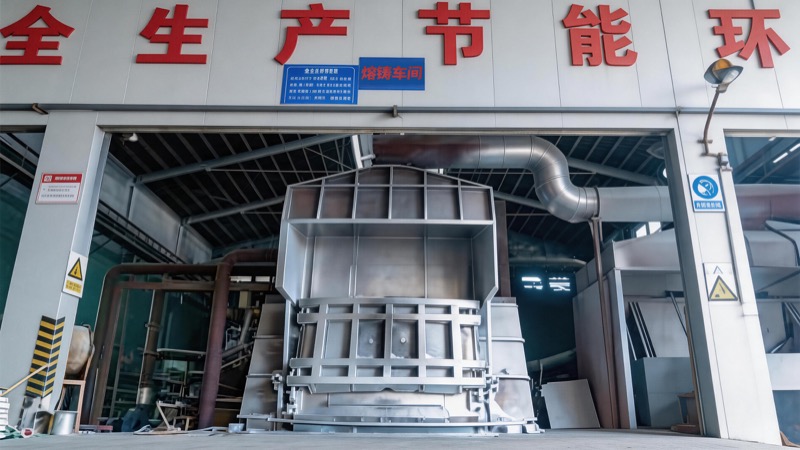
For press-brake fabrication, 5052-H32 generally supports tighter and more complex bends than 6061-T6.
However, there is no universal bend radius suitable for every thickness and condition.
Before production:
1. Confirm alloy, temper, and actual thickness.
2. Establish rolling direction and bend orientation.
3. Select tooling and an appropriate inside radius.
4. Produce representative bend coupons.
5. Inspect for cracking, springback, and dimensional consistency.
Test coupons should represent the production material, not an unrelated sample.
6061-T6 is generally preferable when the enclosure assembly needs machined pockets, accurately positioned holes, substantial mounting features, or relatively thick brackets.
Thin sheet should not be expected to provide robust threads simply because it is made from a stronger alloy.
Where repeated servicing is expected, evaluate inserts, captive nuts, or thicker mounting blocks. These details may influence durability more than the sheet grade.
Both alloys are weldable, but welding changes local properties.
Heat can remove some work-hardening benefit from 5052-H32. It can also reduce the precipitation-hardened strength of 6061-T6 around the weld.
Do not apply unwelded parent-material strength to the entire welded assembly.
Filler selection must account for the base alloys, joint configuration, service temperature, appearance, and any subsequent heat treatment. A qualified welding procedure is more valuable than a generic instruction to use one filler for every enclosure.
Anodizing and suitable coating systems can contribute to corrosion protection. Their effectiveness depends on preparation, coverage, sealing, and compatibility with the exposure.
A useful finish specification addresses:
- Surface preparation and pretreatment.
- Coating or anodizing requirements.
- Edge and weld coverage.
- Masked electrical contact areas.
- Inspection criteria.
- Repair procedures for handling damage.
Coordinate the finish with fabrication. Welding or machining after finishing can create unprotected areas requiring additional treatment.
IEC 60529 ingress-protection ratings describe protection against access, solid objects, and water ingress.
They do not independently establish long-term resistance to marine corrosion.
An enclosure can resist water entry during a defined test while still developing corrosion around fasteners or damaged finishes in service.
Likewise, choosing "marine-grade aluminum" does not establish an IP rating. The assembled enclosure—including seals, cable entries, hinges, and closures—must meet the required test conditions.
The following are illustrative engineering scenarios, not reported customer projects.
Consider a cabinet with multiple bends, a removable door, and frequent salt-spray exposure.
5052-H32 is a strong starting choice for the shell and door because formability and corrosion resistance are central requirements.
Priorities include stable gasket compression, protected fastener interfaces, and avoiding external pockets that retain water. Any drainage feature must remain compatible with the required ingress protection.
Consider an enclosure carrying a pump controller or another substantial internal assembly.
A 5052 shell combined with a 6061 mounting plate or reinforced bracket may be more efficient than using one alloy throughout.
Check concentrated loads, mounting-hole deformation, vibration, and welded-region strength. The enclosure skin should not become the structural support by accident.
Consider a housing requiring machined recesses, precision mounting surfaces, and substantial wall sections.
6061 may be the more practical manufacturing choice.
Its suitability still depends on exposure, surface protection, sealing, and joint design. Higher strength alone does not resolve marine durability.
State whether the enclosure will encounter sheltered humidity, coastal air, deck spray, washdown, temporary immersion, or continuous immersion.
Include temperature, vibration, electrical bonding, and maintenance requirements.
Identify which parts require:
- Reliable bending.
- Structural strength.
- Precision machining.
- Heat transfer.
- Cosmetic finish.
- Electrical continuity.
This often reveals where a mixed-alloy assembly offers better value.
Specify alloy, temper, thickness, dimensional tolerances, and the applicable purchasing standard.
For critical parts, request traceable material documentation and agreed inspection records. Confirm sheet sourcing separately from extrusion and profile capabilities.
Inspect bends, welds, door alignment, mounting interfaces, and coating coverage.
Then test the finished assembly against its actual ingress and mechanical requirements. Include production-representative cable glands, fasteners, and gaskets.
ASTM B117 provides a controlled salt-fog exposure method. It does not provide a universal conversion from test hours to years of marine service.
Define exposure duration, specimen preparation, evaluation methods, and acceptance criteria. Where service-life decisions are consequential, combine laboratory evidence with relevant field experience or exposure data.
Raw sheet price is only one part of the decision.
For a folded cabinet, 5052 may reduce forming difficulty and bend-related rework. For a machined component, 6061 may improve manufacturing practicality.
Compare total delivered cost, including:
- Material procurement.
- Cutting and forming.
- Machining and welding.
- Surface finishing.
- Inspection and testing.
- Assembly and maintenance.
Request quotations against the same drawing, tolerances, finish, and documentation requirements. Otherwise, apparently cheaper offers may represent different products.
Send Guangdong Dapeng Aluminum Industry Co., Ltd. your enclosure drawings, installation environment, loading requirements, target ingress protection, finish specification, and estimated quantity.
Request a component-level manufacturability review covering the shell, mounting plates, brackets, and any extruded frame. Confirm sheet availability, processing scope, documentation, and testing responsibilities before production.
This creates a clearer procurement brief than requesting "5052 or 6061" without defining how the enclosure must perform.
5052-H32 is usually preferable for folded exterior shells. 6061-T6 is often better for machined or strength-critical components. The best assembly may combine both.
Yes. It has recognized marine uses. Evaluate exposure, protection, connections, and maintenance rather than assuming every marine application requires the same alloy.
Yes, within suitable forming limits. It generally needs more conservative bend geometry than 5052-H32. Validate the radius and tooling with representative material before production.
Not throughout the joint region. Welding reduces local strength in the heat-affected zone. Use appropriate welded-condition design values and a qualified procedure.
Not universally, but exposure and appearance requirements may justify it. Neither bare 5052 nor a coating removes the need for sound joint design and galvanic-corrosion control.
No. Ingress protection and corrosion durability are different requirements. Specify and validate both when the installation demands them.
1. [Atlas Steels — Aluminium Alloy 5052 Data Sheet]. Alloy composition, temper principles, flat-rolled product context, and corrosion suitability. [atlassteels.com]
2. [Austral Wright Metals — Aluminium Alloy 5052]. Published 5052-H32 mechanical-property limits, density, workability, and marine-atmosphere corrosion resistance. [australwright.com]
3. [United Aluminum — Aluminum Alloy 6061: Information and Specifications]. Chemical composition, heat-treatment principles, and typical 6061-T6 tensile and yield strengths. [unitedaluminum]
4. [Aalco — 6061-T6 Commercial Alloy]. Temper-related formability and reduced weld-zone strength; extrusion data are not used as sheet-property guarantees. [aalco.co]
5. [AZoM — Aluminum 6061 Alloy]. Density, elastic modulus, machining characteristics, and marine-component applications. [azom]
6. [ESAB — The Heat-Affected Zone in Aluminum Welds]. Effects of welding heat on work-hardened and precipitation-hardened aluminum. [esab]
7. [International Electrotechnical Commission — IP Ratings]. Scope and purpose of IEC 60529 enclosure ingress-protection ratings. [iec]
8. [ASTM International — B117: Standard Practice for Operating Salt Spray Apparatus]. Limitations of using standalone salt-spray results to predict natural-environment performance. The linked page is a historical edition, not a statement of the currently applicable procurement edition. [store.astm]
9. [PW Marine OEM — Galvanic Corrosion: Stainless Steel and Aluminum in Marine Hardware]. Practical guidance on dissimilar-metal contact, isolation, and electrolyte exclusion. [pwmarineoem]


