


Views: 243 Author: Dapeng Aluminum Publish Time: 2026-10-11 Origin: Site


Content Menu
● 3003 vs. 5052 Aluminum Sheet: Key Differences at a Glance
● Alloy Composition and Temper: Why They Matter
>> 3003 Aluminum Sheet: Manganese-Based Formability
>> 5052 Aluminum Sheet: Magnesium-Based Strength
● Chemical Resistance: Evaluate the Liquid Before the Alloy
>> Marine Resistance Is Not Chemical Compatibility
>> Chemical Concentration and Temperature Change the Decision
>> When Neither 3003 nor 5052 Is an Appropriate Starting Point
● Strength, Stiffness, and Aluminum Tank Thickness
>> 5052-H32 Provides a Higher Strength Baseline
>> Similar Stiffness Limits Simple Lightweighting Claims
● Formability: Which Sheet Is Easier to Fabricate?
>> 3003 for Complex Shapes and Tighter Bends
>> 5052 for Formed Components Requiring More Strength
● Welding 3003 and 5052 Aluminum Storage Tanks
>> Both Alloys Weld Well, but Both Can Soften
>> Inspect the Joint, Not Just the Sheet
● Practical Validation: A Chemical Compatibility Test Plan
>> Step 1: Define the Entire Exposure Cycle
>> Step 2: Test Representative Material
>> Step 3: Establish Acceptance Criteria Before Testing
● Illustrative Selection Scenarios
>> Scenario A: A Heavily Formed Tank for a Verified Compatible Liquid
>> Scenario B: A Tank Installed in a Coastal Facility
>> Scenario C: A Sodium Hydroxide Storage Tank
● Procurement and Total Cost: Compare More Than Sheet Price
● Request an Application-Based Aluminum Review
>> Is 5052 Better Than 3003 for Chemical Storage Tanks?
>> Can 3003 Aluminum Sheet Be Used for Storage Tanks?
>> Can Either Alloy Store Sodium Hydroxide?
>> Does Welding Reduce the Strength of 5052-H32?
>> Can 5052 Always Replace 3003 at a Thinner Gauge?
>> What Information Should a Buyer Provide Before Requesting a Quote?
Choosing between 3003 vs. 5052 aluminum sheet for chemical-resistant storage tanks requires more than comparing strength or price. The stored chemical, operating temperature, cleaning procedure, weld design, and installation environment all influence whether either alloy is suitable.
My starting point is compatibility. For a chemically compatible liquid, 3003 can offer excellent formability and an economical fabrication route. For applications requiring greater strength or exposure to marine atmospheres, 5052 often deserves priority. However, neither alloy should be described as universally resistant to chemicals.
For Guangdong Dapeng Aluminum Industry Co., Ltd., an aluminum manufacturer focused on research, production, export, and customized processing, the useful conversation begins with the customer's operating conditions—not simply an alloy number.
This guide compares the two materials and provides a practical framework for discussing tank projects with suppliers, fabricators, and qualified design engineers.
The following comparison uses 3003-H14 and 5052-H32, two common sheet conditions. These are different tempers, so the table compares commercially relevant products rather than isolating alloy chemistry alone.
| Property | 3003-H14 aluminum sheet | 5052-H32 aluminum sheet |
|---|---|---|
| Principal alloying addition | Manganese: 1.0–1.5% | Magnesium: 2.2–2.8% |
| Additional specified element | Copper: 0.05–0.20% | Chromium: 0.15–0.35% |
| Tensile strength | 140–180 MPa | 215–265 MPa |
| Minimum 0.2% proof strength | 115 MPa | 160 MPa |
| Typical density | 2,730 kg/m³ | 2,680 kg/m³ |
| Typical elastic modulus | 69 GPa | 70 GPa |
| Fabrication advantage | Drawing, spinning, and complex forming | Higher strength with good formability |
| Environmental resistance | Excellent in many atmospheric applications | Excellent atmospheric resistance; suitable for many marine environments |
| Welding consideration | Heat-affected-zone softening | Heat-affected-zone softening |
| Chemical tank suitability | Requires chemical-specific validation | Requires chemical-specific validation |
The mechanical figures above come from published supplier datasheets referencing ASTM B209M. They are not substitutes for the applicable standard edition, thickness-specific requirements, or the delivered material certificate.
3003 is a non-heat-treatable aluminum alloy strengthened primarily with manganese. Its combination of corrosion resistance and workability explains its use in storage tanks, chemical equipment, and formed components.
For tank fabrication, its main attraction is the ability to produce curved walls, drawn features, and spun parts without choosing a high-strength alloy unnecessarily.
However, formability depends on temper. Annealed 3003-O and strain-hardened 3003-H14 should not be treated as interchangeable.
5052 contains approximately 2.5% magnesium, with chromium also specified. It offers higher strength than 3003 in the commonly compared sheet tempers.
The H32 designation identifies strain-hardened and stabilized material. H14 identifies strain-hardened material without the same stabilization designation.
Neither alloy gains precipitation-hardening strength through conventional heat treatment. Consequently, selecting the right temper before forming and welding is an important procurement decision.
5052's suitability for many marine environments does not prove that it can safely contain every chloride-bearing process liquid.
Marine exposure, stagnant concentrated brine, acidic chloride solutions, and oxidizing cleaning chemicals are different service conditions. A tank must be evaluated against its actual contents and exposure pattern.
Likewise, descriptions such as "excellent corrosion resistance" for 3003 describe broad material behavior, not approval for a particular chemical.
A chemical name alone is insufficient for material selection. Buyers should specify:
- Chemical identity and complete mixture composition.
- Normal concentration and credible concentration changes.
- Operating and maximum upset temperatures.
- Water content, impurities, and contamination.
- Storage duration and agitation.
- Cleaning agents, rinse water, and cleaning temperature.
Generic compatibility charts provide an initial screening tool. They often describe aluminum generally rather than distinguishing 3003, 5052, weld metal, and surface condition.
Some charts also contain inconsistent entries for related chemical descriptions. Treat uncertainty as a reason for further investigation, not permission to select the more favorable rating.
Published screening data identify serious aluminum compatibility concerns for sodium hydroxide, hydrochloric acid, and sodium hypochlorite.
For these services, upgrading from 3003 to 5052 is not a reliable solution. A qualified materials specialist should evaluate alternative metals, polymers, composites, or engineered lining systems.
Do not generalize acid resistance from one acid to another. Nitric-acid service, for example, requires particularly careful review of concentration, temperature, purity, and alloy-specific evidence.
The published minimum proof strength is 160 MPa for 5052-H32 and 115 MPa for 3003-H14. This makes 5052 a stronger candidate when structural loading influences the material choice.
Relevant loads can include:
- Liquid head.
- Internal pressure or vacuum.
- Nozzle and piping forces.
- Support reactions.
- Transport and handling loads.
- Repeated filling and emptying.
Nevertheless, higher unwelded sheet strength does not automatically justify a proportional reduction in tank wall thickness.
The elastic moduli of the two alloys are almost identical. Consequently, a stronger alloy does not provide a comparable increase in elastic stiffness.
This distinction matters for flat tank panels. Deflection, buckling, support spacing, and local deformation may govern the design before sheet yield strength does.
My recommendation is to ask the designer which failure mode controls thickness. If stiffness or stability governs, switching to 5052 may deliver less weight reduction than a strength-only comparison suggests.
Corrosion allowance, weld properties, fabrication tolerances, and applicable design rules must also enter the calculation.
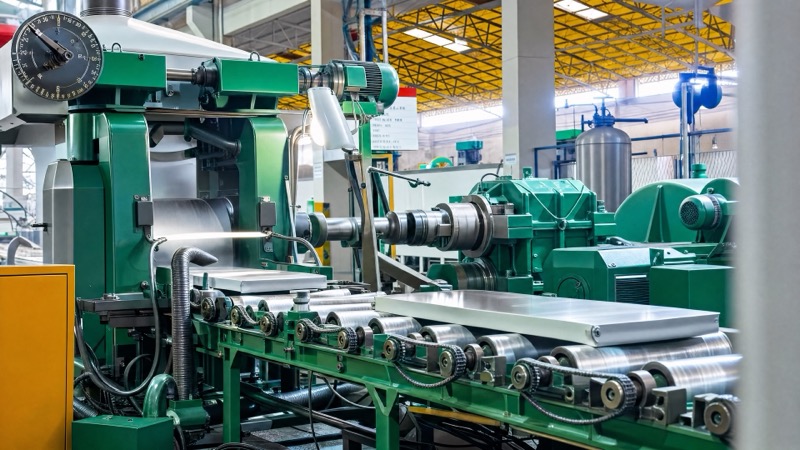
3003 is well suited to drawing and spinning. It can therefore be attractive for tanks incorporating extensively formed components.
A useful thickness-specific example comes from published bending guidance. At 3.2 mm thickness, the recommended minimum bend radius is approximately:
- 3003-H14: 1t, or 3.2 mm.
- 5052-H32: 1.5t, or 4.8 mm.
Here, "t" means sheet thickness. The recommendations apply to the stated bending orientation and are not guaranteed production limits.
5052-H32 remains a practical forming material, but tooling and bend allowances should match its properties.
Avoid copying an established 3003 forming program directly into a 5052 production run. Validate bend radius, springback, surface marking, and crack-free performance with representative material.
For difficult shapes, discuss annealed material or a revised forming sequence. Any change in temper must also be reflected in the structural design.
Both alloys have excellent weldability, with gas metal arc welding and gas tungsten arc welding commonly used.
The critical qualification is that welding strain-hardened material reduces strength in the heat-affected zone. A tank calculation based only on unwelded H14 or H32 values can therefore misrepresent the completed structure.
Published guidance commonly identifies 1100 filler for 3003 and 5356 filler for 5052, while allowing other possibilities. These are starting points—not universal instructions for chemical containment.
Filler selection should consider the base alloy, joint design, service temperature, corrosion exposure, and qualified welding procedure.
A suitable sheet alloy cannot compensate for poor weld execution.
The project inspection plan should address:
1. Joint preparation and cleanliness.
2. Welding procedure and personnel qualification.
3. Weld appearance and dimensional distortion.
4. Appropriate nondestructive examination.
5. A documented leak-test procedure.
6. Identification and traceability of repaired areas.
Testing methods and acceptance criteria should be established by the responsible engineer. Leak tightness demonstrates containment at the test condition; it does not establish long-term chemical resistance.
This is where a material comparison becomes a purchasing decision.
Document normal storage, filling, draining, shutdown, and cleaning. Include foreseeable temperature excursions and contamination.
A tank may tolerate the product yet fail during cleaning. Cleaning chemistry belongs in the specification from the beginning.
Where existing evidence is insufficient, arrange controlled testing through a qualified laboratory.
Include the proposed sheet alloy and temper, representative welded specimens, and any intended surface treatment or lining. Test the actual liquid or a justified equivalent under representative conditions.
The laboratory and design team should agree on:
- Permissible general corrosion.
- Maximum acceptable localized attack.
- Weld and heat-affected-zone performance.
- Surface deterioration.
- Product contamination limits.
- Required exposure duration and reporting.
Do not rely solely on average mass loss. A localized defect can threaten containment even when overall material loss appears modest.
This workflow is a proposed evaluation method, not a claim that a particular tank or alloy has already passed testing.
These examples are hypothetical decision paths, not reported customer projects.
A stationary tank has complex formed components, moderate structural demands, and no aggressive cleaning cycle.
If compatibility testing supports both alloys, 3003 may offer the more efficient fabrication route. Its value comes from forming suitability rather than a blanket claim of superior chemical resistance.
The liquid has been validated as compatible, but the tank also faces salt-bearing outdoor exposure and higher mechanical loads.
5052 deserves consideration because its marine-environment suitability and strength align with those requirements. Weld properties, supports, fittings, and actual exposure still require evaluation.
The first task is not choosing between 3003 and 5052. It is reconsidering aluminum as the wetted construction material.
A stronger aluminum alloy does not remove the underlying chemical incompatibility concern.
An economical tank is one that satisfies the service requirements without creating avoidable fabrication or maintenance costs.
Compare quotations using the same assumptions:
| Cost category | What to compare |
|---|---|
| Material | Alloy, temper, thickness, tolerances, and certified properties |
| Fabrication | Forming operations, weld length, tooling, and expected scrap |
| Verification | Laboratory testing, inspection, and documentation |
| Installation | Supports, fittings, handling, and protection requirements |
| Service life | Inspection access, repair strategy, and downtime exposure |
3003 may reduce forming complexity in some projects. 5052 may justify its price when higher strength or environmental suitability provides a measurable benefit. Neither outcome should be assumed without comparable quotations.
For export procurement, specify packaging, surface protection, dimensional inspection, and document delivery. Also distinguish rolled sheet requirements from extruded aluminum profile requirements; experience with one product form does not automatically establish compliance for another.
Contact Guangdong Dapeng Aluminum Industry Co., Ltd. with your chemical specification, operating conditions, tank drawings, target alloy and temper, and required documentation.
Ask the team to confirm available product forms, customized processing scope, inspection requirements, and delivery arrangements before requesting a final quotation.
For chemical containment, supplier coordination should support—not replace—approval by the responsible tank designer and materials specialist.
Not universally. 5052 offers higher strength in common sheet tempers and suitability for many marine environments. Chemical compatibility must still be confirmed for the actual liquid and operating conditions.
Yes. Storage tanks and chemical equipment are recognized applications for 3003. That application history does not establish suitability for every chemical, concentration, or temperature.
Generic compatibility data rate sodium hydroxide severely against aluminum. Do not specify either alloy for this service without specialist evaluation; alternative construction materials should be investigated.
Yes. Welding can reduce strength in the heat-affected zone of strain-hardened 5052. The completed tank must be designed using appropriate welded-material properties.
No. Thickness may be controlled by deflection, buckling, weld properties, corrosion allowance, or design requirements. The alloys' similar elastic moduli limit stiffness-based benefits.
Provide chemical composition, concentration, temperatures, pressure or vacuum conditions, cleaning procedures, drawings, alloy and temper requirements, inspection criteria, and export documentation needs.
1. [Atlas Steels — Aluminium Alloy Data Sheet: 3003, revised October 2013]. Basis for composition, mechanical and physical properties, forming guidance, welding considerations, and listed applications. The datasheet references historical standard editions; procurement should specify the applicable edition. [atlassteels.com]
2. [Atlas Steels — Aluminium Alloy Data Sheet: 5052, revised October 2013]. Basis for composition, H32 properties, stabilization, marine-environment suitability, bending guidance, and heat-affected-zone softening. [atlassteels.com]
3. [Industrial Specialties Manufacturing — Aluminum Chemical Compatibility Chart]. Basis for chemical screening cautions. The chart states a 22°C reference temperature and provides general aluminum ratings, not alloy-specific tank approval. [industrialspec]
4. [United Aluminum — Aluminum Alloy 3003]. Supporting alloy background and the distinction between typical published properties and guaranteed product properties. [unitedaluminum]
5. [Cole-Parmer — Chemical Compatibility Database]. Supplementary resource for preliminary chemical and material compatibility screening. [coleparmer]


