


Views: 236 Author: Dapeng Aluminum Publish Time: 2026-08-25 Origin: Site


Content Menu
● Quick Answer: Is 2024 or 6061 Aluminum Better?
● 2024 vs 6061 Aluminum at a Glance
● Chemical Composition: Why These Alloys Behave Differently
>> 2024 Aluminum: Copper-Driven Strength
>> 6061 Aluminum: Magnesium and Silicon for Balance
● Strength and Fatigue Resistance
>> Is 2024 Aluminum Stronger Than 6061?
>> Fatigue Performance in Repeated-Load Parts
● Corrosion Resistance and Surface Finish
>> 6061 Is Usually Better for Outdoor Service
>> 2024 Requires More Protection
>> Can You Weld 2024 Aluminum?
>> Why 6061 Is a Fabrication Favorite
● Machining, Extrusion, and Processing
>> 2024 for Precision Machining
>> 6061 for Profiles and Custom Structures
● How to Choose Between 2024 and 6061
>> Questions to Ask Before Ordering
>> When 2024 Aluminum Is the Better Choice
>> When 6061 Aluminum Is the Better Choice
● Request a Custom Aluminum Solution
>> Is 2024 aluminum stronger than 6061 aluminum?
>> Which alloy is better for outdoor use, 2024 or 6061?
>> Can 2024 aluminum be welded?
>> Is 6061 aluminum suitable for CNC machining?
>> Which aluminum alloy is better for aluminum extrusion?
>> Does welding reduce the strength of 6061-T6 aluminum?
>> Is 2024 aluminum suitable for marine environments?
Choosing between 2024 aluminum vs 6061 aluminum is not simply a question of which alloy is stronger. The right choice depends on the part's loading condition, corrosion exposure, fabrication process, surface requirement, service life, and total project cost.
At Guangdong Dapeng Aluminum Industry Co., Ltd., our engineering and export teams regularly support customers who need aluminum profiles, machined parts, structural components, and customized fabrication solutions for industrial, transportation, construction, and new-energy applications. In practice, 2024 and 6061 aluminum serve very different priorities: 2024 is selected for high strength and fatigue performance, while 6061 is widely chosen for weldability, corrosion resistance, finish quality, and versatile fabrication.
This guide compares 2024 aluminum and 6061 aluminum from a manufacturing and application perspective, helping engineers, procurement teams, fabricators, and product designers make a more informed material decision.
Neither alloy is universally better.
- Choose 2024 aluminum when high strength, fatigue resistance, and precision machining are more important than corrosion resistance and welding.
- Choose 6061 aluminum when the component needs good corrosion resistance, welding capability, extrusion suitability, anodizing performance, and broad market availability.
- For outdoor frames, marine-adjacent structures, equipment housings, industrial supports, and welded assemblies, 6061 aluminum is usually the more practical option.
- For highly loaded aerospace-style fittings, structural machined parts, and components exposed to repeated stress cycles, 2024 aluminum may provide the performance advantage.
The most important point is to compare the correct alloy, temper, product form, dimensions, and manufacturing process. A comparison between 2024-T3 sheet and 6061-T6 extrusion, for example, should not be treated as a direct one-to-one material substitution.
| Property | 2024 Aluminum | 6061 Aluminum |
|---|---|---|
| Primary alloying elements | Copper and magnesium | Magnesium and silicon |
| Common tempers | T3, T351 | T6, T651, T4 |
| Typical strength level | Higher | Medium to high |
| Fatigue resistance | Excellent | Good |
| Corrosion resistance | Relatively poor | Good to excellent |
| Weldability | Generally not recommended for fusion welding | Good |
| Machinability | Excellent | Good |
| Anodizing appearance | Can be less uniform | Usually more consistent |
| Extrusion suitability | Limited compared with 6061 | Widely used |
| Cost and availability | Often higher and more specialized | Generally more available |
| Typical applications | Aerospace fittings, high-strength machined parts | Structural frames, transport parts, machinery, marine-related components |
2024-T3 is typically stronger than 6061-T6, but 6061-T6 offers a more balanced package for many commercial and industrial projects. Typical published values place 2024-T3 tensile strength near 469 MPa and yield strength near 324 MPa, while 6061-T6 is commonly around 290–310 MPa in tensile strength and 240–275 MPa in yield strength, depending on product form and specification.
The key difference in the 2024 vs 6061 aluminum comparison begins with alloy chemistry.
2024 belongs to the 2xxx aluminum alloy family. Its major alloying element is copper, supported by magnesium and manganese.
Typical composition ranges include:
| Element | 2024 Aluminum |
|---|---|
| Copper | 3.8–4.9% |
| Magnesium | 1.2–1.8% |
| Manganese | 0.3–0.9% |
| Silicon | Maximum 0.5% |
| Iron | Maximum 0.5% |
| Aluminum | Balance |
Copper contributes substantially to precipitation hardening and high mechanical strength. This is why 2024 is valued in demanding applications where strength-to-weight ratio and resistance to cyclic loading are critical.
However, the same copper-rich structure can reduce corrosion resistance. For this reason, 2024 products may require cladding, conversion coating, anodizing, painting, or other protective measures when used in harsh or moisture-prone environments.
6061 belongs to the 6xxx series. Its principal alloying elements are magnesium and silicon, which form magnesium silicide strengthening phases during heat treatment.
| Element | 6061 Aluminum |
|---|---|
| Magnesium | 0.8–1.2% |
| Silicon | 0.4–0.8% |
| Copper | 0.15–0.40% |
| Chromium | 0.04–0.35% |
| Iron | Maximum 0.7% |
| Aluminum | Balance |
This chemistry gives 6061 a strong balance of mechanical performance, corrosion resistance, fabricability, and surface-treatment compatibility. The Aluminum Association composition limits list magnesium and silicon as the primary elements in 6061 alloy.
Yes. In common tempers, 2024 aluminum generally provides higher tensile strength and yield strength than 6061 aluminum.
This makes 2024 especially valuable where material failure under repeated loads is a serious concern. Typical examples include aerospace hardware, high-load brackets, suspension-related parts, structural fittings, and precision machined components.
However, higher strength does not automatically mean higher structural performance in every finished product. A part's final performance also depends on:
- Section geometry
- Wall thickness
- Fastener design
- Welding requirements
- Stress concentration
- Surface condition
- Corrosion protection
- Manufacturing tolerances
For example, a well-designed 6061-T6 aluminum extrusion with optimized wall thickness and reinforcement ribs may outperform an improperly designed 2024 machined part in a real-world equipment frame.
Fatigue resistance matters when a component experiences repeated loading, vibration, impact, or movement over time.
2024 aluminum is often preferred for components such as:
- Aircraft structural fittings
- High-load brackets
- Precision joints
- Automotive performance parts
- Motion-system components
- Repeated-load mechanical connections
6061 also performs well in many industrial structures, but its lower strength may make it less suitable where maximum fatigue performance is the central material requirement.
Practical manufacturing insight: For a load-bearing part, do not select 2024 solely because of its strength. Ask whether the design needs welding, exposure resistance, extrusion production, and decorative finishing. These factors can quickly shift the best choice toward 6061.
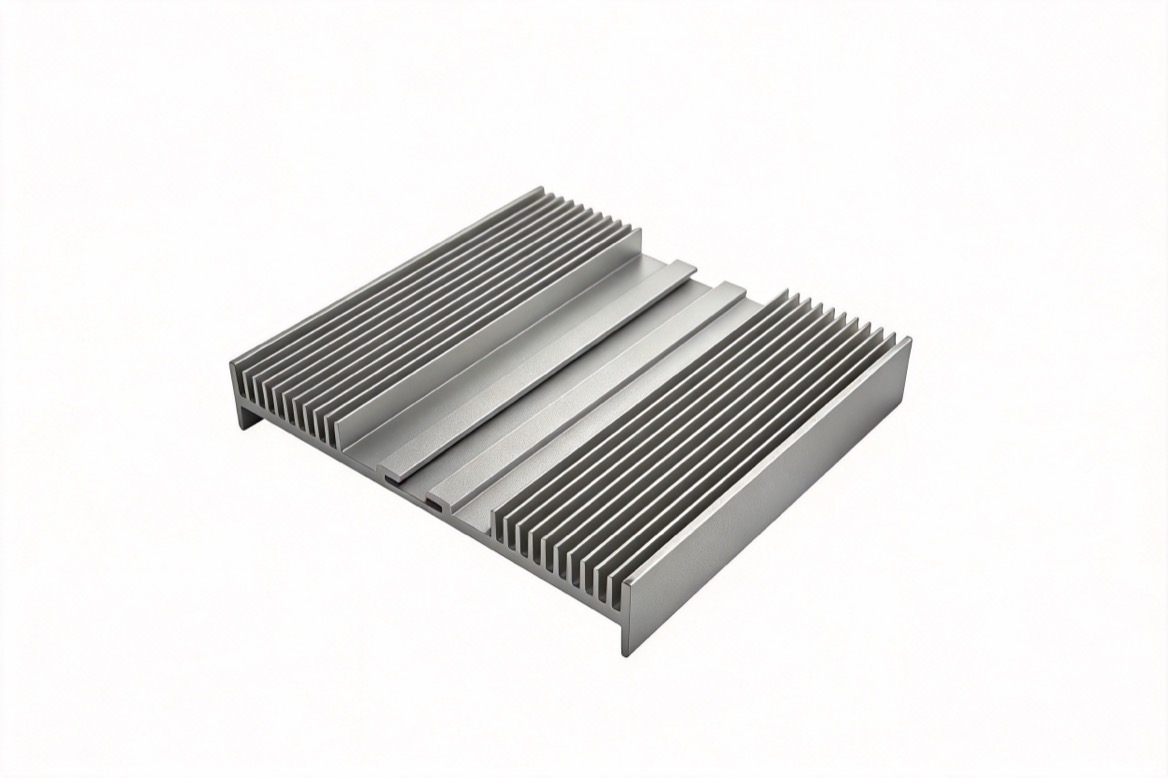
For outdoor, humid, coastal, industrial, and transport environments, 6061 aluminum is generally the safer material choice. Its magnesium-silicon alloy system offers better resistance to common atmospheric corrosion than 2024.
6061 is frequently selected for:
- Outdoor equipment frames
- Solar mounting structures
- Machine enclosures
- Transport components
- Industrial platforms
- Architectural support systems
- Marine-adjacent equipment
- Battery enclosures and new-energy hardware
6061 also performs well with anodizing. It can develop a relatively uniform oxide layer that improves durability, surface appearance, and corrosion protection.
2024 can perform successfully in demanding environments, but it often needs a more deliberate corrosion-control strategy. Bare 2024 is less suitable for prolonged exposure to moisture, salt, and corrosive contaminants.
Common protection methods include:
1. Alclad sheet, which uses a protective high-purity aluminum layer.
2. Chemical conversion coatings.
3. Anodizing or specialized surface treatments.
4. Primer and paint systems.
5. Careful drainage and anti-crevice design.
6. Isolation from dissimilar metals to reduce galvanic corrosion risk.
Alclad material is used to combine the higher strength of the core alloy with the corrosion protection offered by the cladding layer.
2024 aluminum is generally not the preferred choice for conventional fusion welding. Its high copper content increases the risk of hot cracking and can lead to reduced weld-zone performance.
In most practical projects, avoid selecting 2024 if the design requires extensive MIG or TIG welding. Instead, consider:
- Mechanical fastening
- Riveting
- Bolted assemblies
- Adhesive bonding where appropriate
- Alternative alloy selection
2024 is more commonly used in machined, fastened, riveted, or specially processed high-strength components.
6061 has good weldability and is widely used in TIG and MIG welding applications. It is a practical choice for fabricated structures, custom frames, equipment bases, brackets, machine guards, vehicle structures, and industrial assemblies.
However, engineers should account for heat-affected-zone softening. Welding can reduce the strength of 6061-T6 near the joint because the heat treatment condition changes locally. Published guidance notes that welded 6061 can lose a significant share of its T6 strength in the weld-adjacent area unless appropriate post-weld heat treatment is applied.
Manufacturing recommendation: Design the weld joint based on the lower post-weld strength, not the original parent-metal T6 value.
2024 is known for excellent machinability. It can produce clean chips and is widely used for precision CNC machining where dimensional control, strength, and fatigue performance matter.
It is often suitable for:
- Aerospace-style fittings
- Precision fixtures
- High-strength connectors
- Performance components
- Mechanical joints
- Complex machined hardware
Its limitations are corrosion sensitivity, lower weldability, and less flexible extrusion capability.
6061 is one of the most widely used heat-treatable aluminum alloys for structural and industrial applications. It is a strong candidate for custom aluminum profiles, especially when a project needs a combination of extrusion, CNC machining, drilling, tapping, welding, bending, and anodizing.
For export-oriented projects, 6061 may simplify the supply chain because it is available in many forms:
- Extrusions
- Bars
- Tubes
- Rods
- Plates
- Sheets
- Forgings
- Custom-machined parts
At Guangdong Dapeng Aluminum Industry Co., Ltd., we assess the entire production path before recommending a solution. A profile that is easy to extrude, machine, finish, inspect, and ship can produce more value than a theoretically stronger alloy that creates unnecessary manufacturing complexity.
Use this selection framework before issuing a material specification.
| Project Requirement | Recommended Alloy |
|---|---|
| Maximum strength-to-weight ratio | 2024 |
| High fatigue loading | 2024 |
| TIG or MIG welding | 6061 |
| Outdoor structures | 6061 |
| Marine-adjacent equipment | 6061 |
| Decorative anodized finish | 6061 |
| Custom industrial extrusions | 6061 |
| High-strength CNC fittings | 2024 |
| General machine frames | 6061 |
| Cost-sensitive structural fabrication | 6061 |
1. Will the component be welded after machining or extrusion?
2. Will it operate outdoors, in humid environments, or near saltwater?
3. Does it face repeated loading, vibration, or fatigue stress?
4. Is a clear anodized, black anodized, or powder-coated finish required?
5. Does the design need a complex aluminum extrusion profile?
6. Are aerospace or special mechanical-property requirements involved?
7. What standard, temper, tolerance, inspection method, and certificate are required?
These questions reduce material-selection risk before tooling, production, and shipment begin.
Choose 2024 when the priority is high mechanical performance in a carefully controlled service environment.
Typical applications include:
- High-strength aircraft-related structures
- Precision mechanical fittings
- Load-bearing machined brackets
- Racing and performance hardware
- Fatigue-sensitive joints
- High-strength tooling components
Choose 6061 when the project needs versatile processing and dependable environmental performance.
Typical applications include:
- Industrial aluminum profiles
- Machinery frames and automation systems
- Transport equipment components
- New-energy equipment housings
- Solar and battery support structures
- Marine-adjacent structural components
- Architectural and engineering structures
- CNC-machined jigs, fixtures, and plates
- Welded aluminum assemblies
The best alloy decision considers more than a material data sheet. It should match the product's structural load, operating environment, fabrication route, finish requirement, inspection standard, and commercial target.
Guangdong Dapeng Aluminum Industry Co., Ltd. provides industrial aluminum profiles, architectural aluminum profiles, aluminum alloy materials, and customized deep-processing services for international customers. Our team can support your project from alloy selection and profile design to extrusion, machining, surface finishing, quality inspection, and export packaging.
Contact our technical team today to discuss your 2024 aluminum or 6061 aluminum project and receive a tailored material recommendation.
Yes. In commonly used tempers, 2024 aluminum typically has higher tensile and yield strength than 6061 aluminum. It is often selected for high-load and fatigue-sensitive components.
6061 aluminum is generally better for outdoor use because it provides stronger corrosion resistance and is more compatible with anodizing and protective finishing systems.
2024 aluminum is generally not recommended for standard fusion welding because it is more susceptible to hot cracking and reduced weld-joint reliability.
Yes. 6061 aluminum is widely used for CNC machining. It offers good machinability, availability, corrosion resistance, and surface-finishing performance.
6061 is usually the more practical option for structural aluminum extrusion applications. It combines strength, corrosion resistance, and fabrication flexibility.
Yes. The heat from welding can soften the heat-affected zone and reduce local strength compared with the original 6061-T6 condition. Joint design should use appropriate post-weld design values.
Not normally as bare material. 2024 has relatively weak corrosion resistance and needs carefully specified cladding or protective coating systems for harsh moisture or salt-exposure conditions.
1. [FONNOV Aluminium — 2024 vs 6061 Aluminum: The Ultimate Comparison]
2. [The Aluminum Association — Designations and Chemical Composition Limits for Aluminum Alloys]
3. [United Aluminum — 6061 Aluminum Alloy Information and Specifications]
4. [Aluminum Association — 2024 Edition of Aluminum Standards and Data]
5. [ScienceDirect — Protective Role of Local Al Cladding Against Corrosion Damage]
6. [Metal Supermarkets — Difference Between Alclad and Bare Aluminum]
7. [Thomas — All About 2024 Aluminum: Properties, Strength and Uses]


